

How to Keep Building Forward When the Story Changes
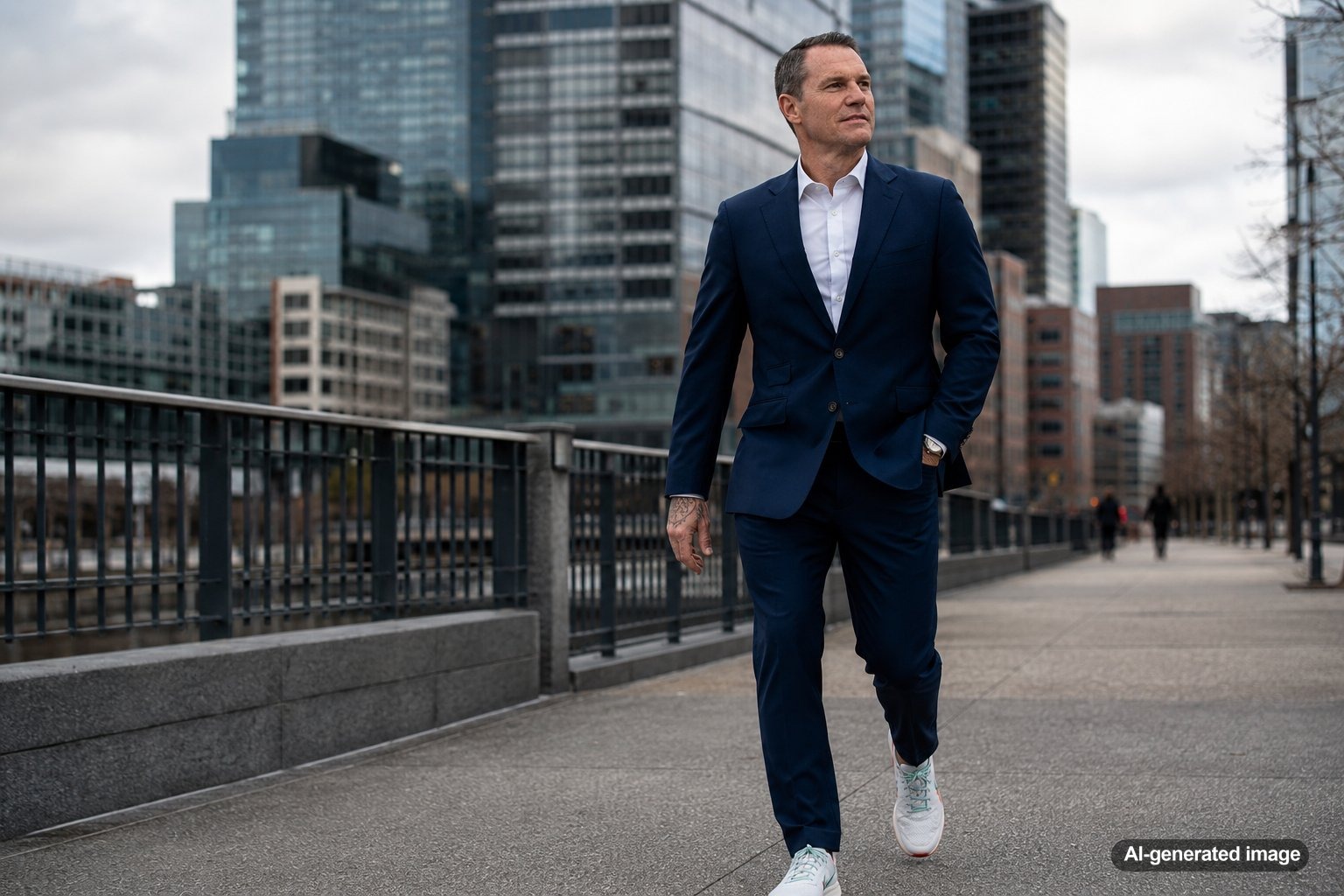
Some stories change slowly. Others change in a single appointment, a single phone call, a single business decision, or a single moment when the plan you trusted no longer fits the life in front of you. When that happens, the question is not whether the old story mattered. It did. The deeper question is what you are willing to build next.
For Greg Schaefer, forward motion is not a slogan. It is the meeting point of family, business leadership, endurance sports, advocacy, and the daily decision to keep showing up when life becomes more complicated than expected. You can learn more about Greg’s broader journey on the About Greg page, but the lesson applies far beyond one person’s story: a changed chapter does not have to mean a closed book.
Quick answer: how do you keep building forward?
- Name what changed without letting it define everything. Honest language gives you a starting point.
- Lower the horizon when the future feels too large. Focus on the next useful action, not the entire comeback.
- Protect the parts of your identity that still matter. You are more than the hard thing you are facing.
- Let support become part of the strategy. Family, teammates, clinicians, mentors, and community can help carry the load.
- Turn motion into meaning. Progress often begins with one more step, taken with purpose.
Start by telling the truth about the new chapter
When the story changes, many people rush toward either control or denial. Control says, “I need to solve the whole thing right now.” Denial says, “Nothing has really changed.” Neither one gives you much room to breathe.
A stronger first move is telling the truth with precision. Maybe your body is changing. Maybe your company is entering a difficult season. Maybe a role you built your identity around no longer fits. Maybe a dream is still possible, but it will require a different path than the one you imagined.
That kind of honesty is not weakness. It is leadership. In business, endurance racing, family life, and advocacy, the people who adapt best are often not the people who pretend the terrain is flat. They are the people who learn to read the terrain clearly and keep moving with their eyes open.
Separate the event from your entire identity
A diagnosis, setback, loss, transition, or unexpected challenge can become loud enough to crowd out every other part of a person. That is understandable. Hard news has a way of taking up space. But one changed part of the story is not the whole story.
Greg’s platform matters because it does not reduce resilience to one category. He is a dad, husband, CEO, speaker, endurance athlete, advocate, and community builder. Parkinson’s is part of his story, but it is not the only lens through which the story should be understood. The same principle helps anyone facing disruption: protect the fullness of who you are.
That might mean staying connected to your work, even if the pace changes. It might mean continuing to train, create, lead, parent, mentor, or serve in a new way. The form may shift. The values underneath can remain.
Make the next step smaller than your fear
Big uncertainty can make progress feel impossible because the mind keeps trying to solve years at once. The next race. The next quarter. The next treatment conversation. The next family decision. The next version of your life. It is too much to carry all at once.
One of the most practical resilience tools is shrinking the frame. Not because the big picture does not matter, but because action often returns through something smaller. One phone call. One training session. One honest conversation. One meeting with the team. One appointment. One page of planning. One more step.
This is not about lowering standards. It is about creating traction. In endurance sports, no finish line is reached in one emotional leap. In leadership, no company is rebuilt with one speech. In personal adversity, no meaningful life is restored in one perfect day. Momentum is usually assembled quietly.
Let discipline become flexible, not fragile
Discipline is often misunderstood as rigid consistency. Do the same thing, the same way, no matter what. That can work when conditions are stable. When the story changes, rigid discipline can break under pressure.
Flexible discipline asks a better question: what does commitment look like under today’s conditions? For an athlete, it may mean adjusting training without abandoning the identity of being an athlete. For a leader, it may mean rethinking goals while still protecting standards. For a family, it may mean changing routines while keeping love and presence at the center.
People often miss this distinction. Forward motion is not always faster motion. Sometimes it is wiser motion. Sometimes it is recovery. Sometimes it is asking for help. Sometimes it is saying no to the wrong opportunity so you can keep saying yes to the mission that matters most.
Use support as a strength multiplier
There is a version of resilience that sounds impressive but is actually lonely: carry everything yourself, never admit strain, and call it toughness. Real resilience is usually more connected than that.
Support systems matter because changed stories affect more than the person at the center. Spouses, partners, children, friends, coworkers, caregivers, teammates, and communities all experience the ripple effects. A strong support system does not erase the challenge. It helps create steadier ground.
For organizations and teams, this lesson is just as relevant. When people are navigating uncertainty, they do not only need slogans. They need clarity, trust, communication, and leaders who understand the human side of performance. That is one reason Greg’s speaking work connects with audiences across business, athletics, health, and mission-driven communities.
Turn what changed into something useful
Not every painful experience has to be transformed into a public mission. Some stories are private. Some healing happens quietly. But when people are ready, there can be power in asking, “How can this help someone else?”
That question can reshape adversity without romanticizing it. It does not pretend the hard thing is easy. It simply refuses to let difficulty have the final word. For Greg, that spirit is reflected in the Forward Motion Fund, which supports mission-aligned work connected to Parkinson’s research, partner and caregiver support, challenged athletes, and youth and education initiatives.
Purpose does not always arrive as a grand revelation. Often, it begins as a decision to make your experience useful. Speak honestly. Encourage someone else. Raise awareness. Build a better team. Fund meaningful work. Show your children what perseverance looks like when it is lived, not performed.
What people often miss about starting over
Starting over is rarely a clean reset. Most people are not beginning from zero. They are beginning with experience, scars, relationships, skills, values, and a clearer sense of what matters. The old chapter may have changed, but it still taught you things you can carry forward.
That is especially true for leaders and athletes. The discipline that built a business can help navigate personal uncertainty. The patience learned in endurance training can help in advocacy and family life. The humility gained through adversity can make a person more credible, not less.
The changed story may ask for a new rhythm, but it does not erase the strength already earned.
Practical ways to keep building forward
- Define the next honest milestone. Choose something real and reachable, not something designed to impress other people.
- Keep one grounding routine. A morning walk, training session, planning habit, family dinner, or weekly check-in can become an anchor.
- Update the plan without abandoning the mission. Goals can change while values stay steady.
- Talk to the people closest to the impact. Changed stories are rarely individual experiences only.
- Measure courage by consistency, not drama. Quiet effort counts.
FAQ
What does it mean to build forward?
Building forward means accepting that something has changed while still choosing purposeful action. It is not about pretending the disruption did not happen. It is about refusing to let the disruption become the only story.
How do you stay motivated when life changes unexpectedly?
Motivation may come and go, so it helps to rely on structure, support, and small actions. A changed life often requires practical rhythms more than emotional intensity.
Can adversity make someone a stronger leader?
It can, but only when the experience is processed with honesty and humility. Adversity alone does not create leadership. Reflection, responsibility, empathy, and action are what turn hardship into useful wisdom.
Why is the phrase “One More Step” meaningful?
It keeps the focus on immediate, purposeful movement. When the full road feels overwhelming, one more step can be a realistic and powerful way to keep going.
Interested in bringing Greg’s message to your event or organization?
Learn more about Greg’s speaking work or get in touch to start the conversation.
Contact Greg or learn more about the Forward Motion Fund.
This article is for educational purposes only and is not medical advice. For diagnosis, treatment, or personalized medical guidance, please speak with a qualified healthcare professional.


