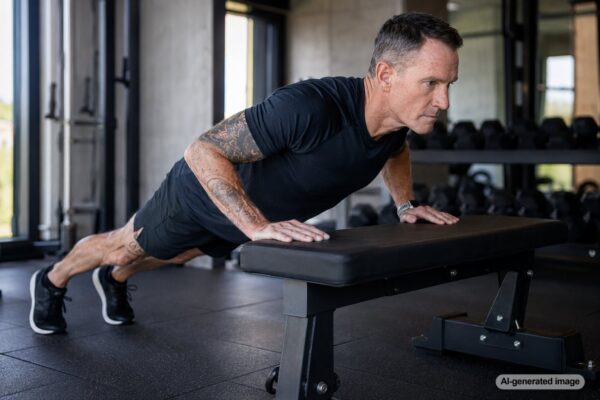
How To Know If You Are Training Hard Enough To Build Muscle
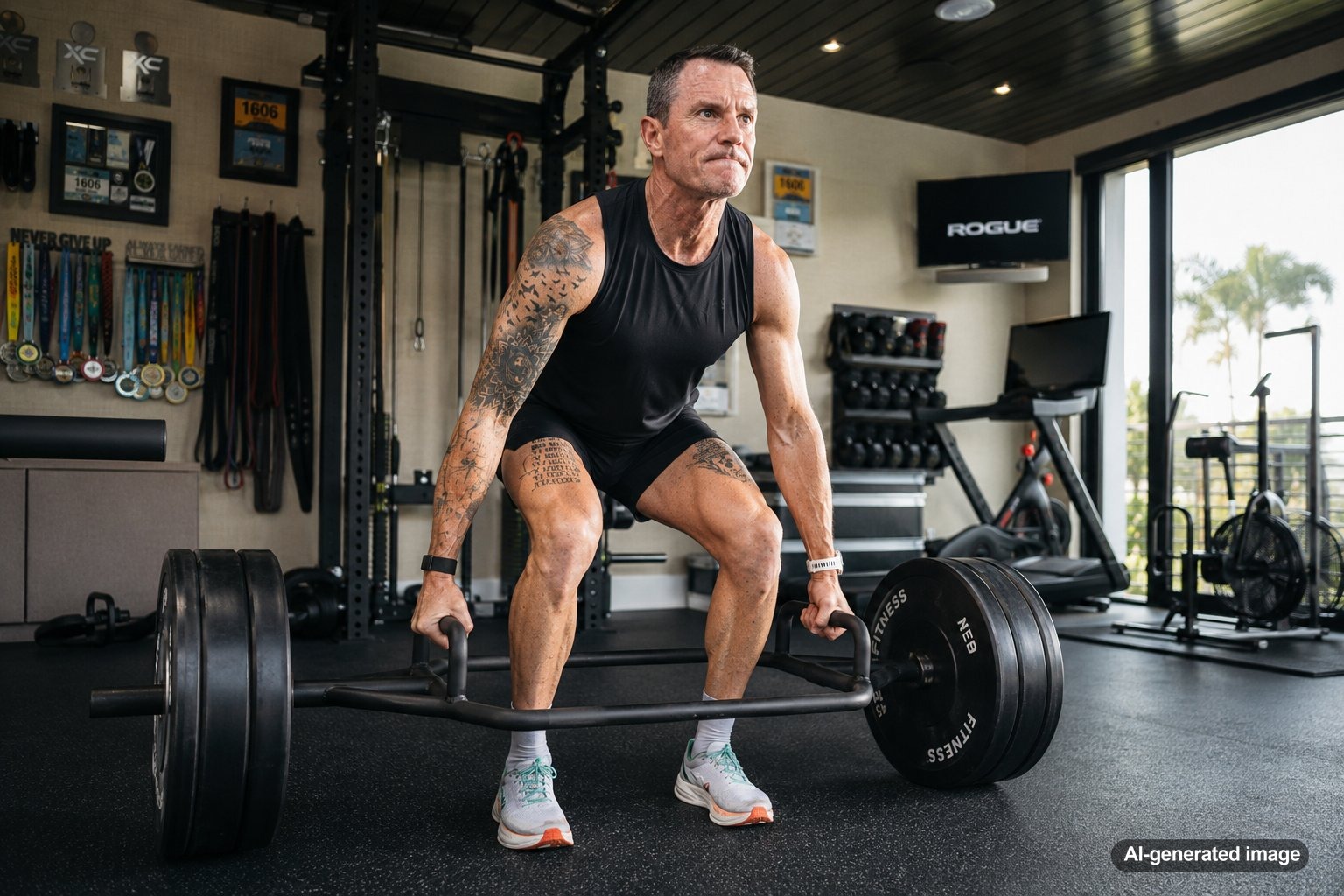
Training hard enough to build muscle does not mean leaving every workout exhausted, sore, or barely able to walk. It means giving your muscles a clear reason to adapt, repeating that challenge consistently, and recovering well enough to return stronger. The most reliable signs are measurable progress, technically sound repetitions that become difficult near the end of a set, and a training plan that gradually asks more of you.
That approach fits a broader principle behind Greg Schaefer’s work as an athlete, entrepreneur, and speaker: meaningful progress usually comes from disciplined effort rather than dramatic effort. You can learn more about his endurance, leadership, and resilience journey on the About Greg page.
Quick answer
- Your final repetitions should feel challenging while your form remains controlled.
- You should be adding repetitions, resistance, range of motion, or control over time.
- You do not need to reach complete muscular failure on every set.
- Soreness and sweating are not reliable measurements of muscle-building quality.
- If your performance never improves, your training stimulus, recovery, or consistency may need attention.
What “hard enough” actually means
Muscle growth requires an appropriate training stimulus. In practical terms, the target muscle must work against enough resistance for the set to become meaningfully difficult. A set of ten repetitions should not feel identical from the first repetition to the last. The final few repetitions should require focus, effort, and control.
However, difficult does not mean reckless. The goal is not to move the heaviest possible weight by any means necessary. If you shorten the range of motion, swing the weight, lose your position, or shift the work away from the intended muscle, the exercise may look intense without delivering the intended stimulus.
A productive set often ends when you believe you could complete only a small number of additional clean repetitions. That judgment will not be perfect, especially for beginners, but it becomes more accurate with experience. You are learning to distinguish muscular effort from discomfort, cardiovascular fatigue, poor technique, and lack of concentration.
The clearest sign is progressive overload
The strongest evidence that your training is sufficiently challenging is progress across several weeks or months. Progressive overload means gradually increasing the demands placed on your body. Adding weight is one method, but it is not the only one.
You may also create progression by:
- Completing more repetitions with the same resistance.
- Using a fuller and more controlled range of motion.
- Improving stability and reducing unnecessary momentum.
- Adding a set when the current workload has become manageable.
- Performing the same work with better technique.
- Using a more challenging variation of the exercise.
Consider a person who performs three sets of eight dumbbell presses with solid form. Several weeks later, that person can complete three sets of twelve with the same weight and equal control. That is progress, even before the dumbbells become heavier.
By contrast, changing exercises every session can make progress difficult to measure. Variety can keep training interesting, but some consistency is necessary if you want to know whether you are actually improving.
Your last repetitions should be challenging, not chaotic
One useful way to evaluate a set is to watch what happens near the end. Are the last repetitions slower because the working muscles are fatigued, or are they messy because the resistance is too heavy?
Productive difficulty may include:
- A noticeable slowing of the lifting phase.
- A strong need to concentrate on maintaining position.
- A clear sense that only a few good repetitions remain.
- Fatigue in the muscle the exercise is intended to train.
Unproductive difficulty may include:
- Sharp pain or a sudden change in sensation.
- Loss of balance or joint position.
- Using momentum to complete most of the repetition.
- Reducing the range of motion without intending to.
- Holding your breath uncontrollably or becoming lightheaded.
The distinction matters because muscle-building training should be demanding without becoming careless. The strongest athletes are not simply willing to suffer. They are willing to repeat high-quality work and protect the consistency that makes long-term improvement possible.
You do not need to train to failure every time
Training to failure means continuing a set until you cannot complete another repetition with acceptable technique. It can be useful in some situations, but it is not a requirement for every exercise or every set.
Frequently reaching complete failure can create more fatigue, lengthen recovery, and reduce the quality of later exercises. It may be especially impractical during heavy compound movements such as squats, presses, and deadlift variations, where technique and safety deserve close attention.
A more sustainable strategy is to perform many working sets with a small number of good repetitions still available. Isolation exercises or machine-based movements may sometimes be taken closer to failure because they are easier to control, but the appropriate approach depends on training experience, exercise selection, goals, and individual circumstances.
Soreness is not proof of growth
Muscle soreness can occur after a hard workout, particularly when you introduce a new exercise, increase volume, or emphasize a longer lowering phase. It may tell you that the session was unfamiliar, but it does not automatically mean the workout was effective.
You can build muscle without becoming very sore. You can also become extremely sore from a poorly planned session that disrupts your next several workouts. The better question is not, “How much do I hurt?” It is, “Am I recovering, improving, and performing quality work consistently?”
The same caution applies to sweating and breathlessness. A demanding circuit may leave you drenched and exhausted, but those sensations primarily reflect the overall demands of the session. A focused strength workout with longer rest periods may feel less dramatic while creating a more useful muscular challenge.
Track performance instead of relying on emotion
Some workouts feel powerful. Others feel flat. Neither feeling tells the whole story. A simple training log gives you more dependable information than memory or mood.
Record the exercise, resistance, repetitions, sets, and any useful technique notes. You might note that the final two repetitions were slow, that your range of motion improved, or that a particular weight felt easier than it did the previous week.
Review patterns rather than judging one day. Progress rarely moves in a perfectly straight line. Sleep, stress, nutrition, schedule changes, and accumulated fatigue can affect performance. A single difficult workout does not mean the plan is failing, just as one personal record does not prove the plan is perfect.
What people often miss
Effort is only one part of muscle growth. A challenging program can still underperform when the surrounding habits do not support it.
- Recovery: Muscles need time between demanding sessions to repair and adapt.
- Nutrition: Consistent eating habits and adequate protein can support training and recovery.
- Sleep: Poor sleep can affect performance, motivation, and recovery.
- Exercise selection: Movements should fit your body, experience, and goals.
- Consistency: A reasonable plan followed for months usually beats an extreme plan followed briefly.
Signs you may not be training hard enough
Your workouts may need a greater challenge if every working set feels easy, you routinely stop long before fatigue, and you have not increased any aspect of performance for an extended period. Another clue is completing a planned repetition range while feeling capable of doing many more repetitions with clean technique.
Before assuming the solution is heavier weight, examine the full picture. Your range of motion may be limited, your pace may be rushed, or the exercise may not be stable enough for the target muscle to work effectively. Sometimes slowing down and improving execution makes a familiar resistance much more demanding.
Signs you may be pushing too hard
More effort is not always better. Training may be excessively demanding when your technique repeatedly breaks down, performance declines for multiple sessions, normal soreness prevents you from training consistently, or fatigue begins affecting your daily responsibilities.
Pain, dizziness, unusual shortness of breath, or other concerning symptoms should not be treated as evidence of a productive workout. Stop the activity and seek appropriate professional guidance when needed. People returning to exercise, managing a health condition, or making major changes to training should consider speaking with a qualified healthcare or fitness professional.
A practical way to adjust your workouts
Choose a repetition range appropriate for the exercise, such as eight to twelve repetitions. Select a resistance that allows you to reach the lower end with clean technique and a meaningful challenge near the end of each set.
Over subsequent workouts, try to add repetitions while maintaining the same standard. Once you can complete the top of the range across your planned sets, increase the resistance slightly and begin progressing again. This method gives you a clear target without demanding a maximum effort every day.
Keep the increases modest. A small improvement repeated consistently can produce more durable progress than frequent leaps followed by stalled training or injury. The same disciplined mindset applies far beyond the gym. Greg explores the relationship between resilience, leadership, and sustained performance through his speaking work.
Frequently asked questions
How many repetitions should I do to build muscle?
Many repetition ranges can be useful when the resistance is challenging, technique remains controlled, and the program progresses over time. Moderate repetition ranges are common because they offer a practical balance of resistance, volume, and control.
Should every set feel extremely hard?
No. Warm-up sets should prepare you rather than exhaust you, and not every working set must reach the same effort level. The most important sets should provide a meaningful challenge while supporting high-quality training across the full session.
How quickly should I add weight?
Add resistance when you can complete the top of your target repetition range with consistent form across the planned sets. Small increases are often easier to sustain than large jumps.
Can I build muscle without feeling sore?
Yes. Soreness is not required for progress. Improvements in repetitions, resistance, control, measurements, and overall performance are more useful indicators.
How long should I follow a program before changing it?
Keep core exercises long enough to evaluate progress, provided they feel appropriate and do not cause pain. You can make smaller adjustments without replacing the entire program whenever a workout becomes familiar.
The bottom line
You are probably training hard enough to build muscle when your working sets become genuinely challenging, your technique remains controlled, and your performance gradually improves. You do not need to prove your commitment through constant failure, soreness, or exhaustion.
The goal is repeatable effort: enough challenge to create adaptation, enough discipline to track progress, and enough restraint to recover. Building muscle is rarely about one heroic workout. It is about returning, adjusting, and completing one more strong repetition with purpose.
Interested in bringing Greg’s message to your event or organization?
Learn more about Greg’s speaking work or get in touch to start the conversation.
Contact Greg or learn more about the Forward Motion Fund.
This article is for educational purposes only and is not medical advice. For diagnosis, treatment, or personalized medical guidance, please speak with a qualified healthcare professional.