
Dealing with ‘Freezing’ of Gait: Practical Tips for Public Spaces
Freezing of gait can be one of the most frustrating Parkinson’s experiences because it does not always announce itself politely. It can happen while stepping through a doorway, turning in a crowded aisle, approaching a curb, entering an elevator, or trying to move while people are waiting behind you. For someone living with Parkinson’s, the moment can feel physical, emotional, and public all at once.
The goal is not to pretend freezing is easy or to offer one magic trick. The goal is to create a practical plan that can help reduce panic, improve safety, and give the person experiencing it a little more room to reset. Greg Schaefer’s larger message of forward motion fits here in a very real way: sometimes forward motion starts with one breath, one cue, one shift of attention, and one more step. To learn more about Greg’s story and mission, visit his About page.
Quick answer
- Freezing of gait is a temporary inability to start or continue walking, even when the person intends to move.
- Public spaces can make freezing harder because of noise, pressure, narrow passages, crowds, turns, and distractions.
- Simple cueing strategies may help some people reset, such as counting, shifting weight, stepping over an imagined line, or using a visual marker.
- Planning routes, allowing extra time, and communicating with a trusted companion can reduce stress.
- Because freezing can increase fall risk, recurring or worsening episodes should be discussed with a qualified healthcare professional.
Why public spaces can trigger freezing
Freezing of gait often appears during transitions. A person may be moving relatively well and then suddenly feel stuck when approaching a doorway, turning around, stepping into a restaurant, crossing a busy lobby, navigating a store aisle, or moving from one floor surface to another. The body may feel ready, but the feet do not cooperate.
Public spaces add several layers of pressure. There may be people close behind, a line forming, a curb ahead, music playing, traffic noise, or the feeling that everyone is watching. That combination can make the nervous system work harder. For many people, multitasking also matters. Walking while answering a question, holding a bag, scanning for a restroom, or looking for the right entrance can make movement more complicated.
This is why freezing is not a character issue, a confidence issue, or a lack of effort. It is a real movement challenge that deserves practical support. The person experiencing it is not being difficult. They are trying to move.
Build a reset routine before you need it
A reset routine is a short sequence you practice when you are calm, so it is easier to access when a freezing episode happens. It should be simple enough to remember in a stressful moment. For some people, that might sound like: stop, breathe, stand tall, shift weight, count, step.
One reason this matters is that panic can make freezing feel larger. A practiced routine gives the mind something steady to follow. It also gives a companion a helpful script. Instead of saying, “Come on, just walk,” which may create more pressure, a support person can calmly say, “Take a breath. Shift your weight. Count it out. One step.”
Different people respond to different cues, so the best routine may take some trial and adjustment with a clinician, physical therapist, or movement specialist. The point is to create a repeatable pattern that supports safety and reduces the sense of being trapped in the moment.
Use cues that fit the environment
Cueing strategies can sometimes help the brain and body reconnect the intention to move with the action of stepping. In public, the most useful cues are often the ones that do not call much attention to themselves.
- Counting cue: Count quietly: one, two, three, step. Some people prefer a rhythm such as left, right, left, right.
- Weight-shift cue: Gently shift weight side to side before trying to step forward.
- Visual cue: Look at a floor tile, line, doorway threshold, curb edge, or imagined line and step over it.
- Marching cue: Think about lifting the knee slightly, as if beginning a small march.
- Music or rhythm cue: A steady beat through earbuds may help some people, though it should not block important environmental sounds like traffic.
These are not guaranteed fixes, and they are not a substitute for medical guidance. They are practical tools that may help some people interrupt a freezing episode or regain momentum.
Make turns wider and slower
Turning is a common freezing situation. In public, tight turns happen everywhere: between tables, around store displays, inside elevators, at security lines, and in restrooms. A rushed pivot can be especially difficult.
One helpful approach is to make a wider turn using several small steps instead of twisting sharply. Think of turning like tracing a small circle rather than spinning in place. It may feel slower, but slower can be safer. A companion can help by giving space instead of crowding the turn or pulling the person forward.
This is one of the overlooked parts of public-space planning. The challenge is not only walking from point A to point B. It is also turning, stopping, starting, stepping around obstacles, and changing direction when the environment does not cooperate.
Plan for thresholds, doorways, and narrow spaces
Doorways, elevators, narrow aisles, escalator approaches, and tight seating areas can be difficult because they ask the body to pass through a defined space. That can increase freezing for some people, especially when others are moving nearby.
A practical plan may include pausing before the threshold, getting balanced, choosing a visual target on the other side, and stepping with intention rather than rushing. If a doorway is crowded, it may help to wait a moment until there is more room. In a restaurant or event venue, asking for an aisle seat or a table with easier access can reduce stress before it starts.
These small choices are not about limiting life. They are about making participation more realistic. Public life should not require a person to pretend every environment is easy.
Communicate without making the moment bigger
Freezing in public can feel exposing. The person may be managing the physical episode and the social discomfort at the same time. A calm communication plan can help.
Some people like having one simple phrase ready, such as, “I need a second to reset,” or “Please give me a little space.” A companion might say to others, “We just need a moment, thank you.” The goal is to create room without overexplaining.
For event planners, workplaces, teams, and community spaces, this is a leadership lesson as much as a Parkinson’s lesson. Accessibility is not only about ramps and policies. It is also about patience, space, and the emotional intelligence to let someone move through a difficult moment with dignity. This is part of the broader message Greg brings to organizations through his speaking work: resilience is real, but so is the need for systems and people that make forward motion possible.
What companions and caregivers can do
Support people often want to help immediately, but the wrong kind of help can add pressure. Pulling, rushing, crowding, or repeating urgent instructions may make the moment harder.
- Stand nearby without blocking the person’s path.
- Use a calm voice and short cues.
- Ask before touching or guiding.
- Create space if people are crowding from behind.
- Help reduce distractions, such as too many people talking at once.
- Watch for fall risk, especially near stairs, curbs, escalators, parking lots, or wet floors.
A good companion does not take over the person’s independence. A good companion protects space, safety, and dignity.
Common public-space scenarios and practical options
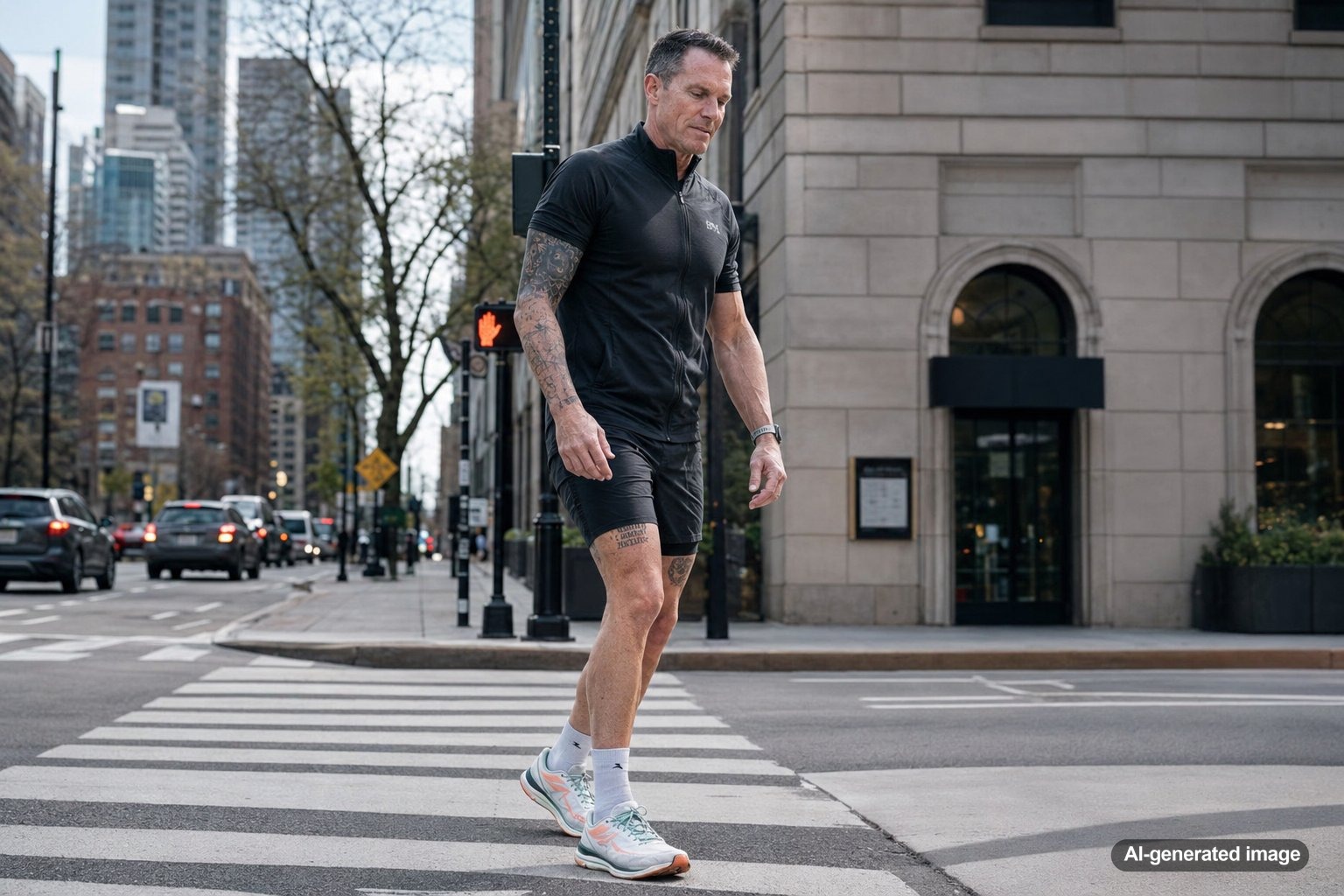
At a crosswalk: If crossing streets is difficult, consider choosing crossings with longer signals, waiting for a fresh walk signal, or crossing with a trusted companion when possible. If freezing at curbs happens often, discuss it with a clinician or physical therapist because safety planning matters.
In a grocery store: Crowded aisles, carts, and sudden stops can be challenging. Shopping at less busy times, using a smaller basket, or choosing wider aisles when available may reduce pressure.
At an airport or event venue: Large spaces can be overstimulating. Extra time, assistance services, seating breaks, and a clear route can help reduce the mental load of navigating under pressure.
In restaurants: Tight tables and narrow walkways can make turning and starting harder. Asking for accessible seating or a table near the entrance can be a practical choice, not a special favor.
When to seek more support
If freezing episodes are becoming more frequent, causing falls, increasing fear of leaving the house, or interfering with daily life, it is worth speaking with a qualified healthcare professional. A movement disorder specialist, neurologist, physical therapist, or occupational therapist may help evaluate patterns, medication timing, fall risk, assistive devices, and individualized strategies.
It is also important to talk about the emotional side. Freezing in public can affect confidence and independence. Support is not only physical. It can include family communication, caregiver education, community planning, and learning how to keep showing up without pretending the challenge is not real.
Bottom line
Freezing of gait in public spaces is not a personal failure. It is a real Parkinson’s challenge that can be made harder by crowds, transitions, narrow spaces, stress, and distraction. Practical preparation can help: build a reset routine, use cues, slow down turns, plan around thresholds, communicate calmly, and seek professional guidance when episodes affect safety or confidence.
Forward motion does not always look dramatic. Sometimes it looks like pausing in a doorway, taking a breath, finding a cue, and taking one more step.
FAQ
What is freezing of gait?
Freezing of gait is a temporary inability to start or continue walking, even when a person intends to move. It is commonly discussed in Parkinson’s disease and can be associated with fall risk.
Why does freezing happen more often in doorways or crowds?
Doorways, narrow spaces, turns, and crowds can add visual, physical, and emotional pressure. For some people, those transitions make it harder to initiate or continue movement.
Can cueing strategies stop every freezing episode?
No. Cueing may help some people in some situations, but it is not guaranteed. Freezing patterns vary, and individualized guidance from a qualified professional can be important.
Should someone pull a person forward during a freezing episode?
Usually, it is better not to pull unless there is an immediate safety concern. Pulling can increase imbalance. Calm cues, space, and patience are often more helpful.
When should freezing be discussed with a clinician?
Freezing should be discussed with a qualified healthcare professional if it is new, worsening, causing falls, creating fear, or interfering with daily activities.
Interested in bringing Greg’s message to your event or organization?
Learn more about Greg’s speaking work or get in touch to start the conversation.
Contact Greg or learn more about the Forward Motion Fund.
This article is for educational purposes only and is not medical advice. For diagnosis, treatment, or personalized medical guidance, please speak with a qualified healthcare professional.