

Why Open-Water Swim Training Builds Confidence Beyond Racing
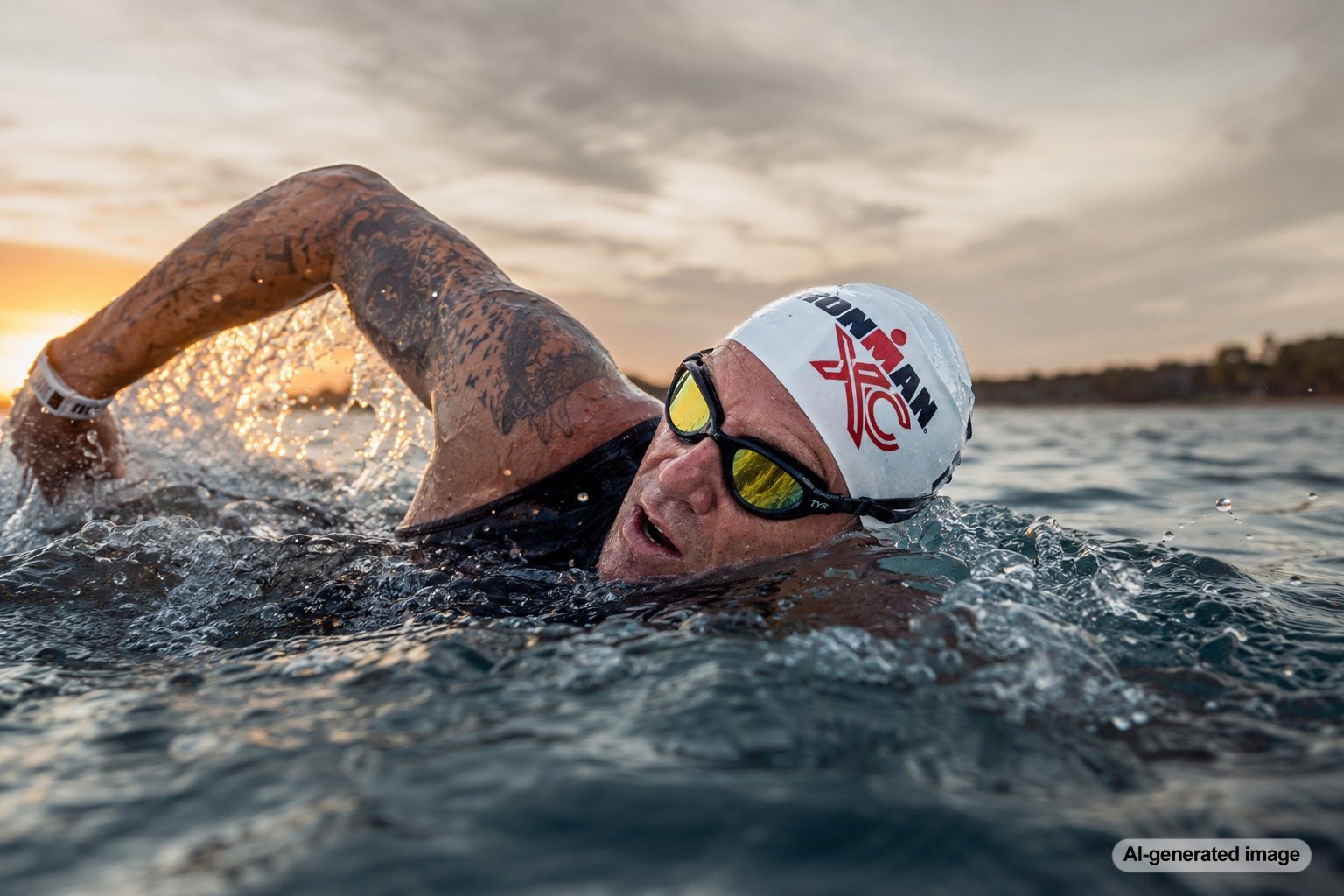
Open-water swim training asks something different from an athlete than a pool does. There are no lane lines, no wall every 25 yards, no perfectly still water, and no guarantee that conditions will feel familiar. That uncertainty is exactly why it can become such a powerful confidence builder.
For Greg Schaefer, the lessons around endurance, adversity, business, family, and forward motion are rarely confined to race day. Open water offers a clear example: confidence is not built by waiting for perfect conditions. It is built by learning how to stay calm, make decisions, and keep moving when the environment refuses to cooperate. That same mindset is part of the message Greg brings through his speaking work, where resilience is treated as a practiced discipline, not a slogan.
Quick answer: why open-water swim training builds confidence
- It teaches you to stay composed when conditions change.
- It builds trust in your preparation instead of dependence on perfect surroundings.
- It strengthens decision-making under pressure.
- It helps you separate real risk from discomfort, nerves, or uncertainty.
- It gives athletes a practical way to practice courage before race day ever arrives.
Open water removes the illusion of total control
In a pool, the environment is controlled. The temperature is predictable, the distance is measured, the bottom is visible, and the boundaries are clear. Open water is different. Wind, chop, glare, current, other swimmers, sighting challenges, and changing weather can all become part of the session.
That can feel intimidating at first, but it also creates a more honest training environment. Open water reminds athletes that confidence is not the same as certainty. Confidence is the ability to act with steadiness even when certainty is missing.
This distinction matters far beyond endurance sports. Leaders rarely get perfect visibility. Families rarely move through hard seasons with every answer in hand. People facing adversity often have to take the next step before they feel fully ready. Open-water training gives that lesson a physical shape.
It trains calm in real time
One of the most valuable parts of open-water swimming is the way it exposes the nervous system to manageable uncertainty. A swimmer may feel a wave hit at the wrong moment, lose rhythm for a few strokes, sight off course, or feel crowded near a buoy. None of those moments has to become a crisis.
With practice, the athlete learns to pause internally without stopping externally. Breathe. Reorient. Find the next landmark. Settle the stroke. Keep moving.
That pattern is a quiet form of mental training. It teaches the body and mind that discomfort does not automatically mean danger, and that a rough moment does not have to define the whole effort. In business, family life, health challenges, or personal goals, that same skill can be invaluable.
It builds trust through preparation, not bravado
Real confidence is not reckless. Open-water swim training should be approached with safety, awareness, and respect for the conditions. Swim with others when possible, use visible gear, understand the location, know the water temperature, and make conservative decisions when conditions are beyond your ability or support system.
That kind of preparation does not reduce courage. It strengthens it. There is a difference between forcing your way through something and earning your way into it through steady, thoughtful practice.
For endurance athletes, this might mean starting with short, supported swims close to shore before building distance. It may mean practicing sighting in calm water before entering rougher conditions. It may mean rehearsing how to recover if goggles fog, breathing gets rushed, or another swimmer bumps into you. Confidence grows when the athlete can say, “I have practiced this before.”
What people often miss about open-water confidence
Confidence is not only about swimming faster
Many athletes measure swim progress only by pace, distance, or race results. Open water adds another layer. Can you stay composed when you drift slightly off line? Can you adapt when visibility is poor? Can you keep your breathing steady when the group around you gets chaotic? Those skills may not show up neatly on a stopwatch, but they matter deeply on race day and in life.
This is where open-water training becomes more than a sport-specific exercise. It becomes a practical rehearsal for uncertainty. The athlete learns how to respond without panic, adjust without shame, and continue without needing the moment to feel perfect.
The confidence carries into race day
On race morning, nerves are normal. Even experienced athletes can feel the energy of the crowd, the cold water, the mass start, and the long day ahead. Open-water training does not erase those nerves. It gives the athlete a relationship with them.
A swimmer who has practiced in open water has felt the water move. They have sighted toward a buoy. They have recovered from a rushed breath. They have experienced that first cold shock and learned how to settle in. Instead of meeting every sensation as a surprise, they can recognize it as familiar.
That familiarity creates confidence. Not the loud kind. The useful kind.
The bigger lesson: confidence is transferable
The deeper gift of open-water swim training is that the lesson does not stay in the water. The same habits that help an athlete handle chop, current, or poor visibility can also help a person handle pressure in a boardroom, uncertainty after a diagnosis, a demanding family season, or a difficult personal transition.
Open water teaches a simple but demanding truth: you do not have to feel completely calm before you move. You can move your way toward steadiness, one decision and one stroke at a time.
That idea sits close to the heart of Greg’s broader story. As a dad, husband, CEO, endurance athlete, speaker, and Parkinson’s advocate, his platform is not built around pretending hard things are easy. It is built around forward motion when life changes the conditions. You can learn more about that mission through the Forward Motion Fund.
Practical ways to build confidence in open water
- Start with support. Swim with a group, coach, lifeguarded area, or experienced partner whenever possible.
- Practice sighting before you need it. Choose landmarks, lift your eyes briefly, and return to rhythm without stopping.
- Rehearse small disruptions. Practice clearing goggles, resetting your breath, or switching effort levels calmly.
- Respect conditions. Confidence grows from good judgment, not from ignoring weather, current, temperature, or fatigue.
- Reflect after each session. Ask what felt hard, what improved, and what you handled better than expected.
FAQ
Does open-water swim training help beginners?
Yes, when approached gradually and safely. Beginners can build confidence by starting in calm, supported environments and focusing first on comfort, breathing, safety, and orientation rather than speed.
Why does open water feel harder than pool swimming?
Open water removes many familiar cues. There are no lane lines, the water may move, visibility can change, and the swimmer has to navigate. The physical work may be similar, but the mental load is often higher.
Can open-water training improve mental toughness?
It can be a meaningful part of mental toughness because it gives athletes repeated practice staying calm, adapting, and continuing through manageable uncertainty. The key is thoughtful progression, not forcing unsafe conditions.
Is confidence from open-water swimming useful outside racing?
Absolutely. The ability to stay composed, reorient, and keep moving through uncertainty applies to leadership, family life, health challenges, entrepreneurship, and many other demanding parts of life.
Interested in bringing Greg’s message to your event or organization?
Learn more about Greg’s speaking work or get in touch to start the conversation.
Contact Greg or learn more about the Forward Motion Fund.
This article is for educational purposes only and is not medical advice. For diagnosis, treatment, or personalized medical guidance, please speak with a qualified healthcare professional.


