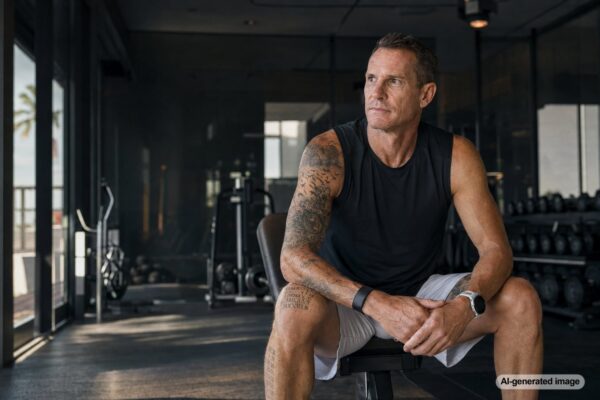

Overcoming the Fear of Being “Seen” Struggling
There is a particular kind of courage required when the hard part is no longer private. Many people can push through pain, uncertainty, fatigue, or fear when nobody else can see it. The heavier challenge often comes when symptoms show, when emotions surface, when performance changes, or when the version of yourself others remember no longer matches the version standing in front of them.
For someone living with Young-Onset Parkinson’s, recovering from a setback, navigating a diagnosis, leading through pressure, or simply trying to keep going when life feels exposed, being “seen” struggling can feel more difficult than the struggle itself. Greg Schaefer’s story lives in that tension: family, business, endurance, Parkinson’s, advocacy, and the decision to keep moving forward without pretending every step is easy. You can learn more about Greg’s broader journey on the About Greg page.
Quick answer
- The fear of being seen struggling often comes from shame, identity loss, pride, uncertainty, or concern about becoming a burden.
- Hiding struggle may feel protective at first, but it can quietly increase isolation and make support harder to receive.
- Being visible does not mean sharing everything with everyone. Healthy openness can be selective, intentional, and boundaried.
- One of the strongest ways to rebuild confidence is to separate being seen struggling from being defined by struggle.
- Support, honest language, and small acts of forward motion can help people stay connected without losing dignity.
Why being seen struggling can feel so hard
Most people do not fear struggle in a vacuum. They fear what struggle might seem to say about them. Will people think I am weaker than I used to be? Will they treat me differently? Will they lower their expectations? Will they pity me? Will they stop seeing the full person and only see the diagnosis, the limp, the tremor, the fatigue, the missed race, the emotional day, or the unfinished task?
That fear is not shallow. It is deeply human. For athletes, leaders, parents, entrepreneurs, and people used to being dependable, struggle can feel like an unwanted public announcement: something has changed. The body may not respond the same way. The mind may be carrying more than it shows. The old rhythm may not be available every day.
The risk is that pride can disguise itself as protection. A person may say, “I just do not want to make people uncomfortable,” when underneath that sentence is a quieter fear: “I do not know who I am if I cannot perform the way I used to.”
The difference between privacy and hiding
Privacy is healthy. Nobody owes the world a full explanation of their pain, diagnosis, symptoms, family stress, grief, fatigue, or fear. Some parts of life are meant to be held closely, shared only with trusted people, or processed in quiet.
Hiding is different. Hiding is when the effort to appear fine becomes heavier than the reality itself. It is when someone avoids friends, declines meaningful opportunities, withdraws from community, or refuses help because being honest feels too exposing.
This distinction matters. Overcoming the fear of being seen struggling does not mean turning life into a public confession. It means refusing to let shame decide where you are allowed to show up.
What people often miss about visible struggle
People often assume visibility is about weakness. In reality, visible struggle can reveal discipline, humility, adaptation, patience, and courage. The person who keeps showing up while managing uncertainty is not failing to be strong. They are practicing a more honest kind of strength.
In endurance sports, nobody gets through every mile looking perfect. There are aid stations, rough patches, course corrections, cramps, bad weather, and moments when the next step matters more than the finish line. Life with adversity often works the same way. The goal is not to look untouched. The goal is to remain engaged, supported, and willing to continue.
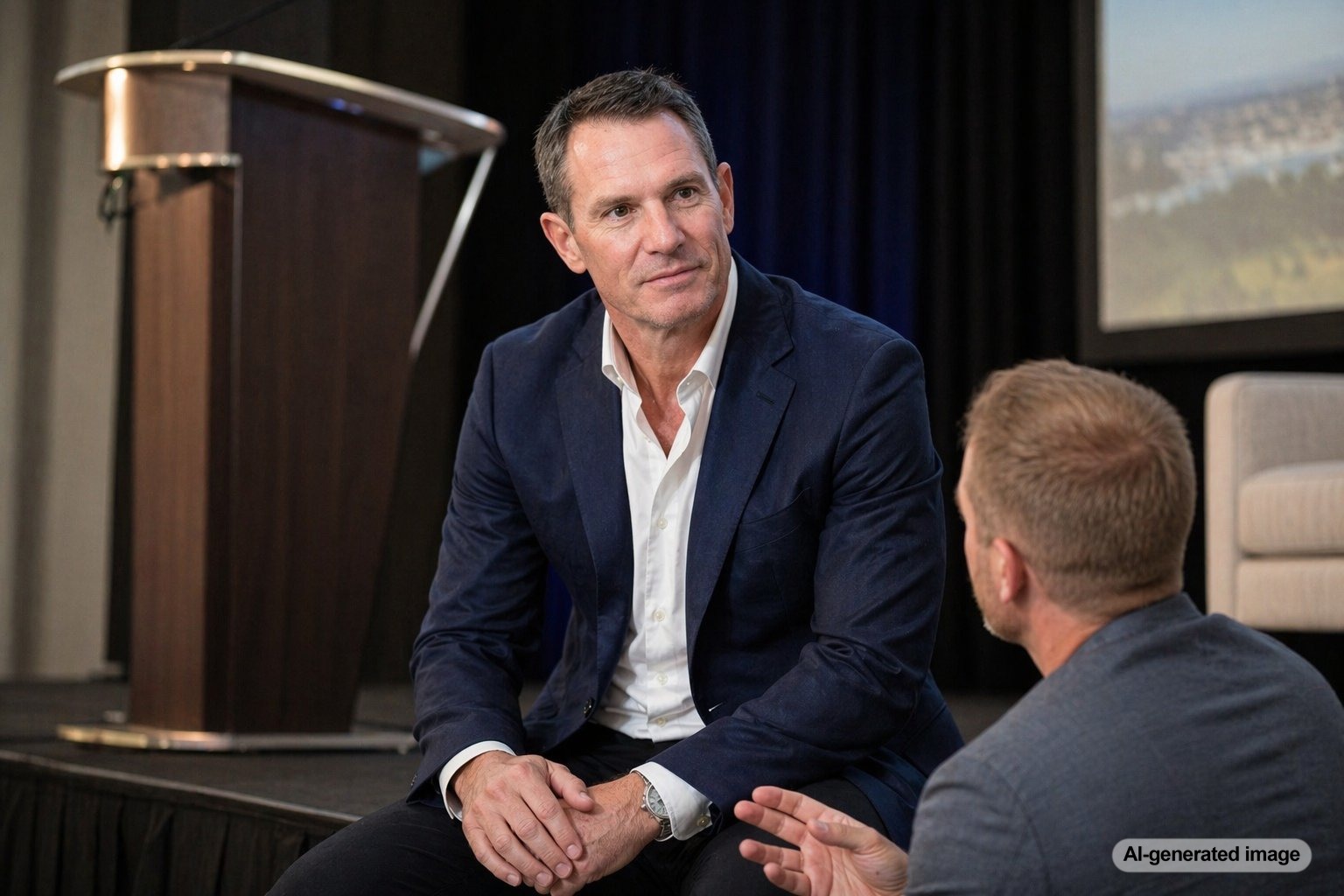
That is part of what makes Greg’s message relevant beyond athletics or Parkinson’s. His story is not about pretending struggle disappears. It is about choosing forward motion while carrying the truth of what is hard. For organizations, teams, and audiences, that message can create a powerful conversation about resilience, leadership, and human performance. Learn more about his work on the Speaking page.
How to start letting people see the truth without losing yourself
Overcoming this fear usually happens in layers. It rarely begins with one dramatic moment of vulnerability. More often, it starts with choosing one safe person, one honest sentence, one small request, or one moment where you stop overexplaining and simply tell the truth.
Use language that protects dignity
Sometimes the first step is finding words that feel honest without feeling like surrender. Instead of saying, “I cannot handle this,” a person might say, “Today is a harder day, and I am adjusting.” Instead of saying, “I am falling apart,” they might say, “I need support with this piece.” Instead of pretending nothing is wrong, they might say, “I am still showing up, but I am moving differently right now.”
Language matters because it shapes identity. A hard day is not a failed life. A visible symptom is not the whole story. A request for support is not a loss of worth.
Choose the right audience
Not everyone deserves access to the most tender parts of your story. Some people listen with care. Others rush to fix, judge, compare, or minimize. Being open does not mean being available to everyone.
A strong support circle may include family, close friends, a clinician, a coach, a therapist, a faith or community leader, or peers who understand the road. The key is not the number of people. The key is whether those people help you feel more grounded, less alone, and more able to keep moving.
Let support be practical, not dramatic
Many people resist support because they imagine it as a major burden. But support is often simple. It can look like a ride, a check-in, help with logistics, a modified training plan, patience during a slower moment, or someone walking beside you without making the struggle the center of every conversation.
For people navigating Parkinson’s or other health challenges, practical support can also include learning reliable information, preparing for appointments, understanding symptoms at a high level, and building a team around care decisions. The experience of Parkinson’s can vary widely, and medical questions should be discussed with a qualified healthcare professional.
A practical reframe: seen struggling is not the same as being reduced
One of the most important shifts is this: being seen struggling does not mean being reduced to struggle. A person can be visibly challenged and still be a parent, spouse, leader, athlete, friend, advocate, builder, competitor, mentor, and whole human being.
This is especially important in conversations around Parkinson’s. A diagnosis may become part of a person’s life, but it should not erase the rest of their identity. Greg’s platform reflects that balance. It includes Parkinson’s advocacy, but also family, business leadership, endurance racing, mission-driven work, and the belief that forward motion can exist even when the path changes.
Bottom-line takeaway
You do not have to perform strength in order to be strong. You do not have to hide every hard moment in order to preserve dignity. And you do not have to share everything in order to stop letting shame make the rules.
FAQ
Why am I afraid of people seeing me struggle?
That fear often comes from a mix of pride, vulnerability, uncertainty, past experiences, and concern about how others will respond. It may also come from feeling that your identity is tied to being capable, strong, athletic, dependable, or in control.
Does being honest about struggle make people see me as weak?
The right people usually see honesty as courage, not weakness. Boundaried honesty can actually strengthen trust because it allows others to understand what is real instead of guessing from a distance.
How much should I share about a diagnosis or personal challenge?
Share what feels useful, safe, and appropriate for the relationship or setting. You can be honest without giving every detail. Privacy and openness can coexist.
What if people treat me differently after they see me struggle?
Some may respond awkwardly at first because they do not know what to say. Clear, calm language can help. You might say what kind of support is useful, what is not helpful, and how you want to keep participating in life, work, family, or community.
How can I support someone who is afraid to be seen struggling?
Start by listening without rushing to fix. Respect their privacy, ask what would actually help, and keep seeing the whole person. Do not make their struggle the only thing you talk about.
Interested in bringing Greg’s message to your event or organization?
Learn more about Greg’s speaking work or get in touch to start the conversation.
Contact Greg or learn more about the Forward Motion Fund.
This article is for educational purposes only and is not medical advice. For diagnosis, treatment, or personalized medical guidance, please speak with a qualified healthcare professional.