
The Power Of “One More Step” In Life’s Toughest Challenges

There are moments in life when the full distance feels impossible. The finish line is too far away, the uncertainty is too heavy, and the next chapter does not arrive with a clean map. In those moments, strength is rarely about having everything figured out. Often, it begins with something much smaller: one more step.
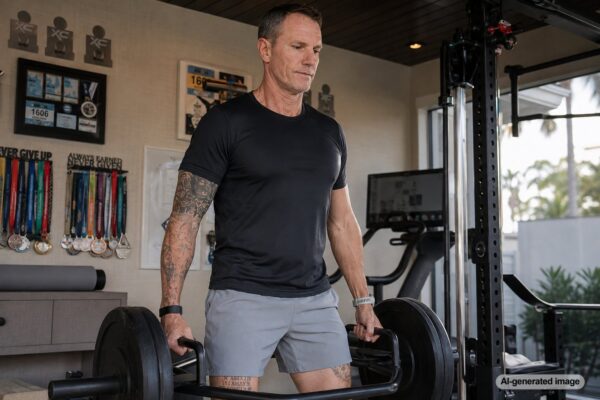
For Greg Schaefer, that phrase carries weight because it is not just a slogan. It reflects a life shaped by family, business leadership, endurance racing, unexpected adversity, and the decision to keep moving with purpose. One more step does not erase difficulty. It gives difficulty a direction.
Quick answer: what does “One More Step” really mean?
- It means narrowing the challenge down to the next honest action.
- It helps people avoid becoming overwhelmed by the entire road ahead.
- It builds resilience through movement, not perfection.
- It can apply to leadership, endurance, family, health challenges, and personal growth.
- It is a practical way to keep hope grounded in action.
Why the next step matters when the whole road feels too heavy
Big challenges often become heavier when we try to solve the entire future at once. A diagnosis, a business setback, a family crisis, a major transition, or a season of uncertainty can make the mind race ahead to every possible outcome. That mental load can be exhausting before any real action has even happened.
The power of one more step is that it brings the focus back to what can be done now. Not what needs to be solved forever. Not what must be proven to everyone else. Just the next meaningful movement in the right direction.
That might mean making the phone call. Showing up for training. Having the hard conversation. Asking for support. Resting with intention. Getting through the next meeting. Recommitting to the purpose behind the work. In Greg’s world, the phrase connects naturally to endurance racing, but it is just as relevant in boardrooms, homes, hospital waiting rooms, and quiet moments no one else sees.
If you are new to Greg’s story, his path brings together business, endurance, family, and advocacy in a way that makes this message especially grounded. You can learn more about that broader journey on the About Greg page.
One more step is not the same as pretending everything is fine
Real resilience is not denial. It is not forcing positivity over pain or acting as if hard things are easy. One more step works because it is honest. It allows room for fear, grief, fatigue, frustration, and uncertainty while still refusing to let those things have the final word.
There is a difference between shallow motivation and earned forward motion. Shallow motivation says, “Just be strong.” Earned forward motion says, “This is hard, and the next step still matters.” That distinction is where the phrase becomes useful instead of decorative.
In life’s toughest challenges, people often need something more durable than a burst of inspiration. They need a repeatable way to return to action when confidence is low. One more step creates that rhythm. It breaks the impossible into the immediate.
How one more step shows up in real life
The phrase becomes powerful when it moves from idea to practice. It can look different depending on the challenge, but the pattern is often the same: reduce the distance, identify the next move, and keep purpose close enough to guide the action.
In endurance and competition
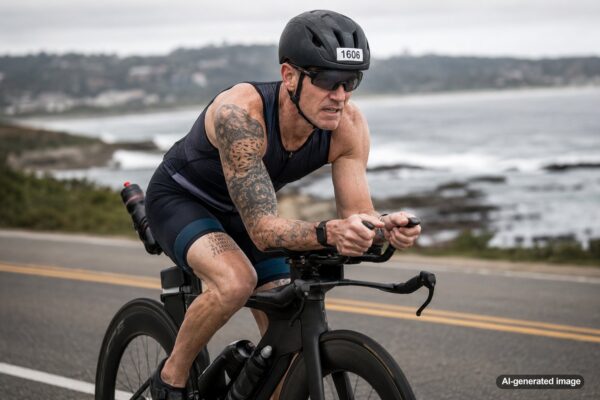
During a long race, the body and mind can both start negotiating. The next mile may feel too far. The finish line may feel abstract. In those moments, an athlete often survives by shrinking the task: get to the next marker, the next aid station, the next breath, the next stride. That is not weakness. It is strategy.
In leadership and business
Leaders face seasons when the pressure is not loud and dramatic, but constant. A tough decision, a team that needs steadiness, a market shift, or a personal challenge happening behind the scenes can all test a leader’s discipline. One more step may mean making the clearest decision available, communicating honestly, or staying anchored to values when speed and stress could pull the team off course.
In family and personal identity
Some of the most important steps are not public. They happen in kitchens, cars, early mornings, and late nights. They show up in how someone chooses to be present for family, how they adjust to a new reality, and how they keep love and responsibility at the center when life feels uncertain.
In advocacy and mission-driven work
One more step can also become bigger than the individual. Greg’s Forward Motion Fund reflects that idea by connecting personal perseverance to a wider mission. For readers who want to understand that side of the work, the Forward Motion Fund offers a natural next place to learn more.
What people often miss about resilience
Resilience is sometimes treated like a personality trait: either someone has it or they do not. Real life is more nuanced. Resilience is often built in small decisions that do not look impressive at the time. It is practiced, tested, repaired, and renewed.
What people often miss
- Resilience can be quiet. It does not always look like a big comeback or a dramatic speech.
- Progress can be uneven. One more step does not mean every day feels strong.
- Support matters. Moving forward does not require doing everything alone.
- Purpose gives pain a direction. It does not remove the challenge, but it can change how someone carries it.
This is why Greg’s message resonates across different audiences. Event planners may hear a leadership message. Athletes may hear an endurance message. Families may hear a message about presence and commitment. People facing uncertainty may hear permission to keep going without pretending the road is easy.
How to practice the one-more-step mindset
The mindset is simple, but not always easy. It works best when it becomes specific. Instead of asking, “How do I get through all of this?” try asking, “What is the next right step I can take today?” That question turns overwhelm into movement.
Another useful practice is separating the controllable from the uncontrollable. You may not be able to control timing, other people’s reactions, a diagnosis, the market, or every outcome. You may be able to control your preparation, your communication, your effort, your attitude toward support, and the values you refuse to abandon.
It also helps to define what forward motion looks like in a difficult season. Sometimes forward motion is training hard. Sometimes it is adapting. Sometimes it is asking for help. Sometimes it is choosing patience. The step does not have to impress anyone. It has to be honest.
Why this message connects with teams, leaders, and organizations
Organizations often talk about resilience, but teams need more than a word on a slide. They need stories and frameworks that help people meet pressure with clarity. One more step gives leaders and teams a shared language for perseverance without pretending pressure is simple.
For teams navigating change, the phrase can become a way to focus attention. What is the next decision? What is the next conversation? What is the next commitment we can keep? What is the next standard we can uphold? That type of clarity can steady a group when the bigger environment feels unpredictable.
Greg’s speaking work brings that message into rooms where people are carrying their own versions of hard things: professional pressure, personal uncertainty, team challenges, health realities, or the quiet fatigue that comes from always needing to perform. The power of the message is that it meets people where they are, then points them toward movement.
FAQ
Is “One More Step” only about endurance sports?
No. Endurance sports make the idea visible, but the message is much broader. One more step applies to leadership, family, health challenges, business, grief, personal growth, and any season where the full road feels overwhelming.
Does taking one more step mean ignoring rest?
No. Sometimes the next right step is recovery, reflection, or asking for support. Forward motion does not always mean pushing harder. It means choosing the most honest and useful action for the moment.
Why does this phrase matter in difficult seasons?
It gives people a practical way to move when the future feels too large to solve. Instead of demanding certainty, it focuses attention on the next meaningful action.
How can organizations use this idea?
Teams can use it as a shared language for navigating pressure, change, and adversity. It can help people focus on the next decision, the next commitment, and the next action that aligns with their values.
Interested in bringing Greg’s message to your event or organization?
Learn more about Greg’s speaking work or get in touch to start the conversation.
Contact Greg or learn more about the Forward Motion Fund.
This article is for educational purposes only and is not medical advice. For diagnosis, treatment, or personalized medical guidance, please speak with a qualified healthcare professional.