
Building A Support Network For Young Onset Parkinson’s Patients
A Young-Onset Parkinson’s diagnosis can arrive in the middle of a very full life. People may be building careers, raising children, paying mortgages, training for races, caring for parents, leading teams, or trying to figure out how much of their story they are ready to share. The medical side matters, but the human side matters too. Support is not just about having people nearby. It is about building a network that understands what is changing, respects what is still strong, and knows how to show up without taking over.
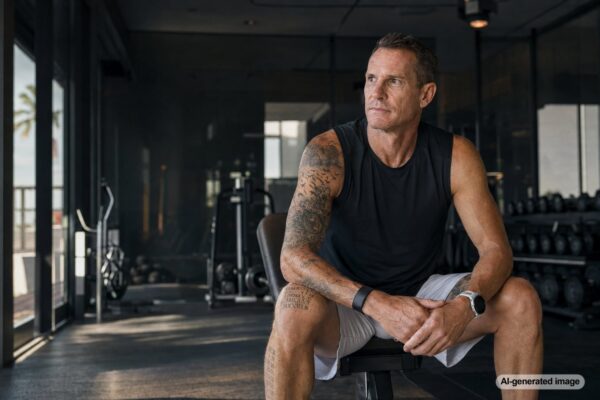
For Greg Schaefer, the idea of support is tied to motion, family, endurance, leadership, and purpose. His story is not only about Parkinson’s. It is also about choosing the next step when life becomes harder than expected. You can learn more about Greg’s broader journey on the About Greg page, or explore how his message reaches teams and organizations through Greg’s speaking work.
Quick answer
- A strong support network should include emotional, practical, medical, workplace, family, and peer support.
- Young-Onset Parkinson’s can create different pressures than later-life Parkinson’s, including career decisions, parenting, identity, finances, disclosure, and long-term planning.
- The best support does not erase independence. It helps protect it.
- Care partners need support too, not just instructions.
- Community can come from family, friends, clinicians, support groups, online networks, exercise communities, faith groups, advocacy spaces, and mission-aligned organizations.
Why support looks different with Young-Onset Parkinson’s
Young-Onset Parkinson’s generally refers to Parkinson’s diagnosed before age 50. While the symptoms can overlap with later-onset Parkinson’s, the life context is often very different. A person may still be in peak earning years, parenting young children, managing a business, dating, training, traveling, or holding a high-responsibility role. That can make the diagnosis feel less like a single medical event and more like a disruption across multiple parts of life.
Support must reflect that reality. A person living with Young-Onset Parkinson’s may need help preparing for a neurology appointment one week, figuring out how to talk to a child the next week, and navigating workplace disclosure months later. Some needs are visible. Others are quiet. Fatigue, uncertainty, mood changes, pain, medication timing, or the emotional weight of explaining the diagnosis again can be hard to see from the outside.
A useful network gives the person room to stay capable while making sure they are not carrying everything alone. That balance is the heart of real support.
Start with the inner circle, but define what help actually means
Family and close friends are often the first layer of support, but closeness does not automatically create clarity. People may want to help and still not know what to do. Some may overstep. Others may stay quiet because they are afraid of saying the wrong thing. The person with Parkinson’s may also feel pressure to reassure everyone else, even on hard days.
One practical step is to turn vague support into specific roles. One person might be the appointment note-taker. Another might help with school pickups during treatment changes. A spouse or partner might become the main care partner, but should not be expected to become the entire support system. A sibling might be good for logistics. A friend might be the person who still talks about sports, work, training, movies, or life beyond the diagnosis.
Specificity reduces resentment and confusion. Instead of saying, “Let me know if you need anything,” a more useful offer sounds like, “I can drive you to your appointment on Thursday,” or “I can take the kids for two hours after work if you need a reset.” Support becomes stronger when it is concrete.
Protect identity, not just health
One overlooked part of Young-Onset Parkinson’s is identity. A diagnosis can make a person feel watched, analyzed, or reduced to symptoms. People who were known as leaders, athletes, parents, builders, entrepreneurs, or caregivers may suddenly feel like others see only the diagnosis.
A strong network remembers the whole person. That means continuing to invite them into normal life. It means asking about their goals, not only their symptoms. It means understanding that someone can be living with Parkinson’s and still be ambitious, funny, competitive, strategic, generous, and fully engaged in the world.
This matters in families, workplaces, and communities. The goal is not to pretend Parkinson’s is not real. The goal is to keep it from becoming the only story.
Build a care team that communicates well
Medical support is one part of the network, and it should be treated as a team effort. Many people living with Parkinson’s work with a neurologist or movement disorder specialist, and may also benefit from physical therapy, occupational therapy, speech therapy, mental health support, exercise professionals, and other qualified providers. The right mix varies by person, symptoms, access, and stage of life.
It helps to prepare for appointments in advance. Keep a running list of symptoms, medication timing questions, sleep changes, exercise patterns, mood concerns, and practical challenges. When appropriate, a trusted care partner can attend appointments, not to speak over the person, but to help capture details and notice patterns.
Parkinson’s can change over time, so the network should stay flexible. A plan that works this year may need to be adjusted later. That is not failure. It is part of living with a progressive condition while continuing to make thoughtful decisions.
Include peer support from people who understand the stage of life
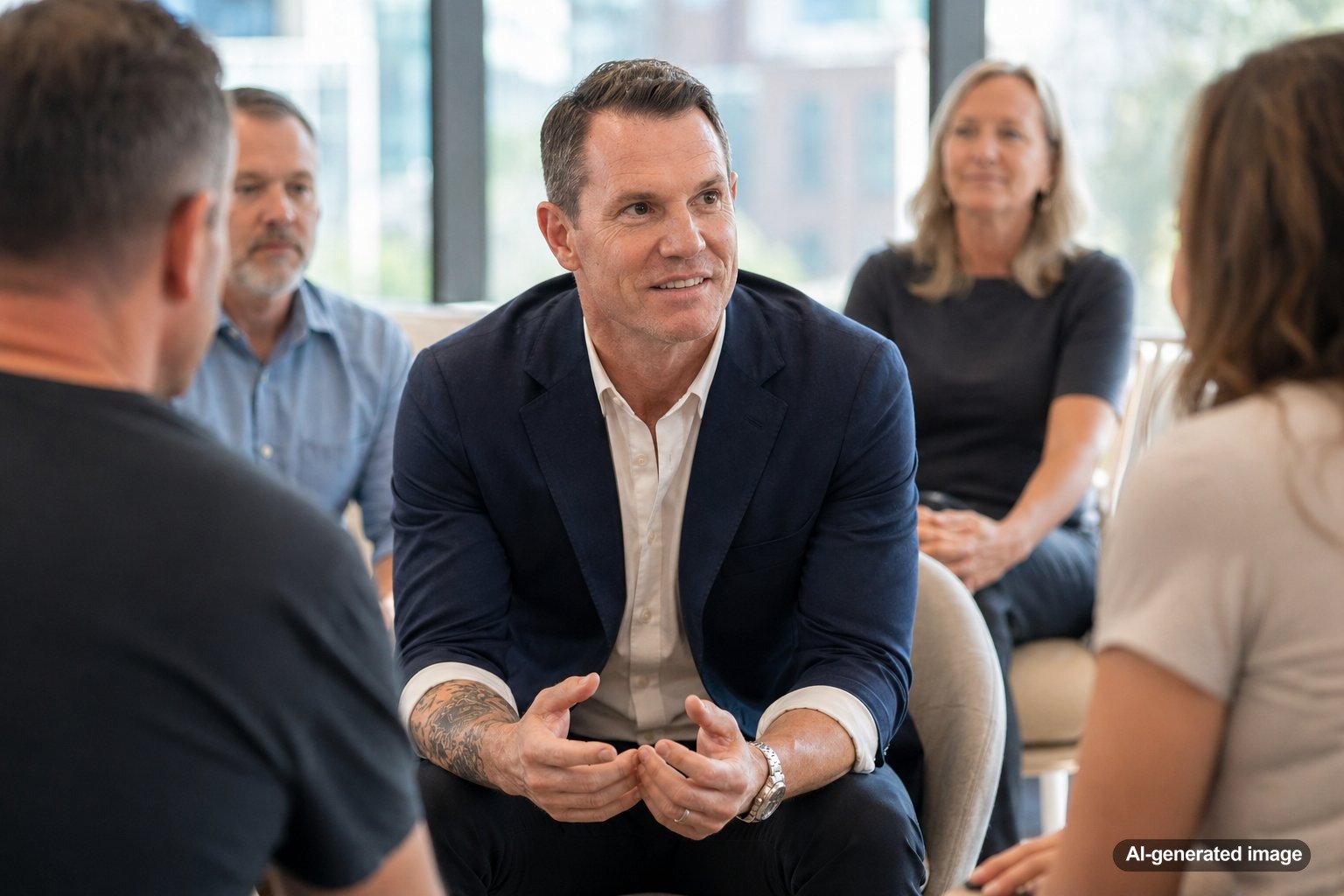
Peer support can be powerful because it reduces the sense of explaining everything from scratch. For someone with Young-Onset Parkinson’s, a general support group may help, but it may not always address the right life stage. Younger people may want to talk about work, parenting, exercise, dating, marriage, insurance, financial planning, disclosure, or the tension between wanting privacy and needing help.
That is where Young-Onset Parkinson’s communities, online groups, local networks, and advocacy organizations can matter. The point is not to compare symptoms or search for one perfect path. The point is to hear from people who are navigating similar questions and to realize that uncertainty does not have to mean isolation.
For some, community will be an in-person group. For others, it may be a moderated online forum, an exercise class, a cycling group, a running community, a nonprofit network, or a small group of people who check in regularly. The right format is the one the person can actually use.
Support the care partner before burnout arrives
Care partners often become the quiet infrastructure of a Parkinson’s journey. They remember medication questions, watch for changes, manage logistics, absorb emotional stress, and keep family life moving. In Young-Onset Parkinson’s, a care partner may also be working full time, raising children, and managing their own fears about the future.
A healthy support network does not put all responsibility on one person. Care partners need respite, honest conversation, education, and their own trusted people. They need permission to say, “This is hard,” without feeling disloyal. They need practical backup before the situation becomes a crisis.
Friends and family can support care partners by checking on them directly, offering specific help, and avoiding the assumption that the partner has everything handled. Supporting the support person is one of the most important things a network can do.
Think carefully about workplace and community disclosure
For people diagnosed younger, one of the hardest questions can be who to tell, when to tell them, and how much to share. There is no single right answer. Some people are open early. Others need time. Some jobs require practical conversations around scheduling, travel, symptoms, or accommodations. Others may not.
A support network can help by respecting the person’s privacy and pacing. No one should share the diagnosis without permission. When workplace conversations are needed, it may help to prepare notes, understand available policies, and speak with trusted professionals when appropriate. The goal is to protect dignity, clarity, and function.
Community disclosure can be just as personal. A person may be comfortable speaking publicly in one setting and private in another. That choice belongs to them.
Use movement, routine, and purpose as connection points
Support is not only about appointments and hard conversations. It can also be built around movement, routine, and purpose. Exercise classes, walks, rides, races, training partners, volunteer work, advocacy events, and family rituals can all become part of the network.
For Greg, forward motion is more than a phrase. It reflects the discipline of endurance sport, the responsibility of leadership, the love of family, and the decision to keep taking the next step after diagnosis. The Forward Motion Fund was shaped by that spirit, supporting mission-aligned work around Parkinson’s research, partner and caregiver support, challenged athletes, and youth and education initiatives.
Purpose does not remove difficulty. It gives difficulty somewhere to go.
What people often miss
- Support should be updated over time. Needs can change with symptoms, treatment adjustments, family demands, work seasons, and emotional bandwidth.
- Independence and help can coexist. Accepting support does not mean giving up agency.
- The person with Parkinson’s should not have to educate everyone alone. Trusted family and friends can learn from reputable organizations and bring better questions to the conversation.
- Children and teens may need age-appropriate explanations. Silence can create more fear than honest, grounded language.
- Normal life still matters. Invitations, humor, goals, work, sports, and ordinary conversations help preserve identity.
FAQ
How do you support someone with Young-Onset Parkinson’s without overwhelming them?
Ask what kind of support is actually useful, then offer specific help. Respect their independence, privacy, and timing. Avoid making every conversation about Parkinson’s unless they want to talk about it.
Should family members attend medical appointments?
Sometimes, yes, if the person with Parkinson’s wants that support. A family member or care partner can help take notes and remember questions, but the person living with Parkinson’s should remain central in the conversation.
Are support groups helpful for Young-Onset Parkinson’s?
They can be. Many people benefit from connecting with peers who understand the unique pressures of being diagnosed younger, including work, parenting, relationships, and long-term planning. The best fit may be local, virtual, condition-specific, or activity-based.
What should friends avoid saying?
Avoid minimizing the diagnosis, offering miracle fixes, comparing one person’s experience to another’s, or framing the person as an inspiration simply for having Parkinson’s. Better support starts with listening, learning, and staying present.
How can a care partner get support?
Care partners can seek education, respite, counseling, peer groups, trusted family help, and practical backup. They should not have to wait until they are exhausted to ask for support.
Interested in bringing Greg’s message to your event or organization?
Learn more about Greg’s speaking work or get in touch to start the conversation.
Contact Greg or learn more about the Forward Motion Fund.
This article is for educational purposes only and is not medical advice. For diagnosis, treatment, or personalized medical guidance, please speak with a qualified healthcare professional.