

Why Resilience Is More Than Just Mental Toughness
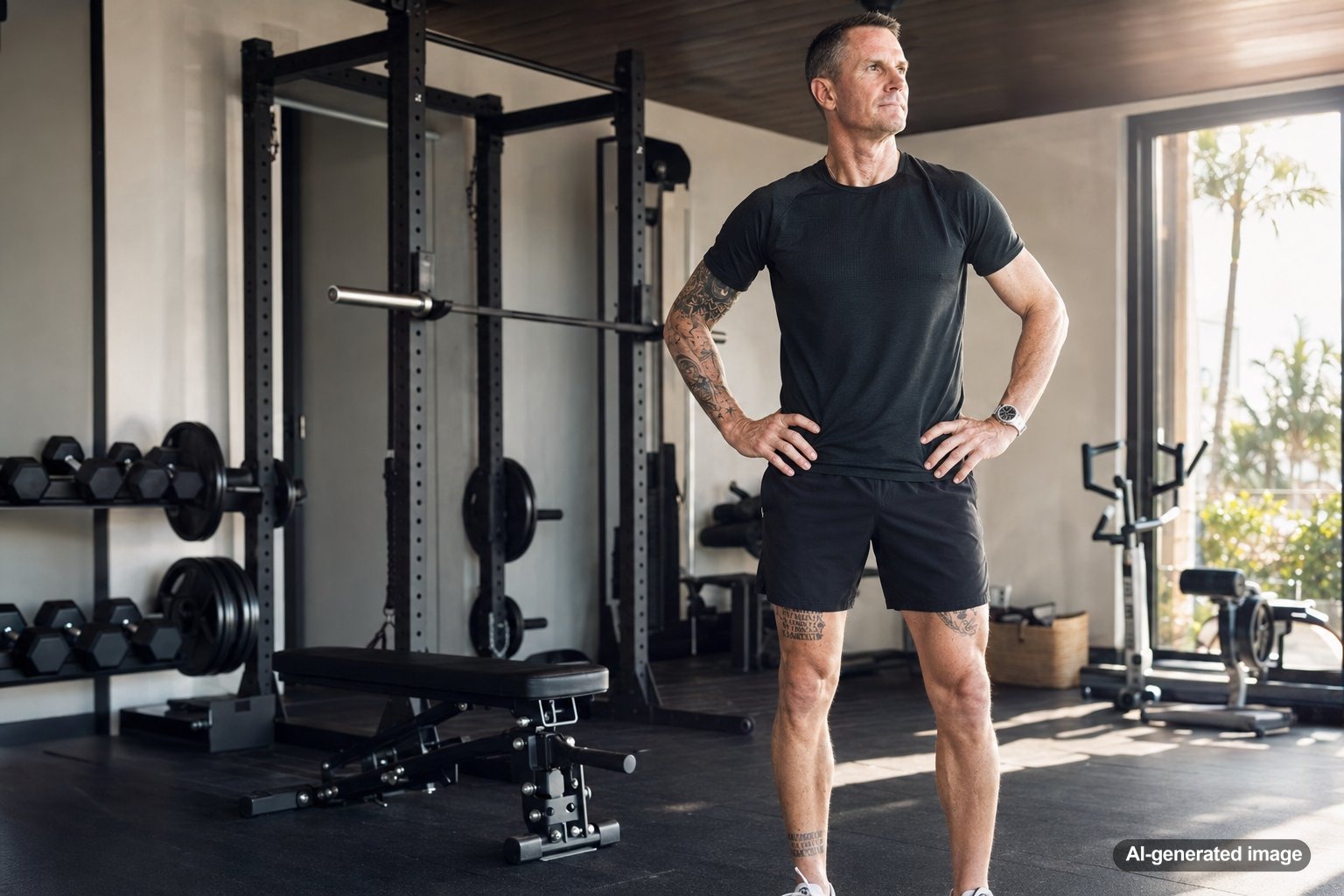
Resilience is often mistaken for the ability to push harder, stay silent, and keep going no matter what. Mental toughness can be part of it, but it is not the whole story. Real resilience is more durable than that. It includes discipline, yes, but also recovery, honesty, adaptability, support, and the willingness to take one more step when life no longer looks the way it used to.
For Greg Schaefer, resilience lives at the intersection of family, business leadership, endurance sports, advocacy, and forward motion. It is not a slogan. It is a daily practice built through pressure, uncertainty, commitment, and the people who walk beside you. That is also why his work as a speaker connects with teams and organizations looking for something deeper than a quick motivational charge. You can learn more about that work on Greg’s speaking page.
Quick answer: resilience is bigger than mental toughness
- Mental toughness often focuses on persistence under pressure.
- Resilience includes persistence, but also recovery, flexibility, perspective, and support.
- Resilient people do not ignore pain or uncertainty. They learn how to respond to it with clarity.
- Resilience is built through habits, relationships, purpose, and repeated action, not just willpower.
- The goal is not to pretend hard things are easy. The goal is to keep moving forward with honesty and intention.
Mental toughness can get you through a moment
Mental toughness matters. There are moments when a person has to hold the line, make the call, finish the race, show up for the team, or keep a promise when circumstances are uncomfortable. In endurance sports, business, parenting, and health challenges, there are days when discipline has to lead.
But mental toughness can become incomplete when it is treated as the only tool. If toughness means ignoring every warning sign, refusing help, hiding emotion, or confusing exhaustion with excellence, it can eventually work against the person trying to stay strong.
A leader who never admits uncertainty may look steady from the outside while leaving a team without honesty. An athlete who never respects recovery may call it grit until the body forces a pause. A person facing a difficult diagnosis or life change may feel pressure to be inspiring all the time, when what they really need is room to be human.
Resilience is the ability to adapt and continue
Resilience is not just the ability to endure impact. It is the ability to absorb reality, adjust to it, and keep moving in a meaningful direction. That difference matters.
Resilience asks better questions than toughness alone. What has changed? What still matters? Who can help? What is the next right step? What needs to be rebuilt, protected, or released? Those questions require strength, but they also require humility and self-awareness.
Greg’s core message, One More Step… Just One More, captures this kind of resilience. It does not pretend the entire road has to be solved at once. It brings the focus back to forward motion. One decision. One conversation. One training session. One act of service. One honest reset.
What people often miss about resilience
Resilience is not denial
Denial says, “This is not happening.” Resilience says, “This is happening, and I still have choices.” That distinction is powerful. Denial avoids reality. Resilience faces reality without letting it have the final word.
Resilience is not isolation
Some people think strength means carrying everything alone. In real life, support systems often make resilience more sustainable. Family, friends, teammates, clinicians, coaches, colleagues, and community can all become part of a person’s capacity to keep going.
Resilience is not constant optimism
Hope does not have to be loud. Some days it looks like a clear plan. Some days it looks like a quiet conversation. Some days it looks like getting up and doing the next thing with no applause at all.
Resilience includes recovery
One of the most overlooked parts of resilience is recovery. In endurance sports, recovery is not weakness. It is part of performance. The same principle applies to leadership, caregiving, entrepreneurship, advocacy, and personal hardship.
When people treat recovery as optional, they may keep functioning for a while, but the cost can build. Better resilience makes room for rest, reflection, recalibration, and support. It understands that a person can be committed without being reckless.
This is especially important for teams and organizations. A culture that praises only nonstop output may confuse short-term intensity with long-term strength. A resilient culture knows how to perform under pressure while still protecting trust, clarity, and sustainability.
Resilience is connected to purpose
Purpose gives resilience direction. Without purpose, pushing through can become empty endurance. With purpose, the effort has meaning beyond the immediate struggle.
That is one reason Greg’s story resonates across business, athletics, family, and advocacy. His work is not only about overcoming a difficult chapter. It is about using forward motion to serve something larger. The Forward Motion Fund reflects that same idea by supporting mission-aligned work connected to Parkinson’s research, partner and caregiver support, challenged athletes, and youth and education initiatives.
Purpose does not remove difficulty. It helps people decide what they are willing to keep showing up for.
Practical ways to build resilience beyond toughness
Resilience is not built in a single dramatic moment. It is usually built through repeated choices that become a pattern.
- Name the reality clearly. Avoid minimizing what is hard. Clarity gives you a better starting point.
- Break the road into smaller steps. A long journey becomes more manageable when the next step is specific.
- Protect recovery. Rest, reflection, and support are part of sustained strength.
- Ask for help before the breaking point. Resilience is often relational, not solitary.
- Stay connected to purpose. Know what you are moving toward, not only what you are fighting through.
- Adjust without quitting. A changed plan is not the same as a failed plan.
FAQ
Is resilience the same as mental toughness?
No. Mental toughness is often about staying focused and persistent under pressure. Resilience includes that, but also includes adaptability, recovery, support, and the ability to keep moving with honesty when circumstances change.
Can resilience be learned?
Yes. Resilience can be strengthened through habits, perspective, relationships, experience, and purposeful action. It is less about having a perfect personality and more about practicing how to respond when life becomes difficult.
Does being resilient mean staying positive all the time?
No. Resilience does not require constant positivity. It allows room for grief, frustration, uncertainty, and fatigue. What makes it resilient is the willingness to keep engaging with life and take the next constructive step.
Why does resilience matter in leadership?
Leaders face pressure, change, conflict, and uncertainty. Resilient leaders are better equipped to remain honest, adaptable, and grounded while helping others move forward with clarity.
The bottom line
Resilience is not just the refusal to break. It is the practice of adapting, recovering, asking for support, staying connected to purpose, and choosing forward motion even when the path changes. Mental toughness may help someone survive a hard moment. Resilience helps them build a life, a team, a mission, and a future beyond it.
Interested in bringing Greg’s message to your event or organization?
Learn more about Greg’s speaking work or get in touch to start the conversation.
Contact Greg or learn more about the Forward Motion Fund.
This article is for educational purposes only and is not medical advice. For diagnosis, treatment, or personalized medical guidance, please speak with a qualified healthcare professional.


