

What Ironman Training Teaches You About Self Leadership
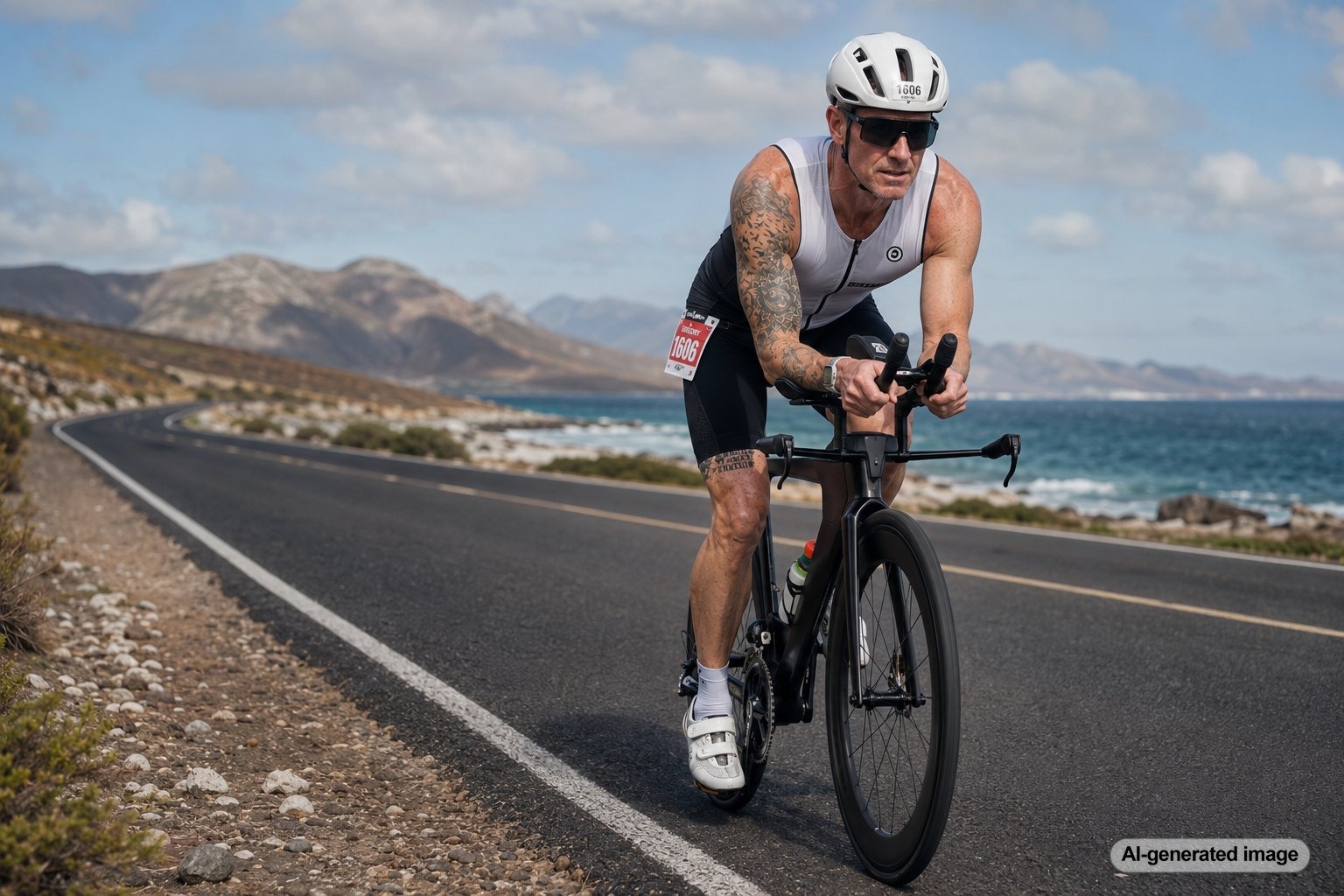
Ironman training teaches self leadership because it exposes the gap between what someone says they value and what they are willing to practice when nobody is watching. The miles matter, but the deeper lesson is not only physical. It is about making a promise, managing discomfort, adjusting when conditions change, and returning to the work long after the excitement has faded.
For Greg Schaefer, the connection between endurance, business, family, adversity, and purpose is not theoretical. As a 20-time Ironman, entrepreneur, speaker, husband, dad, and Parkinson’s advocate, Greg’s story reflects a simple but demanding truth: forward motion is built one decision at a time. You can learn more about his broader story on the About Greg page, or explore how these lessons translate to audiences through his speaking work.
Quick answer: What does Ironman training teach about self leadership?
- Self leadership starts before motivation shows up. Training rewards consistency more than emotional intensity.
- Discipline is not rigidity. A good athlete adapts without abandoning the mission.
- Small choices compound. Recovery, nutrition, sleep, planning, and pacing all become leadership decisions.
- Pressure reveals preparation. Race day rarely creates character from scratch. It reveals what has been practiced.
- Forward motion is a mindset and a method. One more step can be a physical act, a business principle, and a way to live through uncertainty.
Self leadership begins with keeping promises to yourself
Ironman training is not glamorous most of the time. It often looks like early alarms, quiet workouts, long rides, careful recovery, and choosing the next right action when excuses would be easier. That is where self leadership begins. It is the ability to lead yourself when there is no crowd, no applause, and no immediate reward.
In business, family, and personal adversity, the same pattern shows up. A leader cannot rely only on urgency. Urgency fades. Energy changes. Circumstances interrupt the plan. Self leadership means building a relationship with your own word so that your choices are not controlled entirely by mood, convenience, or the pressure of the moment.
That does not mean perfection. In fact, Ironman training makes perfection look unrealistic very quickly. Weather changes. Schedules break. Bodies need rest. Work demands attention. Family matters. The point is not to execute every plan flawlessly. The point is to keep returning to the commitment with honesty, humility, and discipline.
Training teaches the difference between pain, discomfort, and danger
One of the most overlooked lessons in endurance sports is discernment. Not every hard thing is a crisis. Not every uncomfortable moment is a reason to quit. Not every signal should be ignored, either. Self leadership requires knowing the difference between ordinary resistance and a real warning sign.
That distinction matters beyond sport. A founder leading a company through uncertainty, a parent carrying family responsibility, or a person rebuilding after a life-changing diagnosis may all face moments that feel heavy and unclear. The self leader learns to ask better questions: Is this hard because I am growing, or hard because something needs to change? Do I need grit right now, or recovery? Do I need to push, pause, ask for help, or adjust the plan?
Ironman training does not reward reckless stubbornness. It rewards durable wisdom. The strongest athletes are rarely the ones who ignore everything. They are the ones who can listen carefully, make adjustments, and stay connected to the larger mission.
Consistency beats intensity when the goal is long-term growth
There is a kind of motivation that burns hot and disappears quickly. It feels powerful at the start, but it is not enough for months of training, years of leadership, or a life shaped by challenge. Ironman training teaches that consistency is not exciting every day, but it is deeply powerful over time.
That lesson translates directly into self leadership. The leader who keeps showing up thoughtfully, even in ordinary moments, builds trust with others and with themselves. The athlete who stacks manageable efforts creates capacity. The entrepreneur who takes the next responsible step, even when progress is slow, builds something more stable than momentum alone.
Greg’s core message, One More Step… Just One More, carries weight because it does not pretend the whole road is easy. It narrows the focus to the next faithful action. Sometimes that action is a workout. Sometimes it is a conversation. Sometimes it is asking for support. Sometimes it is simply refusing to let one hard day define the entire story.
Adaptability is part of discipline
Many people think discipline means never changing the plan. Ironman training teaches a more mature version. Discipline means staying loyal to the purpose while being honest about reality. If the weather shifts, the course changes, or the body needs a different kind of work, the athlete still has to lead.
This is one reason endurance training offers such a useful leadership metaphor. Organizations face market changes. Families face unexpected seasons. Health, work, and identity can all shift without permission. Self leadership is not the fantasy of total control. It is the practice of responding with clarity when control is limited.
Strong self leadership asks, What matters now? What can I do next? What needs to be protected? What needs to be released? Those questions keep a person from confusing adaptability with weakness. Adjusting the route can be an act of strength when the mission still matters.
Race day reveals the hidden work
By the time an Ironman begins, much of the outcome has already been shaped. The long workouts, recovery choices, pacing discipline, nutrition practice, mental preparation, and small sacrifices have all been making deposits. Race day matters, but it does not stand alone.
Leadership works the same way. A difficult meeting, a public stage, a business decision, or a personal crisis may look like the main event from the outside. But the real preparation happened earlier, in the habits and values built quietly over time. That is why self leadership cannot be reduced to a speech, a slogan, or a burst of confidence. It is a practiced way of living.
For event planners and organizations, this is part of what makes endurance-based leadership stories resonate. They give audiences a concrete language for pressure, preparation, resilience, and responsibility. Greg’s work as a speaker connects those themes in a way that is human, practical, and earned.
Practical takeaways from Ironman self leadership
The lessons of Ironman training become more useful when they are brought down to everyday decisions. You do not need to be training for 140.6 miles to practice the mindset. You can apply the same principles in work, family, service, recovery, and personal growth.
- Name the mission before the hard moment arrives. When the reason is clear, the next step becomes easier to identify.
- Build systems that do not depend on perfect motivation. Calendar blocks, support, routines, and accountability help carry the commitment.
- Practice pacing. Going too hard too early can be just as costly as not starting.
- Respect recovery. Rest is not the opposite of discipline. It is often what keeps discipline sustainable.
- Use setbacks as information. A hard day can teach you what needs attention without becoming a verdict on who you are.
What people often miss about endurance and leadership
The real lesson is not that strong people never struggle. The real lesson is that self leadership gives people a way to respond when struggle arrives. It brings structure to uncertainty, humility to ambition, and purpose to effort.
That matters because the world often celebrates finish lines more than formation. It notices the medal, the title, the sale, the stage, or the public comeback. Ironman training points to something quieter and more useful: the person you become through repeated choices.
Self leadership is not about becoming untouchable. It is about becoming trustworthy. Trustworthy with your own commitments. Trustworthy with your energy. Trustworthy with your people. Trustworthy with the mission you say matters.
FAQ
Do you have to be an endurance athlete to learn these lessons?
No. Ironman training offers a powerful framework, but the lessons apply to many areas of life. Anyone can practice self leadership through consistency, adaptability, honest reflection, and purposeful action.
Why is Ironman training such a strong metaphor for leadership?
It combines preparation, pressure, patience, decision-making, discomfort, recovery, and long-term commitment. Those same qualities show up in business leadership, family life, advocacy, and personal adversity.
Is self leadership the same as motivation?
No. Motivation can help you start, but self leadership helps you continue. It is the ability to make values-based choices even when motivation is low or circumstances are difficult.
How can organizations use these lessons?
Teams can use endurance-based leadership lessons to talk about resilience, pacing, accountability, adaptability, and mission. These ideas are especially useful for organizations navigating pressure, change, or ambitious goals.
Moving forward, one step at a time
Ironman training teaches that leadership is not only what happens in public. It is what happens in the unseen spaces where discipline, doubt, purpose, fatigue, and hope meet. The finish line may be visible on race day, but self leadership is built long before that moment.
Greg Schaefer’s message is grounded in that kind of forward motion. It is not about pretending hard things are easy. It is about choosing the next step with courage, clarity, and purpose.
Interested in bringing Greg’s message to your event or organization?
Learn more about Greg’s speaking work or get in touch to start the conversation.
Contact Greg or learn more about the Forward Motion Fund.
This article is for educational purposes only and is not medical advice. For diagnosis, treatment, or personalized medical guidance, please speak with a qualified healthcare professional.


