How to Stay Present When the Future Feels Uncertain

Staying present when the future feels uncertain does not mean pretending the uncertainty is not there. It means learning how to live inside the unknown without letting it take over every part of your day.
For anyone facing a major life shift, a diagnosis, a business challenge, a family pressure, or a season where the next step is unclear, the mind often wants to race ahead. It tries to solve the whole road at once. But real resilience is usually built closer to the ground. It begins with the next honest choice, the next useful action, and sometimes the next breath.
Quick answer
- Staying present starts with accepting that you may not be able to control the whole future today.
- Focus on the next right action instead of trying to solve every possible outcome.
- Use structure, movement, honest conversation, and small routines to steady your mind.
- Let hope be practical. Hope is not denial. It is the choice to keep participating in your life.
- When uncertainty feels heavy, support from trusted people can help you stay grounded.
Why uncertainty pulls us out of the present
Uncertainty has a way of making the future feel louder than the moment you are actually living. A single unanswered question can multiply into ten more. What if this changes everything? What if I cannot do what I used to do? What if the plan I trusted is no longer the plan?
Those questions are human. They are not weakness. They are often signs that something matters deeply: your family, your work, your health, your identity, your commitments, your ability to keep showing up. The problem is not that the questions exist. The problem is when they become the only place your attention knows how to go.
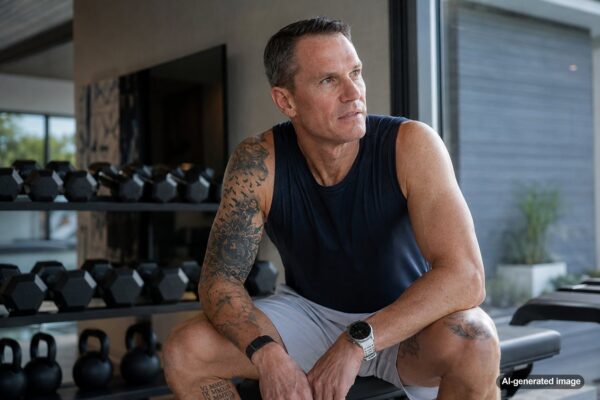
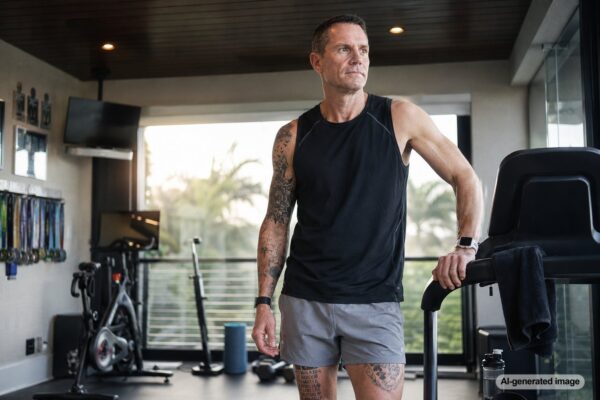
Presence is not passive. It is an active decision to return to what is real, useful, and available now. For Greg Schaefer, whose story brings together family, business leadership, endurance racing, advocacy, and life with Young-Onset Parkinson’s, forward motion is not a slogan. It is a way of meeting uncertainty without giving it the final word. You can learn more about that broader story on the About Greg page.
Start by shrinking the time horizon
When the future feels too large, one of the most useful things you can do is reduce the size of the question. Instead of asking, “How will I handle the next year?” ask, “What needs my attention today?” Instead of asking, “What if everything changes?” ask, “What is one steady thing I can do before noon?”
This does not mean avoiding long-term planning. Planning matters. But planning from panic rarely produces clarity. A smaller time horizon can help you make decisions from a steadier place.
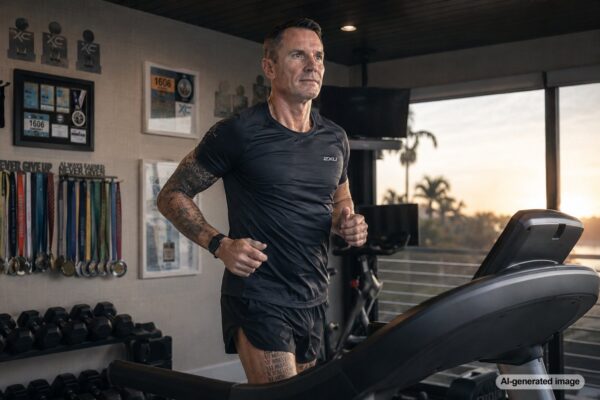
In endurance sports, no athlete finishes a long race by emotionally carrying every mile at once. The finish line matters, but the work is done step by step: fuel here, breathe here, settle the pace here, climb this hill, handle this moment. That same mindset can help in life. The whole road may be uncertain, but the next step can still be clear.
Separate what is unknown from what is still yours to do
Uncertainty becomes more manageable when you stop treating every unknown as an emergency. Some things are truly outside your control. You may not know exactly how a situation will unfold. You may not be able to control another person’s response, a medical timeline, a market shift, or the timing of an opportunity.
But there are usually things that remain yours to do. You can make the call. You can keep the appointment. You can train at the level available to you today. You can be honest with your family. You can lead your team with clarity. You can ask for support. You can protect your morning routine. You can choose not to abandon yourself while waiting for answers.
A simple practice is to draw a mental line between two categories: what is uncertain and what is actionable. The first category deserves respect, but the second deserves your energy.
Use routine as a guardrail, not a cage
During uncertain seasons, routine can become a form of quiet leadership. It gives the day a shape when the bigger picture feels unstable. That routine does not have to be complicated. A walk, a workout, a set time to review priorities, a family dinner, a journal entry, or a regular check-in with someone you trust can all help create steadiness.
The goal is not to become rigid. The goal is to give yourself a few reliable points of contact with the present. When life changes, small routines remind you that you still have agency.
For leaders, athletes, caregivers, parents, and people navigating personal adversity, this matters. Routine can protect the part of you that still wants to participate fully in life. It can keep uncertainty from becoming the only rhythm of the day.
Let movement bring you back to the moment
Movement has a way of making the present physical. It pulls attention out of the endless loop of thought and back into the body. That may mean training for a race, walking around the block, stretching, breathing with intention, or simply stepping outside for a few minutes.
Movement does not need to be dramatic to be meaningful. The point is not performance. The point is reconnection. When you move, you create evidence that you are still here, still capable of taking action, still part of the world around you.
This is part of the deeper meaning behind forward motion. It is not about denying hard realities. It is about refusing to become frozen by them. Greg’s Forward Motion Fund reflects that same belief: that one more step can become a powerful way to support purpose, community, research, caregivers, challenged athletes, and young people.
Be honest without rehearsing every fear
There is a difference between honesty and rumination. Honesty says, “This is hard, and I need to face it.” Rumination says, “I must replay every possible fear until I feel certain.” The first can lead to support and wise action. The second often leads to exhaustion.
Staying present requires room for truth. You do not have to dress up uncertainty in positive language before you are ready. You can admit that a situation is painful, confusing, or frustrating. You can acknowledge that you are carrying more than people can see.
But after naming what is true, it helps to ask a second question: “What would be useful now?” That question does not erase the fear. It gives fear some boundaries. It shifts your attention from endless prediction to meaningful participation.
Choose one conversation instead of carrying everything alone
Uncertainty often grows in isolation. When people keep everything inside, the mind can turn a difficult reality into a private courtroom where every thought argues against them. A grounded conversation with the right person can interrupt that cycle.
The right person does not have to fix the situation. Often, the most helpful support comes from someone who can listen without minimizing, encourage without performing, and stay steady without pretending to have all the answers.
This is especially important for people who are used to being strong for others. CEOs, parents, athletes, caregivers, and high-performing professionals can fall into the habit of carrying uncertainty silently because they believe everyone else depends on them. Strength is not the same as isolation. Sometimes strength is letting the right people stand close enough to help.
Practice the discipline of the next step
Presence is not a mood you wait for. It is a discipline you return to. Some days it will feel natural. Other days it will feel like work. That does not mean you are failing. It means you are human.
The next step may be small: drink water, answer one email, go to the appointment, get outside, write down the fear, call the friend, complete the workout, sit with your family, or rest without guilt. Small steps are not small when they keep you connected to your life.
“One More Step… Just One More” is powerful because it does not ask someone to solve the entire future. It asks them to remain in motion. That is often where resilience becomes real: not in a grand declaration, but in the quiet decision to keep going with integrity.
What people often miss
Staying present is not about becoming calm all the time. It is about building enough steadiness to make the next choice well. You can be uncertain and still be committed. You can be afraid and still be useful. You can be tired and still take one honest step toward the life you want to keep living.
FAQ
How do I stop thinking so much about the future?
You may not be able to stop every future-focused thought, but you can change how much authority those thoughts have. Bring your attention back to a specific action you can take today. Writing down the concern, naming what is controllable, and choosing one next step can help reduce the mental loop.
Does staying present mean I should avoid planning?
No. Healthy planning can be wise and necessary. The difference is whether planning is helping you act with clarity or keeping you trapped in fear. Presence gives you a steadier foundation from which to plan.
What if my uncertainty is connected to a health issue or diagnosis?
Health-related uncertainty can be especially heavy because it touches identity, family, work, and daily life. It can help to seek qualified medical guidance, build a support system, and focus on what remains actionable. No article can replace personalized care from a qualified healthcare professional.
How can leaders stay present during uncertain seasons?
Leaders can stay present by communicating clearly, avoiding panic-driven decisions, focusing on the next useful priority, and staying connected to the people they serve. A leader does not need to know every future answer to provide steadiness today.
When should I ask for more support?
If uncertainty is affecting your sleep, relationships, work, safety, or ability to function, it may be time to speak with a trusted professional, clinician, counselor, mentor, or support person. Asking for support is not a failure of resilience. It is often part of resilience.
Interested in bringing Greg’s message to your event or organization?
Learn more about Greg’s speaking work or get in touch to start the conversation.
Contact Greg or learn more about the Forward Motion Fund.
This article is for educational purposes only and is not medical advice. For diagnosis, treatment, or personalized medical guidance, please speak with a qualified healthcare professional.