

Vo2 Max, Longevity, and Why Endurance Training Gets So Much Attention
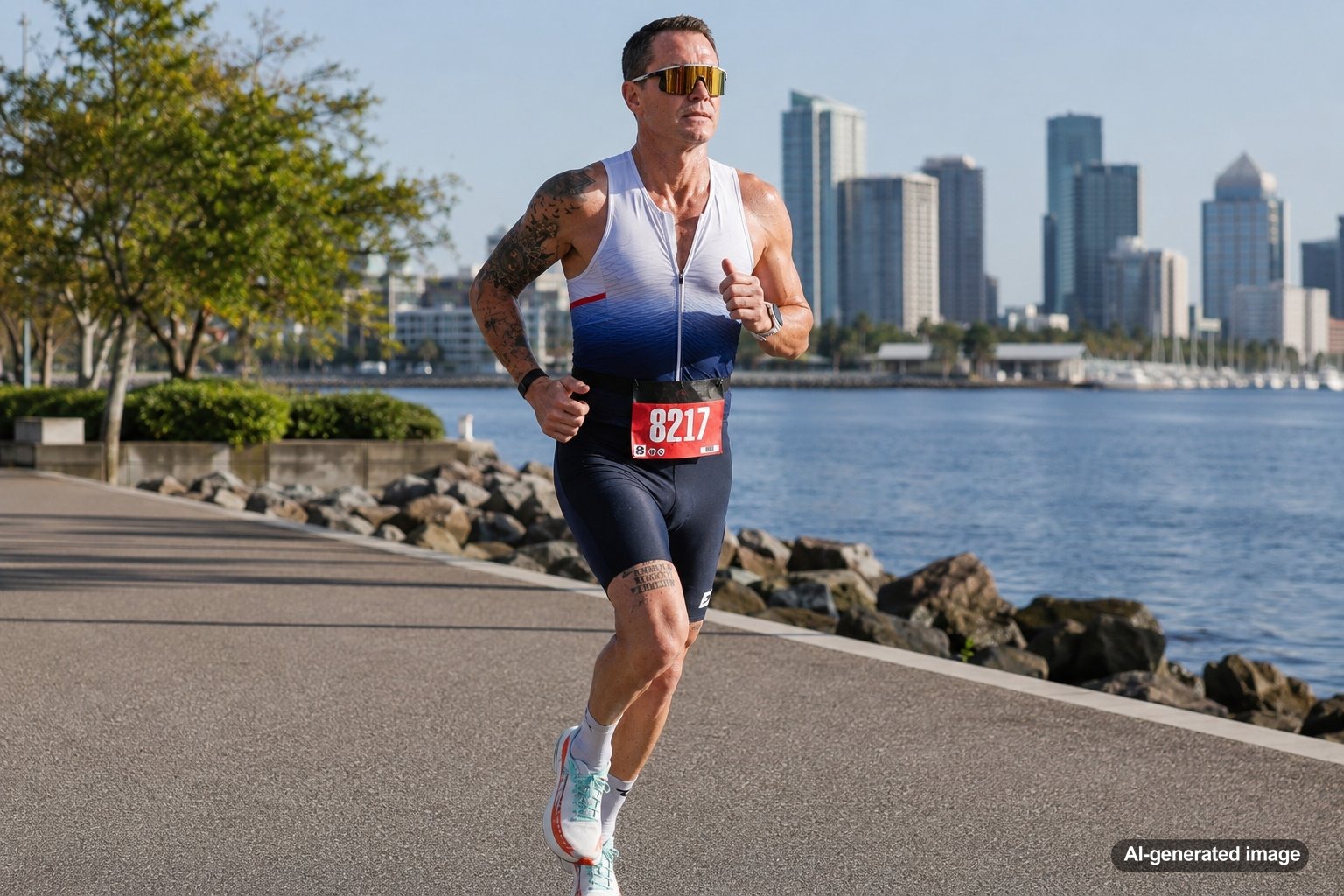
VO2 max has become one of those terms that shows up everywhere: longevity podcasts, wearable dashboards, endurance training plans, executive health conversations, and performance clinics. It sounds technical, but the idea behind it is straightforward. VO2 max is a measure of how much oxygen your body can use during intense exercise. In plain terms, it reflects the capacity of your heart, lungs, blood vessels, and muscles to work together under demand.
For someone like Greg Schaefer, a dad, husband, entrepreneur, speaker, Parkinson’s advocate, and 20-time Ironman, the conversation around endurance is not about chasing a number for vanity. It is about capacity. It is about staying in the game physically, mentally, and emotionally. That same idea runs through Greg’s story and the message behind forward motion: build the ability to keep taking the next step.
Quick answer: why VO2 max gets so much attention
- VO2 max is one marker of cardiorespiratory fitness. It reflects how effectively the body takes in, transports, and uses oxygen during hard effort.
- Higher cardiorespiratory fitness is strongly associated with better health outcomes. Research consistently links fitness level with lower risk of all-cause and cardiovascular mortality.
- Endurance training can improve aerobic capacity. Walking, cycling, running, swimming, rowing, and other sustained efforts can help train the systems involved.
- The number is not the whole point. VO2 max matters, but so do consistency, strength, mobility, recovery, purpose, and medical context.
- Longevity is not just living longer. For many people, the deeper goal is staying capable, engaged, useful, and connected for as long as possible.
What VO2 max actually measures
VO2 max stands for maximal oxygen uptake. It is usually expressed as milliliters of oxygen used per kilogram of body weight per minute. A lab test can measure it more directly during a graded exercise test, while many watches and fitness platforms estimate it from heart rate, pace, power, and other data.
The useful part is not the jargon. The useful part is what the metric points toward. When you climb stairs, ride into a headwind, chase your kids across a field, race a triathlon, or simply try to stay active through a demanding season of life, your body needs oxygen delivery and muscular efficiency. VO2 max is one way to describe the ceiling of that system.
That is why it attracts so much attention in endurance sports. Athletes care about how much work they can sustain. But it also matters outside racing because the same physical system supports everyday function: walking with energy, recovering after effort, staying independent, and tolerating physical stress.
Why the longevity world cares about cardiorespiratory fitness
Longevity conversations can get distracted by hacks, supplements, devices, and expensive testing. Cardiorespiratory fitness cuts through some of that noise because it is not just an idea. It is observable. It can be tested. It can often be improved. And it reflects multiple systems working together rather than one isolated lab value.
Research has consistently associated higher cardiorespiratory fitness with lower mortality risk. That does not mean a high VO2 max guarantees a longer life, and it does not mean someone with a lower number is doomed. Human health is more complex than one metric. Genetics, illness, medications, sleep, stress, environment, strength, nutrition, community, and access to care all matter.
Still, cardiorespiratory fitness gets attention because it is both meaningful and trainable. It gives people a practical lever. You can build a base. You can improve gradually. You can start from where you are. You can use training not as punishment, but as preparation for a fuller life.
Endurance training is not just about suffering longer
Endurance training is often misunderstood. From the outside, it can look like people voluntarily choosing discomfort: long runs, early swims, windy bike rides, repeat intervals, tired legs, and hours of steady work. But the real lesson is more subtle.
Endurance training teaches the body to become more efficient under pressure. Over time, the heart can pump blood more effectively, muscles can use oxygen better, and the nervous system can become more familiar with sustained effort. For many people, it also changes the mind. You learn the difference between discomfort and danger. You learn pacing. You learn restraint. You learn that not every hard moment is a crisis.
That is part of why endurance sports connect so naturally with Greg’s work as a speaker. An Ironman is not won by one dramatic burst of motivation. It is completed through thousands of quiet decisions: getting in the pool, clipping into the bike, doing the recovery work, managing the middle miles, and continuing when the finish line is still far away. In leadership, family, advocacy, and health challenges, that rhythm matters.
The overlooked distinction: performance versus capacity
Many people hear VO2 max and think only of elite performance. Fast runners. Professional cyclists. Age-group podiums. Lab numbers. Race splits. That is one version of the conversation, but it is not the only one.
For everyday life, the more important word may be capacity. Capacity is the margin between what life asks of you and what your body can handle. If walking up a hill, carrying luggage, or navigating a long workday consumes nearly all your available energy, life feels smaller. When fitness improves, the same tasks can feel more manageable.
This matters for leaders, parents, caregivers, athletes, and anyone facing adversity. Physical capacity can support emotional capacity. It does not erase stress, grief, uncertainty, symptoms, or hard responsibilities. But it can give a person a stronger platform from which to meet them.
Why steady training still matters in a high-intensity culture
High-intensity intervals get a lot of attention because they can be efficient and powerful. They also have a place in many training plans. But endurance development is not built only through heroic workouts. It often depends on repeatable work that can be done consistently without breaking the body down.
For many people, that means a mix of easier aerobic sessions, occasional harder efforts, strength training, mobility, and recovery. The easier work is not wasted. It builds a foundation. It helps people accumulate volume safely. It teaches rhythm and patience. It can also be more accessible for people who are returning to exercise, managing fatigue, or balancing training with work and family.
The point is not to copy an Ironman plan. The point is to respect the principle: sustainable progress usually beats occasional intensity followed by long layoffs. A person who walks consistently, builds gradually, and stays engaged may gain far more over time than someone who keeps starting over after overreaching.
What people often miss about VO2 max
- It is a signal, not a complete health report. A VO2 max estimate can be useful, but it does not replace medical evaluation, strength assessment, blood pressure, metabolic health, or symptoms that deserve attention.
- Wearable estimates are not the same as lab testing. Watches can help track trends, but the number may shift based on device algorithms, terrain, temperature, fatigue, and data quality.
- Improvement is personal. Age, training history, health status, medication, genetics, sleep, and stress all influence how someone responds to endurance work.
- More is not always better. Training needs recovery. Pushing through warning signs is not resilience. It is often poor judgment dressed up as toughness.
How to think about endurance training in real life
A practical endurance mindset begins with honesty. Where are you now? What does your body tolerate? What are you trying to build? Are you training for a race, improving health markers, gaining energy, managing stress, rebuilding after a setback, or simply wanting to remain active for your family?
From there, the smartest approach is usually progressive. Start with what you can repeat. Add duration before intensity when appropriate. Keep easy days easy enough to recover from. Use harder sessions carefully. Include strength work because muscles, joints, bones, and connective tissue also need attention. Protect sleep. Listen to pain. Work with qualified professionals when health conditions, symptoms, or uncertainty are part of the picture.
This is where endurance becomes more than exercise. It becomes a practice of self-respect. Not ego. Not punishment. Not chasing someone else’s number. A disciplined training life can be one way of saying: I am preparing myself to live more fully.
The Greg Schaefer lens: one more step, not one perfect number
Greg’s platform does not treat endurance as a magic answer. Parkinson’s is not simplified into a motivational prop. Business leadership is not reduced to a finish-line photo. Family, advocacy, athletic discipline, and adversity all exist together. That is what makes the message human.
VO2 max can be a helpful metric, but the deeper lesson is not found in a dashboard. It is found in the daily commitment to keep building capacity where you can. For some people, that may mean training for an Ironman. For others, it may mean walking three days a week, returning to movement after illness, supporting a loved one, or finding the courage to begin again after life changes.
The phrase behind the Forward Motion Fund is simple: One More Step… Just One More. That line fits endurance training because progress is rarely as dramatic as people imagine. It is usually incremental. Quiet. Repeated. Earned.
FAQ
Is VO2 max the best measure of longevity?
VO2 max is one important marker of cardiorespiratory fitness, and higher fitness is strongly associated with better health outcomes. It is not the only measure that matters. Strength, balance, metabolic health, sleep, nutrition, medical care, relationships, and stress management also play meaningful roles.
Can endurance training improve VO2 max?
Many people can improve aerobic capacity through consistent endurance training, especially when training is progressive and appropriate for their current fitness level. The amount of improvement varies widely from person to person.
Do I need to run to improve cardiorespiratory fitness?
No. Running is one option, but cycling, swimming, brisk walking, rowing, elliptical training, hiking, and other sustained aerobic activities can also challenge the cardiovascular system. The best option is often the one you can do consistently and safely.
Should people with medical conditions train for VO2 max?
Anyone with a medical condition, new symptoms, or uncertainty about exercise safety should speak with a qualified healthcare professional before beginning or changing a training plan. The goal should be appropriate progress, not reckless intensity.
Why does this topic fit Greg Schaefer’s message?
Because the VO2 max conversation is ultimately about capacity, resilience, and the ability to keep moving forward. Greg’s life and work sit at the intersection of endurance, leadership, family, Parkinson’s advocacy, and mission-driven action.
Interested in bringing Greg’s message to your event or organization?
Learn more about Greg’s speaking work or get in touch to start the conversation.
Contact Greg or learn more about the Forward Motion Fund.
This article is for educational purposes only and is not medical advice. For diagnosis, treatment, or personalized medical guidance, please speak with a qualified healthcare professional.
Sources & further reading
- National Heart, Lung, and Blood Institute: Physical Activity and Your Heart – Recommendations
- National Heart, Lung, and Blood Institute: Physical Activity and Your Heart – Types
- National Institutes of Health: The Physical Activity Guidelines for Americans
- National Institutes of Health: Commentary on cardiorespiratory fitness and mortality risk


