
Can People With Parkinson’s Still Run, Bike, or Swim?
Yes, many people with Parkinson’s can still run, bike, swim, lift, walk, hike, box, dance, and train. The better question is not whether movement still belongs in life with Parkinson’s. It is how to make that movement safe, consistent, adaptive, and personal.
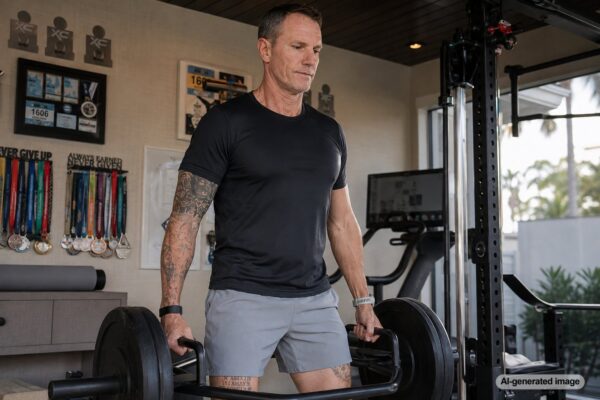
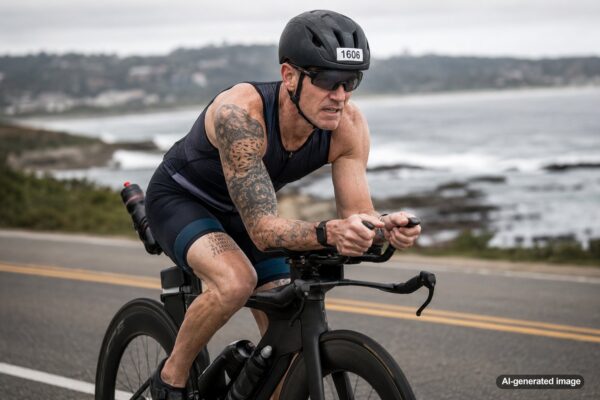
Parkinson’s can affect balance, coordination, stiffness, fatigue, tremor, sleep, confidence, and timing. Those realities matter. But they do not automatically erase an athletic identity or close the door on endurance sports. For someone like Greg Schaefer, whose life intersects family, business leadership, Ironman racing, advocacy, and Young-Onset Parkinson’s, movement is not just exercise. It is a way of practicing forward motion, one honest step at a time. Learn more about Greg’s broader story on the About Greg page.
Quick answer
- Many people with Parkinson’s can continue running, biking, or swimming, but the right approach depends on symptoms, fitness history, balance, medication timing, and medical guidance.
- Exercise is widely recognized as an important part of living with Parkinson’s, supporting mobility, strength, flexibility, mood, and quality of life.
- Safety matters. A person who has balance changes, freezing, falls, dizziness, heart concerns, or new symptoms should speak with a qualified clinician before pushing intensity.
- The goal may change over time. Some seasons are about performance. Others are about consistency, function, confidence, and staying connected to the body.
- Forward motion does not have to look heroic. It can be a lap in the pool, a carefully planned ride, a short run-walk, or showing up when the plan has to be adjusted.
Parkinson’s does not affect every athlete the same way
One of the most important things to understand is that Parkinson’s is highly individual. Two people with the same diagnosis can have very different movement patterns, energy levels, tremor, stiffness, gait changes, medication responses, and confidence in motion.
That means there is no single answer that fits every runner, cyclist, or swimmer. A former endurance athlete may need a different plan than someone beginning exercise after diagnosis. A person with strong balance and a long training history may have different options than someone dealing with falls or freezing of gait. A person early in the disease may be navigating uncertainty more than visible limitation, while someone farther along may need more supervision, adaptive equipment, or physical therapy support.
What matters is not comparison. It is paying attention to the real body in front of you, the real symptoms of the day, and the kind of support that helps movement remain safe and sustainable.
Running with Parkinson’s: possible, but rhythm and safety matter
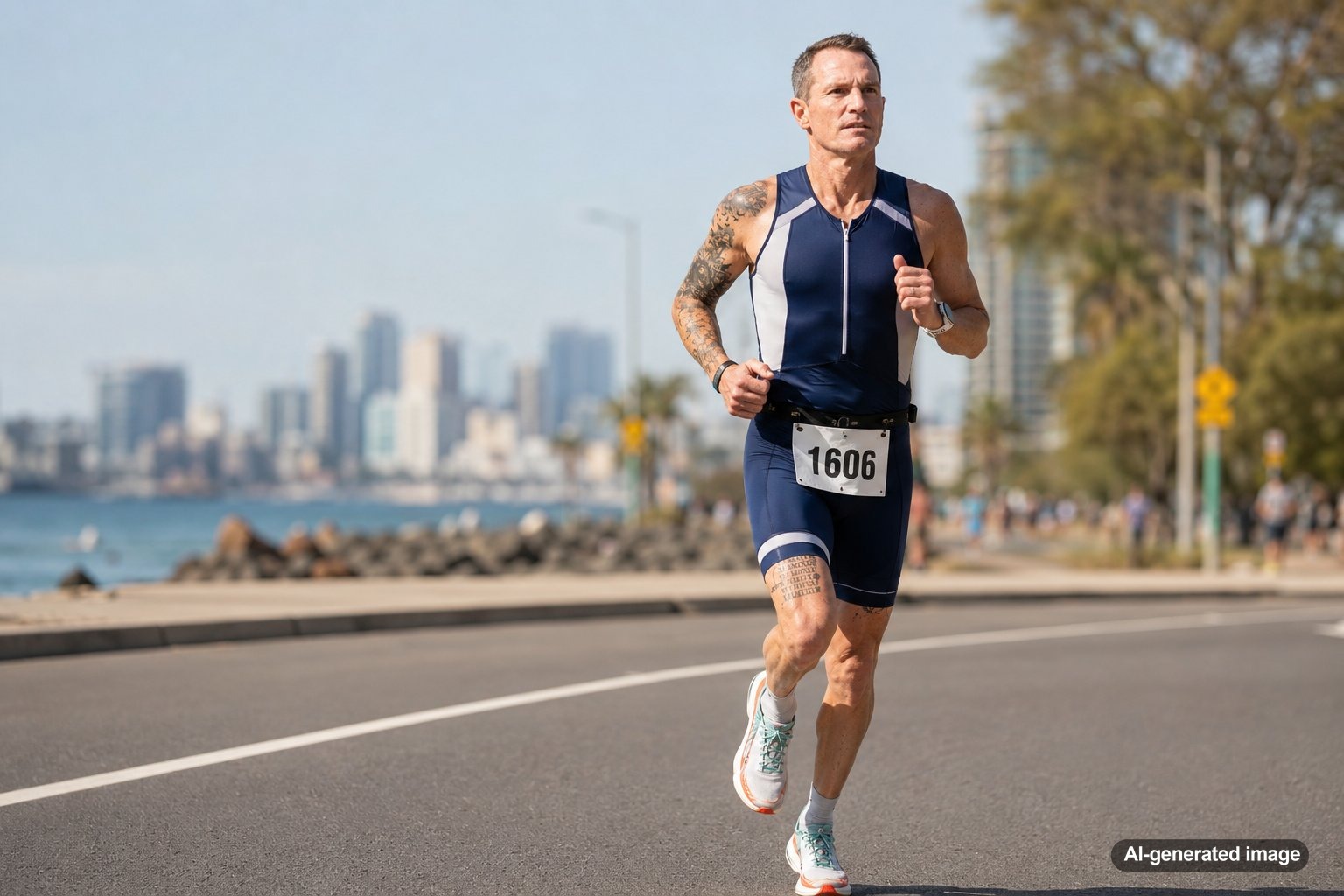
Running can still be part of life for some people with Parkinson’s. It can support cardiovascular fitness, mental clarity, routine, and identity. For people who already have a running background, the familiar rhythm of stride, breath, and forward movement can feel grounding.
But running also asks a lot from the nervous system. It requires balance, reaction time, foot clearance, posture, and the ability to respond to uneven surfaces, traffic, fatigue, heat, and distraction. Parkinson’s symptoms such as stiffness, slower movement, gait changes, or freezing can make those demands more complicated.
Practical adjustments may include run-walk intervals, softer surfaces that are still stable, shorter loops close to home, training with a partner, avoiding crowded or uneven routes, warming up longer, and choosing times of day when medication and energy feel most reliable. For some people, a treadmill with safety rails may feel better. For others, outdoor running may remain possible with smart route choices.
The point is not to prove that nothing has changed. The point is to keep the relationship with movement alive while respecting what has changed.
Biking with Parkinson’s: powerful, but choose the right setup
Cycling can be a strong option because it builds aerobic fitness without the same impact as running. Many people enjoy the rhythm of pedaling, and stationary bikes can offer a controlled way to train when outdoor riding feels less predictable.
Outdoor cycling, however, brings additional safety questions. Balance, traffic, clipping in and out, quick stops, cornering, road conditions, group-ride dynamics, and reaction time all matter. A person who feels strong on a bike may still need to reassess the environment, equipment, and risk level.
Options can include indoor cycling, a smart trainer, a recumbent bike, a stationary bike, carefully selected bike paths, riding with a trusted partner, or adjusting intensity based on symptom patterns. For some athletes, cycling may remain a place of power and freedom. For others, the smartest version of cycling may move indoors for a season.
That shift should not be treated as failure. Adaptation is a form of discipline.
Swimming with Parkinson’s: low impact, but never casual about safety
Swimming can be appealing because the water reduces impact and can allow a person to move with less joint stress. It can support endurance, breathing control, mobility, and full-body coordination. For some people, the pool feels like a place where the body can move differently than it does on land.
At the same time, water safety has to be taken seriously. Fatigue, cramping, freezing, dizziness, medication timing, swallowing issues, anxiety, or sudden changes in coordination can become more serious in a pool, lake, or ocean. Open-water swimming adds visibility, currents, temperature, waves, navigation, and panic risk.
Safer choices may include supervised pools, lane swimming with someone nearby, avoiding open water alone, using brightly colored swim gear outdoors, staying within known limits, and discussing any new concerns with a clinician or physical therapist. For triathletes, open-water confidence should be rebuilt carefully, not assumed from past fitness.
Swimming can be an incredible expression of forward motion, but respect for the water must always come first.
What people often miss about Parkinson’s and endurance sports
Many conversations about Parkinson’s and exercise focus only on whether a person can still perform. That misses the deeper and more useful question: what does movement help protect?
For some, it protects independence. For others, it protects confidence, emotional steadiness, daily structure, social connection, or the feeling of being more than a diagnosis. For endurance athletes, it may also protect a piece of identity that still matters deeply.
There are also less obvious details that can shape the training experience:
- Medication timing can affect workouts. Some people notice better movement during certain windows of the day.
- Fatigue may be different from ordinary training fatigue. Recovery, sleep, and nervous system load deserve attention.
- Balance work matters even for strong athletes. Endurance fitness does not automatically protect against fall risk.
- Intensity is not the only measure of success. Consistency, range of motion, confidence, and showing up can be meaningful wins.
- Support changes the equation. A coach, physical therapist, training partner, spouse, friend, or care team can help keep movement realistic and safe.
A practical way to think about run, bike, and swim decisions
A helpful framework is to separate desire from design. The desire may be simple: I want to keep moving. I want to keep training. I want to feel like myself. The design is where wisdom comes in.
Ask: What activity fits my body today? What environment lowers unnecessary risk? What symptoms tend to show up under fatigue? What would make this session safer? What should I discuss with a healthcare professional? What is the goal of this season: performance, consistency, rehabilitation, confidence, or connection?
That kind of honesty does not make a person less tough. It makes the effort more sustainable. Greg’s message of Forward Motion is not about pretending the hard things are easy. It is about taking the next step with purpose, support, and clarity.
When to seek professional guidance before training
People with Parkinson’s should consider speaking with a qualified healthcare professional, physical therapist, or movement-disorder-informed clinician before starting or changing an exercise routine, especially if there are new symptoms, falls, freezing episodes, dizziness, chest pain, shortness of breath, major fatigue, medication changes, or concerns about balance.
A clinician can help evaluate risk, suggest modifications, and guide an exercise plan that fits the person’s stage, goals, medical history, and daily function. For athletes, that guidance can be empowering. It can help preserve training while reducing avoidable risk.
FAQ
Can exercise slow Parkinson’s progression?
Research on Parkinson’s and exercise continues to evolve. Exercise is broadly recognized as beneficial for people with Parkinson’s, especially for mobility, strength, balance, flexibility, mood, and quality of life. It should not be framed as a cure or guaranteed way to stop progression.
Is running better than biking or swimming for Parkinson’s?
Not necessarily. The best option depends on the person’s symptoms, safety needs, preferences, fitness background, and access to support. A well-rounded routine may include aerobic activity, strength training, flexibility, and balance or functional training.
Can someone with Parkinson’s train for endurance events?
Some people can, particularly with medical guidance, smart training, realistic expectations, and support. The plan may need to adapt around fatigue, medication timing, balance, recovery, and safety. For many athletes, the goal is not to deny Parkinson’s, but to keep moving with intelligence and purpose.
What if I can no longer train the way I used to?
That can be emotionally difficult. Losing a familiar level of performance can affect identity, confidence, and motivation. But adjustment is not the same as surrender. A shorter session, a different format, an indoor bike, a walk-run, or a supervised swim can still be meaningful forward motion.
Should family members encourage someone with Parkinson’s to exercise?
Support can help, but pressure rarely does. Encouragement works best when it respects the person’s symptoms, autonomy, fatigue, and goals. Offer partnership, transportation, accountability, or company rather than judgment.
The bottom line
People with Parkinson’s are not automatically finished with running, biking, swimming, or athletic life. Many can keep moving, and many should be encouraged to explore safe, supported, personalized ways to do so.
But the bravest version of movement is not reckless. It listens. It adapts. It asks for help when needed. It honors the body without giving the diagnosis the final word.
Sometimes forward motion looks like an Ironman finish line. Sometimes it looks like one careful mile, one steady lap, one ride on a trainer, or one more step on a hard day. The distance matters less than the decision to keep moving with purpose.
Interested in bringing Greg’s message to your event or organization?
Learn more about Greg’s speaking work or get in touch to start the conversation.
Contact Greg or learn more about the Forward Motion Fund.
This article is for educational purposes only and is not medical advice. For diagnosis, treatment, or personalized medical guidance, please speak with a qualified healthcare professional.