

What Young-Onset Parkinson’s Taught Me About Redefining Strength
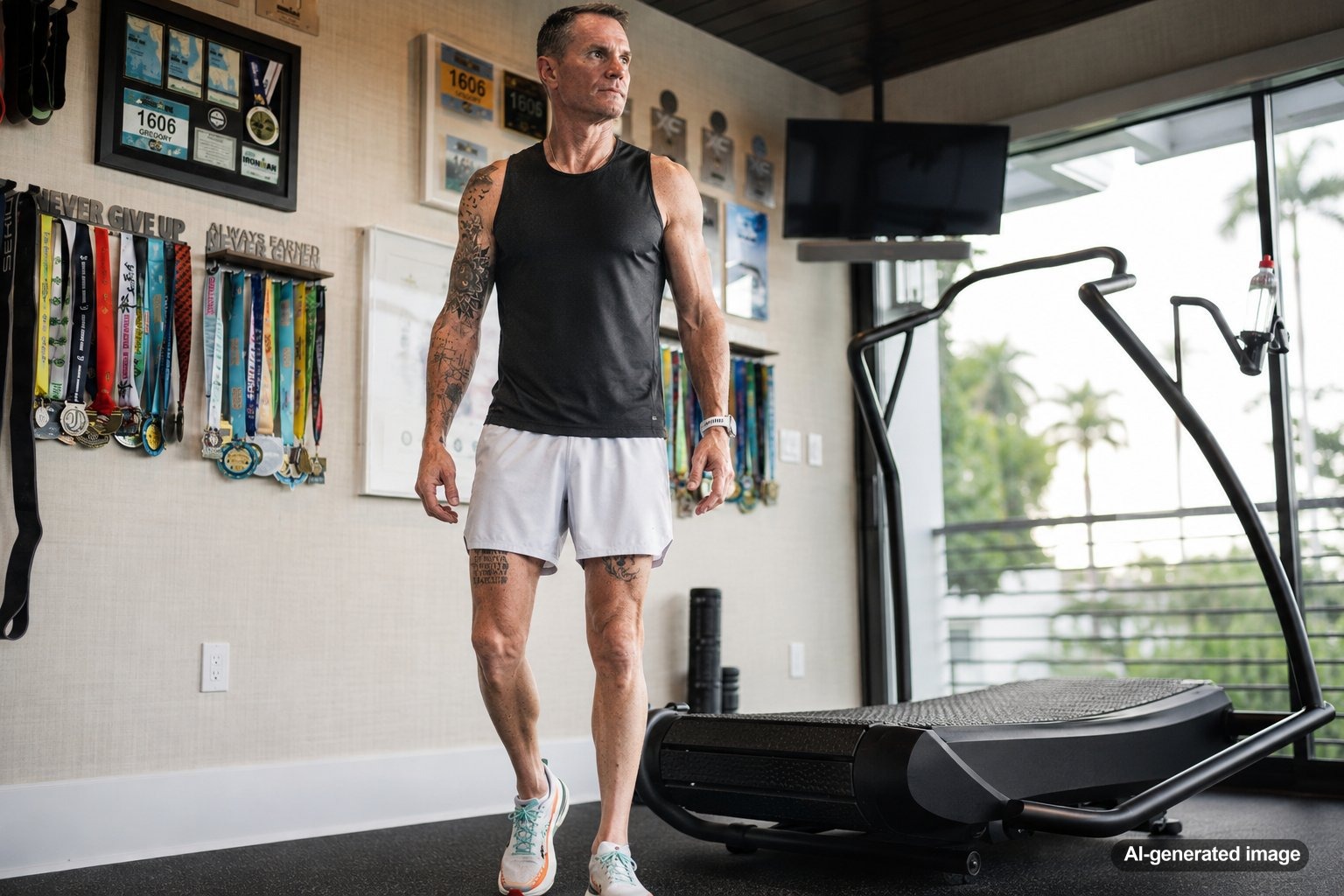
Strength is often measured by what we can lift, how fast we can move, or how much we can endure. For much of my life, endurance sports, business challenges, and personal goals shaped the way I understood strength. Young-onset Parkinson’s changed that definition. It taught me that strength is not only about pushing harder. It is also about adapting, accepting uncertainty, staying connected to the people who matter, and continuing forward when the path looks different than expected.
A diagnosis can create a moment where everything feels like it needs to be redefined. For me, the challenge was not only learning about Parkinson’s. It was understanding how to keep showing up as a husband, father, entrepreneur, athlete, and advocate while navigating a new reality.
Quick answer: What young-onset Parkinson’s taught me about strength
- Strength is more than physical performance. It includes adaptability, patience, and emotional resilience.
- Your identity is bigger than any single challenge or diagnosis.
- Support from family, friends, and community is an important part of moving forward.
- Purpose can become clearer when life does not go according to plan.
Strength is not the absence of uncertainty
Before Parkinson’s entered my life, I was used to solving problems through preparation and effort. Training for endurance events taught me discipline. Building a business taught me leadership. Family taught me responsibility and perspective.
Parkinson’s introduced a different kind of challenge because not every obstacle can be solved by simply working harder. Some moments require patience. Some require asking for support. Some require accepting that progress may look different than it did before.
That lesson applies far beyond Parkinson’s. Leaders, athletes, parents, and professionals all encounter moments where their original plan changes. The question becomes less about controlling every outcome and more about responding with intention.
Redefining identity after a major life change
One of the hardest parts of any major challenge can be understanding who you are when a familiar role changes. For athletes, it may be losing access to a previous level of performance. For leaders, it may be facing a new business reality. For anyone, it can be difficult when life asks you to adjust the story you have always told yourself.
Young-onset Parkinson’s reminded me that identity cannot be built around only one achievement, title, or ability. Being a father, husband, friend, leader, athlete, and advocate are all connected parts of who I am.
The goal is not to ignore what changed. The goal is to recognize that change does not erase everything that came before it.
What endurance taught me about resilience
Endurance racing has always been a powerful teacher. Long races reveal what happens when things become uncomfortable. The body gets tired. The mind starts asking questions. Conditions change.
The same principles apply when facing unexpected life challenges. Resilience is built through small decisions: showing up, staying engaged, asking for help when needed, and continuing to take the next step.
Forward motion does not always mean moving at the same speed. Sometimes it means adjusting the pace while refusing to stop.
The importance of support and connection
Challenges are rarely carried alone. Family, friends, teammates, caregivers, and communities all play a role in helping people navigate difficult seasons.
For people living with Parkinson’s and their loved ones, connection can provide encouragement, understanding, and a reminder that a diagnosis is only one part of a much larger story. Every person’s experience is different, and support often looks different from one person to the next.
Finding purpose after adversity
Adversity has a way of clarifying what matters most. My journey with Parkinson’s strengthened my commitment to advocacy, community, and helping others move forward through difficult circumstances.
The Forward Motion Fund represents that belief: when life changes, we can still choose purpose, action, and hope. The next step may be small, but small steps create momentum.
What people often miss about strength
- Strength can be quiet. It may look like attending an appointment, having a difficult conversation, or continuing a routine when things feel uncertain.
- Strength can include vulnerability. Asking for help is not a weakness. It is often a sign of awareness and courage.
- Strength can evolve. The qualities that helped you succeed before may combine with new skills developed through adversity.
FAQ
What is young-onset Parkinson’s disease?
Young-onset Parkinson’s generally refers to Parkinson’s diagnosed at a younger age than is typical. The experience can vary widely, and anyone with concerns about symptoms or diagnosis should speak with a qualified healthcare professional.
How can someone redefine strength after a major diagnosis?
Redefining strength can involve shifting from a focus on control and performance toward adaptability, connection, purpose, and continued engagement with life.
Why is identity important when facing adversity?
A person’s identity includes many roles, relationships, values, and experiences. Keeping sight of the full picture can help prevent one challenge from becoming the entire story.
Interested in bringing Greg’s message to your event or organization?
Learn more about Greg’s speaking work or get in touch to start the conversation.
Contact Greg or learn more about the Forward Motion Fund.


