

How to Use Data to Predict and Prevent Overtraining
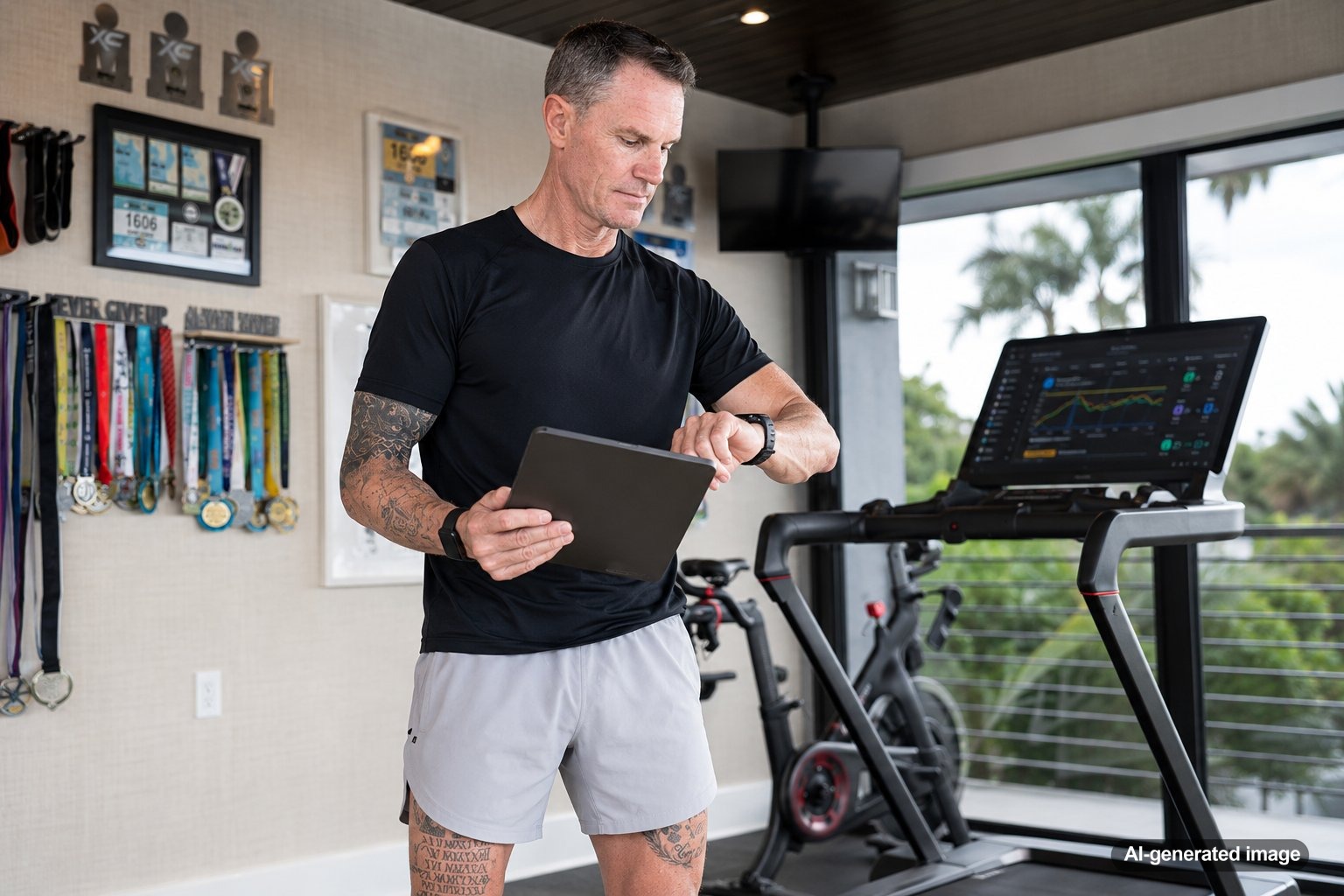
Overtraining rarely announces itself with one dramatic warning. More often, it develops through a series of small changes: a familiar pace begins to feel unusually difficult, sleep becomes less restorative, motivation fades, soreness lingers, and performance stops responding to additional effort. Data can help athletes notice those changes earlier, but only when the numbers are interpreted as part of a larger human picture.
The goal is not to let a watch, app, or spreadsheet control every training decision. The goal is to create enough awareness to recognize when productive fatigue is turning into a pattern that deserves attention. For endurance athletes, leaders, and high performers who are accustomed to pushing through discomfort, that distinction can protect both long-term performance and the ability to keep moving forward.
Quick answer
- Track trends across several metrics instead of reacting to a single number.
- Compare training load with recovery, sleep, mood, soreness, and actual performance.
- Use your own baseline rather than relying only on generic readiness scores.
- Treat unusual combinations of warning signs as a reason to reduce stress and reassess.
- Escalate concerns when symptoms persist, worsen, or affect daily functioning.
What overtraining data can and cannot tell you
Training data is useful because fatigue leaves patterns. Workouts may become slower at the same effort. Resting heart rate may move away from its usual range. Sleep may become inconsistent. A steady training load may suddenly feel much harder than it did two weeks earlier.
However, no single metric can confirm that an athlete is overtrained. Wearable data is influenced by device accuracy, hydration, illness, alcohol, travel, emotional stress, medication, sleep environment, and many other variables. Even a sophisticated readiness score is still an interpretation of selected inputs, not a complete assessment of the person wearing the device.
The most useful approach is to combine objective measurements with subjective experience. Numbers may reveal that something is changing. The athlete’s body, mood, performance, and daily life help explain whether that change matters.
Build a personal baseline before looking for warning signs
Data becomes meaningful when it is compared with your normal range. A resting heart rate that appears high for one athlete may be completely ordinary for another. The same is true for heart rate variability, sleep duration, training volume, and perceived exertion.
Begin by observing several relatively stable weeks. Record the same core measurements under similar conditions whenever possible. Morning readings are often more useful when taken at roughly the same time, before caffeine, training, or a stressful commute changes the picture.
A practical baseline may include:
- Morning resting heart rate
- Heart rate variability, if measured consistently
- Sleep duration and perceived sleep quality
- Weekly training duration and intensity
- Session rating of perceived exertion
- General soreness or heaviness
- Mood, motivation, and irritability
- Performance in repeatable workouts
The baseline does not need to be perfect. It needs to be consistent enough to show when several indicators begin moving away from what is normal for you.
Compare training load with the body’s response
Training load describes how much stress has been applied. Recovery data describes how the athlete appears to be absorbing it. Looking at either side alone creates an incomplete picture.
For example, a high-volume week may be appropriate during a planned build if sleep remains steady, motivation is intact, easy sessions still feel easy, and performance is progressing. The same volume may be excessive during a week filled with business travel, family stress, poor nutrition, or disrupted sleep.
A simple way to estimate internal training load is to multiply session duration by the athlete’s rating of perceived exertion. A 60-minute workout rated 5 out of 10 would produce a session load of 300. This is not a medical measurement, but it can help show how hard the workout felt rather than only how long it lasted.
External load and internal load do not always match. Two identical runs can place very different demands on the same athlete depending on heat, terrain, illness, recovery, and life stress. That gap is often worth investigating.
Watch for clusters instead of isolated readings
One poor night of sleep does not mean an athlete is overtraining. One slow workout may reflect heat, fueling, hills, or an unusually stressful day. A single low readiness score may be noise.
Concern becomes more reasonable when several changes appear together and continue across multiple days. A useful warning cluster might include:
- Resting heart rate consistently outside the athlete’s normal range
- Heart rate variability trending away from baseline
- Declining performance in familiar sessions
- Higher perceived effort at ordinary paces or power outputs
- Repeated sleep disruption
- Persistent soreness, heaviness, or unusual fatigue
- Loss of motivation or growing irritability
- Reduced appetite or difficulty recovering between sessions
The combination matters more than any individual signal. When the device, the workout log, and the athlete’s lived experience all point in the same direction, it is time to pay attention.
Use repeatable workouts as performance checkpoints
Race results are too infrequent and too dependent on conditions to serve as the only performance measure. Repeatable training sessions can provide earlier feedback.
An athlete might use a familiar aerobic run, controlled bike interval, steady swim set, or standardized strength session as a checkpoint. The objective is not to turn every workout into a test. It is to observe whether a known effort is producing an unusual response.
Useful comparisons include:
- Pace or power at the same heart rate
- Heart rate at the same pace or power
- Perceived effort during a controlled session
- Recovery between repeated intervals
- Technique or movement quality late in the workout
Normal fluctuations are expected. The stronger signal is a sustained decline that cannot be explained by conditions, equipment, course changes, or a deliberate training phase.
Do not confuse productive fatigue with chronic breakdown
Hard training should create fatigue. A demanding block may temporarily reduce performance, increase soreness, and make rest feel especially valuable. That does not automatically mean the plan has failed.
Productive fatigue generally has a recognizable relationship to recent work and begins to improve when recovery is increased. The athlete may feel tired while still maintaining stable mood, reasonable sleep, and confidence in the training process.
A more concerning pattern is less responsive. Fatigue persists despite easier days. Performance continues to slide. Sleep may become worse rather than better. Motivation changes from healthy reluctance before a hard workout to a broad loss of interest. Daily responsibilities begin to feel more difficult.
The key question is not simply, “Am I tired?” It is, “Am I adapting when I create space to recover?”
Add life stress to the training dashboard
The body does not keep separate accounts for workout stress and life stress. A challenging project, family responsibility, illness, travel schedule, or emotional strain can change how much training an athlete can absorb.
This is especially important for high performers. People who are disciplined enough to complete every workout are often capable of ignoring the context that makes those workouts more costly.
Add a simple daily life-stress rating to the training log. It can be as basic as low, moderate, or high. Notes about travel, late meetings, caregiving demands, illness exposure, or disrupted meals can make later patterns much easier to understand.
This broader view also supports better leadership. The same principle applies to teams: workload cannot be judged only by the number of assigned tasks. Capacity changes with context, recovery, uncertainty, and the pressure people carry outside the visible plan. Greg’s speaking work explores how endurance, adversity, and leadership intersect when performance must be sustained over time.
Create simple decision rules before fatigue clouds judgment
It is difficult to make an objective decision when an athlete is exhausted, frustrated, or afraid of losing fitness. Predefined rules reduce that pressure.
Examples of practical rules include:
- If three recovery indicators move meaningfully away from baseline for three consecutive days, replace intensity with easy movement or rest.
- If performance declines in two comparable workouts and perceived effort rises, review sleep, fueling, illness, and life stress before adding more work.
- If pain changes movement mechanics, stop treating the issue as ordinary soreness.
- If fatigue persists after several reduced-load days, seek qualified medical or coaching guidance.
These are not universal formulas. They are examples of how athletes can convert data into action. The best rules should reflect training history, health, age, event demands, and professional guidance.
Adjust training without abandoning the larger goal
Reducing load is not the same as quitting. An adjustment may involve shortening a session, lowering intensity, replacing running with low-impact movement, taking a full rest day, improving sleep opportunity, or changing the week’s sequence.
The objective is to preserve the ability to train consistently. One modified workout rarely destroys a season. Repeatedly forcing work through a deteriorating recovery pattern can create a much larger interruption.
This is where resilience needs to be understood correctly. Resilience is not endless tolerance for damage. It includes the judgment to change course while staying committed to the mission. Forward motion sometimes looks like one more hard interval. On another day, it looks like protecting the body that must carry the mission forward.
What athletes often miss
The trend may begin outside training. Sleep disruption, emotional strain, travel, or illness can appear before workout performance changes.
Easy days provide valuable information. When easy work repeatedly feels hard, the athlete may be carrying more fatigue than the training plan shows.
More data is not always better. A small set of consistently recorded metrics is often more useful than dozens of disconnected scores.
Discipline includes restraint. The ability to complete a workout does not automatically make completing it the best decision.
When to seek professional support
Persistent or severe fatigue should not be managed through an app alone. Speak with a qualified healthcare professional when fatigue is prolonged, performance continues to decline, sleep remains disrupted, mood changes become significant, pain affects movement, or symptoms interfere with normal daily activities.
A knowledgeable coach may also help interpret training patterns, but coaching does not replace medical evaluation. Symptoms associated with illness, nutritional deficiencies, injury, medication effects, or other health concerns can resemble training-related fatigue.
For athletes managing a neurological condition, chronic illness, or other medical considerations, training decisions should be coordinated with appropriate healthcare professionals. Data may help organize observations, but it should not be used to self-diagnose.
Frequently asked questions
Can a smartwatch predict overtraining?
A smartwatch may identify changes in sleep, heart rate, heart rate variability, training load, or performance, but it cannot reliably diagnose overtraining by itself. Its value comes from revealing trends that can be considered alongside symptoms, training history, and personal context.
Which metric is most useful for preventing overtraining?
No single metric is best for every athlete. A combination of training load, perceived exertion, sleep, resting heart rate, mood, soreness, and repeatable performance tends to provide a more useful picture than one score alone.
How many days of abnormal data should cause concern?
There is no universal threshold. One unusual day may be normal variation. Several days of worsening recovery data combined with declining performance or persistent symptoms deserve closer attention and may justify reducing training stress.
Should athletes train when their readiness score is low?
A low score should be treated as one piece of information. Consider recent training, sleep, illness, life stress, and how the body feels during the warm-up. Repeated low scores combined with other warning signs are more meaningful than one isolated result.
Can rest completely prevent overtraining?
Rest supports recovery, but prevention also depends on appropriate workload progression, nutrition, sleep, stress management, medical context, and honest communication. The goal is not simply to add occasional rest days. It is to build a training process that adapts to the athlete’s total condition.
The bottom line
Data is most powerful when it improves self-awareness rather than replacing it. Track a few meaningful metrics, establish personal baselines, watch for clusters of change, and connect every number to performance and lived experience.
The strongest athletes are not those who ignore every warning. They are the ones who understand when effort is creating adaptation and when it is creating unnecessary damage. Sustainable performance requires courage, discipline, and the humility to respond before the body is forced to make the decision.
That principle extends beyond sport. Greg’s story brings together endurance, business leadership, family, Parkinson’s advocacy, and the belief that meaningful progress is built one deliberate step at a time. Learn more about his broader mission through the Forward Motion Fund.
Interested in bringing Greg’s message to your event or organization?
Learn more about Greg’s speaking work or get in touch to start the conversation.
Contact Greg or learn more about the Forward Motion Fund.
This article is for educational purposes only and is not medical advice. For diagnosis, treatment, or personalized medical guidance, please speak with a qualified healthcare professional.


