Living Fully With Young Onset Parkinson’s Disease
Living fully with young onset Parkinson’s disease does not mean pretending the diagnosis is easy, denying its effects, or forcing every difficult day into an inspirational story. It means continuing to build a meaningful life while making honest adjustments for symptoms, uncertainty, treatment, work, relationships, and changing energy.
Young onset Parkinson’s generally refers to Parkinson’s diagnosed before age 50. Because it often arrives during active career, parenting, financial, and family-building years, it can disrupt far more than movement. Living fully requires a plan that protects health without allowing the diagnosis to become the only way a person sees themselves.
Quick answer
- Build a knowledgeable care team and communicate changes clearly.
- Treat consistent, appropriate movement as part of long-term self-care.
- Adapt routines before everyday problems become crises.
- Protect relationships through direct, ongoing communication.
- Keep making room for work, family, purpose, competition, creativity, and joy.
Living fully is not the same as living unchanged
A Parkinson’s diagnosis can create a strong desire to prove that nothing has changed. That reaction is understandable, especially for younger people who are building careers, raising children, leading organizations, or training toward demanding goals. However, refusing every adjustment can consume energy that could be used more purposefully.
Living fully is less about preserving an exact version of the past and more about protecting what matters most. A runner might modify training volume without giving up racing. A business leader might schedule demanding conversations during more reliable periods of the day. A parent might explain symptoms in age-appropriate language rather than continually hiding them.
Adaptation is not surrender. It is a practical form of endurance.
Build a care team that understands your whole life
Parkinson’s experiences vary widely, and care may involve more than medication alone. A movement disorder specialist can help guide disease-specific treatment, while physical, occupational, and speech therapists may address movement, daily tasks, communication, swallowing, workplace challenges, and home routines.
For someone diagnosed at a younger age, useful conversations may also include employment, insurance, long-term planning, family responsibilities, medication timing, exercise, emotional health, and questions about genetics. The goal is not to assemble the largest possible team. It is to have access to the right expertise before a manageable issue begins limiting daily life.
Prepare for appointments with real examples
General statements such as “I feel worse” can be difficult to evaluate. Specific observations are often more useful:
- “My right foot begins cramping about 30 minutes before my next dose.”
- “Typing becomes slower late in the afternoon.”
- “I am waking several times each night and struggling to focus the next morning.”
- “I can complete my workout, but balance feels less reliable afterward.”
A simple symptom and medication log may help reveal patterns. Any medication changes, new symptoms, falls, swallowing concerns, mood changes, or significant sleep problems should be discussed with a qualified healthcare professional.
Make movement consistent, personal, and sustainable
Exercise is widely recognized as an important part of living well with Parkinson’s. It may support mobility, balance, flexibility, strength, endurance, mood, and participation in daily activities. The most appropriate program depends on current symptoms, fitness, safety considerations, treatment, and personal goals.
A balanced routine may include aerobic activity, resistance training, mobility work, balance or agility practice, and activities that require coordination. Walking, cycling, swimming, dancing, strength training, yoga, and non-contact boxing are among the many options people may explore with guidance from their healthcare team.
Consistency matters more than selecting the most impressive workout. An ambitious plan that repeatedly causes exhaustion, injury, or long gaps may be less useful than a challenging but sustainable routine. A physical therapist familiar with neurological conditions can help establish a baseline and identify movement changes that might otherwise be missed.
Adjust without abandoning your athletic identity
For an endurance athlete, Parkinson’s can create a difficult emotional question: “Am I still an athlete if my pace, power, balance, or recovery changes?” The answer does not have to depend on yesterday’s numbers.
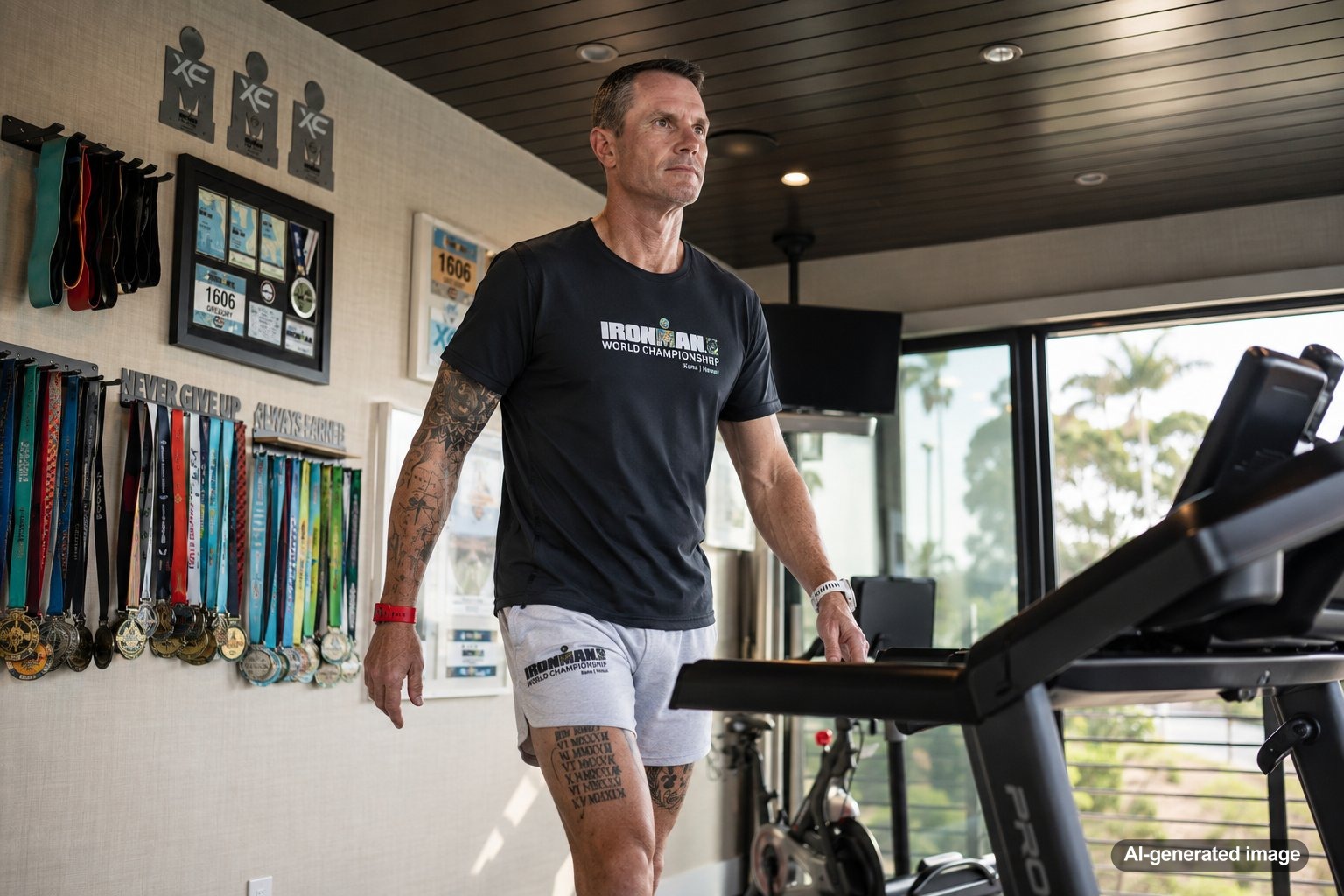
Athletic identity can continue through disciplined training, thoughtful adaptation, competition, teamwork, and the willingness to return after setbacks. The objective may shift from chasing every personal record to building durability, staying engaged, or reaching a start line with a body that now requires more careful management. The effort remains real.
Design daily life around patterns, not pride
Young onset Parkinson’s may affect different tasks at different times. Medication cycles, stress, sleep, fatigue, stiffness, tremor, and cognitive load can influence how a day unfolds. Instead of treating those patterns as personal failures, use them as planning information.
Practical adjustments may include:
- Scheduling high-focus work during the most reliable part of the day.
- Building transition time between demanding commitments.
- Using voice notes, reminders, checklists, or simplified systems.
- Choosing clothing, tools, or technology that reduces unnecessary friction.
- Keeping commonly used items within easy reach.
- Planning recovery after travel, major presentations, or hard training.
Occupational therapy can be especially valuable for protecting independence at work and at home. The best adaptation is often subtle. It removes a barrier without making life revolve around the barrier.
Protect your identity beyond the diagnosis
A diagnosis can quickly become the headline through which other people interpret everything. Friends may ask only about symptoms. Professional contacts may become overly cautious. Family members may watch every movement for signs of change.
Parkinson’s deserves honest attention, but it does not erase the rest of a person. Someone can live with Parkinson’s and still be a parent, spouse, executive, teammate, athlete, volunteer, builder, mentor, and friend. Keeping those identities active is not avoidance. It is part of remaining connected to a full life.
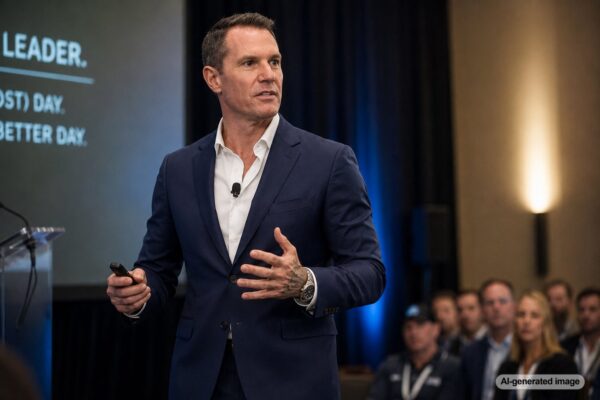
Greg Schaefer’s platform reflects that wider perspective. His story includes business leadership, family, endurance competition, advocacy, and Parkinson’s, rather than allowing any one dimension to replace all the others. Readers can learn more about Greg’s background and journey or explore the mission behind the Forward Motion Fund.
Talk openly with the people closest to you
Parkinson’s affects relationships even when symptoms are not discussed. A spouse may quietly take on more responsibility. Children may sense tension without understanding its cause. Colleagues may misread reduced facial expression, softer speech, fatigue, or slower movement.
Useful communication is specific and two-way. Instead of saying, “I am fine,” explain what is happening and what would help. Instead of allowing a partner to guess, agree on which tasks require assistance and which ones should remain independent. Instead of giving children more medical detail than they need, offer a clear explanation that matches their age and reassures them that they can ask questions.
Care partners also need room to be honest. Support becomes more sustainable when one person is not expected to anticipate every need or absorb every concern alone.
Address work and financial planning before urgency takes over
Younger people with Parkinson’s may expect to remain in the workforce for years or decades. Decisions about disclosure, accommodations, role changes, insurance, disability policies, and long-term finances can therefore carry significant weight.
There is no universal rule for when or how to disclose a diagnosis at work. The right approach depends on symptoms, safety, job responsibilities, workplace culture, legal considerations, and personal preference. Before making major decisions, it may help to document essential job functions, identify specific barriers, review available benefits, and seek qualified legal or financial guidance.
Planning is not a prediction of rapid decline. It is a way to preserve choices. Organizing insurance information, legal documents, account access, and household responsibilities can reduce uncertainty for the entire family.
Make space for emotional health without reducing everything to mindset
Living with Parkinson’s can bring grief, anger, anxiety, frustration, and uncertainty. These responses are not signs of weak character. Parkinson’s can also affect mood directly, and emotional symptoms deserve the same seriousness as movement changes.
Support may come from a therapist, support group, faith community, peer network, family member, coach, or trusted friend. Some people prefer disease-specific groups, while others find that too much Parkinson’s-focused conversation becomes overwhelming. The right amount of connection is personal.
Resilience does not require constant optimism. It can look like admitting that a day is difficult, asking for help, changing the plan, and still remaining connected to the life you are trying to build.
Continue choosing experiences that make life feel alive
Medical appointments and symptom management can gradually fill the calendar. Living fully requires placing meaningful experiences on the calendar too. That might be a race, family trip, date night, school event, speaking engagement, volunteer commitment, quiet morning outdoors, or a project that has nothing to do with Parkinson’s.
The point is not to stay endlessly busy. It is to continue making decisions based on values, not only limitations. Some experiences will require more planning. Others may need to be shortened, modified, or approached with support. They can still matter deeply.
The bottom line
Living fully with young onset Parkinson’s disease is a continuing process of attention, adaptation, and choice. It involves taking symptoms seriously without allowing them to define every ambition, relationship, or identity.
Build a strong care team. Move consistently and safely. Plan around real patterns. Protect your closest relationships. Prepare for the future while continuing to participate in the present. Forward motion is not the absence of difficult days. Sometimes it is simply one more deliberate step.
Frequently asked questions
What is considered young onset Parkinson’s disease?
Young onset Parkinson’s generally refers to Parkinson’s diagnosed before age 50. The symptoms can resemble those seen in later-onset Parkinson’s, but younger adults may face distinct issues involving careers, parenting, finances, long-term treatment, and identity.
Can someone with young onset Parkinson’s remain active?
Many people remain physically active after diagnosis. Exercise can be an important part of Parkinson’s management, but the safest and most useful routine depends on the individual’s symptoms, fitness, treatment plan, and risk factors. A healthcare professional or neurological physical therapist can help tailor an appropriate program.
Should I tell my employer about my diagnosis?
Disclosure is a personal decision influenced by symptoms, safety, job duties, workplace policies, and the need for accommodations. Consider speaking with a qualified employment or disability professional before making decisions with legal or financial consequences.
How can family members provide useful support?
Ask rather than assume. Clarify which tasks require help, preserve independence where possible, communicate about changing needs, and make room for the care partner’s wellbeing. Support works best as an ongoing conversation.
Is living fully the same as staying positive all the time?
No. Living fully can include grief, frustration, uncertainty, and difficult adjustments. It means continuing to make meaningful choices and seek appropriate support, not denying the reality of the condition.
Interested in bringing Greg’s message to your event or organization?
Learn more about Greg’s speaking work or get in touch to start the conversation.
Contact Greg or learn more about the Forward Motion Fund.
This article is for educational purposes only and is not medical advice. For diagnosis, treatment, or personalized medical guidance, please speak with a qualified healthcare professional.