
Why Longevity Advice Often Ignores Quality Of Life
Longevity advice often ignores quality of life because lifespan is easier to measure than meaning, independence, connection, or satisfaction. A number can describe how long someone lives. It cannot tell us whether those years feel engaged, purposeful, and recognizably their own.
Living longer can be a worthwhile goal, but it is an incomplete one. The better conversation asks what we want those additional years to contain. Greg Schaefer’s story sits at the intersection of family, leadership, endurance, adversity, and advocacy. It offers a grounded reminder that a meaningful life cannot be reduced to a collection of optimized metrics.
Quick answer
- Longevity advice tends to emphasize measurable outcomes while overlooking personal priorities.
- Quality of life includes physical capacity, emotional well-being, relationships, autonomy, purpose, and enjoyment.
- A habit that extends life in theory may have limited value if it makes daily life rigid, isolated, or joyless.
- The most useful approach supports both a longer future and a life worth participating in now.
What longevity advice tends to measure
Popular longevity discussions often focus on laboratory results, body composition, sleep scores, exercise targets, supplements, and tightly controlled routines. These measures can provide useful information. The problem begins when information becomes the definition of a successful life.
What gets measured usually receives the most attention. It is relatively straightforward to track a workout, count hours of sleep, or record a health marker. It is harder to quantify whether someone still feels useful, has dependable relationships, enjoys ordinary moments, or can adapt when life disrupts the plan.
A person can follow an impressive routine while becoming increasingly anxious about missing it. Another person may accept a less optimized schedule because it leaves room for family dinners, travel, community, recovery, or meaningful work. A narrow longevity framework may favor the first person. A quality-of-life framework asks better questions about both.
Quality of life is personal, not universal
There is no single version of a good life. For one person, quality of life may mean continuing to compete in endurance events. For another, it may mean gardening, caring for grandchildren, running a company, walking without assistance, traveling with a spouse, or having enough energy to participate in the community.
This is one reason generalized longevity rules can feel disconnected from real life. The same recommendation may create different tradeoffs for different people. A demanding routine that gives one person confidence may leave another feeling consumed by self-monitoring. A restrictive eating plan may appear disciplined on paper while damaging someone’s enjoyment of shared meals.
Good guidance should account for the person behind the plan. Health history, resources, responsibilities, values, physical ability, and tolerance for complexity all matter. Quality of life cannot be copied from someone else’s schedule.
The difference between lifespan and healthspan
Lifespan refers to the total length of a life. Healthspan is commonly used to describe the portion of life spent with relatively good health and functional ability. The distinction is helpful, but even healthspan does not capture everything.
Physical function matters deeply, yet a full life also includes identity, belonging, curiosity, dignity, and contribution. Someone facing a chronic condition can still lead, love, train, create, advocate, and experience meaning. Quality of life should not be treated as something available only to people with perfect health.
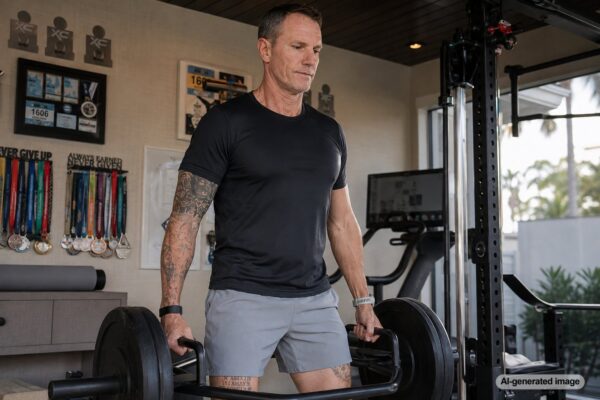
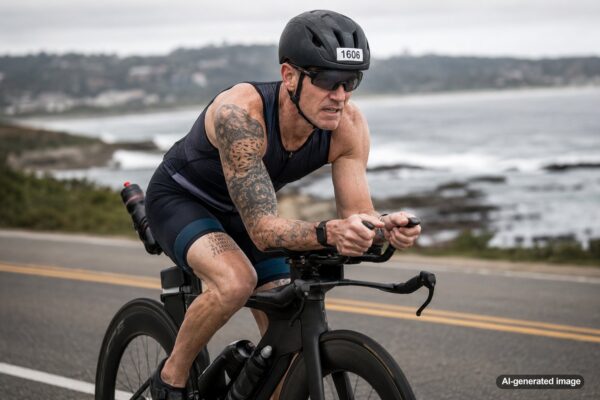
Greg’s return to endurance racing after his Young-Onset Parkinson’s diagnosis reflects this broader perspective. The value is not found in pretending adversity is absent. It is found in continuing to engage with family, purpose, challenge, and service while acknowledging that circumstances have changed.
Optimization can become its own burden
Many health practices are useful because they support life. Trouble starts when life becomes organized entirely around maintaining the practices. A person may decline spontaneous experiences, feel guilty about rest, or treat every meal and workout as a test of discipline.
Four warning signs suggest that optimization may be crowding out quality of life:
- The routine produces more fear than confidence. Missing one session or eating one unplanned meal feels like a serious failure.
- Relationships repeatedly come second. The plan leaves little room for shared experiences or other people’s needs.
- Rest feels morally wrong. Recovery is viewed as weakness instead of a necessary part of sustainable performance.
- The future consumes the present. Nearly every decision is made for a hypothetical later life, with little attention to what makes today meaningful.
Discipline and flexibility do not have to be enemies. Endurance sports and business leadership both teach that durable progress depends on adapting to changing conditions rather than following a rigid script at any cost.
A better framework for longevity decisions
Instead of asking only whether a habit might add years, consider whether it supports the kind of life you want to live. The following questions can make the decision more practical:
- Does this help me remain capable? Consider mobility, strength, energy, cognition, and the ability to handle daily responsibilities.
- Can I sustain it without constant distress? A moderately effective habit practiced consistently may be more useful than an extreme plan that collapses quickly.
- Does it preserve connection? Evaluate how the choice affects family, friendships, community, and shared rituals.
- Does it leave room for purpose? Health should support meaningful work, service, creativity, adventure, and contribution.
- Can it adapt when life changes? Illness, caregiving, work demands, injury, and aging may require the plan to evolve.
- Would I still choose parts of this life today? A future-oriented strategy should not make the present feel like a waiting room.
Quality of life does not mean avoiding hard things
A focus on quality of life can be misunderstood as choosing comfort over effort. In reality, difficult pursuits often add meaning. Training for an endurance event, building a business, supporting a loved one, or advocating for a cause can involve discomfort while making life richer.
The distinction is between chosen difficulty that serves a purpose and unnecessary hardship pursued only to satisfy a metric. A hard workout may reinforce identity, capability, and confidence. The same workout performed through fear, exhaustion, or inappropriate pressure may undermine the life it was supposed to improve.
Forward motion is not endless acceleration. Sometimes it means pushing. Sometimes it means recovering, revising the goal, asking for support, or taking one manageable step. The direction matters more than maintaining the same speed through every season.
Build a life that remains meaningful under changing conditions
No longevity plan can eliminate uncertainty. Bodies change, responsibilities shift, and diagnoses can alter the future without warning. A strong approach therefore needs more than perfect habits. It needs adaptability.
Relationships, purpose, emotional resilience, financial stability, accessible movement, and meaningful community can all help a person navigate change. These elements are not secondary rewards to pursue after health has been perfected. They are part of health and part of the reason longevity matters.
Greg’s work through the Forward Motion Fund also reflects the value of looking beyond the individual. A longer life gains dimension through contribution: supporting research, partners and caregivers, challenged athletes, and young people who need opportunities to discover their own capacity.
Frequently asked questions
Is living longer still a worthwhile goal?
It can be. The point is not to dismiss longevity but to place it within a larger goal. Additional years have greater value when a person can use them for relationships, purpose, participation, and experiences that matter to them.
What factors contribute to quality of life?
Quality of life may involve physical function, emotional well-being, autonomy, safety, relationships, purpose, financial security, enjoyment, and access to appropriate support. The relative importance of each factor varies by person and season of life.
How can someone balance discipline with enjoyment?
Choose a small number of meaningful habits, allow reasonable flexibility, and regularly examine whether the routine is supporting or dominating daily life. Sustainable discipline should create capacity for living, not make ordinary variation feel like failure.
Can someone have a good quality of life with a chronic condition?
Yes, although the experience varies widely and challenges should not be minimized. Meaning, connection, contribution, and personal agency can remain present alongside illness or disability. Qualified healthcare professionals can help individuals evaluate medical needs and appropriate support.
What is one useful question to ask about longevity advice?
Ask, “What is this helping me live for?” The answer can reveal whether a recommendation supports your values or merely adds another task to an already crowded life.
Interested in bringing Greg’s message to your event or organization?
Learn more about Greg’s speaking work or get in touch to start the conversation.
Contact Greg or learn more about the Forward Motion Fund.
This article is for educational purposes only and is not medical advice. For diagnosis, treatment, or personalized medical guidance, please speak with a qualified healthcare professional.