
How To Build A Body And Life That Can Handle Hard Things
Hard things rarely arrive on a convenient schedule. A setback at work can collide with family responsibilities. A difficult season can stretch longer than expected. A physical challenge can expose weaknesses that were easy to ignore when life felt comfortable. Building a body and a life that can handle hard things is not about becoming invulnerable. It is about developing enough capacity, structure, perspective, and support that difficulty does not automatically knock everything else apart.
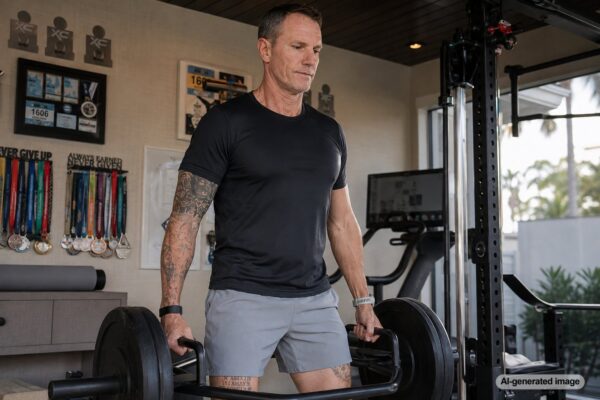
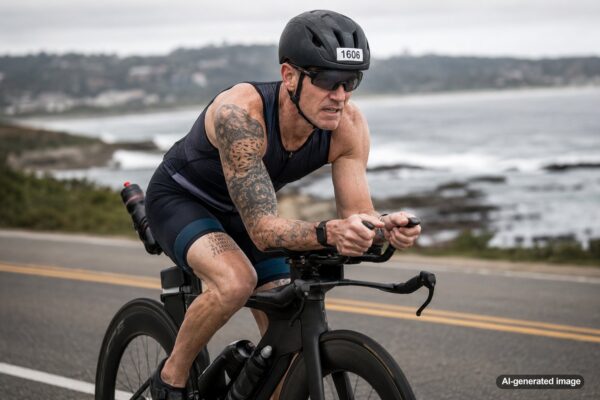
That kind of resilience is built before the hardest moments. It grows through ordinary training, consistent decisions, honest recovery, meaningful relationships, and the willingness to keep moving when progress is slower than you hoped. Greg Schaefer’s story brings together endurance sports, business leadership, family, adversity, and advocacy, but the larger lesson applies far beyond any race course. You can learn more about Greg’s journey and the experiences that have shaped his approach to forward motion.
Quick answer: Build capacity before you need it
- Train your body consistently. Strength, endurance, mobility, sleep, nutrition, and recovery create useful physical capacity.
- Practice doing difficult things on purpose. Chosen challenges teach you how you respond to discomfort, uncertainty, and fatigue.
- Create routines that survive imperfect days. A resilient system does not require ideal conditions.
- Protect your relationships and support network. Strength is not the same as isolation.
- Keep a reason to move forward. Purpose makes effort easier to organize when motivation is unreliable.
Resilience starts with capacity, not toughness
People often talk about resilience as if it were a personality trait. You either have grit or you do not. You are mentally tough or you are not. Real life is more practical than that.
Your ability to handle difficulty is partly determined by how much capacity you have available when the difficulty arrives. If you are already exhausted, isolated, overscheduled, physically depleted, and constantly reacting, a relatively small disruption can feel enormous. If you have created some margin in your body, schedule, relationships, and decision-making, the same disruption may still hurt, but you have more resources available to respond.
This is one reason endurance training can be such a powerful teacher. The goal is not simply to suffer more. Good training gradually expands what you can handle. You stress the system, recover, adapt, and return with more capacity. Life does not follow a perfect training plan, but the principle is useful: resilience grows when challenge and recovery work together.
Build a body that gives you options
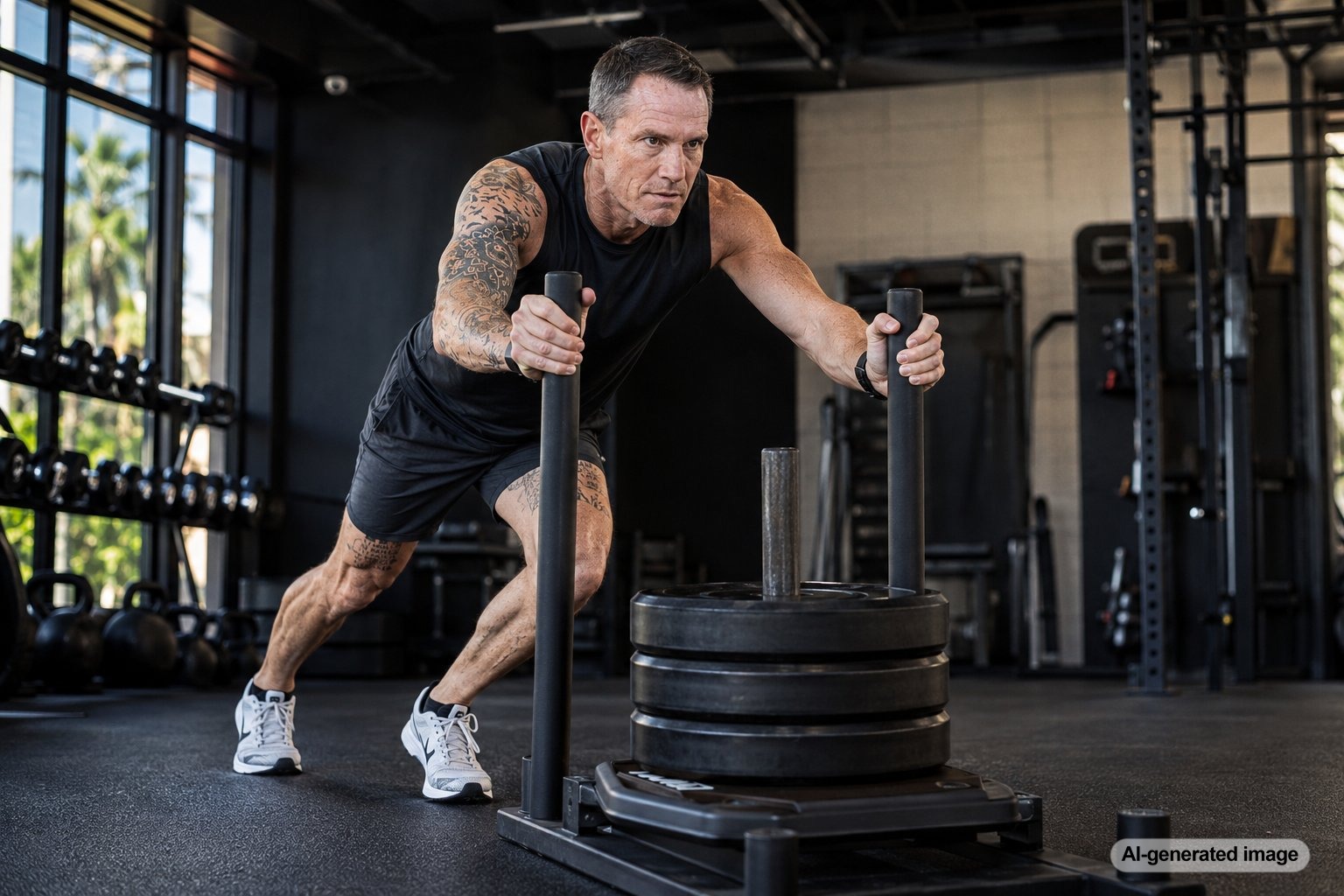
A capable body cannot prevent adversity, but physical capacity can give you more options inside demanding seasons. Regular movement can become a source of structure. Strength can make ordinary tasks easier. Endurance can teach patience. Mobility can help you continue participating in activities that matter to you. Recovery practices can remind you that progress is not created by effort alone.
The important distinction is between training for appearance and training for capability. There is nothing wrong with aesthetic goals, but a body prepared for hard things is built around function. Can you carry what needs to be carried? Can you stay active when a day becomes unexpectedly long? Can you recover from effort instead of living permanently exhausted? Can you adjust when your original plan is no longer realistic?
You do not need to be an Ironman athlete to think this way. The principle works at many levels. Walking consistently, lifting weights appropriately for your circumstances, protecting sleep, eating in a way that supports your activity, and making room for recovery can all be parts of building physical capacity. The specific approach should fit the individual, especially when health conditions or physical limitations are involved.
Practice discomfort before life chooses it for you
There is a meaningful difference between chosen discomfort and uncontrolled adversity, but chosen challenges can still teach useful skills. A difficult workout, an early morning commitment, a demanding project, a long training session, or a conversation you have been avoiding can reveal how quickly you start negotiating with yourself when something becomes uncomfortable.
The goal is not to make life harder for the sake of proving something. The goal is to become familiar with the internal moment when quitting, avoiding, blaming, or postponing starts to feel attractive.
That moment is valuable information. You begin to notice your patterns. Maybe you catastrophize when progress slows. Maybe you become impatient when results are not visible. Maybe you push too hard and ignore recovery. Maybe you withdraw from people when you are struggling. Awareness gives you a chance to respond differently.
Small, deliberate challenges can become practice fields for bigger ones. You learn that discomfort is not always an emergency. You learn that a bad hour does not have to become a bad week. You learn that you can adjust the plan without abandoning the mission.
Create routines that work on bad days
Many routines are designed for the version of us who is rested, motivated, organized, and operating under ideal conditions. That version does not need much help. Resilient routines are built for the other days.
A useful question is: What is the smallest version of this habit that still keeps me connected to the person I want to be?
If the normal workout is an hour, perhaps the hard-day version is a short walk or a few minutes of mobility. If the normal leadership routine involves a detailed planning session, perhaps the hard-day version is identifying the one decision that cannot be avoided. If maintaining relationships usually means a long conversation, perhaps the hard-day version is sending one honest message instead of disappearing.
This approach is not an excuse for lowering standards indefinitely. It is a way to maintain continuity. Extreme all-or-nothing thinking can make a difficult season worse because every disrupted plan starts to feel like failure. A flexible system protects forward motion.
Learn the difference between pain and information
Hard things generate information. Fatigue tells you something. Frustration tells you something. Repeated mistakes tell you something. Conflict tells you something. The challenge is learning how to listen without immediately surrendering to every uncomfortable signal.
In endurance sports, ignoring every signal can be reckless. Reacting dramatically to every signal can also make sustained effort difficult. Life requires a similar kind of judgment. Some discomfort is part of growth. Some discomfort means the plan needs to change. Some situations require professional help, medical guidance, a difficult boundary, or genuine rest.
Mental toughness is not the ability to ignore reality. It is the ability to stay engaged with reality long enough to make a useful decision.
That distinction matters in leadership as well. Strong leaders do not prove resilience by pretending nothing affects them. They gather information, separate urgency from noise, make adjustments, communicate clearly, and keep the team focused on what matters next.
Build margin into your life
Capacity is difficult to build when every part of life is operating at its limit. A calendar with no empty space, finances with no cushion, a body with no recovery, and relationships receiving only leftover attention can function for a while. Then one unexpected problem arrives and exposes how fragile the system has become.
Margin is not laziness. It is strategic capacity.
This can mean leaving room between major commitments. It can mean protecting sleep before an important week. It can mean maintaining relationships before you desperately need support. It can mean saying no to opportunities that look impressive but pull energy away from the work, people, and responsibilities that matter most.
Entrepreneurs and high performers can struggle with this because full capacity feels productive. Yet a life permanently operating at 100 percent has very little ability to absorb surprise. The strongest systems often have some reserve.
Strengthen the people around you
One of the most damaging myths about toughness is the idea that capable people should be able to handle everything alone. In reality, support systems are part of resilience.
Family, friends, teammates, colleagues, coaches, mentors, caregivers, and professionals can provide different forms of support. Sometimes you need advice. Sometimes you need practical help. Sometimes you need accountability. Sometimes you simply need someone who understands that a difficult season is difficult without turning you into a project.
Strong relationships also require contribution. Building a life that can handle hard things means becoming the kind of person who can receive support and offer it. You check on people. You show up. You communicate before problems become crises. You make gratitude visible. You do not wait until you need something to invest in the relationship.
What people often miss about resilience
Resilience is not constant intensity. Sometimes the strongest move is recovery.
Resilience is not pretending you are fine. Honest information helps you make better decisions.
Resilience is not doing everything alone. Support is part of a strong system.
Resilience is not staying attached to one plan. The mission can remain steady while the method changes.
Give the hard thing a larger context
Difficulty becomes harder to navigate when it consumes your entire identity. A failed project can make someone feel like a failed leader. An injury can make an athlete feel like they have lost themselves. A diagnosis can threaten to turn a whole person into a medical label. A business setback can make years of accomplishment suddenly feel irrelevant.
A resilient identity is wider than the current challenge.
Greg’s platform reflects that broader view. He is a husband, dad, former insurance agency CEO, endurance athlete, speaker, advocate, and someone living with Young-Onset Parkinson’s. None of those dimensions needs to erase the others. The same principle applies to anyone facing adversity. You are allowed to acknowledge the seriousness of what you are dealing with without making it the only true thing about you.
This wider identity creates room for adaptation. If one role changes, meaning can still exist elsewhere. If one goal becomes temporarily impossible, another form of contribution may still be available.
Use purpose when motivation disappears
Motivation is useful, but it is unreliable. Some mornings you will feel ready. Others will require a decision before the feeling arrives.
Purpose helps because it connects effort to something larger than the immediate discomfort. The reason might be family. Service. Leadership. Health. Competition. Community. Faith. Craft. Responsibility. A promise you made to yourself. A cause that matters enough to keep showing up for.
Purpose does not make hard things easy. It helps answer a more useful question: Why is continuing worth the effort?
That idea sits at the heart of Greg’s Forward Motion Fund and the message, One More Step… Just One More. Forward motion does not require pretending the road is easy. Sometimes it means making the next useful decision while accepting that the entire path is still unclear. Readers who want to explore that mission can learn more about the Forward Motion Fund.
A practical framework for harder seasons
When life becomes demanding, complexity can become its own burden. A simpler framework can help you identify what deserves attention first.
- Stabilize: What needs immediate attention so the situation does not become unnecessarily worse?
- Assess: What is actually true right now, separate from fear, assumptions, and worst-case projections?
- Prioritize: What matters most today, even if ten other things also feel urgent?
- Adjust: What part of the original plan no longer fits reality?
- Connect: Who needs to know what is happening, and where could support help?
- Move: What is one useful next action you can take with the capacity you have?
- Recover: What will help restore enough energy to make another good decision tomorrow?
This framework works because it does not require certainty about the entire future. It brings attention back to the next responsible step.
Build before the storm
The best time to create resilience is not after every resource has already been depleted. Build strength when you can. Protect important relationships while things are going well. Practice honest communication before a crisis. Create routines before motivation disappears. Develop interests and purpose beyond a single role. Learn how you recover. Notice how you react when plans change.
Then, when something difficult arrives, you will not be starting from zero.
You still may be scared. You may need help. You may need to change direction. You may have days when forward motion looks almost invisible. None of that cancels the work you have already done.
A body and life capable of handling hard things is not one that never bends. It is one that has learned how to absorb pressure, adapt intelligently, recover honestly, and keep moving with purpose.
Frequently asked questions
Can resilience actually be developed?
Resilience can be strengthened through experience, habits, supportive relationships, physical capacity, reflection, and repeated practice responding to manageable challenges. It is better understood as a set of capacities and behaviors than as a fixed personality trait.
Does mental toughness mean pushing through everything?
No. Useful mental toughness includes judgment. Sometimes continuing is appropriate. Sometimes changing the plan, resting, asking for help, or seeking professional guidance is the stronger decision. Ignoring important information is not the same as resilience.
What is the best first step for becoming more resilient?
Choose one area where greater capacity would meaningfully improve your life. That might be physical fitness, sleep, time management, relationships, financial margin, communication, or a consistent daily routine. Start small enough that you can continue even when the week becomes difficult.
How can leaders help teams handle hard situations?
Leaders can create clarity around priorities, communicate honestly, distinguish real urgency from unnecessary pressure, encourage preparation, protect recovery when possible, and build a culture where asking for help is compatible with accountability. Teams tend to handle pressure better when expectations and responsibilities are clear before a crisis.
How does purpose help during adversity?
Purpose can give effort a meaningful direction when immediate circumstances are discouraging. It does not remove pain or uncertainty, but it can help someone identify why the next action still matters.
Interested in bringing Greg’s message to your event or organization?
Learn more about Greg’s speaking work or get in touch to start the conversation.
Contact Greg or learn more about the Forward Motion Fund.
This article is for educational purposes only and is not medical advice. For diagnosis, treatment, or personalized medical guidance, please speak with a qualified healthcare professional.