

Why Swimming Is One Of The Best Full-Body Workouts For Aging Men
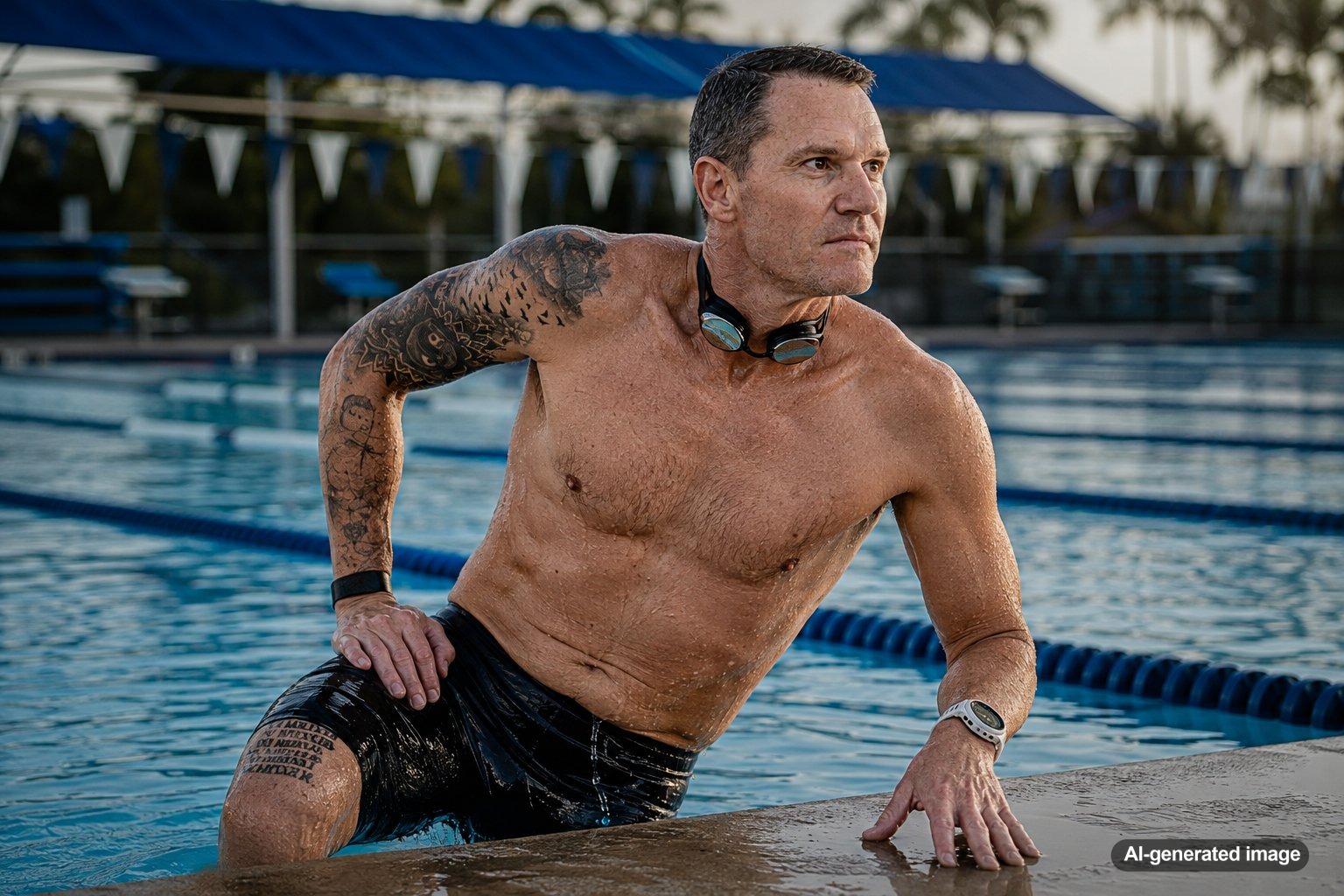
For men who want to stay strong, capable, and active as the years add up, swimming deserves a serious look. It challenges the entire body, demands coordination, builds cardiovascular endurance, and does it without the repeated pounding that comes with many land-based workouts. That combination can make the pool especially valuable for athletes who still want to work hard but also understand that longevity depends on training intelligently.
For someone like Greg Schaefer, whose life has long included endurance sports, business leadership, family, adversity, and a commitment to forward motion, sustainable training matters. You can learn more about that broader story on Greg’s About page. Swimming fits naturally into that mindset because it rewards patience, consistency, technique, and the willingness to keep showing up.
Quick answer: Why is swimming so effective for aging men?
- It engages the upper body, lower body, and core in the same workout.
- Water reduces impact on the body compared with many land-based activities.
- It can challenge cardiovascular endurance without requiring high-impact movement.
- Technique, breathing, and body position add coordination and focus to the workout.
- Intensity can be adjusted easily, making swimming useful for recovery days, steady aerobic work, or harder training sessions.
Swimming trains more than just your arms
Watch a strong swimmer for a few lengths and it becomes obvious that swimming is not simply an upper-body exercise. The arms may be the most visible part of the stroke, but efficient movement through the water depends on the entire kinetic chain.
Your shoulders, back, chest, and arms contribute to propulsion. Your core helps maintain body position and connects the movement of the upper and lower body. Your hips and legs contribute through kicking, rotation, balance, and streamlined positioning. Even when one muscle group is doing more of the work, the rest of the body is rarely completely off duty.
That matters for aging athletes because maintaining useful, integrated movement can be more valuable than chasing isolated numbers in the gym. Swimming asks the body to work as a coordinated system.
It offers hard work without constant pounding
One of swimming’s biggest practical advantages is the environment itself. Water supports the body, so a swimmer does not experience the same repeated ground impact associated with running, jumping, or many court sports.
That does not mean swimming is automatically easy or appropriate for every person. A demanding swim session can leave an experienced athlete thoroughly worked. Shoulder technique also matters, and anyone dealing with pain, injury, balance concerns, cardiovascular limitations, or other health issues should discuss an appropriate exercise plan with a qualified professional.
Still, for many men who enjoy endurance training but want another way to accumulate quality work, swimming can provide a useful alternative. It lets the athlete train with purpose while varying the stresses placed on the body.
Swimming combines endurance with muscular work
A steady swim requires continuous effort, but water also creates resistance in every direction. Instead of moving a weight through a fixed path, the swimmer repeatedly pushes against the surrounding water while trying to maintain efficient position.
This creates an interesting blend. A longer, controlled session can emphasize aerobic endurance, while shorter intervals can make the workout feel much more demanding. Paddles, pull buoys, kick sets, and changes in stroke can alter the emphasis further, although equipment and technique should match the swimmer’s ability and comfort.
For an aging athlete, that versatility is valuable. One pool can support an easy recovery-oriented session on Monday, controlled endurance work later in the week, and a sharper interval session when the training plan calls for it.
Breathing becomes part of the training
On land, breathing often happens without much conscious timing. In freestyle swimming, breathing has to fit the stroke. The swimmer exhales, rotates, takes a breath, returns the face to the water, and continues moving without losing rhythm.
That makes swimming unusually technical for a cardiovascular workout. Fitness alone cannot solve every problem. A strong athlete who fights the water, holds his breath, or rushes each stroke can burn energy quickly. A more efficient swimmer can often move with greater control.
This is one reason swimming can remain interesting for decades. There is always something to refine: body position, hand entry, catch, rotation, kick timing, breathing, pacing, or simply the ability to stay relaxed while working hard.
The pool makes intensity easy to scale
Aging well as an athlete does not mean every session should become easy. It means effort should have a purpose. Swimming provides a wide range of intensity without requiring an entirely different activity.
A swimmer might spend one session moving continuously at a conversational effort. Another workout might alternate moderate lengths with easy recovery. A more experienced athlete might use short repeats with generous rest to work on speed and technique. The distance, pace, stroke, rest interval, and equipment can all be adjusted.
That flexibility can help men move away from the idea that every workout has to prove something. Some days are for building. Some are for maintaining. Some are for recovering while staying in motion.
Technique can matter more as you get older
One of the overlooked advantages of swimming is that better technique can make training more productive without simply demanding more effort. That is an appealing proposition for anyone interested in athletic longevity.
Instead of asking, “How can I work harder?” a swimmer can also ask, “How can I move better?” Those are different questions. The second one encourages attention to efficiency, posture, timing, and unnecessary tension.
For men coming back to swimming after years away, a few sessions with a qualified swim coach can be useful. The goal is not necessarily to become a competitive swimmer. It is to build a stroke that feels sustainable enough to make the pool a consistent part of life.
What aging athletes often miss about swimming
The biggest mistake is assuming that swimming only counts if the workout is long, fast, or exhausting. Consistency matters more than turning every visit to the pool into a test.
- Start with manageable volume. Ten controlled lengths with good form can be more useful than forcing a long session while technique falls apart.
- Use rest intentionally. Taking 15, 30, or 60 seconds between repeats is not cheating. Rest can help preserve technique and make the session more purposeful.
- Mix strokes carefully. Freestyle is common, but backstroke, breaststroke, or drills can add variety when they are comfortable and appropriate.
- Pay attention to the shoulders. Repetition adds up. Pain is not a badge of toughness, and persistent discomfort deserves appropriate evaluation.
- Think in months, not heroic days. A workout you can repeat consistently is usually more valuable than one session that leaves you unwilling to return.
Swimming can support the endurance mindset
Endurance sports teach a lesson that reaches well beyond racing: progress is usually built through repeated, ordinary efforts. Swimming makes that lesson visible. One length becomes another. One set becomes another. The workout moves forward through small decisions to continue.
That idea connects naturally with Greg’s broader message of resilience and forward motion. His experience as a 20-time Ironman, entrepreneur, husband, dad, speaker, and advocate is not built around pretending challenges do not exist. It is built around continuing to engage with what comes next. For organizations exploring those themes in a leadership or team setting, Greg’s speaking work brings those lessons into a broader conversation.
The bottom line
Swimming stands out for aging men because it can train the whole body, challenge endurance, encourage better movement, and provide substantial flexibility in how hard or easy a session becomes. It is not the only exercise anyone needs, and it does not replace individualized medical or fitness guidance. But as part of a balanced approach to staying active, capable, and engaged, the pool can be an exceptionally useful place to keep moving forward.
Frequently asked questions
Is swimming enough for a complete fitness program?
Swimming can contribute significantly to cardiovascular fitness, muscular endurance, coordination, and general conditioning, but a well-rounded program may also include appropriate strength, mobility, balance, and weight-bearing activity depending on a person’s goals and health needs.
How often should an older man swim?
There is no single schedule that fits everyone. Training frequency depends on current fitness, swimming experience, recovery, other activities, health considerations, and goals. Someone new to swimming may benefit from starting conservatively and increasing workload gradually.
Is swimming a good choice if running feels too hard on the body?
Swimming may be a useful alternative or complement because it does not involve the same repetitive ground impact as running. However, any persistent pain or limitation should be evaluated appropriately rather than simply worked around.
Do you need to be a strong swimmer to get a useful workout?
No. Beginners can work with shorter distances, generous rest, and technique-focused sessions. Comfort and safety in the water come first, and instruction can make the learning process more productive.
Can experienced endurance athletes benefit from swimming even if they are not training for a triathlon?
Yes. Swimming can provide variety, aerobic work, technique practice, and a different physical challenge from running or cycling. It can be valuable even when there is no race on the calendar.
Interested in bringing Greg’s message to your event or organization?
Learn more about Greg’s speaking work or get in touch to start the conversation.
Contact Greg or learn more about the Forward Motion Fund.
This article is for educational purposes only and is not medical advice. For diagnosis, treatment, or personalized medical guidance, please speak with a qualified healthcare professional.


