
What The Final Miles Of The Ironman Bike Teach You About Grit
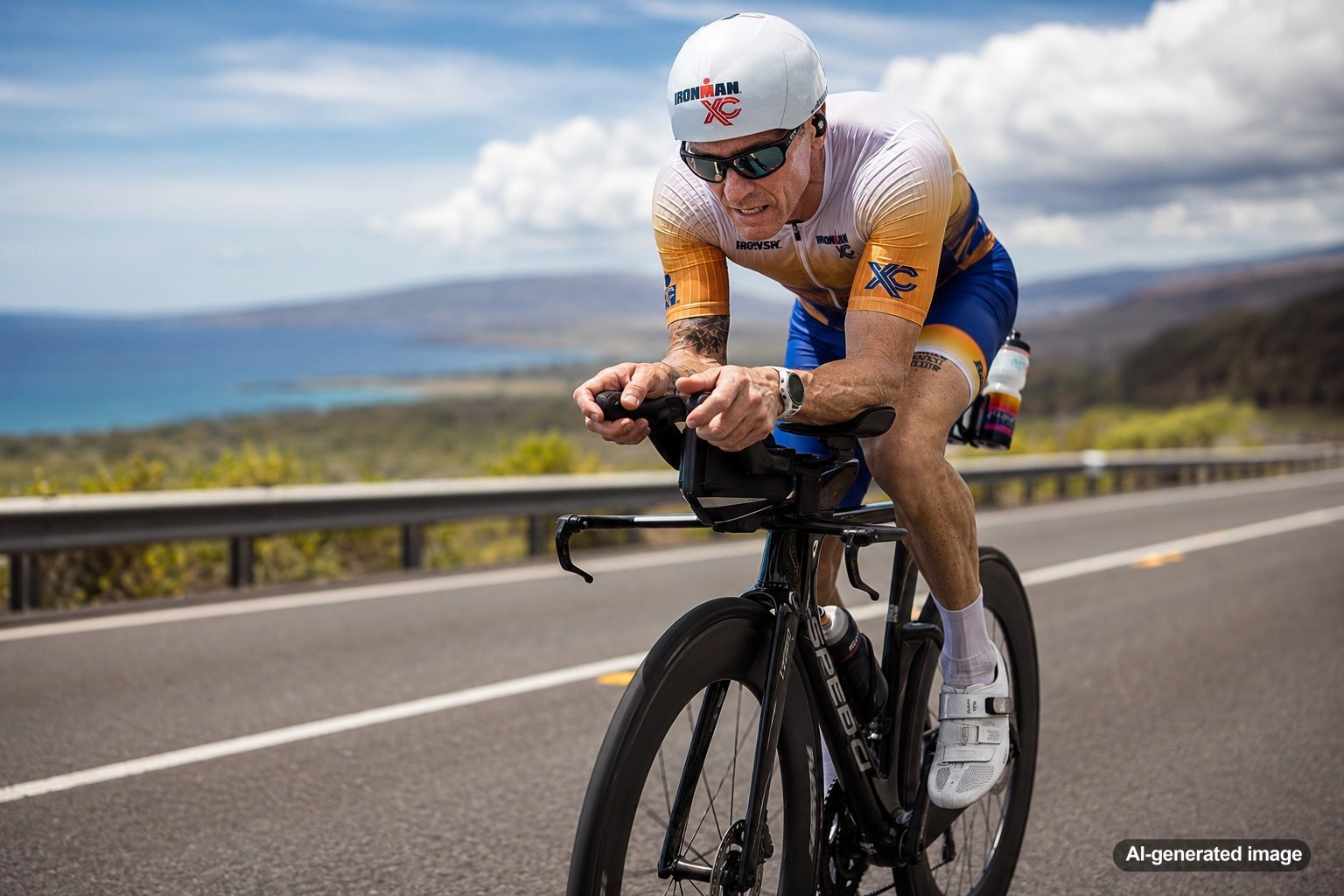
The final miles of the Ironman bike are not usually dramatic in the way people imagine endurance sports. There is no finish-line tape yet. No roar of the crowd carrying you home. No simple burst of adrenaline that makes the hard part disappear. There is only the road, the fatigue, the math in your head, and the quiet decision to keep doing the next right thing.
That is what makes those miles such a powerful teacher. They reveal that grit is not a personality trait reserved for the loudest or toughest person in the room. Grit is the practiced ability to stay committed when the reward is still far away, when the body is asking questions, and when the mind has to become steady enough to answer. For Greg Schaefer, whose platform brings together family, business, endurance, adversity, advocacy, and forward motion, that lesson reaches far beyond the race course. It is part of the same message behind Greg’s story: keep moving with purpose, one step at a time.
Quick answer: what those final miles teach about grit
- Grit is controlled patience. The final miles are not about panic or heroics. They are about staying composed long enough to make good decisions.
- Fatigue exposes your systems. Training, fueling, pacing, and mindset all show up when comfort is gone.
- Progress gets smaller, but it still counts. A few steady miles can matter more than one emotional surge.
- Discipline beats drama. The strongest athletes often look calm because they are choosing efficiency over ego.
- The lesson transfers. Leadership, family, health challenges, business pressure, and advocacy all require the same ability to keep moving when the outcome is not immediate.
The final bike miles are where the race gets honest
In an Ironman, the bike leg is long enough to test more than fitness. It tests judgment. By the final miles, the early excitement is gone. The athlete has already spent hours managing effort, nutrition, position, terrain, wind, discomfort, and the voice inside that keeps asking how much is left.
Those miles are honest because they remove the illusion that grit is just intensity. Intensity may get someone out the door. It may get them through the start. But near the end of the bike, intensity without discipline can become expensive. Push too hard and the run may fall apart. Back off mentally and the race can shrink before it is over. The work becomes less about proving something and more about preserving enough strength to continue well.
That distinction matters in life too. Many people can start with energy. Leaders can launch a company with ambition. Families can rally in the first days after difficult news. Athletes can train hard when motivation is high. The deeper test comes later, when there is less applause, more uncertainty, and a need for steady, repeatable choices.
Grit is not the absence of doubt
One of the most overlooked truths about endurance racing is that strong athletes still have hard thoughts. Grit does not mean the mind never questions the plan. It means doubt does not automatically get the steering wheel.
In the final miles of the bike, the questions can become practical and personal at the same time. Did I pace this correctly? Did I fuel enough? How will my legs feel when I get off the bike? Can I hold this together for the run? None of those questions make an athlete weak. They make the moment real.
The useful skill is learning how to respond without spiraling. That may mean returning to breath, cadence, nutrition, posture, or the next landmark. It may mean narrowing the focus from the entire race to the next five minutes. In business and in life, the same principle applies. When the challenge feels too large, gritty people do not always feel fearless. They get specific. They ask, what is the next useful action?
What the bike teaches about patience under pressure
The final miles of the bike can be frustrating because the athlete is close, but not close enough. The transition area may be coming, but the marathon still waits. This is where patience becomes a form of strength.
Patience does not mean coasting. It means resisting the urge to make emotional decisions just because the end of one segment is near. A smart athlete knows that a race is not won by pretending the next stage does not exist. The bike has to be finished in a way that honors the run.
That is a leadership lesson as much as an athletic one. A founder cannot spend every ounce of energy closing one deal if it leaves the team unable to deliver. A parent cannot pour from an empty cup forever and call it strength. A person facing adversity cannot build a sustainable life on adrenaline alone. Grit requires pacing. It asks for commitment, but it also asks for wisdom.
Fatigue reveals what was built before the hard moment
By the final miles, an athlete is not inventing character from scratch. The race reveals what was practiced. The long rides, the early alarms, the recovery choices, the fueling tests, the uncomfortable workouts, and the quiet decisions all arrive together.
This is one reason endurance sports can feel so connected to resilience. The visible race is only the surface. The deeper story is preparation. When the hard moment comes, the athlete draws from habits built when no one was watching.
Greg’s work as a speaker connects with that same idea. The message is not that life becomes easy if you are determined enough. It is that forward motion is often built through ordinary choices repeated with purpose. That is true in training, in leadership, in family life, and in the work of continuing to show up after a life-changing diagnosis. For organizations and teams, this is part of what makes Greg’s speaking resonate: resilience becomes practical, not abstract.
The difference between toughness and grit
Toughness can sound like a clenched jaw. Grit is more nuanced. Toughness may help someone endure pain for a short period. Grit is what keeps someone aligned with a mission over time.
In the final miles of the bike, toughness might say, push no matter what. Grit asks a better question: what choice helps me keep moving toward the larger goal? Sometimes that means holding pace. Sometimes it means backing off slightly so the next stage is possible. Sometimes it means refusing to negotiate with the part of the mind that wants to quit early.
That distinction matters because real resilience is not reckless. It is not pretending limits do not exist. It is working with reality, making the strongest available choice, and staying connected to why the effort matters.
What people often miss about grit
Grit is easy to admire from the outside and difficult to practice from the inside. From a distance, it can look like one heroic moment. Up close, it is usually a series of smaller decisions: drink now, stay smooth, relax the shoulders, keep the cadence, do not chase someone else’s race, get to the next mile marker, repeat.
Practical takeaways from the final miles
The final miles of the Ironman bike offer a simple but demanding framework for anyone trying to move through pressure with more strength and clarity.
- Protect the next stage. Do not spend all your energy proving you can survive this moment if the larger mission requires you to keep going after it.
- Make the next action concrete. When the full challenge feels overwhelming, shrink the focus to something useful and immediate.
- Trust preparation, not panic. Hard moments are not the time to abandon every system. They are the time to rely on what has been practiced.
- Separate discomfort from danger. Not every hard feeling means the plan is failing. Sometimes it means the work is real.
- Remember the reason. Purpose does not remove the pain, but it can help organize the effort.
Why this lesson matters beyond racing
Most people will never race an Ironman, but nearly everyone will face their own version of the final miles. It may be the late stage of a business challenge, a difficult season in a marriage, a health journey that demands patience, a caregiving role, a leadership decision, or a mission that takes longer than expected to build.
The lesson is not that everyone needs to become an endurance athlete. The lesson is that forward motion is often quiet before it is visible. It is built in the miles where no one is cheering yet. It is built when the path is still unfinished and the outcome has not fully arrived.
That is also why Greg’s phrase, One More Step… Just One More, carries weight. It is not a slogan about pretending hardship is simple. It is a reminder that progress often comes down to the next faithful action. The Forward Motion Fund grows from that same belief: movement can become mission, and personal adversity can become a way to support others.
FAQ
What does the final part of an Ironman bike leg feel like?
It can feel mentally and physically complex. The athlete may be tired from hours of riding while also preparing for the marathon ahead. The challenge is not only to finish the bike, but to finish it with enough composure and energy to continue.
Is grit the same as mental toughness?
They overlap, but they are not identical. Mental toughness often describes the ability to handle pressure or discomfort. Grit includes persistence over time, commitment to a larger goal, and the discipline to keep making wise choices when motivation fades.
Why does pacing matter so much in endurance sports?
Pacing matters because endurance is cumulative. A choice made too aggressively in one section can affect the next. In an Ironman, the bike is not an isolated event. It sets up the run, which makes patience and judgment essential.
How can non-athletes use this lesson?
Non-athletes can apply the same mindset by focusing on the next useful action, preparing before pressure hits, avoiding emotional overreaction, and staying connected to the larger purpose behind the work.
How does this connect to Greg Schaefer’s message?
Greg’s story brings together endurance racing, entrepreneurship, family, Parkinson’s advocacy, and mission-driven impact. The final miles of the bike reflect a broader truth in his work: resilience is not about never hurting or never doubting. It is about continuing with purpose when the road asks more of you.
Interested in bringing Greg’s message to your event or organization?
Learn more about Greg’s speaking work or get in touch to start the conversation.
Contact Greg or learn more about the Forward Motion Fund.
This article is for educational purposes only and is not medical advice. For diagnosis, treatment, or personalized medical guidance, please speak with a qualified healthcare professional.