The Best Exercise Bikes for Parkinson’s Patients: A Triathlete’s Review
The best exercise bike for someone living with Parkinson’s is not always the most expensive, the most connected, or the one with the hardest workout modes. It is the bike that feels safe enough to use consistently, stable enough to trust, and adjustable enough to meet the rider where they are on that particular day.
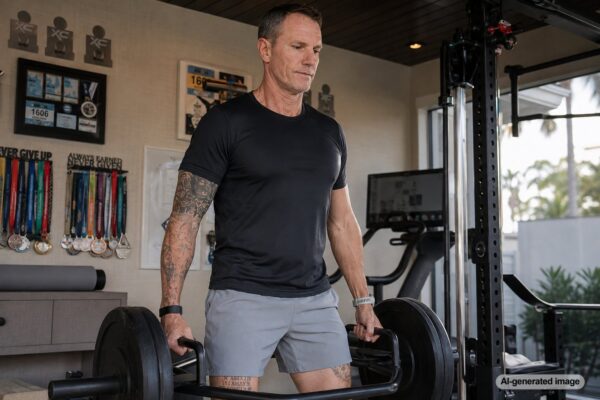
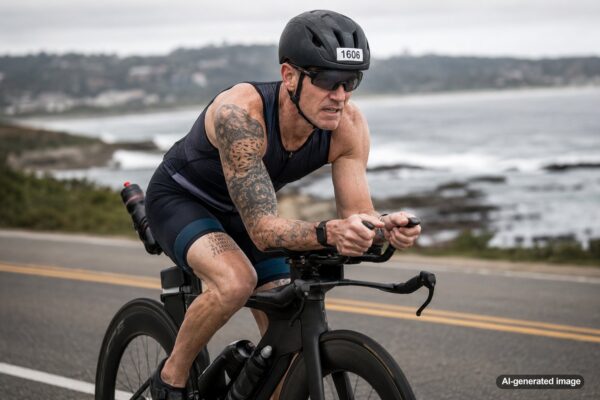
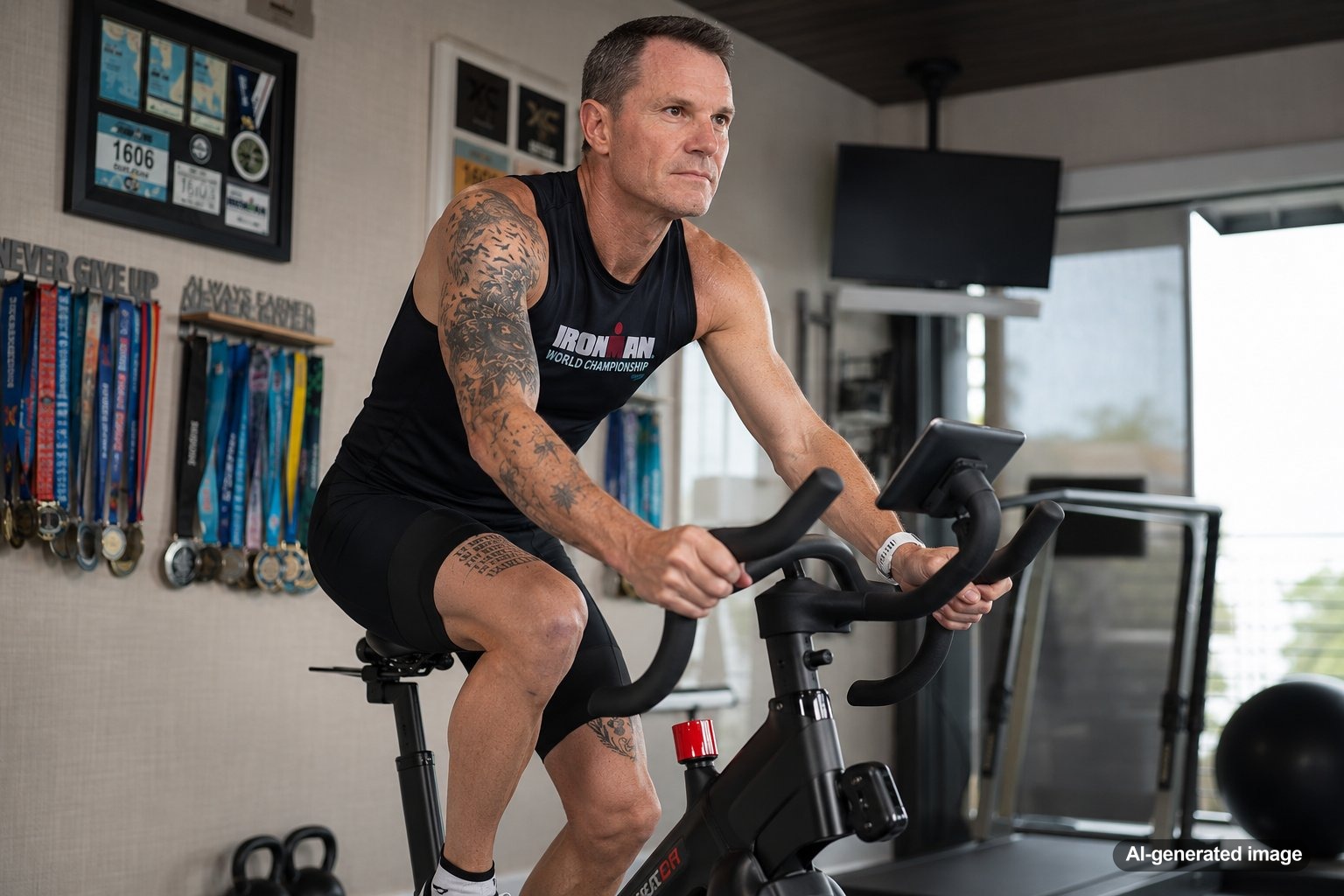
From a triathlete’s point of view, cycling has a clear appeal: it is rhythmic, measurable, low impact, and easy to scale. From a Parkinson’s point of view, those same strengths matter even more. A stationary bike can remove weather, traffic, balance concerns, and time pressure from the equation. For someone like Greg Schaefer, whose life sits at the intersection of endurance sport, business leadership, family, and Young-Onset Parkinson’s, the right bike is not just equipment. It can be one more practical tool for forward motion.
Quick answer: what matters most
- For stability and ease of access: a recumbent bike is often the most approachable choice.
- For a road-bike feel: an indoor cycling bike or smart trainer may suit experienced riders.
- For small spaces or gentle movement: a compact pedal exerciser can be useful, but it is not a full substitute for a stable bike.
- For motivation: a connected bike, app, or simple display can help, but only if it does not make training feel more complicated.
- For safety: the best setup is one your clinician or physical therapist agrees fits your balance, mobility, cardiovascular health, and goals.
First, what makes cycling useful for Parkinson’s?
Exercise is widely recognized as an important part of living with Parkinson’s. The Parkinson’s Foundation describes exercise as a vital part of Parkinson’s management and notes that it can support balance, mobility, flexibility, and quality of life. The American Parkinson Disease Association also emphasizes aerobic, strengthening, balance, and stretching work as part of a well-rounded approach.
Cycling is not magic, and it is not a treatment plan by itself. But it has a few qualities that make it especially practical. It allows repeated, rhythmic movement. It can be adjusted from very gentle to very challenging. It reduces impact on the joints compared with running. It also provides a controlled environment, which can be valuable for people who are concerned about uneven pavement, crowds, weather, or balance demands outdoors.
A triathlete looks at a bike through the lens of fit, repeatability, resistance, cadence, and comfort. A person living with Parkinson’s may look at the same bike through the lens of entry height, seat support, stability, tremor, stiffness, fatigue, confidence, and how the body feels before and after medication timing. The best choice respects both realities.
1. Recumbent bikes: often the best starting point for stability
A recumbent bike places the rider in a seated, reclined position with back support and pedals out in front. For many people with Parkinson’s, this can feel less intimidating than climbing onto a tall saddle. The lower step-through design, wider seat, and backrest may help riders feel more secure.
From a training perspective, a recumbent bike can still provide real aerobic work. The rider can use light resistance for an easy spin, build toward moderate effort, or create structured intervals when appropriate. It may not mimic a road bike perfectly, but it wins on accessibility, comfort, and confidence.
Look for a recumbent model with a low step-through frame, a seat that slides easily, clear resistance controls, stable handles, and a display that is simple to read. A heavy frame is not always convenient to move, but it can feel more planted during use. If getting on and off the bike is the hardest part of the workout, the recumbent bike deserves serious consideration.
2. Upright stationary bikes: a balanced middle ground
An upright stationary bike looks more like a traditional gym bike. It usually takes up less floor space than a recumbent bike and keeps the rider in a more vertical position. For someone who has decent balance, can mount safely, and wants a familiar cycling motion, this category can be a strong middle option.
The main question is not whether the bike is hard enough. It is whether it is forgiving enough. A good upright bike for Parkinson’s should have a stable base, an easy-to-adjust seat, handlebars that are comfortable to grip, and controls that do not require fine motor precision just to start a ride.
For a triathlete, an upright bike may feel less performance-oriented than a dedicated indoor cycling bike. For a Parkinson’s rider, that may be a positive. A calmer, simpler machine can make it easier to show up three or four times a week without turning every ride into a production.
3. Indoor cycling bikes: best for experienced riders who want intensity
Indoor cycling bikes are designed for more athletic riding. They often have a heavier flywheel, a more aggressive riding position, and resistance that can be adjusted for climbs, intervals, and higher-output sessions. For someone with prior cycling or triathlon experience, this may feel natural and motivating.
The tradeoff is access and posture. These bikes often require the rider to swing a leg over a higher frame, lean forward more, and manage resistance while riding. That may be completely reasonable for one person and frustrating or unsafe for another. Parkinson’s can vary widely, not just from person to person but from day to day.
If an indoor cycling bike is the right fit, prioritize stability over flash. Look for a solid frame, wide adjustment range, easy resistance control, secure pedals or straps, and a cockpit that does not force a strained position. A bike that looks like a professional training tool but creates anxiety every time you mount it is not the best bike. Consistency beats intimidation.
4. Smart trainers: best for cyclists who already own and trust their bike
A smart trainer lets a rider use an existing road, triathlon, or hybrid bike indoors. For an experienced cyclist, this can be the most natural setup because the contact points are already familiar: saddle, handlebars, pedals, and bike fit. It can also connect to training platforms that make indoor rides more engaging.
The setup, however, can be more complicated. Mounting the bike, calibrating devices, stepping over the frame, and managing apps may create barriers. For someone with Parkinson’s symptoms affecting dexterity, balance, or fatigue, the best training setup may be the one with the fewest steps before movement begins.
A smart trainer can be excellent for a rider who already has a safe bike fit, enjoys structured training, and has support for setup if needed. It is probably not the simplest first purchase for someone who mainly wants a reliable, low-friction way to move.
5. Compact pedal exercisers: useful, but limited
Pedal exercisers sit on the floor and can be used from a chair. They are compact, affordable, and easy to store. For gentle movement, early habit-building, or days when a full bike session feels like too much, they can have a place.
But they also have limitations. Many are less stable, offer less precise resistance, and can slide during use unless placed carefully. They may not provide the same aerobic challenge or body position as a stationary bike. They are best seen as a supplemental tool, not necessarily the main training platform.
For someone dealing with fatigue, stiffness, or low motivation, a compact pedaler can still matter because it lowers the barrier to starting. Sometimes the first win is not a heroic workout. It is ten steady minutes that help keep the habit alive.
What a triathlete would look for before buying
The best exercise bike is not defined by a brand name. It is defined by fit and follow-through. Before buying, consider four practical questions.
- Can you get on and off safely? Entry height, frame shape, seat position, and nearby support all matter.
- Can you adjust it without frustration? Seat height, seat distance, handlebars, resistance, and display settings should be manageable.
- Will you use it on a low-energy day? The right bike should not require a perfect mood, perfect symptoms, or a perfect schedule.
- Can it grow with you? A useful bike allows easy rides, moderate aerobic work, and progression when appropriate.
For Parkinson’s, comfort is not a luxury detail. It is part of adherence. If the seat hurts, the screen is confusing, the bike wobbles, or the setup feels like a chore, the bike becomes furniture. The winning choice is the one that makes movement easier to repeat.
Features that matter more than hype
Connected screens, leaderboard rides, power meters, and virtual courses can be fun. They can also become noise. For many riders, especially those managing Parkinson’s symptoms, the practical features matter more.
- Step-through access: helpful when balance, stiffness, or leg swing is a concern.
- Stable frame: a bike should feel steady when mounting, pedaling, and dismounting.
- Comfortable seat: especially important for longer or more frequent sessions.
- Clear resistance control: large knobs or simple buttons may be easier than small touch controls.
- Readable metrics: time, cadence, resistance, heart rate, and distance can be enough.
- Quiet operation: a quieter bike is easier to use in a shared home and may support routine.
- Emergency stop or easy slowdown: useful when intensity changes quickly or fatigue appears.
A bike does not have to be fancy to be effective. It has to be safe, repeatable, and matched to the rider’s life.
How to think about intensity
Many exercise resources for Parkinson’s discuss aerobic activity as part of a broader routine. The Parkinson’s Foundation’s exercise recommendations include aerobic activity, strength training, balance, agility, and stretching. The Michael J. Fox Foundation also frames exercise as a powerful tool for living well with Parkinson’s, while reminding readers that the best exercise is one a care team approves and a person will actually do.
On a bike, intensity can be adjusted through resistance, cadence, duration, and interval structure. A gentle spin may support movement and confidence. A moderate ride may build aerobic fitness. A more intense session may be appropriate for some riders with the right medical guidance and training background.
The overlooked point is recovery. Parkinson’s, medication timing, sleep, stress, and daily responsibilities can all affect how a workout feels. A triathlete learns to respect the difference between productive discomfort and warning signs. That same wisdom applies here: the goal is not to prove toughness every session. The goal is to keep returning.
A simple way to choose
Bottom line
If safety and confidence are the top concerns, start by looking at recumbent bikes. If space and simplicity matter most, consider an upright bike. If you already ride and want a more athletic feel, an indoor cycling bike or smart trainer may fit. If the barrier to movement is very high, a compact pedaler may help build momentum, but it should be chosen carefully for stability.
Before purchasing, it can help to test a few options in person. Pay attention to the first thirty seconds: Can you approach the bike easily? Can you sit down without feeling rushed? Can you place your feet securely? Can you change resistance without looking down too long? Can you dismount calmly?
Those small moments often reveal more than a spec sheet.
FAQ
Is a recumbent bike better than an upright bike for Parkinson’s?
Not always, but it may be better for someone who wants more back support, easier access, and a lower center of gravity. An upright bike may work well for a person with good balance and comfort in a more traditional cycling position. A physical therapist can help evaluate what is safest.
Can cycling help Parkinson’s symptoms?
Exercise can be part of Parkinson’s management and may support mobility, balance, mood, flexibility, and overall quality of life. Individual results vary, and cycling should not be treated as a substitute for medical care.
Should someone with Parkinson’s use a high-intensity bike program?
Some people may tolerate or enjoy higher-intensity riding, especially with prior athletic experience and medical clearance. Others may do better with moderate, steady cycling. The right intensity depends on health history, symptoms, balance, medications, and clinician guidance.
What is the safest bike setup for home use?
A safe setup usually includes a stable bike, clear floor space, good lighting, supportive footwear, hydration nearby, and a plan for stopping if symptoms, dizziness, fatigue, or pain appear. For many people, placing the bike where help is nearby can add confidence.
What would Greg’s message be to someone starting?
Start where you are. Choose the tool that helps you move safely and consistently. Forward motion does not always look dramatic. Sometimes it looks like one more steady ride, one more honest effort, and one more step.
Interested in bringing Greg’s message to your event or organization?
Learn more about Greg’s speaking work or get in touch to start the conversation.
Contact Greg or learn more about the Forward Motion Fund.
This article is for educational purposes only and is not medical advice. For diagnosis, treatment, or personalized medical guidance, please speak with a qualified healthcare professional.