

The Best Exercises For Men Who Want To Stay Athletic After 40
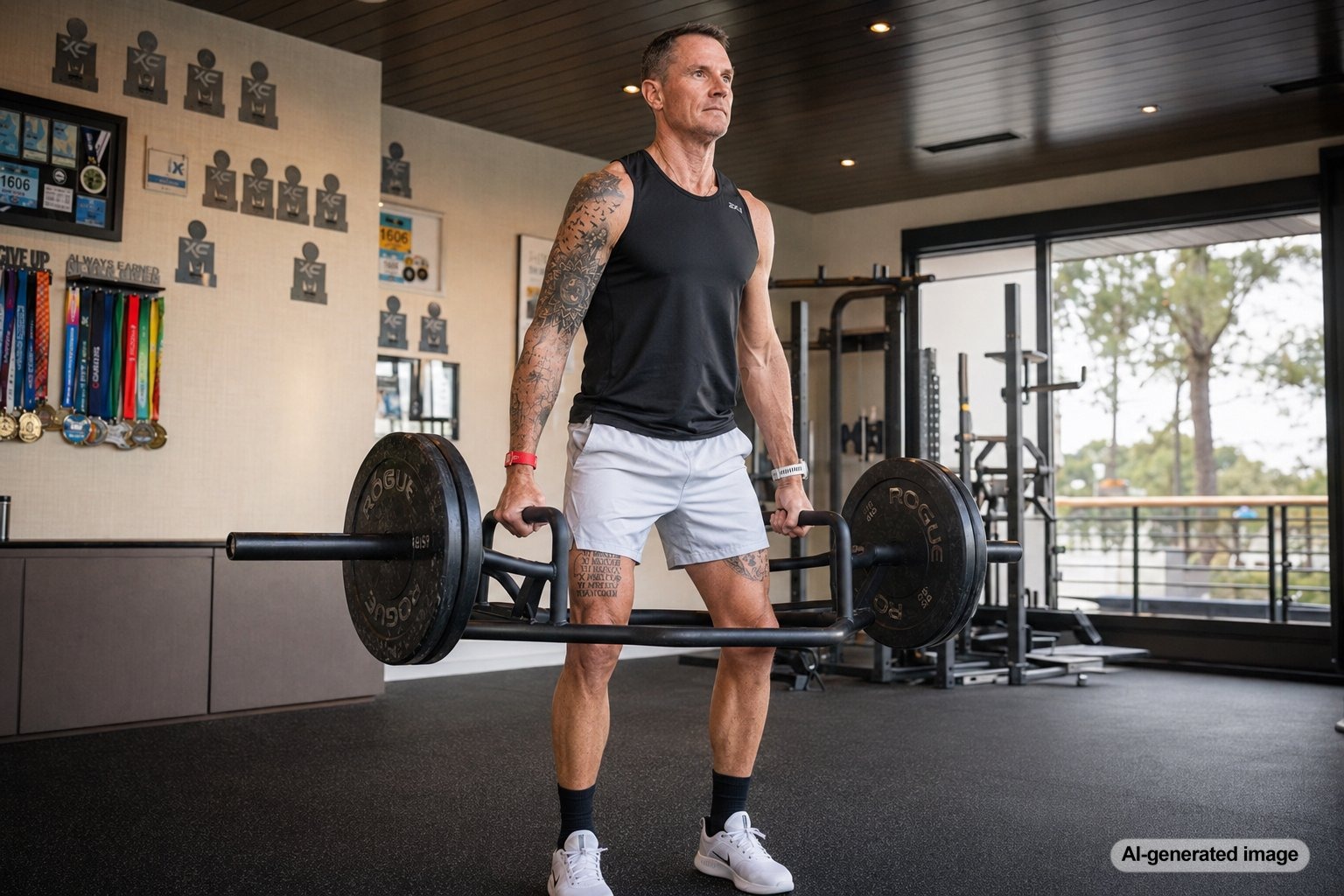
Staying athletic after 40 is not about pretending your body has not changed. It is about training with enough intelligence, consistency, and variety to keep doing the things that make you feel capable. Strength still matters. So do speed, balance, mobility, endurance, coordination, and the ability to recover well enough to train again.
The best program is rarely built around one perfect exercise. It combines several movement qualities and gives each one enough attention to remain useful. That approach reflects the broader mindset behind Greg Schaefer’s story: keep moving forward, adjust when necessary, and build capacity through disciplined work rather than empty intensity.
Quick answer
- Prioritize compound strength exercises that train several muscle groups together.
- Include short doses of speed, power, and athletic movement instead of only slow gym work.
- Use conditioning that supports your goals without leaving you constantly exhausted.
- Train mobility, balance, and single-leg strength to preserve movement quality.
- Progress gradually and make recovery part of the plan.
What does it really mean to stay athletic after 40?
Athleticism is broader than appearance. A man can look fit and still struggle to sprint, change direction, carry a heavy object, climb stairs quickly, or move comfortably through a deep range of motion.
Useful athletic ability includes several qualities:
- Strength: producing force and handling resistance.
- Power: producing force quickly.
- Endurance: sustaining effort without falling apart.
- Mobility: moving through usable ranges of motion with control.
- Balance and coordination: controlling the body during unstable, fast, or uneven movement.
- Resilience: tolerating training consistently without turning every session into a setback.
Training after 40 should protect and improve these qualities rather than chasing only one number in the gym.
1. Squats and squat variations
Squats train the legs, hips, trunk, and the basic ability to lower and raise your body under control. They carry over to standing, climbing, lifting, and many sports.
The back squat is not mandatory. Depending on mobility, experience, and comfort, useful options include goblet squats, front squats, safety-bar squats, box squats, split squats, and bodyweight squats.
A strong squat pattern should feel stable and controlled. Use a variation that lets you maintain good posture and gradually add resistance without forcing a range of motion you cannot own.
2. Deadlifts and hip-hinge exercises
The hip hinge teaches you to generate force through the hips while keeping the trunk organized. Deadlifts, Romanian deadlifts, kettlebell deadlifts, trap-bar deadlifts, and cable pull-throughs all train this pattern.
For many men over 40, the trap-bar deadlift is a practical choice because it allows a strong, athletic pulling position and can be easier to learn than a traditional barbell deadlift. Romanian deadlifts are especially useful for building hamstring and hip strength with controlled loading.
The goal is not to prove how much weight you can pull on a random day. The goal is to build durable strength that supports running, cycling, lifting, and everyday movement.
3. Split squats, lunges, and step-ups
Life and sports happen one leg at a time. Walking, running, climbing, changing direction, and regaining balance all depend on single-leg control.
Split squats, reverse lunges, lateral lunges, step-ups, and rear-foot-elevated split squats expose differences between sides and strengthen the hips and legs without requiring extremely heavy loads.
These movements also demand balance and coordination. That makes them valuable for men who have spent years focusing mainly on machines or bilateral barbell lifts.
4. Push-ups, presses, and upper-body pushing
Upper-body pushing strength supports sports, lifting, posture, and shoulder function when trained with appropriate technique and volume. Push-ups are often underrated because they can be scaled in many directions.
Options include incline push-ups, standard push-ups, weighted push-ups, dumbbell bench presses, landmine presses, and overhead presses. Neutral-grip dumbbells and landmine presses can be comfortable alternatives for people who do not enjoy fixed barbell positions.
Athletic training does not require grinding through painful repetitions. Choose angles and grips that allow controlled movement and steady progress.
5. Rows, pull-ups, and upper-body pulling
Pulling exercises strengthen the back, arms, grip, and muscles that help control the shoulder blades. Rows and pull-up variations also balance the pressing work found in many gym programs.
Good options include chest-supported rows, cable rows, one-arm dumbbell rows, assisted pull-ups, lat pulldowns, and suspension-trainer rows.
Focus on smooth repetitions rather than yanking the weight. A stable trunk, full control, and a clear squeeze through the back usually matter more than moving the heaviest possible load.
6. Loaded carries
Farmer carries, suitcase carries, front-rack carries, and overhead carries are simple exercises with broad benefits. They train grip, posture, trunk stability, breathing under load, and the ability to move while carrying weight.
Suitcase carries are especially useful because the weight is held on one side, forcing the trunk to resist leaning. Farmer carries allow heavier loading and can create a strong whole-body conditioning effect.
Loaded carries feel practical because they are practical. They build the kind of strength that shows up when moving equipment, carrying luggage, handling groceries, or navigating physically demanding days.
7. Jumps, throws, and low-volume power work
Power often receives less attention with age, yet it is a major part of athletic movement. You do not need a long, punishing plyometric workout. Small doses can be enough.
Examples include low box jumps, broad jumps, medicine-ball chest passes, rotational throws, kettlebell swings, and short hill accelerations. The repetitions should be crisp, not exhausted.
Power training belongs early in a workout, after a thorough warm-up and before fatigue reduces movement quality. Start with low volume and simple variations. Stop the set when speed noticeably drops.
8. Short sprints and controlled acceleration
Many adults stop moving fast long before they lose the desire to feel fast. Carefully planned acceleration work can help preserve speed, coordination, and confidence.
A sprint session does not have to mean running all-out on a track. It may involve short uphill runs, bike sprints, rowing intervals, sled pushes, or controlled accelerations at less than maximum effort.
The preparation matters. Warm up gradually, allow generous rest, and avoid turning every repetition into a test. Speed improves through quality, not through sloppy fatigue.
9. Zone-based aerobic conditioning
Aerobic training supports endurance, recovery, heart and lung function, and the ability to handle longer efforts. Walking, running, cycling, swimming, rowing, and hiking can all work.
Most conditioning should not feel like a race. Steady sessions at a conversational effort are often easier to recover from and can be repeated consistently. Hard intervals can still have a place, but they should complement the program rather than dominate it.
Endurance athletes understand that not every workout should be heroic. Greg’s speaking work often connects discipline with resilience, and the same principle applies here: progress comes from the sessions you can absorb, not only the ones that leave you emptied.
10. Mobility and controlled range-of-motion work
Mobility training should improve positions you actually need. Random stretching may feel productive, but useful mobility includes strength and control within the range of motion.
Helpful areas for many men include the ankles, hips, upper back, and shoulders. Exercises such as ankle rocks, hip-flexor stretches with glute engagement, controlled deep squats, thoracic rotations, and shoulder wall slides can fit into a warm-up or recovery session.
Mobility work is most effective when it addresses a specific limitation. If a stiff ankle changes your squat or a restricted upper back affects your overhead position, target that pattern rather than stretching everything without a plan.
11. Balance and coordination drills
Balance is trainable. Single-leg stands, slow step-downs, lateral hops, controlled reaches, agility ladder patterns, and light change-of-direction drills challenge the nervous system in ways that machines do not.
These exercises do not need to look flashy. The goal is to control your center of mass, react to changing positions, and stay organized when movement is less predictable.
Balance work can be added between strength sets, during warm-ups, or in short movement sessions on easier days.
12. Rotational and anti-rotational core exercises
The trunk does more than bend forward. It transfers force between the upper and lower body while resisting unwanted movement.
Pallof presses, cable chops, medicine-ball rotational throws, side planks, dead bugs, bird dogs, and suitcase carries all develop different forms of trunk control.
A strong core should help you run, lift, throw, and change direction. Endless crunches may create fatigue, but they do not cover the full range of athletic demands.
How to organize these exercises during the week
A good weekly plan depends on training history, schedule, goals, and recovery. A practical starting structure might include:
- Two or three strength sessions: squat or lunge, hinge, push, pull, carry, and trunk work.
- Two or three aerobic sessions: mostly steady, moderate work.
- One short power or speed session: low volume, high quality, full recovery.
- Brief mobility work: five to fifteen minutes on most days, focused on actual restrictions.
- At least one easier day: walking, gentle movement, or complete rest.
This structure can be adjusted. A runner may need more running volume. A cyclist may prioritize time on the bike. A former athlete returning after years away may need several months of basic strength and aerobic work before adding faster movements.
What men over 40 often get wrong
- Training like every session is a competition: Constant testing creates fatigue without guaranteeing progress.
- Doing only slow strength work: Strength matters, but speed and power need direct attention too.
- Doing only cardio: Endurance alone does not preserve muscle, strength, balance, or power.
- Ignoring pain and movement changes: Pushing through every warning sign is not toughness.
- Changing programs too often: Consistency is difficult when exercises and goals change every week.
- Copying a younger athlete’s volume: The right workload is the one you can recover from and repeat.
How hard should you train?
Hard training can still be part of life after 40. The difference is that intensity should have a purpose.
Strength sets do not always need to reach failure. Conditioning does not always need to leave you on the floor. Sprinting does not need to be maximal. Most progress comes from accumulating high-quality work while leaving enough capacity to recover.
Use effort strategically. Some sessions should challenge you. Others should build skill, volume, or movement quality without creating unnecessary damage.
Recovery is part of athletic training
Recovery is not a reward for training. It is part of the process that allows training to work.
Sleep, nutrition, hydration, stress, workload, and training frequency all affect how the body responds. A demanding week at work may change what you can reasonably handle in the gym. A poor night of sleep may call for reduced volume rather than a complete abandonment of the plan.
Adaptation is not weakness. Athletes adjust to conditions. The ability to modify a session while preserving the larger goal is a form of discipline.
FAQ
Can men over 40 still build muscle and strength?
Many men can continue improving strength and muscle after 40 with progressive resistance training, sufficient recovery, and a consistent plan. Individual results vary based on training history, health, nutrition, sleep, and other factors.
How many days a week should a man over 40 work out?
Three to five training days can work well for many people, but the total workload matters more than the number of calendar days. Shorter, focused sessions may be easier to recover from than a few extremely long workouts.
Should men over 40 avoid running or jumping?
Not automatically. Running and jumping can be useful forms of athletic training when introduced gradually and matched to current ability. People with pain, injuries, medical conditions, or a long period of inactivity should seek appropriate professional guidance before beginning higher-impact work.
What is the single best exercise for staying athletic?
There is no single exercise that develops every athletic quality. A balanced program should include strength, power, conditioning, mobility, balance, and coordination.
How quickly should a returning athlete progress?
Progress slowly enough that movement quality remains high and soreness does not repeatedly disrupt training. Adding small amounts of weight, volume, speed, or duration over time is usually more sustainable than making large jumps.
The bottom line
The best exercises for men who want to stay athletic after 40 are the ones that preserve a broad range of abilities. Squats, hinges, lunges, presses, pulls, carries, sprints, jumps, aerobic work, mobility, balance, and trunk training each solve a different part of the problem.
The larger lesson is simple: do not train only for the mirror, the scale, or one performance number. Train to remain useful, capable, confident, and ready for the next challenge. Athleticism is not a memory from your twenties. It is a quality you can continue practicing.
Interested in bringing Greg’s message to your event or organization?
Learn more about Greg’s speaking work or get in touch to start the conversation.
Contact Greg or learn more about the Forward Motion Fund.
This article is for educational purposes only and is not medical advice. For diagnosis, treatment, or personalized medical guidance, please speak with a qualified healthcare professional.


