
How to Build a Life Around Purpose Instead of Circumstances

A life built around purpose does not require perfect conditions. It requires a clear enough reason to keep choosing your next step, especially when circumstances become uncertain, inconvenient, painful, or unfair.
For Greg Schaefer, purpose lives at the intersection of family, leadership, endurance, advocacy, and forward motion. It is not a slogan. It is a way of organizing decisions when life refuses to stay predictable. You can learn more about the broader story behind that message on Greg’s About page.
Quick answer
- Building a life around purpose starts with knowing what still matters when circumstances change.
- Purpose becomes practical when it shapes daily decisions, not just long-term dreams.
- Hard seasons can clarify priorities, but they do not have to define your whole identity.
- Support systems matter because purpose is easier to sustain when it is shared.
- Forward motion often begins with one small, honest step instead of a dramatic reinvention.
Purpose is not the same as control
One of the most important distinctions is this: purpose is not control. Control says life must cooperate before you can move forward. Purpose says there is still a meaningful way to respond, even when life does not cooperate.
That difference matters because circumstances are unstable by nature. Careers shift. Families face pressure. Health changes. Plans get interrupted. Goals that once felt automatic may need to be rebuilt with more humility and intention.
A purpose-centered life does not deny any of that. It simply refuses to let circumstances become the only author of the story. It asks a better question: What kind of person do I want to become inside this reality?
Start by naming what does not change
When circumstances change, people often rush to fix everything at once. That instinct is understandable, but it can create more noise than clarity. A better starting point is to name what still matters.
For one person, that may be showing up for family with steadiness. For another, it may be leading a team with integrity during a difficult season. For an athlete, it may be staying connected to movement, discipline, and community even when performance looks different than it once did.
Purpose becomes easier to recognize when it is connected to values that can survive disruption. Achievement may change. Timelines may change. Identity may be tested. But values such as courage, service, faithfulness, discipline, generosity, and responsibility can still guide the next choice.
Turn purpose into a decision filter
Purpose sounds inspiring until Monday morning arrives. Then it has to become practical. One of the most useful ways to build a life around purpose is to use it as a decision filter.
Instead of asking only, “What do I feel like doing?” or “What is easiest right now?” try asking, “Which choice keeps me aligned with the person I am trying to become?” That question can change the way you approach time, work, training, relationships, and recovery.
For leaders, this may mean choosing the harder conversation instead of the convenient silence. For parents, it may mean being present when the phone is easier. For someone rebuilding after a setback, it may mean taking the smaller step that is actually sustainable instead of chasing a dramatic restart.
Do not reduce your identity to the hardest thing you carry
Circumstances can become so loud that they start to feel like the whole truth. A diagnosis, a business failure, a loss, a family crisis, or a period of uncertainty can take up enormous emotional space. But a hard circumstance is not the full measure of a person.
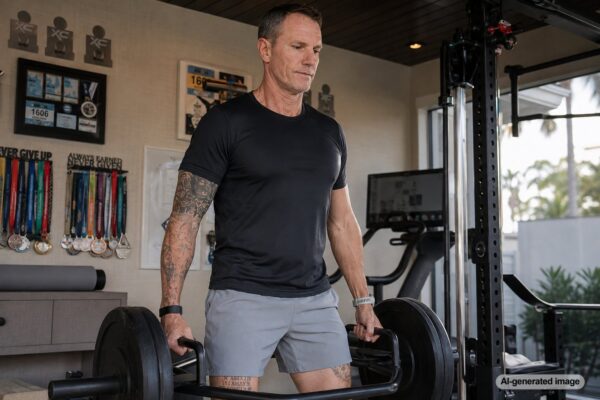
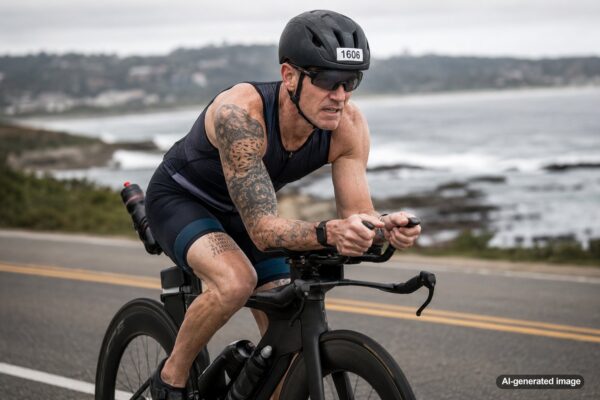
This is where Greg’s story carries a broader lesson. His platform includes Parkinson’s advocacy, but it is not only about Parkinson’s. It includes endurance sports, but it is not only about racing. It includes speaking, but it is not only about a stage. The deeper message is about continuing to live with purpose when life changes the terrain.
That same principle applies far beyond one person’s story. You may be carrying something real and difficult. You may need support, patience, and a new way forward. Still, your identity can remain larger than the challenge in front of you.
Build systems that support the person you want to become
Purpose cannot depend only on emotion. Motivation rises and falls. Energy changes. Stress interrupts good intentions. A life built around purpose needs systems that make the right next step more possible.
That might mean setting a simple morning routine, protecting time for movement, choosing people who tell the truth with kindness, creating boundaries around work, or making service part of your calendar rather than just part of your beliefs.
Systems do not have to be complicated. In many cases, the most powerful systems are ordinary and repeatable. They help you act from commitment when feelings are unreliable.
Let service widen your purpose
Purpose becomes stronger when it reaches beyond personal achievement. Goals can motivate, but service gives them depth. It reminds us that forward motion is not only about what we accomplish for ourselves. It is also about what our choices make possible for others.
That is part of the heart behind the Forward Motion Fund. The message of “One More Step… Just One More” is not only about endurance. It is about using movement, community, advocacy, and mission to support meaningful impact.
Service also protects purpose from becoming self-absorbed. It asks, “Who else can be strengthened by the way I respond?” That question can turn personal adversity into a source of connection, not performance.
What people often miss
Purpose is not always loud. Sometimes it looks like keeping a promise, asking for help, doing the next responsible thing, taking care of your body, encouraging someone else, or refusing to quit on the person you are becoming.
Many people wait for purpose to feel dramatic. In real life, it is often quieter. It shows up in habits, conversations, commitments, and the willingness to keep moving when no one is applauding.
That is why a purpose-centered life is not built in one grand moment. It is built through repeated alignment. One choice. One conversation. One training day. One act of service. One more step.
Practical ways to begin
- Write down three values you want your life to reflect. Keep them simple enough to remember under stress.
- Identify one circumstance you have been letting define too much. Be honest without being harsh with yourself.
- Choose one daily action that reflects your values. Make it small enough to repeat.
- Tell one trusted person what you are trying to build. Purpose becomes stronger when it is supported.
- Look for one way to serve. Purpose deepens when it helps someone beyond yourself.
FAQ
Can purpose change over time?
Yes. Purpose can deepen, mature, and take different forms as life changes. The core values may remain steady while the expression of those values evolves.
What if my circumstances feel overwhelming right now?
Start smaller. Purpose does not require solving everything at once. It may begin with one honest conversation, one healthy routine, one request for support, or one decision that reflects your values.
Is purpose only about career or big achievements?
No. Purpose can be expressed through family, service, recovery, leadership, advocacy, friendship, faith, discipline, creativity, and the way you respond to adversity.
How do I know if I am living from purpose or pressure?
Pressure often feels like proving. Purpose usually feels more like alignment. It may still be hard, but it is connected to what matters rather than only to what others expect.
Interested in bringing Greg’s message to your event or organization?
Learn more about Greg’s speaking work or get in touch to start the conversation.
Contact Greg or learn more about the Forward Motion Fund.
This article is for educational purposes only and is not medical advice. For diagnosis, treatment, or personalized medical guidance, please speak with a qualified healthcare professional.