

How To Maintain Grip Strength In Early Stage Parkinson’s Disease
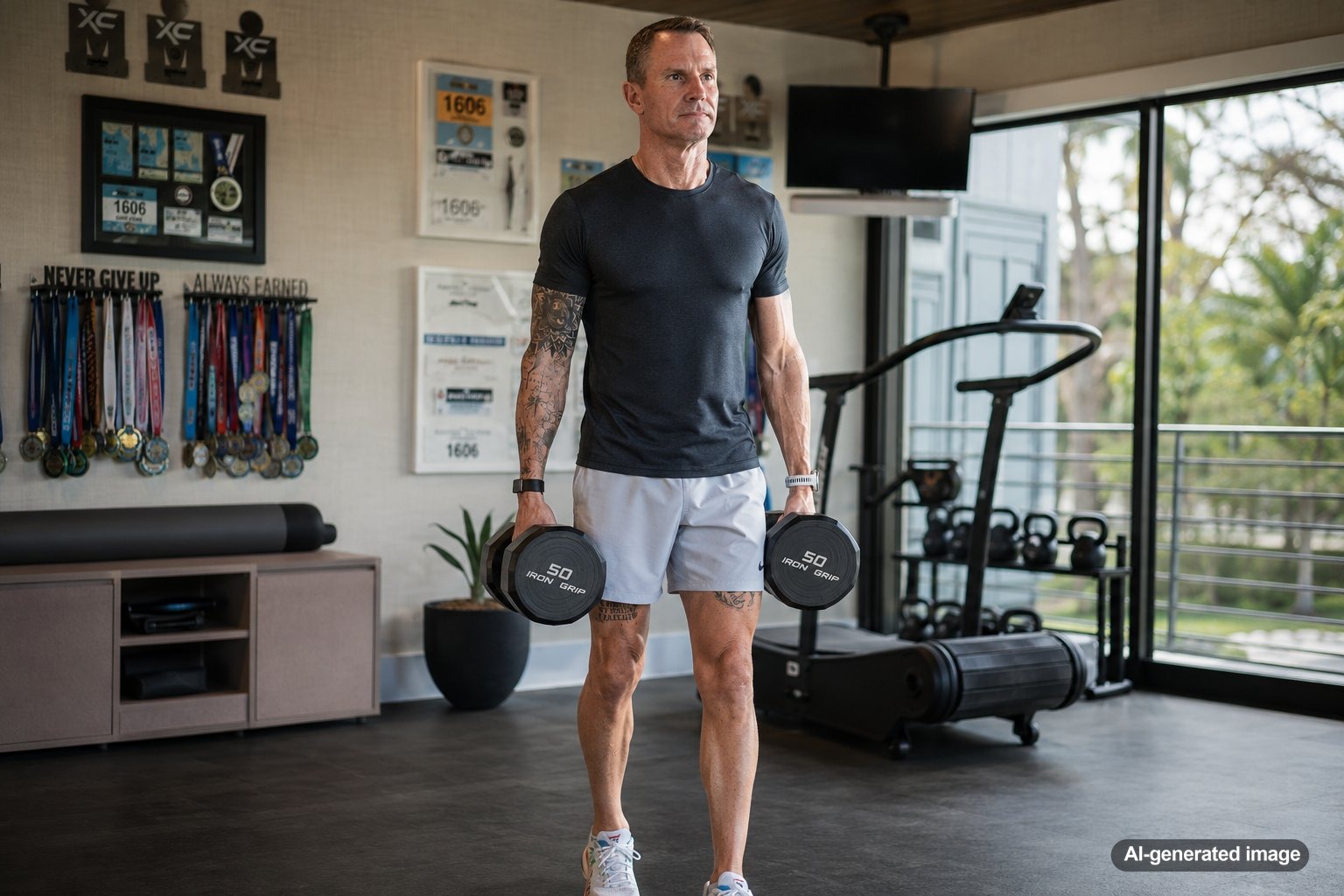
Maintaining grip strength in early stage Parkinson’s disease is not simply about squeezing harder. The most useful approach combines appropriate resistance, finger coordination, full-range movement, posture, recovery, and practice with the real objects you use every day. Symptoms and abilities vary, so the goal is not to chase a universal strength score. It is to preserve useful hand function for tasks that matter to you.
Early attention can be valuable because Parkinson’s may affect movement speed, stiffness, coordination, dexterity, and the ease of completing familiar activities. A personalized plan from a neurologist, physical therapist, or occupational therapist can help you work safely and focus on your specific challenges. Greg’s broader story of endurance, leadership, family, and forward motion also reflects an important principle: meaningful progress is often built through consistent, well-directed practice rather than one heroic effort.
Quick answer
- Practice gentle hand and finger exercises regularly instead of relying on occasional intense sessions.
- Train both grip strength and the ability to release, open, pinch, rotate, and manipulate objects.
- Use functional tasks such as carrying a light bag, opening containers, sorting coins, or handling utensils.
- Stop and seek professional guidance if exercise causes sharp pain, significant swelling, new numbness, or a sudden loss of function.
- Ask an occupational therapist to assess difficult daily tasks and recommend individualized exercises or adaptive tools.
Why grip can feel different with Parkinson’s
A hand may feel weaker even when reduced muscle strength is only part of the problem. Parkinson’s can involve bradykinesia, or slowness of movement, as well as rigidity, tremor, changes in coordination, and difficulty producing movements at the desired size or speed. These factors can affect how confidently a person holds a coffee mug, turns a key, buttons a shirt, uses a phone, writes, cooks, or handles exercise equipment.
Grip is also more complex than one maximum squeeze. Daily function depends on several abilities working together:
- Power grip: Holding a bottle, tool handle, suitcase, or railing.
- Pinch strength: Picking up a coin, fastening a button, or holding a card.
- Finger isolation: Moving one finger without unnecessary movement from the others.
- Release control: Letting go smoothly rather than continuing to hold an object too tightly.
- Wrist stability: Keeping the wrist in a useful position while the fingers work.
- In-hand manipulation: Moving an object from the palm to the fingertips or rotating it within one hand.
A balanced routine should address several of these qualities instead of treating grip strength as a single number.
Start with a professional baseline
Before beginning a new strengthening program, discuss it with a qualified healthcare professional, especially if you have pain, arthritis, a previous hand injury, nerve symptoms, recent surgery, severe stiffness, or difficulty holding objects safely. An occupational therapist can evaluate how your hands perform during the tasks that are most important to you. A physical therapist may also help when posture, shoulder mobility, overall strength, or balance affects upper-body function.
A useful evaluation may look beyond a grip dynamometer reading. The therapist may observe how you button clothing, write, prepare food, use a keyboard, handle medication containers, carry groceries, or manage equipment during exercise. This functional view can reveal whether the main limitation involves force, speed, range of motion, tremor, fatigue, sensation, positioning, or task design.
Use a simple hand-strength routine
The right resistance should feel challenging but controlled. More resistance is not automatically better. Excessive squeezing may increase discomfort, reinforce a clenched posture, or leave the hand too fatigued for the rest of the day. Begin conservatively and prioritize clean movement.
Gentle whole-hand squeeze
Hold therapy putty, a soft stress ball, or a rolled pair of socks. Squeeze gradually, pause briefly, then open the hand fully. The opening phase matters because functional hand use requires both grasping and releasing. Avoid holding your breath or tightening your shoulders.
Thumb-to-finger pinch
Touch the thumb to the index finger to form an O shape, then repeat with each finger. A small piece of soft putty can add light resistance. Keep the movement deliberate and make the circle as complete as comfortably possible.
Finger spreading
Place a light elastic band around the fingers and gently spread them apart. This trains muscles that open the hand and can help balance repeated gripping. Use only light resistance and keep the wrist neutral.
Tabletop finger lifts
Place the palm and fingers flat on a table. Lift one finger at a time, lower it with control, and move to the next. Do not force a finger that does not lift far. The purpose is coordinated activation, not height.
Wrist-supported grip
Rest the forearm on a table with the wrist in a comfortable, neutral position while practicing a gentle squeeze. Supporting the forearm can reduce unnecessary effort and make it easier to focus on the hand.
An occupational therapist can help determine appropriate resistance, repetitions, frequency, and progression. Stop before your technique deteriorates. A small amount of high-quality practice is generally more useful than continuing until the hand is exhausted.
Train dexterity along with strength
A person can produce reasonable squeezing force and still struggle with buttons, handwriting, keys, utensils, or a phone. That is why dexterity practice belongs in the plan.
- Pick up coins one at a time using the thumb and a different finger.
- Move a coin or small object from the palm to the fingertips and back again.
- Rotate a lightweight ball or similarly sized object within the hand.
- Place clothespins along the edge of a container using controlled pinches.
- Turn playing cards, sort small objects, or deal cards one at a time.
- Practice fastening the type of buttons, zippers, or clasps used in your own clothing.
Choose objects large enough to handle safely. Small items can present a choking risk around children or pets, and they may be inappropriate for anyone with substantial tremor, sensory loss, or difficulty controlling release.
Practice larger, more complete movements
Parkinson’s can make movements smaller or slower without the person immediately noticing. During hand practice, think beyond the squeeze. Open the fingers wide, reach the thumb away from the palm, straighten the elbows, rotate the forearms, and move through a comfortable range.
External cues may help some people produce clearer movement. You might say “open” and “close” aloud, follow a steady rhythm, or use a visual target for how far the fingers should spread. The cue should make the movement more intentional, not rushed.
Connect exercises to everyday function
Hand exercise becomes more meaningful when it supports real life. Select two or three tasks you want to protect or improve, then practice the components of those tasks.
If opening containers is difficult
Practice gentle grip-and-turn movements with empty plastic containers of different sizes. Keep the container close to the body and use both hands when helpful. A nonslip mat, jar-opening tool, or larger lid may be more effective than forcing the hand to work harder.
If carrying objects feels less secure
Begin with a light object that has a comfortable handle. Practice picking it up, carrying it a short distance, setting it down carefully, and releasing fully. Avoid glass, hot liquids, or heavy loads during practice.
If writing is becoming cramped
Experiment with a larger-barrel pen or a built-up grip. Support the forearm, sit with the work surface at a comfortable height, and practice making larger letters. Frequent brief practice may be easier than a long writing session.
If buttons or zippers are frustrating
Practice on clothing placed on a table before trying the same movement while wearing it. This removes some postural demands and allows you to focus on the fingers. An occupational therapist can also recommend button hooks, zipper pulls, magnetic closures, or clothing adaptations when appropriate.
Do not ignore the shoulders, arms, and posture
Efficient hand use starts farther up the movement chain. A rounded posture, unsupported trunk, stiff shoulder, or poorly positioned elbow can make the hand work harder. When exercising or performing a detailed task, sit or stand with stable support, relax the shoulders, and position the forearm so the wrist does not have to compensate.
General exercise can also support the strength, mobility, endurance, and confidence needed for daily activity. Walking, resistance training, aerobic exercise, mobility work, and other activities may be part of a broader Parkinson’s care plan, but the appropriate program should reflect your health, symptoms, experience, and medical guidance.
Pay attention to timing and fatigue
Hand performance may change during the day. Some people notice that detailed tasks are easier when they are well-rested or when their prescribed medications are working effectively. Keep a simple note of when grip, handwriting, utensil use, or buttoning feels easiest and hardest. Share meaningful patterns with your medical or rehabilitation team rather than changing medication timing on your own.
Fatigue can also change movement quality. Instead of saving every difficult hand task for the end of the day, schedule priority activities during a more capable period when possible. Break long tasks into shorter blocks and pause before the hand becomes tense or unreliable.
Common mistakes to avoid
- Training only the dominant hand: Both hands contribute to daily tasks, and Parkinson’s symptoms may be more noticeable on one side.
- Squeezing without reopening: Practice complete release and finger extension after each repetition.
- Using excessive resistance: Heavy resistance may encourage compensation, pain, or unnecessary fatigue.
- Ignoring function: A stronger squeeze does not automatically improve writing, buttons, typing, or utensil use.
- Holding the breath: Exhale normally and keep the jaw, neck, and shoulders relaxed.
- Pushing through sharp pain: Exercise should not produce sharp pain, new numbness, or significant swelling.
- Waiting for a major problem: Early occupational therapy can identify practical strategies before frustration begins limiting daily life.
When to seek additional support
Contact a qualified healthcare professional if you notice a sudden change in hand strength, new numbness, persistent pain, swelling, repeated dropping of dangerous objects, or a rapid change in daily function. These issues should not automatically be attributed to Parkinson’s because other medical or musculoskeletal conditions can affect the hands.
It is also reasonable to request occupational therapy when daily tasks are still possible but require more time, concentration, or effort. Rehabilitation is not reserved for advanced limitations. It can help establish a baseline, protect independence, adapt activities, and create a plan tied to your work, family life, hobbies, and goals.
How to track progress without obsessing over numbers
Maximum grip force is only one measure. Consider tracking practical outcomes every few weeks:
- Can you open a familiar container with less struggle?
- Can you carry a light bag without the handle slipping?
- Can you button a shirt with fewer pauses?
- Can you write a short note more comfortably?
- Can you complete your hand routine with smoother opening and closing?
- Are you using both hands more naturally during daily tasks?
Progress may appear as better control, less fatigue, more confidence, or fewer adaptations rather than a dramatic increase in force. Parkinson’s experiences vary widely, and day-to-day fluctuations do not erase the value of steady practice.
Frequently asked questions
Can hand exercises prevent grip changes from Parkinson’s?
No exercise can promise that a symptom will not change. Regular, appropriately designed practice may support hand strength, coordination, mobility, and daily function. A clinician or therapist can help create realistic goals based on your needs.
How often should I perform grip exercises?
The appropriate frequency depends on the exercise, resistance, your current ability, and other health conditions. Brief, consistent sessions may be more manageable than infrequent, exhausting workouts. Ask an occupational therapist or physical therapist for personalized guidance.
Are stress balls useful for Parkinson’s?
A soft stress ball can provide convenient resistance, but it should not be the entire program. Include finger opening, pinching, dexterity, wrist positioning, and functional tasks. The ball should be soft enough to squeeze without pain or excessive tension.
Should I exercise the hand that is less affected?
In many cases, both hands should remain active because most daily activities are bilateral. A therapist may recommend different exercises or resistance levels for each side based on your symptoms and goals.
When should I ask for occupational therapy?
Consider occupational therapy when writing, dressing, cooking, typing, driving, hobbies, or other daily activities become slower, less secure, or more frustrating. You do not need to wait until a task becomes impossible.
The bottom line
Maintaining grip strength in early stage Parkinson’s disease requires more than repeated squeezing. A well-rounded approach includes controlled resistance, complete hand opening, finger coordination, functional practice, good positioning, fatigue management, and professional guidance. The most effective plan is the one connected to the life you want to keep living.
Forward motion does not require pretending every day feels the same. It means paying attention, adjusting intelligently, and continuing with purpose. Learn more about the mission behind the Forward Motion Fund and its support for Parkinson’s research, partners and caregivers, challenged athletes, and youth initiatives.
Interested in bringing Greg’s message to your event or organization?
Learn more about Greg’s speaking work or get in touch to start the conversation.
Contact Greg or learn more about the Forward Motion Fund.
This article is for educational purposes only and is not medical advice. For diagnosis, treatment, or personalized medical guidance, please speak with a qualified healthcare professional.
Sources & further reading
- Parkinson’s Foundation: Physical, Occupational & Speech Therapies
- American Parkinson Disease Association: Handwriting & Parkinson’s Disease
- American Parkinson Disease Association: Occupational Therapy for Parkinson’s Disease
- National Institute of Neurological Disorders and Stroke: Parkinson’s Disease


