Motivational Speaking For Students: Building Resilience Early
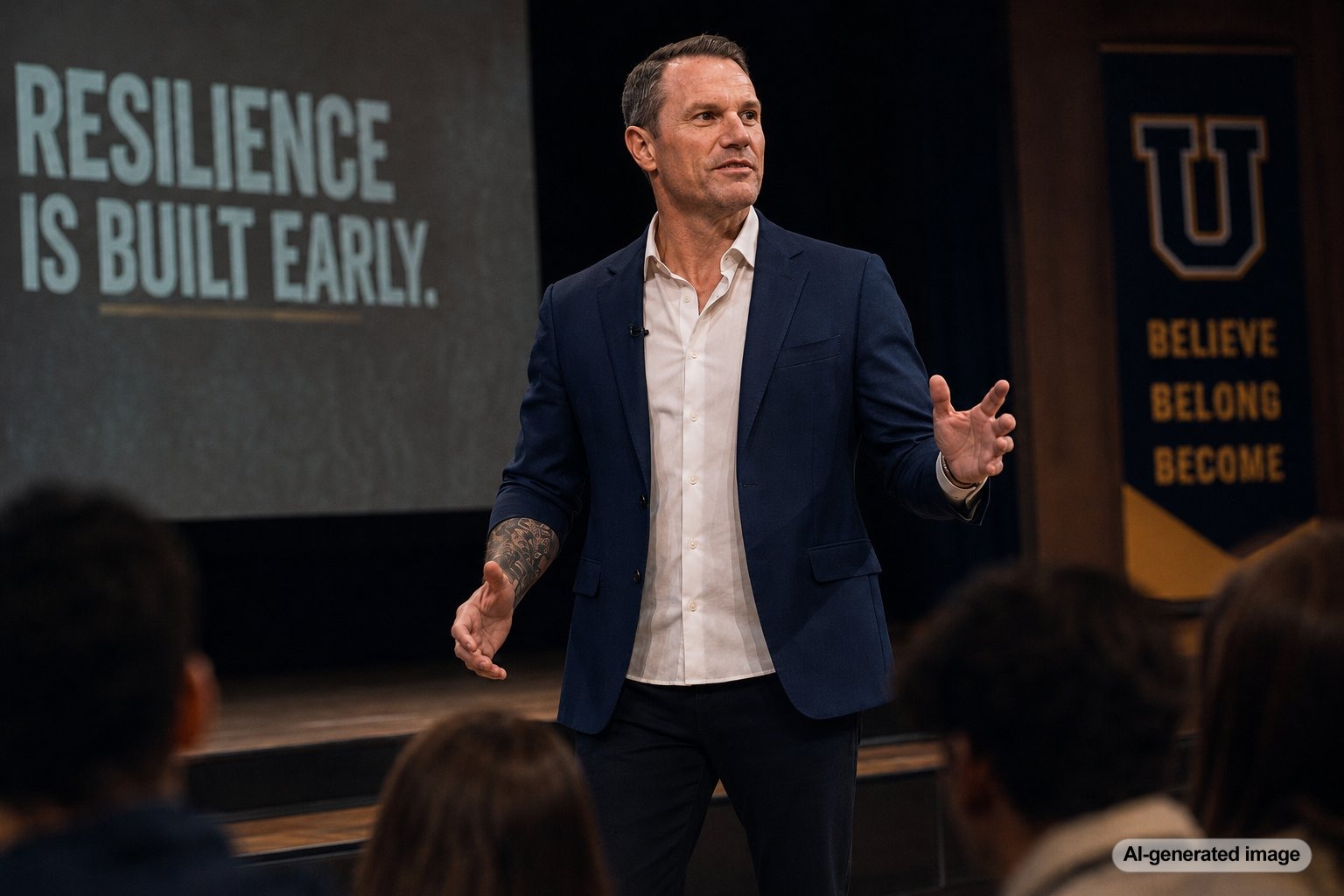
Students are growing up in a world that asks a lot of them. Academic pressure, social comparison, family expectations, uncertainty about the future, and the daily noise of digital life can make resilience feel less like a nice character trait and more like a survival skill. Motivational speaking for students matters because the right message can give young people language for what they are already facing.
At its best, a school assembly or student leadership event is not about a speaker arriving with easy answers. It is about helping students recognize that difficulty does not have to define them, that setbacks can be met with discipline and support, and that forward motion often begins with one honest step. That is the kind of message Greg Schaefer brings through his work as a dad, husband, entrepreneur, endurance athlete, speaker, and advocate. Learn more about Greg’s story on the About Greg page.
Quick answer: why motivational speaking helps students build resilience
- It gives students a real-world picture of resilience, not just a slogan.
- It helps normalize setbacks as part of growth without minimizing pain or pressure.
- It connects motivation to daily choices, habits, support systems, and personal responsibility.
- It can strengthen school culture by giving students shared language around courage, effort, and perseverance.
- It reminds students that progress is often built through small, repeatable steps.
Resilience is easier to understand when students can see it
Students hear words like perseverance, grit, discipline, and mental toughness all the time. The problem is that those words can become background noise unless they are connected to real life. A strong motivational speaker helps students see what resilience looks like when things are uncertain, uncomfortable, or unfair.
For Greg, that credibility comes from the intersection of business leadership, endurance sports, family, and living with Young-Onset Parkinson’s. His message is not that life becomes easy if you think positively. It is that people can learn how to respond when the road changes, how to keep their identity bigger than one challenge, and how to keep moving when the next step feels heavy.
That distinction matters for students. They do not need polished perfection. They need examples of people who have faced disruption, made difficult choices, leaned on the right support, and continued forward with purpose.
Motivational speaking can help students name what they are facing
Many young people carry pressure quietly. Some are dealing with academic stress. Some are trying to fit in. Some are navigating family responsibilities, confidence issues, injuries, anxiety about the future, or the private fear that they are falling behind everyone else.
A meaningful student talk does not have to turn every challenge into a dramatic life lesson. It can simply give students permission to be honest about hard things while still believing in their capacity to grow. That balance is important. Resilience is not pretending everything is fine. It is learning how to keep showing up with support, perspective, and a willingness to try again.
When students hear a grounded message from someone who has lived through uncertainty, built a business, competed in endurance events, and continued moving forward through adversity, the idea becomes less abstract. They can begin to ask, “What is my one more step today?”
What schools should look for in a student resilience speaker
Not every motivational speaker is the right fit for students. The strongest talks for young audiences are clear, age-aware, practical, and emotionally honest without becoming heavy or performative.
- Credibility without ego: Students respond to real stories, not self-promotion.
- Hope without hype: The message should inspire action without promising that every problem disappears.
- Practical takeaways: Students should leave with ideas they can use in school, sports, relationships, leadership, or personal challenges.
- Respect for student reality: A good speaker does not talk down to students or dismiss what they are carrying.
- A message that supports school culture: The talk should reinforce values like effort, accountability, courage, kindness, and perseverance.
Greg’s speaking work is especially relevant for schools, student leadership groups, athletic programs, youth organizations, and communities that want a message rooted in resilience, responsibility, and forward motion. For event planners, details are available on the Speaking page.
The overlooked value of hearing resilience early
Resilience is often discussed after something goes wrong. A student fails a test. A team loses a season. A friendship breaks. A family faces a crisis. Those moments matter, but students benefit when resilience is taught before the major setback arrives.
When students hear strong resilience messages early, they can start building a framework for how to respond to adversity. They can learn that asking for help is not weakness. They can understand that discipline is not punishment, but a form of self-respect. They can see that identity should not be built only around achievement, popularity, performance, or one perfect version of the future.
That kind of message can stay with a student long after the assembly ends. It may come back during a hard practice, a difficult class, a rejection, a diagnosis in the family, a leadership challenge, or a moment when quitting feels easier than continuing.
What students often remember
Students may not remember every detail of a speech, but they often remember the moment a speaker made them feel seen. They remember a phrase, a story, a challenge, or a new way of thinking about the next step in front of them. For Greg, that message is simple and durable: One More Step… Just One More.
How a student talk can connect to leadership and character
Motivational speaking for students should not only be about overcoming personal hardship. It can also help young people think about how they show up for others. Resilience has a personal side, but it also has a community side.
In schools, students are constantly practicing leadership, even when they do not call it that. They lead in classrooms, hallways, teams, clubs, families, and friend groups. A strong resilience message can help them understand that leadership is not reserved for the loudest person in the room. It can be found in consistency, encouragement, humility, effort, and the choice to keep going when others are watching.
Greg’s background as a CEO, endurance athlete, and mission-driven advocate gives students a broader view of leadership. It is not just about achievement. It is about responsibility, service, preparation, and the willingness to keep moving toward something meaningful.
Practical takeaways students can carry forward
A good student assembly should give young people something useful to take with them. The best messages are not complicated. They are clear enough to remember and strong enough to apply.
- Start with the next step: Big goals can feel overwhelming. Progress often begins with the one action directly in front of you.
- Separate a setback from your identity: A bad day, loss, injury, grade, or disappointment is part of the story, not the whole story.
- Build support before you need it: Friends, family, teachers, coaches, mentors, and counselors can all be part of a healthier response to pressure.
- Use discipline as a tool: Small routines can create stability when motivation rises and falls.
- Let purpose guide effort: Students are more likely to keep going when they understand why the work matters.
FAQ
What is motivational speaking for students?
Motivational speaking for students is a live or virtual talk designed to encourage, challenge, and equip young people with useful perspective. The best student talks combine relatable stories, practical lessons, and age-appropriate encouragement that students can apply in everyday life.
Why is resilience important for students?
Resilience helps students respond to pressure, setbacks, change, disappointment, and uncertainty. It does not remove hard moments, but it can help students develop healthier ways to keep moving forward with support and perspective.
What makes Greg Schaefer a strong speaker for students?
Greg brings lived credibility from family life, entrepreneurship, endurance sports, advocacy, and his experience living with Young-Onset Parkinson’s. His message is grounded in real adversity and practical forward motion, not generic motivation.
What types of student events are a good fit?
Greg’s message can fit school assemblies, leadership conferences, athletic programs, student wellness events, youth organization gatherings, and community events focused on resilience, purpose, and overcoming adversity.
Does a resilience talk need to be heavy?
No. A strong resilience talk can be honest without being overwhelming. The goal is to give students hope, clarity, and practical tools while respecting the real challenges they may be facing.
Interested in bringing Greg’s message to your event or organization?
Learn more about Greg’s speaking work or get in touch to start the conversation.
Contact Greg or learn more about the Forward Motion Fund.
This article is for educational purposes only and is not medical advice. For diagnosis, treatment, or personalized medical guidance, please speak with a qualified healthcare professional.