
How To Maintain Strength While Training For An Ironman
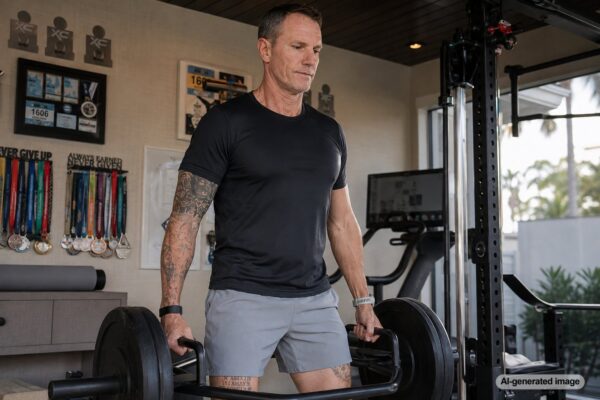
Maintaining strength while training for an Ironman is not about trying to be the strongest person in the gym while also stacking swim, bike, and run volume. It is about preserving useful strength: the kind that helps your posture hold late in the marathon, keeps your hips stable on tired legs, supports power on the bike, and gives your body more durability through months of repetitive work.
For an endurance athlete, strength has to serve the mission. The goal is not to chase soreness or win a lifting session. The goal is to arrive at the start line resilient, efficient, and prepared. That balance is familiar territory in Greg Schaefer’s world, where endurance, discipline, family, leadership, and forward motion all meet. You can learn more about that broader mission on Greg’s About page.
Quick answer
- Lift 2 times per week during most Ironman training blocks, then reduce volume as race day approaches.
- Focus on movement quality, core stability, hips, posterior chain, single-leg strength, and upper-back posture.
- Avoid turning strength work into another endurance workout. Keep it controlled, intentional, and recoverable.
- Place harder strength sessions away from your longest or most intense bike and run workouts when possible.
- Fuel, sleep, mobility, and recovery habits matter as much as the exercises themselves.
Why strength matters during Ironman training
Ironman training rewards consistency. The athlete who can stack week after week without breaking down usually has an advantage over the athlete who relies only on intensity. Strength work can support that consistency by helping the body tolerate load, absorb impact, and maintain form as fatigue builds.
That does not mean strength training should dominate the plan. During Ironman prep, swimming, cycling, running, nutrition, pacing, and recovery all need room. The best strength routine is usually simple, repeatable, and tied to the demands of the race. It helps you keep moving well when the training calendar gets crowded.
Think of strength as infrastructure. You may not notice it every minute, but when the day gets long, it matters. Strong glutes, hamstrings, calves, trunk, lats, and upper back can help support position on the bike, control on the run, and steadiness in open water.
Shift from building strength to maintaining strength
One of the biggest mistakes endurance athletes make is treating every training phase the same. Early in a training cycle, there may be room to build strength gradually. As Ironman volume increases, the priority shifts. At that point, strength work should help preserve power, posture, and durability without stealing too much recovery from key endurance sessions.
That shift matters because the cost of a workout is not only what happens during the session. It is also what happens after. A heavy leg day that leaves you sore for three days can compromise your long run, your bike intervals, or your ability to absorb the next block of training. Productive strength training should leave you feeling capable, not wrecked.
A useful rule is to finish strength sessions with the feeling that you could have done a little more. That restraint is not weakness. It is strategy. Ironman training asks for patience, humility, and a willingness to respect the whole picture.
What to prioritize in the gym
The best exercises are not always the flashiest ones. For Ironman athletes, strength training should focus on movements that support alignment, control, and durability under fatigue.
- Lower-body strength: Squats, split squats, step-ups, deadlift patterns, hip bridges, and calf work can support running economy and bike power.
- Single-leg control: Lunges, single-leg Romanian deadlifts, and controlled step-downs can help expose and address side-to-side differences.
- Posterior chain work: Glutes, hamstrings, and back strength matter because they help support posture and power late in long sessions.
- Core stability: Planks, dead bugs, Pallof presses, carries, and anti-rotation work can help the body stay organized when fatigue rises.
- Upper-back and shoulder support: Rows, band pull-aparts, face pulls, and controlled pulling movements can help balance the demands of swimming and bike position.
For many athletes, the overlooked area is not one big muscle group. It is control. Can you stay stable on one leg? Can you hinge without rounding? Can you keep your trunk quiet while your limbs move? Can you maintain posture when tired? These details may seem small in the gym, but they become meaningful after hours of racing.
A practical weekly structure
Most Ironman athletes do well with 2 strength sessions per week during the main training build. Some may use 3 shorter sessions earlier in the season, while others may need only 1 maintenance session during the heaviest race-specific weeks. The right answer depends on training history, age, injury history, available time, coaching guidance, and recovery capacity.
A practical approach might look like this:
- Session 1: Lower-body strength, core stability, and posterior chain work.
- Session 2: Single-leg control, upper back, hips, calves, and trunk work.
- Optional micro-session: 15 to 20 minutes of mobility, activation, or light corrective work on a lower-volume day.
Scheduling matters. Try not to put your hardest strength session right before a key long run or a race-specific bike workout. Some athletes prefer lifting after a quality endurance session on the same day so that easier days can stay easier. Others separate strength and endurance by several hours. The principle is simple: protect the sessions that matter most.
Keep the reps honest and the recovery realistic
Strength maintenance does not require marathon gym sessions. Many athletes can get meaningful work done in 35 to 50 minutes if the plan is focused. The goal is not to collect exercises. The goal is to choose the right ones, perform them well, and leave enough energy for the next day.
Moderate loads, controlled reps, and clean technique are often more useful than chasing maximum weight during the heart of Ironman training. A set of 5 to 8 strong, focused reps can be more productive than a sloppy set of 20 that turns into fatigue for fatigue’s sake. For accessory work, 8 to 12 reps often works well. Core and stability work should emphasize control, not speed.
Avoid the trap of making every strength workout feel heroic. The race itself is long enough. Training should build capacity, not constantly prove toughness. That mindset is also central to Greg’s broader speaking message around discipline, resilience, and forward motion. For organizations looking to bring that perspective to a team or event, Greg’s Speaking page offers more context.
Do not ignore mobility, tissue care, and movement quality
Strength is not only about force. It is also about access. If your hips, ankles, thoracic spine, or shoulders are constantly restricted, your body may compensate somewhere else. Over time, those compensations can make training feel heavier than it needs to feel.
Mobility does not have to become another complicated program. A few minutes of consistent work can make a difference: ankle mobility before runs, hip flexor and glute work after bike-heavy days, thoracic rotation for swim and bike posture, and easy movement on recovery days. The key is consistency, not complexity.
What athletes often miss
Strength maintenance is not only the lifting session. It is also the decision to stop one set early, eat enough after training, protect sleep, and notice when fatigue is changing your mechanics. The strongest Ironman build is usually not the most aggressive one. It is the one you can absorb.
Fueling is part of strength maintenance
It is difficult to maintain strength while under-fueling. Ironman training creates a large energy demand, and strength can fade when the body is asked to do more with less for too long. Protein matters, but so do carbohydrates, total calories, hydration, and timing around harder sessions.
Under-fueling can show up quietly. The athlete may feel flat in the gym, heavy on easy runs, irritable, unusually sore, or unable to hit familiar power. When that happens, the answer is not always more grit. Sometimes the answer is better recovery, more food, or a smarter training adjustment.
This is where endurance training becomes a leadership lesson. You have to listen to feedback, make decisions with incomplete information, and adjust before a small issue becomes a larger one. Strength is built through work, but it is preserved through wisdom.
How to adjust strength training as race day approaches
As race day gets closer, strength work should become more about maintenance, freshness, and confidence. You do not need to prove anything in the weight room during the final stretch. You need to stay durable and arrive ready.
In the final weeks, many athletes reduce total sets, avoid unfamiliar exercises, and keep movements crisp. Heavy soreness late in the build is rarely helpful. The gym should support the taper, not sabotage it.
A smart race-season strength session may include a warmup, a few controlled lower-body movements, some core stability, light upper-back work, and mobility. The session should feel like it sharpened you, not drained you.
FAQ
Should Ironman athletes lift heavy?
Some athletes can benefit from heavier strength work at certain points in the season, especially earlier in a training cycle and under good guidance. During peak Ironman volume, the goal usually shifts toward maintenance, clean technique, and recoverable work rather than chasing personal records.
How many days per week should I strength train during Ironman training?
Many athletes do well with 2 focused strength sessions per week for much of the build. During very heavy training weeks or taper, 1 shorter maintenance session may be enough. The best frequency is the one that supports your swim, bike, run, and recovery instead of competing with them.
Can strength training make me too sore to run or bike?
Yes, if the session is too hard, too new, too close to a key workout, or built around excessive volume. Soreness is not the goal. Strength training for Ironman should be progressed gradually and scheduled with the larger training plan in mind.
What is the biggest mistake athletes make?
The biggest mistake is treating strength as separate from the rest of training. The body does not separate stress into neat categories. Swim, bike, run, lift, work, family, sleep, and life all draw from the same recovery system.
Is bodyweight training enough?
Bodyweight training can be useful, especially for core stability, mobility, control, and travel weeks. Many athletes also benefit from external resistance for maintaining strength. The right mix depends on experience, access, goals, and coaching support.
Bottom line
To maintain strength while training for an Ironman, keep the work simple, consistent, and purposeful. Lift enough to preserve durability, but not so much that the gym steals from the race-specific work. Prioritize movement quality, recovery, fueling, and discipline over ego.
Ironman training asks an athlete to keep choosing the next right step. Not the loudest step. Not the most dramatic one. The next useful one. That is where strength is built, protected, and carried forward.
Interested in bringing Greg’s message to your event or organization?
Learn more about Greg’s speaking work or get in touch to start the conversation.
Contact Greg or learn more about the Forward Motion Fund.
This article is for educational purposes only and is not medical advice. For diagnosis, treatment, or personalized medical guidance, please speak with a qualified healthcare professional.