

Why Balance Training Is Critical For Parkinson’s Management
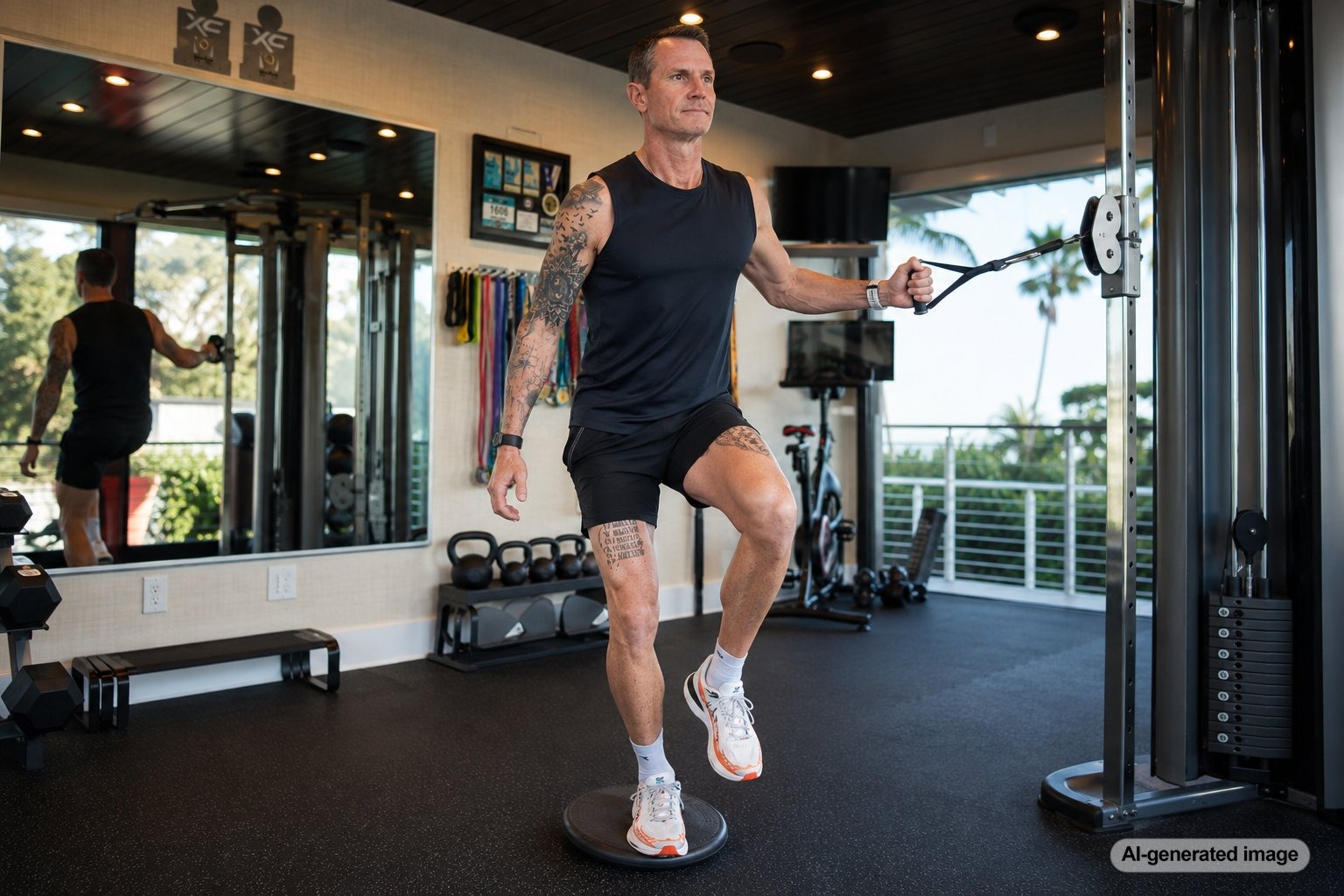
Balance training is critical for Parkinson’s management because Parkinson’s can affect posture, coordination, walking, turning, and the body’s ability to recover from a loss of stability. Targeted practice may help a person move more deliberately, respond more effectively to everyday challenges, and maintain confidence during activities such as standing up, navigating a crowded room, or stepping over a curb.
Balance work is not a stand-alone answer, and the right approach varies from person to person. It is one part of a broader movement plan that may include aerobic exercise, strength training, flexibility, gait practice, medication management, and guidance from qualified healthcare professionals. Greg’s broader message of forward motion through disciplined action fits this reality: progress is often built through consistent, thoughtful practice rather than one dramatic effort.
Quick answer
- Parkinson’s can affect postural control, walking patterns, coordination, and reaction time.
- Balance training may help improve steadiness, movement awareness, and confidence during daily tasks.
- Effective training should include both stationary and movement-based challenges.
- Exercises should be matched to the person’s current abilities, symptoms, environment, and fall risk.
- A physical therapist or other qualified professional can help create a safer, more personalized plan.
Why Parkinson’s can make balance more complicated
Balance is not a single skill. It depends on the brain and body continuously combining information from vision, the inner ear, muscles, joints, and the surface beneath the feet. The nervous system then uses that information to adjust posture and keep the body’s center of mass within a stable base of support.
Parkinson’s may interfere with several parts of that process. Some people experience smaller movements, stiffness, slower reactions, changes in posture, reduced arm swing, shorter steps, or difficulty initiating and stopping movement. Turning may feel especially demanding because it requires the body to shift weight, coordinate several steps, and adapt direction at the same time.
These challenges can become more noticeable in real-world situations. A person may feel steady while standing in a quiet room but less secure when carrying groceries, talking while walking, moving through dim lighting, or responding to someone who suddenly steps into the path. Balance training matters because daily life rarely happens under perfectly controlled conditions.
Balance training prepares the body for more than standing still
Standing on one foot is often associated with balance practice, but useful Parkinson’s training can be much broader. A well-designed program may address several distinct abilities.
Static balance
Static balance involves maintaining control while the body is relatively still. Examples may include standing with the feet closer together, holding a stable position, or shifting weight without taking a step. These exercises can build awareness of posture and foot pressure.
Dynamic balance
Dynamic balance is the ability to stay controlled while moving. Walking, turning, reaching, stepping backward, and changing direction all depend on it. This category often has a direct connection to daily independence because most meaningful activities require movement rather than stillness.
Anticipatory balance
Anticipatory balance occurs when the body prepares for a voluntary action. Before reaching into a cabinet or stepping onto a curb, the body must organize posture and shift weight. Training these transitions may help movements feel more deliberate and controlled.
Reactive balance
Reactive balance is the body’s response to an unexpected disturbance, such as a small trip, a bump, or a shifting surface. This type of training requires careful professional supervision because the exercises may intentionally challenge stability. It should not be attempted casually by someone with an elevated fall risk.
How balance practice may support everyday function
The value of balance training is best understood through ordinary situations. Consider the difference between practicing a controlled weight shift and using that skill to step into a pair of pants. Think about rehearsing turns and then applying that control in a narrow kitchen. Even getting out of a car requires coordination, trunk rotation, weight transfer, and confidence.
Consistent practice may also reduce hesitation. Fear of falling can lead some people to move less, avoid unfamiliar settings, or stop activities they once enjoyed. Reduced activity can then affect strength, endurance, and confidence. Safe movement practice may help interrupt that cycle by giving the person structured opportunities to build capability.
That does not mean fear should be ignored. Concern about falling can be reasonable, especially after a previous fall or near-fall. The goal is not reckless confidence. It is informed confidence supported by appropriate training, environmental adjustments, and professional guidance.
Four elements of useful balance training
1. Practice that reflects real life
Exercises become more meaningful when they connect to actual needs. Someone who struggles with turns may benefit from supervised turning drills. Someone who feels unstable when rising from a chair may need strength, posture, and transition practice. Someone who wants to continue traveling may need to prepare for escalators, luggage, uneven walkways, and crowded spaces.
2. Gradual progression
Balance challenges should become harder in measured steps. Progression might involve changing foot position, adding movement, altering visual input, introducing a reaching task, or practicing on a different surface. Increasing difficulty too quickly can add unnecessary risk and reinforce anxiety.
3. Repetition with attention
Quality matters as much as quantity. Rushing through exercises may reinforce small or poorly controlled movement patterns. Focused repetition allows the person to notice posture, step size, breathing, alignment, and weight transfer. External cues, such as floor markers, counting, music, or verbal prompts, may be useful for some people when recommended by a professional.
4. Integration with strength and endurance
Balance does not operate separately from the rest of physical fitness. Leg strength can support standing and stepping responses. Core and hip strength may contribute to postural control. Aerobic capacity can matter because fatigue may make movement less consistent. A comprehensive plan often combines several forms of exercise instead of treating balance as an isolated category.
What people often miss
Balance can change from one situation to another. Medication timing, fatigue, stress, attention, footwear, lighting, illness, and the surrounding environment may all influence how steady a person feels. An exercise that is manageable in the morning may feel different later in the day.
Tracking patterns can help a healthcare professional understand when difficulties occur and how a program might be adjusted. It can also reveal practical issues, such as loose rugs, poor hallway lighting, cluttered walking paths, or shoes that do not provide reliable support.
Why professional guidance can be important
A physical therapist with experience in neurological conditions can evaluate walking, posture, turning, transfers, strength, range of motion, and responses to balance challenges. The therapist may also help determine whether an assistive device, home modification, or caregiver strategy should be considered.
Professional assessment is especially important for someone who has fallen, frequently freezes while walking, feels dizzy, has significant vision changes, experiences sudden changes in mobility, or avoids activity because of instability. These concerns can have different causes, and a clinician can help evaluate the broader picture.
Group exercise classes can provide structure and connection, but a class should not replace individualized medical or rehabilitation guidance when safety concerns are present. The most demanding exercise is not automatically the most effective one. The best program is one that is appropriately challenging, sustainable, and connected to the person’s goals.
The mindset behind consistent practice
Balance training is a practical example of resilience without empty slogans. Improvement may be uneven. Some days feel strong, while others require modification. The work is still valuable because it reinforces attention, preparation, and the willingness to keep engaging with what matters.
Greg’s experience as an endurance athlete, business leader, husband, dad, speaker, and person living with Young-Onset Parkinson’s reflects an important truth: identity is larger than any diagnosis. Training is not about pretending Parkinson’s is easy or reducing the condition to an inspirational storyline. It is about meeting reality with a thoughtful plan and continuing to take the next meaningful step.
Organizations exploring conversations about resilience, leadership, adversity, and sustained performance can learn more about Greg’s speaking work.
Frequently asked questions
Can balance training prevent every fall?
No. Balance training cannot eliminate all fall risk or guarantee that a fall will not occur. It may be one useful part of a broader safety plan that includes medical care, strength and mobility training, home modifications, appropriate footwear, vision care, and assistive devices when recommended.
How often should someone with Parkinson’s practice balance exercises?
The appropriate frequency depends on the person’s abilities, symptoms, health history, fall risk, and overall exercise plan. A physical therapist or qualified healthcare professional can provide personalized guidance and help determine which activities are safe to practice independently.
Are tai chi, dance, yoga, or boxing forms of balance training?
They can include balance-related elements such as weight shifting, posture, coordination, stepping, rotation, and controlled movement. Suitability varies, however. Programs may need to be adapted, and people with significant instability should seek professional guidance before starting.
Should balance exercises feel difficult?
They should provide an appropriate challenge without creating uncontrolled risk. Mild effort and concentration may be expected, but repeated loss of control, unsafe wobbling, dizziness, pain, or near-falls are reasons to stop and seek guidance.
Can someone begin balance training after Parkinson’s has progressed?
Movement programs may be adapted across different stages and ability levels. The exercises, level of support, and goals may change over time. A clinician can help identify realistic priorities and safer ways to participate.
Interested in bringing Greg’s message to your event or organization?
Learn more about Greg’s speaking work or get in touch to start the conversation.
Contact Greg or learn more about the Forward Motion Fund.
This article is for educational purposes only and is not medical advice. For diagnosis, treatment, or personalized medical guidance, please speak with a qualified healthcare professional.


