

Balancing CEO Responsibilities With Family And Personal Health
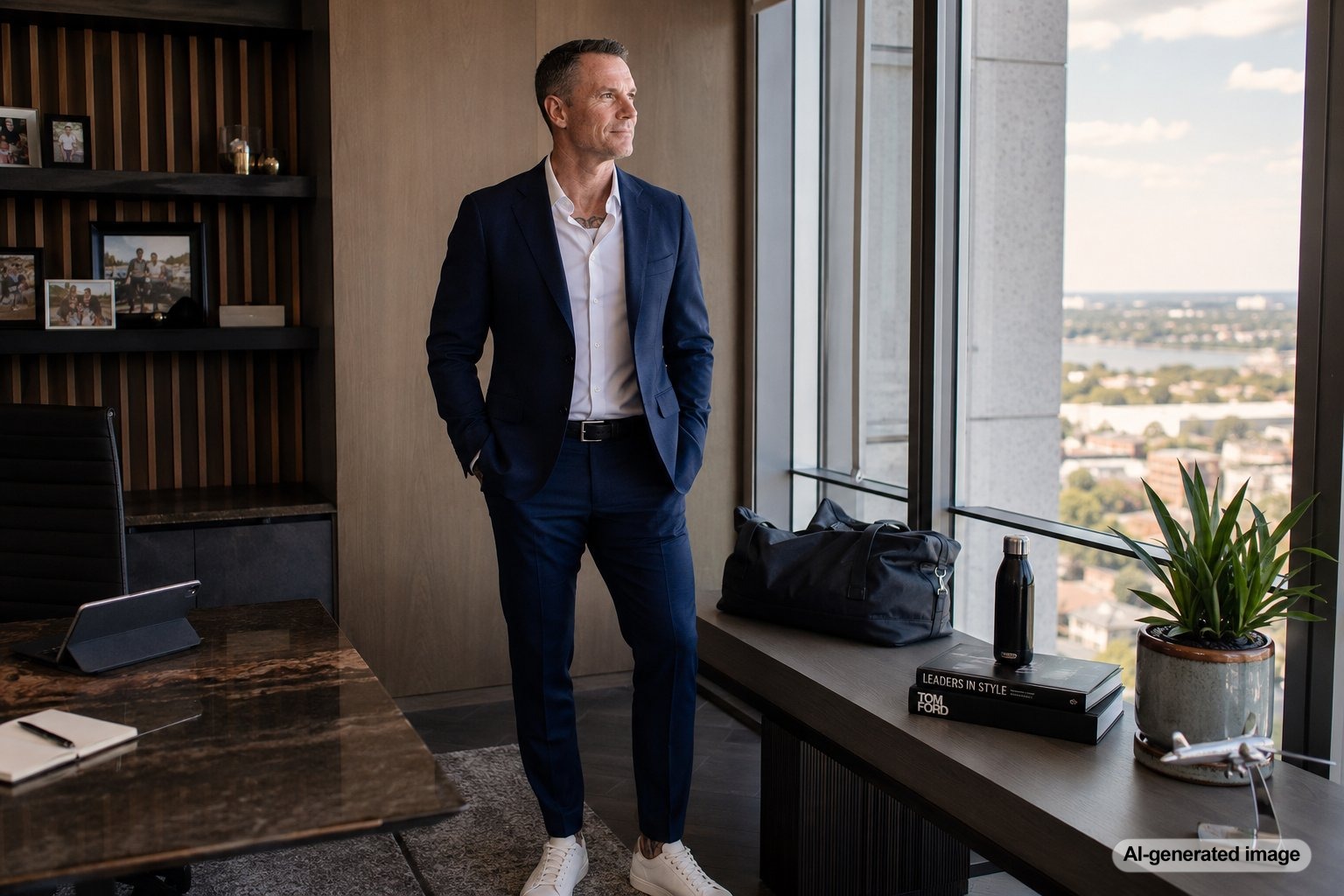
The responsibilities of a CEO rarely stay inside a neat workday. Decisions follow you home. People depend on your judgment. Problems arrive without asking whether you slept, trained, ate well, or had enough time with your family. For many leaders, the pressure becomes so familiar that they stop noticing how much of themselves they are trading away.
Balancing CEO responsibilities with family and personal health is not about chasing perfect balance. It is about building a life where leadership does not require neglecting the people, habits, and health that make leadership possible in the first place. Greg Schaefer’s story sits at that intersection of business, family, endurance, adversity, and forward motion. His work as a speaker is rooted in the belief that success means very little if it costs you the foundation you were trying to protect. Learn more about Greg’s broader story on the About Greg page.
Quick answer: what real balance looks like for CEOs
- It starts with clarity: know which responsibilities truly require your attention and which ones can be delegated, delayed, or simplified.
- It protects family time with intention: presence at home should not be treated as leftover time after the business takes everything else.
- It treats health as leadership infrastructure: sleep, movement, recovery, and medical care are not indulgences. They support better decisions.
- It requires boundaries that people can understand: a CEO cannot be fully unavailable, but the team can learn what is urgent and what is not.
- It is built in seasons: some weeks demand more from the business, but long-term leadership requires a way back to center.
The hidden cost of being constantly available
Many CEOs build their identity around responsiveness. They answer early, stay late, solve problems quickly, and carry the emotional weight of the company. In the early stages of a business, that intensity can feel necessary. Over time, though, constant availability can become a quiet liability.
When every decision runs through one person, the organization becomes slower, not stronger. The CEO becomes the bottleneck. Team members stop developing judgment because the leader keeps absorbing every hard call. Family members learn that work can interrupt anything. Health becomes something to address after the next deal, the next crisis, the next quarter, or the next milestone.
The problem is not hard work. Serious leadership requires serious effort. The problem is when effort turns into a system with no recovery built into it. A CEO who never steps back may look committed from the outside, but inside the business, that pattern can create dependency, fatigue, and reactive decision-making.
Health is not separate from performance
There is a tendency among high-achieving leaders to treat personal health as private maintenance, separate from the work that matters. But the body keeps score in practical ways. Poor sleep can affect patience. Chronic stress can narrow perspective. Lack of movement can drain energy. Ignoring symptoms can turn small concerns into larger problems.
For a CEO, health is not just a personal issue. It influences tone, stamina, judgment, creativity, and the way pressure gets distributed across a team. A leader who is depleted may still be able to perform for a while, but performance built on depletion is fragile.
This does not mean every CEO needs to train like an endurance athlete. It means leaders need honest systems that support their actual lives. That might include non-negotiable medical appointments, daily movement, more disciplined sleep routines, a clearer end to the workday when possible, or a weekly review of what is quietly consuming too much energy.
Family balance is built through presence, not just time
Many executives measure family balance by the number of hours they are home. Time matters, but presence matters more. Being physically in the room while mentally replaying emails, staffing issues, financial pressure, or tomorrow’s meeting can still leave family members feeling like they are competing with the business.
Practical presence often looks simple. Put the phone away during dinner. Protect a recurring family ritual. Let your children or spouse know when a busy season is coming, and tell them when it will end. Apologize when work takes too much, but also change the pattern when the same apology keeps repeating.
Leaders sometimes fear that setting boundaries at home will make them less committed at work. In reality, the opposite can be true. A CEO who protects family priorities is often forced to become more disciplined with meetings, delegation, communication, and decision-making. Family can become a source of clarity instead of guilt.
Delegation is not weakness. It is leadership maturity.
One of the hardest transitions for founders and CEOs is moving from being the person who can do everything to being the person who builds a team that can carry the mission without constant intervention. Delegation is not simply handing off tasks. It is transferring trust, context, and authority.
Weak delegation sounds like, “Take this off my plate, but check with me before anything meaningful happens.” Strong delegation sounds like, “Here is the outcome, here is the standard, here are the constraints, and here is where you have room to make the call.” The second version builds leadership capacity across the organization.
This matters for family and health because a CEO cannot protect personal priorities if the company collapses every time they step away. The ability to attend a child’s event, take a real recovery day, go to a doctor’s appointment, or be fully present for a spouse often depends on whether the business has been trained to function without constant rescue.
What CEOs often miss about balance
Balance is not a perfectly even split
There will be seasons when the business requires more. There will be seasons when family or health must take priority. The goal is not a flawless calendar. The goal is honest alignment over time.
Boundaries work better when they are explained
A team can respect boundaries when they understand the rules. Define what counts as urgent, who makes decisions in your absence, and how communication should work outside normal hours.
Personal health needs calendar space
If health is handled only when time appears, it will often lose. Put movement, recovery, medical care, and family commitments on the calendar with the same seriousness as important business meetings.
How to build a more sustainable leadership rhythm
A healthier rhythm starts with a clear audit. Look at the last two weeks and ask what actually required CEO-level attention. Then ask what felt urgent only because the system was unclear. Many leaders discover that their schedule is not packed only because the business needs them, but because habits, expectations, and unclear ownership have gone unchallenged.
Next, identify one family commitment and one health commitment that deserve protection. Keep the first version realistic. A leader who has ignored personal routines for years may not need a dramatic overhaul. They may need one protected dinner, one recurring workout, one scheduled medical appointment, or one screen-free block that proves a new pattern is possible.
Finally, communicate the change. Teams do not need every personal detail, but they do need operating clarity. Tell key people when you are unavailable, what qualifies as an exception, and who owns decisions when you are offline. This is not about disappearing. It is about leading with structure instead of constant strain.
Why this matters beyond the CEO
A CEO’s relationship with work often becomes a cultural signal. If the leader never rests, people assume rest is unsafe. If the leader answers every message instantly, the team learns that speed matters more than thoughtfulness. If the leader sacrifices family and health without question, others may feel pressure to do the same.
But when a leader works hard, communicates clearly, protects what matters, and still expects excellence, the culture becomes more mature. People see that resilience is not endless self-neglect. They see that discipline includes recovery. They see that commitment can coexist with boundaries.
That message is central to Greg’s work with organizations, teams, and leaders. Forward motion is not about pretending pressure does not exist. It is about taking the next right step with enough honesty to keep moving without losing yourself. For organizations looking to bring that kind of grounded message to their teams, Greg’s speaking work offers a powerful place to start.
FAQ
Can a CEO really have work-life balance?
Yes, but it may not look like a perfect daily split. CEO balance is usually built through priorities, boundaries, delegation, and recovery across seasons. The goal is sustainable leadership, not equal hours every day.
How can CEOs protect family time during busy seasons?
Start by naming the busy season clearly, protecting a few specific family commitments, and communicating availability rules to the team. Even small rituals can matter when they are consistent and fully present.
Why is personal health important for executive leadership?
Health affects energy, patience, decision-making, and resilience. Leaders who ignore their health may continue performing for a time, but the cost often shows up in focus, mood, relationships, and long-term capacity.
What is one practical first step for a CEO who feels stretched thin?
Review your calendar and identify one recurring responsibility that no longer requires your direct involvement. Delegating that responsibility with clear expectations can create space for higher-value leadership, family presence, or health.
The bottom line
Balancing CEO responsibilities with family and personal health is not a soft issue. It is a leadership issue. The strongest leaders are not the ones who pretend they have no limits. They are the ones who understand what matters, build systems that support it, and keep moving with discipline, humility, and purpose.
Interested in bringing Greg’s message to your event or organization?
Learn more about Greg’s speaking work or get in touch to start the conversation.
Contact Greg or learn more about the Forward Motion Fund.
This article is for educational purposes only and is not medical advice. For diagnosis, treatment, or personalized medical guidance, please speak with a qualified healthcare professional.


