

How To Build Confidence When Your Body Is Changing
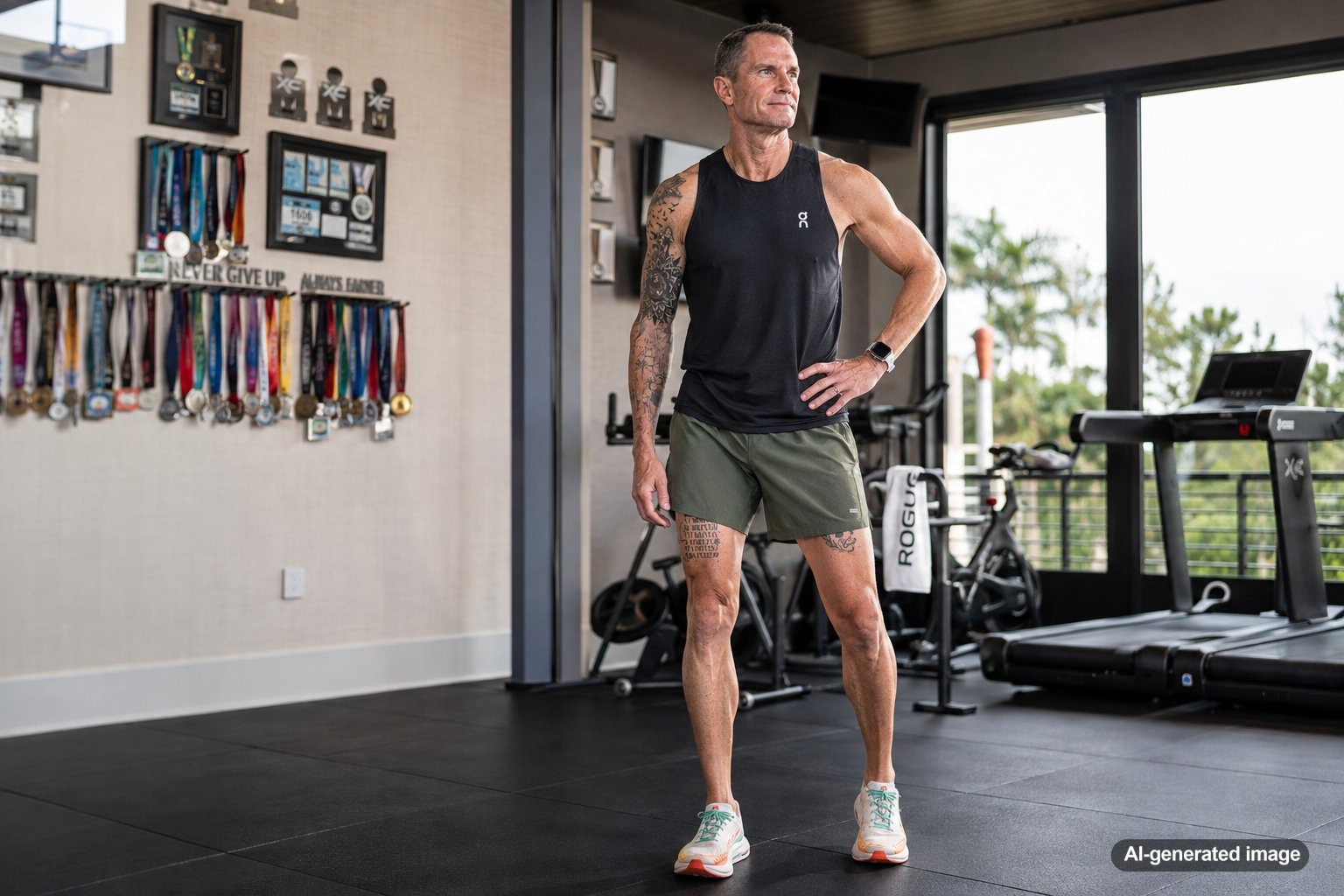
When your body changes, confidence can change with it. Strength may feel different. Movement may become less predictable. Clothes may fit differently. Energy can shift. Something that once felt automatic may suddenly require concentration, patience, or adaptation. Those changes can reach far beyond appearance because the body is often connected to how we understand capability, independence, identity, and the way we move through the world.
Building confidence during that kind of transition is not about pretending nothing has changed. It is about learning how to trust yourself inside a reality that may be different from the one you expected. Greg Schaefer’s own story brings together endurance, business leadership, family, adversity, and continued forward motion. You can learn more about that broader journey on the About Greg page. The lesson is not that confidence requires an unchanged body. Confidence can grow from learning how to respond when change arrives.
Quick answer: How do you build confidence when your body is changing?
- Separate your identity from one measurement of physical ability or appearance.
- Focus on what you can influence today instead of constantly comparing yourself with the past.
- Create smaller, meaningful wins that rebuild trust in your capabilities.
- Adapt without treating adaptation as defeat.
- Stay connected to people, purposes, and activities that remind you who you are beyond your body.
Confidence starts with telling the truth about change
There is a difference between acceptance and surrender. Acceptance means acknowledging the reality in front of you clearly enough to make useful decisions. Surrender means deciding that change has taken away your ability to participate meaningfully in your own life. Those are not the same thing.
People often lose confidence because they are measuring today’s body against yesterday’s expectations. A runner compares every workout with a previous pace. A leader who once seemed to have endless energy judges a productive day by how long he or she can push without stopping. Someone recovering from a difficult season may look in the mirror and expect to see the person they remember.
That constant comparison can make almost any progress feel inadequate. A more useful question is not, “Why can’t I be exactly who I was?” It is, “What does capable look like for me now?” That question leaves room for ambition while recognizing reality.
Do not let one physical change become your entire identity
A changing body can become psychologically enormous when it starts occupying every definition of who you are. You may begin describing yourself according to what you cannot do, what feels different, or what other people might notice. Confidence becomes harder to access when one part of life is allowed to speak for the whole person.
Your body matters, but it is not the complete inventory of your value. You may also be a parent, partner, friend, teammate, entrepreneur, mentor, competitor, volunteer, creator, problem-solver, or advocate. Some roles may change as your physical circumstances change. Others may become more important.
This is especially meaningful during seasons when an old source of confidence is less available. If confidence once came mainly from speed, strength, appearance, stamina, or physical independence, a change in any of those areas can feel like a change in identity. The answer is not to deny what has been lost or altered. It is to build a wider foundation.
Replace comparison with useful evidence
Confidence grows when your brain has evidence that you can still act, adjust, learn, contribute, and follow through. Big achievements can create that evidence, but they are not the only way.
Consider an athlete returning to activity after a difficult period. If every session is judged against a personal record, nearly every workout can feel like failure. But if success is defined as showing up, completing a planned effort responsibly, practicing a new technique, or recovering well enough to return again, confidence has somewhere to grow.
The same principle applies outside sports. A person adapting to changes in energy might stop measuring productivity by uninterrupted hours and instead measure it by completing the most important task of the day. Someone whose mobility has changed might recognize the confidence required to learn a new route, modify an activity, ask for help when appropriate, or return to a place that had started to feel intimidating.
These are not consolation prizes. They are evidence of adaptability.
Adaptation is a skill, not an admission of defeat
One of the most overlooked parts of confidence is flexibility. We often imagine confidence as certainty: knowing exactly what to do, moving without hesitation, and feeling fully in control. In reality, durable confidence can sound more like, “I do not know exactly how this will go, but I trust myself to respond.”
That distinction matters when your body is changing. You may need different routines, equipment, pacing, preparation, recovery, or expectations. You may need to ask questions you never had to ask before. You may need to stop doing something one way so you can continue doing it another way.
Adaptation protects participation. It keeps you engaged instead of forcing you into an all-or-nothing choice between performing exactly as before and withdrawing completely. A modified workout is still a workout. A slower route still takes you somewhere. A different role on a team can still matter. A changed way of contributing does not automatically mean a lesser contribution.
Build confidence through smaller promises you can keep
When confidence is shaken, enormous goals can sometimes create more pressure than momentum. Smaller commitments can be more powerful because they rebuild the relationship you have with your own word.
Choose promises that are meaningful but realistic: take the walk you planned, complete the mobility routine, attend the event you were tempted to avoid, make the phone call, prepare the meal, show up for the meeting, spend focused time with your family, or begin an activity you have been postponing because you are worried about how different it might feel.
Then notice that you followed through. Confidence is not only a feeling that appears before action. Often, action comes first. The feeling catches up later.
Greg’s core message, “One More Step… Just One More,” reflects that kind of forward motion. One step does not solve every problem. It gives you something concrete to do next. When uncertainty feels too large to carry all at once, the next useful action can be enough.
Give yourself permission to care about appearance without making it everything
Conversations about body confidence sometimes become unrealistically dismissive of appearance. People are told that looks should not matter at all. For many people, that does not reflect lived experience. Changes in weight, muscle, posture, movement, facial expression, scars, hair, clothing fit, or other visible characteristics can affect how a person feels.
You do not need to shame yourself for noticing. The more useful goal is proportion. Appearance can matter without becoming the sole judge of your confidence.
Instead of asking only whether you look like your former self, consider questions such as: Do I feel comfortable in what I am wearing? Does this help me move confidently? Am I caring for myself in ways that feel respectful? Am I choosing clothing, grooming, or routines because they support me, or because I am trying desperately to erase evidence of change?
Self-respect is a stronger target than perfection. It leaves room to care about how you present yourself without tying your entire identity to maintaining one version of your body forever.
Stay in rooms that remind you what you can contribute
Physical change can quietly lead to social withdrawal. You may avoid photographs, events, sports, professional gatherings, or familiar activities because you do not want questions, comparisons, attention, or the discomfort of feeling different.
Sometimes rest and privacy are appropriate. But prolonged withdrawal can shrink confidence because it removes opportunities to experience yourself as capable, connected, funny, helpful, knowledgeable, competitive, generous, or needed.
Stay connected where you can. Spend time with people who see the full person rather than reducing you to what has changed. Return to communities where contribution matters more than presentation. Ask for reasonable accommodations when you need them rather than automatically removing yourself from the experience.
Support does not make resilience less legitimate. Most meaningful achievements are not solo projects. Families, teams, training partners, coworkers, coaches, friends, and communities matter.
Let your definition of strength become more sophisticated
There is a version of strength that is easy to recognize: lifting more, moving faster, working longer, enduring discomfort, staying composed, and needing very little from anyone else. Those qualities can be valuable. They are also incomplete.
Strength can include changing a plan. It can mean saying that something is difficult without turning difficulty into defeat. It can mean asking for support before a situation becomes unmanageable. It can mean returning after a setback without demanding that the return look exactly like the past.
For leaders, this distinction matters beyond personal confidence. Teams pay attention to how leaders respond when circumstances change. A leader who adapts thoughtfully, communicates honestly, and keeps moving toward the mission demonstrates a form of confidence that is highly relevant in business as well as life. Greg speaks about resilience, leadership, adversity, and forward motion with organizations and teams through his speaking work.
What people often miss about confidence
Confidence is not the belief that your body will always cooperate, improve on your preferred timeline, or return to an earlier version of itself. It is the belief that change does not eliminate your ability to make choices, create meaning, contribute, adapt, and move forward.
That kind of confidence may look quieter than the confidence you once knew. It may be less about certainty and more about trust. Less about proving something and more about continuing to participate. Less about controlling every outcome and more about knowing what you will do when the outcome is uncertain.
Practical ways to rebuild confidence
- Name what has changed without exaggerating what it means. A physical change can be significant without defining your entire future.
- Choose one controllable action. When the big picture feels overwhelming, identify what you can do today.
- Track evidence of capability. Notice consistency, adaptation, participation, and follow-through instead of only dramatic outcomes.
- Reduce unhelpful comparisons. Your past self can provide context, but should not become a permanent opponent.
- Stay connected. Spend time with people and communities that value your whole identity.
- Adjust the plan when necessary. Changing the method can be a way of protecting the mission.
- Keep purpose visible. Knowing why an activity matters can make it easier to tolerate changes in how you accomplish it.
Frequently asked questions
Can you still be confident if you do not feel comfortable with your body?
Yes. Confidence and comfort are related, but they are not identical. You can feel uncomfortable with a physical change while still trusting your judgment, capabilities, values, and ability to adapt. Confidence does not require loving every change.
What if I keep comparing my body with how it used to be?
Some comparison is natural because your previous experience is your most familiar reference point. The problem arises when the past becomes the only acceptable standard. Try adding present-focused measurements such as participation, consistency, adaptation, meaningful effort, or progress toward a current goal.
Is changing my goals the same as giving up?
No. A goal can change because your information, circumstances, priorities, or capabilities have changed. The important question is whether the adjustment helps you remain engaged with what matters or whether fear alone is making the decision for you.
What if confidence is not coming back quickly?
Confidence does not always return in a dramatic moment. It may rebuild through repeated experiences of showing up, adjusting, and discovering that you can still participate in meaningful parts of your life. Smaller evidence can accumulate over time.
What should I do if physical changes are affecting my health or daily functioning?
If you are concerned about new, unexplained, or significant physical changes, a qualified healthcare professional can help evaluate what you are experiencing and provide personalized guidance. Confidence-building strategies are not a substitute for appropriate medical care.
Interested in bringing Greg’s message to your event or organization?
Learn more about Greg’s speaking work or get in touch to start the conversation.
Contact Greg or learn more about the Forward Motion Fund.
This article is for educational purposes only and is not medical advice. For diagnosis, treatment, or personalized medical guidance, please speak with a qualified healthcare professional.


