

How To Build A Stronger Core Without Doing Hundreds Of Crunches
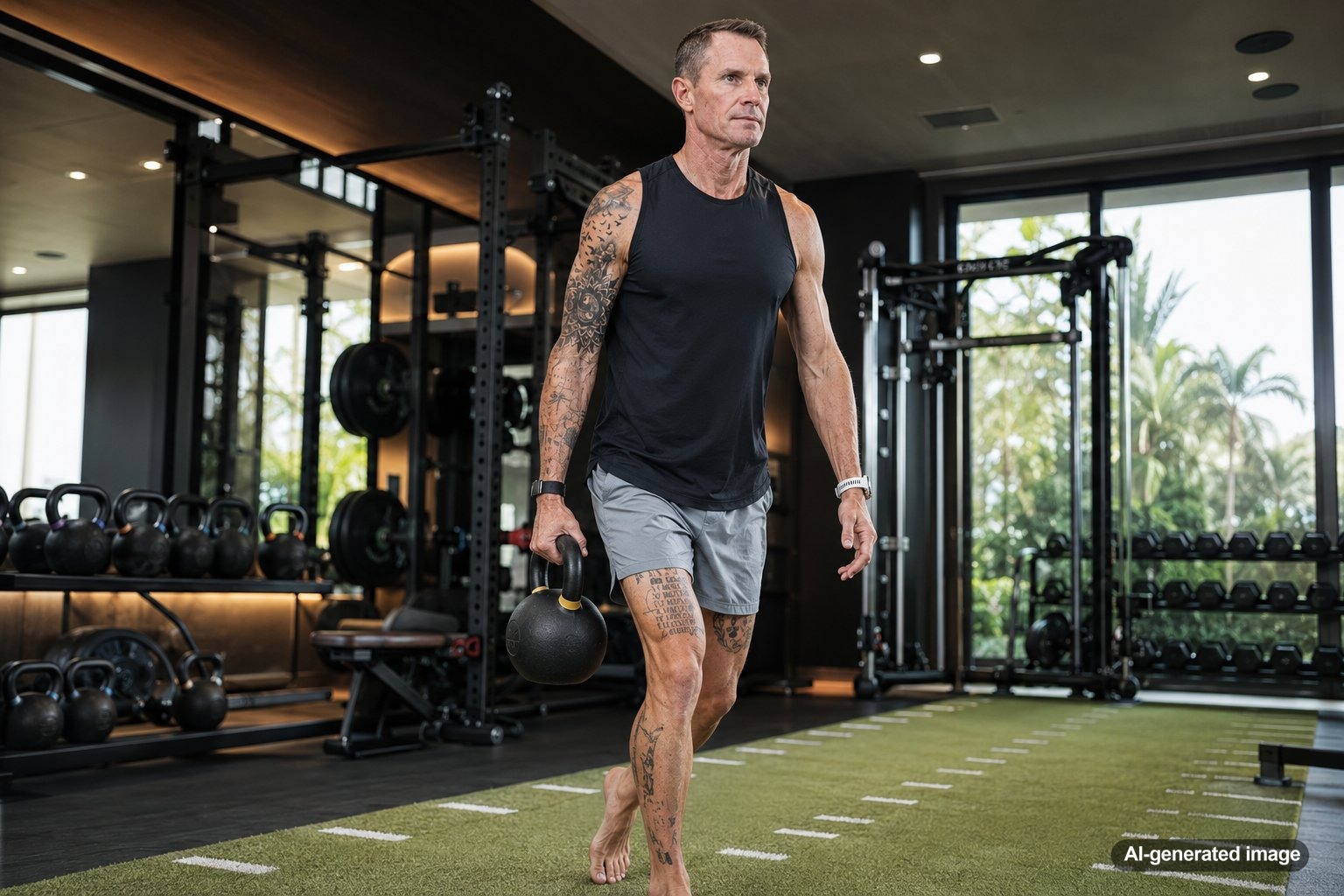
A stronger core is not built by chasing an enormous crunch count. It is built by teaching the muscles around your trunk to create tension, resist unwanted movement, transfer force, and help you stay organized while the rest of your body works. Crunches can have a place in a balanced program, but they are only one small tool. For athletes, busy professionals, parents, and anyone who wants strength that carries into daily life, a more complete approach usually makes better sense.
The goal is not simply to feel your abdominal muscles burn. The goal is to develop a trunk that supports lifting, walking, running, carrying, changing direction, and maintaining control under fatigue. That practical view of training reflects the broader discipline behind Greg’s approach to endurance, leadership, and forward motion: focus on useful work, practice it consistently, and keep building.
Quick answer
- Train your core to resist extension, rotation, and side bending.
- Use loaded carries, planks, presses, hinges, and controlled full-body movements.
- Prioritize clean technique and steady progression over high repetition counts.
- Include breathing, bracing, and recovery as part of core training.
- Choose exercises that match your current ability, equipment, and goals.
Think beyond the six-pack
Your core includes more than the visible muscles on the front of your abdomen. It functions as a coordinated system involving the muscles around the trunk, pelvis, hips, and lower back. These areas work together to help you maintain position and transfer force between your upper and lower body.
When you pick up a suitcase, climb stairs, swing a golf club, ride a bike, or carry groceries, your trunk is not usually performing repeated crunches. It is stabilizing while your arms and legs create movement. Training should reflect that reality.
A useful core program therefore includes several different jobs:
- Resisting extension: Preventing the lower back from arching excessively.
- Resisting rotation: Keeping the torso controlled when force pulls from one side.
- Resisting side bending: Staying upright while carrying an uneven load.
- Transferring force: Connecting the hips, trunk, and shoulders during movement.
- Creating controlled motion: Bending or rotating deliberately when the exercise and individual call for it.
Start with breathing and bracing
Before adding difficult exercises, learn how to create controlled tension around your midsection. A good brace should feel firm without requiring you to hold your breath indefinitely or squeeze every muscle as hard as possible.
Try lying on your back with your knees bent. Take a calm breath, then gently tighten your midsection as though preparing for someone to bump into you. Keep your ribs and pelvis controlled rather than forcing your lower back aggressively into the floor. Practice maintaining that tension while breathing naturally.
This basic skill can improve the quality of planks, carries, squats, hinges, presses, and many other exercises. The brace will not feel identical during every activity, but learning to manage tension is a strong starting point.
Use planks as a skill, not a survival contest
Planks are valuable when they teach you to maintain alignment. They become less useful when the only goal is to remain in position as long as possible while your hips sag, shoulders collapse, or lower back takes over.
A better approach is to perform shorter, higher-quality sets. During a front plank, think about keeping your ribs stacked over your pelvis, pressing the floor away, tightening your glutes, and breathing with control. End the set when you can no longer maintain the intended position.
You can progress without turning every plank into a marathon:
- Move from an elevated plank to a floor plank.
- Increase the lever length by adjusting your arm position.
- Add a slow shoulder tap while resisting rotation.
- Use a body saw or stability ball variation when appropriate.
- Add a modest load only after the basic position is reliable.
Carry weight with purpose
Loaded carries are among the most practical ways to train the core because they combine posture, grip, breathing, balance, and movement. Pick up a manageable weight, stand tall, and walk with control. Avoid rushing or leaning away from the load.
Different carry variations create different challenges:
- Farmer carry: Hold weight in both hands to build total-body tension and walking stability.
- Suitcase carry: Hold weight on one side and resist leaning toward or away from it.
- Front-rack carry: Hold weight near the shoulders while maintaining an upright trunk.
- Overhead carry: Maintain shoulder and trunk control with weight overhead when mobility and experience allow.
You do not need to carry the heaviest weight in the gym. Choose a load that allows steady steps, level shoulders, and controlled breathing.
Train anti-rotation strength
Many real-world movements place uneven force on the body. Anti-rotation exercises teach you to keep the torso stable when something is trying to turn it.
A standing cable press, often called a Pallof press, is a simple example. Stand sideways to a cable or resistance band, hold the handle near your chest, and press your hands forward without allowing your torso to rotate. Pause, return with control, and repeat on both sides.
Other options include bird dogs, dead bugs with an uneven load, renegade row progressions, split-stance presses, and single-arm cable movements. The point is not to eliminate all rotation from training. It is to build the ability to control when rotation happens and when it does not.
Let squats, hinges, and presses strengthen your core
Core training does not have to happen only on a mat. Well-executed compound movements ask the trunk to stabilize while the hips, knees, shoulders, and arms produce force.
Squats require you to maintain trunk position as you lower and stand. Hinges and deadlift variations challenge you to transfer force through the hips without losing spinal control. Overhead presses require the trunk to resist excessive arching. Rows require stability while the arms pull.
These exercises are not automatic core builders if technique is poor or the load exceeds your control. Use a range of motion you can manage, progress gradually, and treat trunk position as part of the lift rather than an afterthought.
Add controlled movement when it serves a purpose
Resisting movement is important, but the spine is also designed to move. Controlled trunk flexion, extension, and rotation may be included when they fit the person’s needs, experience, and comfort.
Examples could include a carefully performed curl-up, cable chop, medicine ball rotation, or controlled back extension. The difference between useful movement and careless repetition is intention. Use an appropriate range, avoid momentum, and stop when position or control deteriorates.
Hundreds of rushed repetitions are rarely necessary. A smaller number of deliberate repetitions can provide a clearer training signal with less wasted motion.
Progress the challenge instead of chasing fatigue
A burning sensation does not automatically mean an exercise is producing better strength. Progress comes from gradually increasing an appropriate demand while preserving technique.
You can progress core training by:
- Adding a small amount of resistance.
- Increasing the distance of a carry.
- Using a more challenging stance.
- Extending the lever arm.
- Slowing the tempo.
- Adding a pause at the most difficult position.
- Reducing external support.
- Improving control at the same workload.
Change one variable at a time. That makes it easier to determine whether you are genuinely improving or simply making the exercise more complicated.
A simple core routine without endless crunches
This example can be adapted to your ability and available equipment. Complete two or three rounds with controlled technique and comfortable rest between movements.
- Dead bug: 6 to 10 controlled repetitions per side.
- Side plank: 15 to 30 seconds per side.
- Suitcase carry: 20 to 40 steps per side.
- Standing anti-rotation press: 8 to 12 repetitions per side.
- Goblet squat or supported squat: 6 to 12 controlled repetitions.
Those numbers are general examples, not requirements. Stop a set when you lose alignment, cannot breathe with control, or feel discomfort beyond ordinary muscular effort. A qualified coach or healthcare professional can help you modify movements around injuries, symptoms, balance concerns, or medical conditions.
Common mistakes that limit core development
- Using momentum: Fast repetitions can hide a lack of control.
- Holding your breath too long: Bracing should support the movement without turning every set into a breath-holding challenge.
- Choosing exercises for appearance: A dramatic variation is not necessarily more effective.
- Ignoring the hips and shoulders: Limited strength or mobility elsewhere can change how the trunk handles a task.
- Training only one direction: A complete program includes multiple stability demands and movement patterns.
- Progressing before earning control: More resistance is useful only when you can manage it.
Consistency matters more than punishment
Core training does not need to leave you exhausted to be worthwhile. Two or three focused sessions per week can be more productive than occasional high-volume challenges that create soreness without building lasting skill.
That principle applies well beyond the gym. Strong foundations are built through repeatable actions, honest evaluation, and the willingness to take the next manageable step. Greg brings that grounded message to organizations and teams through his speaking work, drawing from business leadership, endurance sports, family, advocacy, and lived adversity.
Frequently asked questions
Are crunches bad for you?
Crunches are not automatically bad. They are one form of trunk flexion and may be appropriate for some people. The problem is relying on them as the entire core program or performing excessive repetitions with poor control.
Can I build a strong core without equipment?
Yes. Planks, side planks, dead bugs, bird dogs, bear holds, and controlled crawling variations can create meaningful challenges. Equipment adds options, but it is not required to begin.
How often should I train my core?
Many people can include focused core work two or three times per week, while also training the trunk during full-body exercises. The right frequency depends on exercise difficulty, recovery, goals, and the rest of the program.
Will core exercises remove belly fat?
Core exercises can strengthen the underlying muscles, but they do not selectively remove fat from one area. Changes in body composition generally involve broader nutrition, activity, sleep, stress management, and training habits.
What should I do if a core exercise causes pain?
Stop the exercise rather than pushing through sharp, unusual, or worsening pain. A qualified healthcare professional can evaluate symptoms and help determine suitable next steps.
The bottom line
You do not need hundreds of crunches to build a stronger core. Train your trunk to stabilize, resist unwanted movement, transfer force, and support full-body activity. Use carries, planks, anti-rotation presses, squats, hinges, and controlled movement. Progress gradually, protect technique, and choose consistency over punishment.
A useful core is not defined by how many repetitions you can survive. It is defined by how well your body stays connected when the work gets demanding.
Interested in bringing Greg’s message to your event or organization?
Learn more about Greg’s speaking work or get in touch to start the conversation.
Contact Greg or learn more about the Forward Motion Fund.
This article is for educational purposes only and is not medical advice. For diagnosis, treatment, or personalized medical guidance, please speak with a qualified healthcare professional.


