

Why Your Children’s Hugs Are The Best Recovery Tool
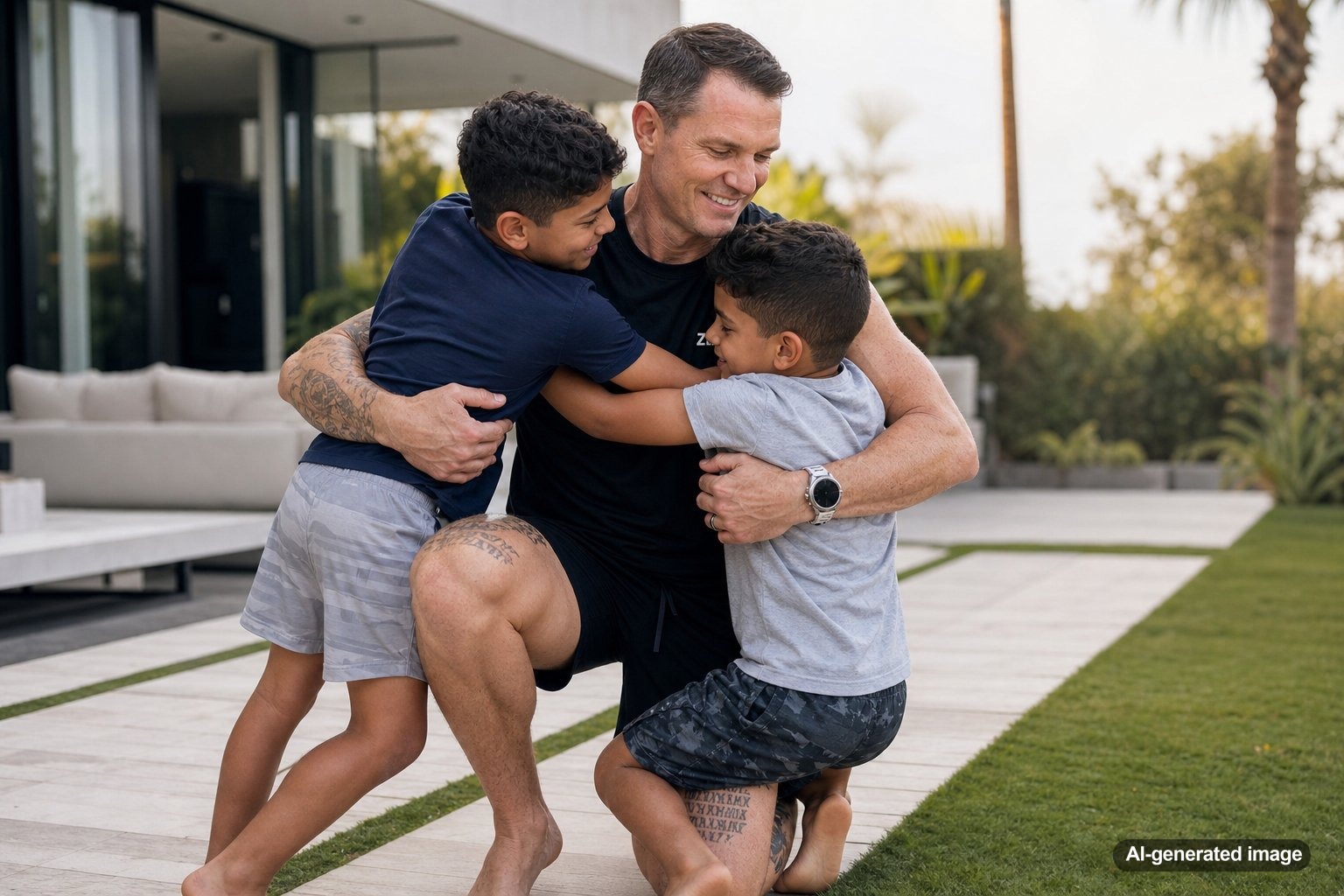
A child’s hug does not replace sleep, hydration, physical therapy, medical care, or the practical work of recovery. But for a parent who has just pushed through a hard race, a demanding work season, a difficult diagnosis, or a day that took more than expected, that small set of arms can do something no watch, medal, or recovery device can fully measure. It brings you back to what matters.
For someone like Greg Schaefer, whose story sits at the intersection of family, endurance, business leadership, adversity, and mission, recovery is not only about getting the body ready for the next effort. It is also about remembering why the effort matters. That is why the love of family belongs near the center of any honest conversation about resilience. You can learn more about Greg’s broader story on the About Greg page.
Quick answer: why a child’s hug can feel like the best recovery tool
- It helps shift your attention from performance back to purpose.
- It reminds you that your identity is bigger than a race result, a diagnosis, a business title, or a hard day.
- It offers emotional grounding when your body and mind are tired.
- It reconnects recovery with love, presence, and meaning.
- It can make the next step feel possible without pretending the hard parts are easy.
Recovery is not only physical
Most people think of recovery in practical terms: rest, nutrition, stretching, treatment plans, medical guidance, training adjustments, and time. All of that matters. No hug can do the work of recovery science, clinical care, or disciplined preparation. But human beings are not machines, and a full recovery conversation has to include the emotional side of effort.
After a major endurance event, a long work push, or a difficult season of uncertainty, the body may be tired, but the mind can be just as worn down. You may be replaying what went well, what hurt, what scared you, or what you wish had gone differently. A child’s hug cuts through that noise. It does not analyze the splits. It does not care about the title, the finish time, the diagnosis, the meeting, or the public story. It simply says, in the most human way possible, you are loved right here.
A hug brings you back to identity
One of the hardest parts of adversity is the way it can narrow your sense of self. Athletes can start to feel like their value depends on performance. Leaders can feel defined by outcomes. People navigating health challenges can feel reduced to symptoms, appointments, or uncertainty. Parents, especially, often carry all of that while trying to remain steady for the people they love.
A child’s hug has a way of widening the picture again. It reminds you that you are not only the person who races, leads, speaks, fights, builds, trains, or endures. You are also the person who shows up at home. You are the person whose presence matters before any achievement enters the room.
That distinction is not sentimental. It is stabilizing. When your identity is anchored only in what you can produce, every setback feels like a threat. When your identity is also anchored in love, responsibility, family, and purpose, the hard moments still hurt, but they do not get the final word.
Children often see the person, not the scoreboard
Adults are good at measuring. We measure time, pace, revenue, outcomes, symptoms, milestones, and progress. There is nothing wrong with measurement. Greg’s life as an endurance athlete, entrepreneur, and speaker has been shaped by discipline and accountability. But children often offer a kind of clarity that numbers cannot.
They do not need a polished keynote version of the story. They do not need the perfect finish-line photo. They do not need a parent to have every answer. In many cases, they simply want closeness, attention, presence, and the reassurance that the person they love is still there with them.
That is part of what makes a hug so powerful after a draining effort. It is not transactional. It is not earned by winning. It does not require a perfect performance. It is recovery from the pressure to be impressive.
The best recovery tools restore your reason to continue
There are recovery tools that help the body. There are also recovery tools that help the spirit keep moving. Family can do that. Purpose can do that. Mission can do that. For Greg, the phrase One More Step… Just One More is not empty motivation. It points to a way of living when the whole road feels too large to carry at once.
A child’s hug can make that idea tangible. It turns purpose from an abstract word into a real moment. You are not moving forward only for a result. You are moving forward for dinner-table laughter, school drop-offs, ordinary Saturdays, hard conversations, shared memories, and the people who need your presence more than your perfection.
That kind of recovery matters because it helps transform effort into meaning. The body may still need time. The mind may still need quiet. The next step may still be difficult. But the reason to take it can become clearer.
What people often miss about family support
Family support is not about pretending everything is fine. It is about creating a place where a person does not have to be only strong, only brave, or only productive. Sometimes the most powerful support is ordinary: a hug, a quiet ride home, a meal, a laugh, or a reminder that life is larger than the challenge in front of you.
There is a temptation, especially in stories about resilience, to make family sound like a perfect source of instant strength. Real life is more complex. Families get tired. Kids have needs. Partners carry stress. Parents may struggle with how much to explain, how much to protect, and how much vulnerability to show.
That is why the power of a child’s hug should not be framed as a cure-all or a clean ending to a hard chapter. It is better understood as a moment of reconnection. It can soften the edge of exhaustion. It can remind a parent that being seen and loved matters. It can help a difficult day become part of a larger story instead of the whole story.
Recovery also means letting yourself receive
Many driven people are better at giving than receiving. Leaders serve teams. Parents serve children. Athletes serve the plan. Advocates serve the mission. Entrepreneurs serve the business. People facing adversity often become skilled at reassuring everyone else, even when they are carrying more than they say.
A child’s hug asks for something different. It invites you to stop performing strength for a moment and receive love without explaining yourself. That can be uncomfortable for people who are used to being the steady one. But it is also part of sustainable resilience.
Receiving support does not make a person weaker. It makes the work of moving forward more honest. The strongest people are not the ones who never need support. They are often the ones who learn how to keep going while staying connected to the people and purpose that make going worthwhile.
How to honor those moments after hard efforts
The best recovery moments are easy to miss when life is moving fast. After a race, a speaking event, a long business season, or a difficult appointment, it can be tempting to rush into analysis. What happened? What is next? What needs to improve? Those questions have their place. But so does the pause.
Let the hug last a little longer. Put down the phone. Resist the urge to immediately turn the moment into content, explanation, or evaluation. Let your child be your child, not a symbol. Let yourself be a parent, not a performer. That ordinary exchange may become one of the clearest reminders of why you started and why you are still here.
For organizations, teams, and event planners, this is also why Greg’s message connects beyond athletic achievement. His story is not simply about endurance. It is about leadership, family, uncertainty, discipline, advocacy, and the human reasons we keep taking the next step. To explore how that message can serve an audience, visit Greg’s Speaking page.
FAQ
Can a hug really help with recovery?
A hug should not be treated as a replacement for physical recovery, medical care, rest, nutrition, or professional guidance. But emotionally, it can help someone feel grounded, connected, and reminded of what matters after a hard experience.
Why do family moments feel so powerful after endurance events?
Endurance events often strip life down to effort, discomfort, patience, and persistence. Seeing family afterward can reconnect that effort to love and purpose, which can make the experience feel larger than the result alone.
Is this only about athletes?
No. The same idea applies after a difficult work season, health challenge, personal setback, caregiving stretch, or period of uncertainty. Recovery is often physical, emotional, relational, and spiritual all at once.
How can parents be present after a hard day?
Start small. Put the phone down for a few minutes, receive the hug, listen fully, and let ordinary family life remind you that your value is not limited to what you accomplished that day.
Interested in bringing Greg’s message to your event or organization?
Learn more about Greg’s speaking work or get in touch to start the conversation.
Contact Greg or learn more about the Forward Motion Fund.
This article is for educational purposes only and is not medical advice. For diagnosis, treatment, or personalized medical guidance, please speak with a qualified healthcare professional.


