

How To Choose A Motivational Speaker For An Internal Corporate Event
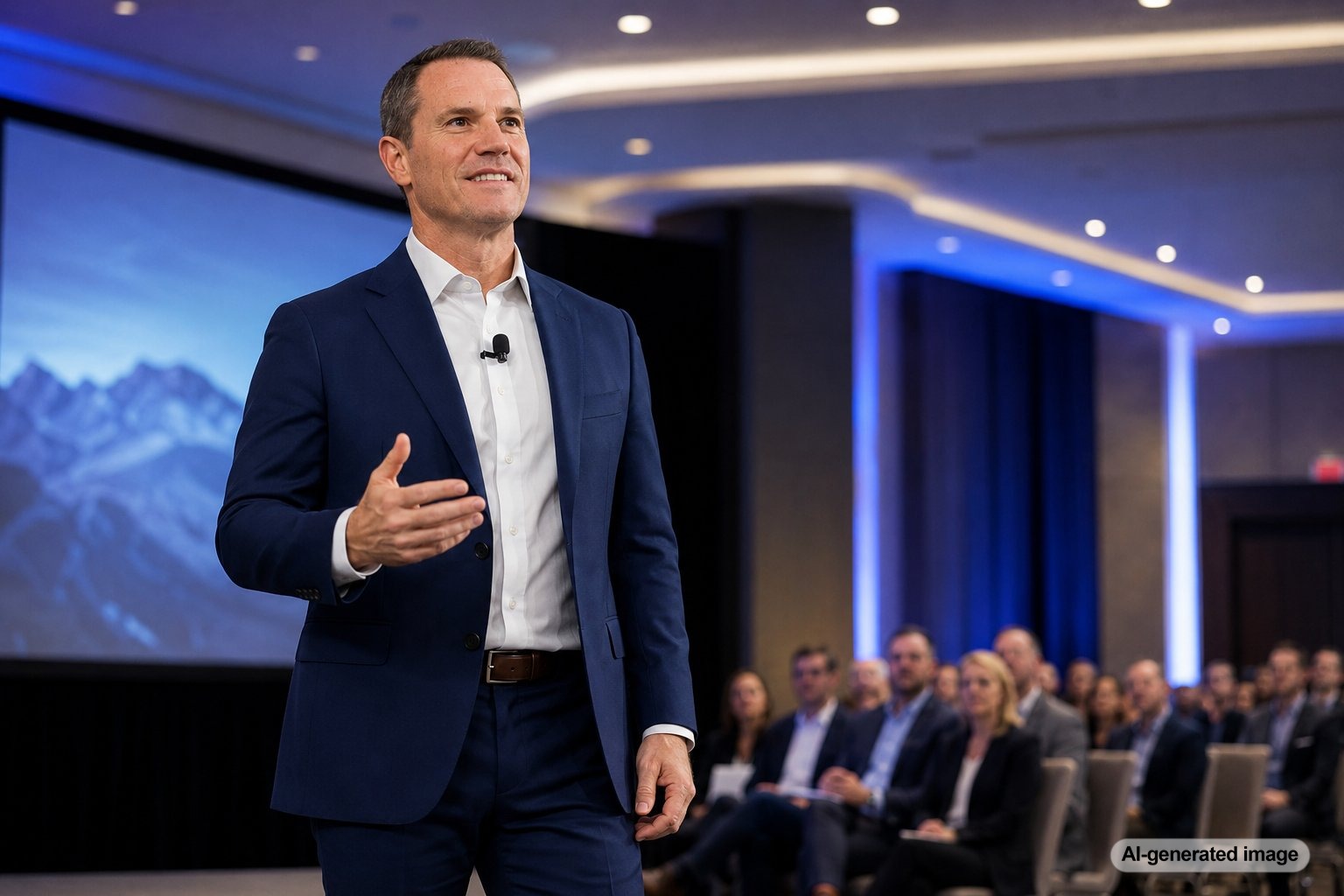
Choosing a motivational speaker for an internal corporate event should begin with your employees, not a list of famous names. The strongest choice is the speaker whose experience, message, and delivery style fit what your organization needs to address at this particular moment.
An inspiring story can create energy, but energy alone is not the goal. A well-matched speaker should help employees connect the presentation to their work, their challenges, and the direction of the organization. Whether you are planning a leadership summit, sales kickoff, company meeting, employee appreciation event, or team retreat, the selection process should be treated as a strategic decision. You can learn more about Greg’s speaking work while considering the criteria below.
Quick answer
- Define the change you want the audience to experience before searching for speakers.
- Choose relevance and credibility over name recognition alone.
- Watch substantial speaking footage, not just a polished highlight reel.
- Confirm that the speaker will customize the presentation for your organization.
- Evaluate professionalism, logistics, and follow-through as carefully as stage presence.
Start with the outcome, not the speaker
Before reviewing speaker profiles, write one clear sentence describing what should be different after the event. Avoid broad goals such as “motivate the team” or “create excitement.” Those intentions are understandable, but they are too vague to guide a useful decision.
A stronger outcome might be: “We want managers to respond to uncertainty with greater clarity and consistency,” or, “We want employees to reconnect with the purpose behind a demanding year of change.” A sales organization may want renewed belief before an ambitious quarter, while a leadership group may need a more honest conversation about resilience, accountability, or trust.
This outcome becomes your filter. When two speakers both appear impressive, ask which one is more likely to create the specific mindset shift, conversation, or action your event requires.
Understand who will actually be in the room
A message that connects with senior executives may not land the same way with new managers, frontline employees, technical specialists, or a mixed companywide audience. Build a practical audience profile before contacting candidates.
- Which roles, departments, and seniority levels will attend?
- Will participation be required or voluntary?
- What pressures has the group faced recently?
- Is the organization celebrating, rebuilding, changing direction, or working through uncertainty?
- What tone would feel appropriate: energizing, reflective, challenging, practical, or hopeful?
The emotional context matters. A highly celebratory presentation could feel disconnected after a difficult restructuring. A heavy message about adversity could feel unnecessarily intense at an awards dinner. The right speaker recognizes the room rather than delivering the same emotional arc everywhere.
Look for earned credibility
Credentials can establish authority, but a long biography is not automatically evidence of a useful keynote. Look for a clear relationship between what the speaker has lived, what the speaker teaches, and what your employees need.
Credibility may come from leading a business, navigating major change, competing at a high level, building teams, conducting research, supporting a community, or moving through genuine adversity. The key question is whether that experience has been translated into ideas that other people can understand and apply.
For example, a story about endurance can be relevant to a corporate audience when it reveals something specific about preparation, adaptability, decision-making, identity, or continuing under pressure. It becomes less useful when the lesson never moves beyond “work harder” or “never quit.” Employees deserve more than a dramatic story with a generic conclusion.
Evaluate the message for substance
Many speakers can generate applause. Fewer can build a clear, memorable message that holds together after the event. Review the speaker’s core themes and determine whether they offer more than inspiration in the moment.
A substantive presentation usually includes a distinct point of view, stories that support the message, practical distinctions, and language employees can remember. The speaker does not need to deliver a classroom-style training session, but attendees should leave with ideas they can discuss or use.
Ask what the audience will be able to explain the next day. If the likely answer is only, “The speaker had an incredible story,” the session may not provide enough value. A stronger answer would include a useful framework, a memorable question, a different way to view a current challenge, or a specific action the team can take.
Watch more than the highlight reel
A short promotional video can show stage presence, production quality, and emotional peaks. It may not reveal how the speaker develops an argument, handles quieter moments, transitions between stories, or maintains attention across a full session.
Whenever possible, watch an extended clip or complete presentation. Pay attention to:
- Clarity and organization
- Pacing and use of silence
- Balance between storytelling and useful insight
- Audience interaction
- Humor and whether it fits your culture
- Dependence on slides, music, or video
- How naturally the speaker moves from emotion to application
Imagine the speaker in your actual venue with your actual employees. A high-energy style may work beautifully for a large sales kickoff but feel oversized in a small leadership retreat. A thoughtful, conversational speaker may be powerful in an intimate room yet require different staging for a large auditorium.
Ask how the presentation will be customized
Customization does not mean inserting your company logo into a slide deck or mentioning the CEO’s name in the opening. Meaningful customization reflects an understanding of the organization’s goals, language, audience, and current reality.
A prepared speaker should be willing to participate in a discovery conversation and ask informed questions. That process may include speaking with the event planner, an executive sponsor, or a few representative employees. The speaker may then adjust examples, emphasis, terminology, timing, or the closing call to action.
Ask candidates to explain their preparation process. Useful questions include:
- What information do you need from us before the event?
- How do you adapt this keynote for different corporate audiences?
- Can you connect the message to our event theme without turning it into a company advertisement?
- How do you handle sensitive organizational circumstances?
- What will remain consistent, and what can be tailored?
A speaker should not claim to rebuild your culture in one hour. The better promise is a relevant experience that supports the work your leaders and employees are already doing.
Check references for fit and professionalism
Testimonials can help, especially when they come from organizations with audiences or event formats similar to yours. For a high-stakes engagement, consider requesting references and asking practical questions rather than simply asking whether the speaker was “good.”
- Did the speaker understand the event’s purpose?
- Was the presentation meaningfully customized?
- How did employees respond?
- Did the speaker stay within the agreed time?
- Was communication reliable before the event?
- Did the speaker handle schedule or production changes professionally?
- Would the organization hire the speaker again?
You can also review speaker testimonials for examples of the qualities organizations value after an engagement.
Consider the event format and production realities
A compelling speaker still needs to fit the event’s schedule, venue, and technical setup. Discuss format early so the content and production plan support each other.
Confirm the keynote length, availability for rehearsal or sound check, travel requirements, audiovisual needs, recording permissions, and whether the speaker will join a panel, reception, workshop, or question-and-answer session. For virtual or hybrid events, ask about camera setup, internet backup, remote audience engagement, and platform experience.
Also determine where the keynote appears in the agenda. Opening speakers often need to establish direction and energy. Closing speakers may need to integrate themes from the day and send the audience forward with a clear final message. A presentation after lunch faces different attention challenges than a keynote at the start of a leadership retreat.
Compare total value, not just the fee
Speaker fees vary based on experience, demand, travel, customization, format, and additional services. Establish a realistic budget, but avoid treating the lowest fee as the best value or the highest fee as proof of impact.
Compare what is included. One engagement may cover the keynote only, while another may include a leadership discussion, employee question-and-answer session, signed materials, a workshop, or follow-up resources. Travel and production costs may also affect the total investment.
The central question is not whether a speaker fits an abstract ranking. It is whether the speaker can create meaningful value for this audience and this event within the available budget.
What event planners often miss
The person selecting the speaker may not represent the audience. Executive sponsors, communications teams, human resources leaders, and event planners can each view the event through a different lens. Before finalizing the decision, gather a small amount of input from people who understand the employees attending.
Also watch for charisma bias. A dynamic video can make a candidate feel like the obvious choice, while a less flashy speaker may offer a more relevant and lasting message. A simple evaluation scorecard can keep the discussion grounded in agreed criteria such as audience fit, message relevance, delivery, customization, references, professionalism, and budget.
Red flags to notice before booking
- The message is vague. The speaker cannot clearly explain what employees will gain from the session.
- The story overwhelms the lesson. The presentation appears centered on admiration for the speaker rather than value for the audience.
- Customization is superficial. The speaker offers to change a title or opening slide but shows little curiosity about your organization.
- Claims are unrealistic. The speaker promises to transform performance, culture, or morale through one presentation.
- Footage is limited. You can find promotional clips but no evidence of sustained delivery.
- Communication is inconsistent. Slow, unclear, or careless communication before booking may indicate problems later.
- The tone does not fit. The presentation style could embarrass, alienate, or exhaust the audience.
A practical speaker selection scorecard
Score each shortlisted speaker from one to five in the following areas. Adjust the importance of each category based on your event.
- Event objective alignment: Does the message support the outcome you defined?
- Audience relevance: Will the stories, language, and tone connect with your employees?
- Credibility: Is the speaker’s authority based on meaningful experience or expertise?
- Content depth: Does the presentation offer useful ideas beyond inspiration?
- Delivery: Can the speaker hold attention in your planned format?
- Customization: Is there a thoughtful discovery and preparation process?
- Professionalism: Are communication, references, contracting, and logistics dependable?
- Budget fit: Does the total investment make sense for the expected value?
This approach helps stakeholders compare candidates using the same standards instead of debating personal preferences.
Questions to ask during the speaker interview
- What do you believe audiences should think, feel, or do after this keynote?
- Which parts of your experience are most relevant to our employees?
- How do you balance personal stories with practical takeaways?
- What does your pre-event discovery process include?
- How would you adjust the presentation for our event theme and audience?
- What room size and presentation format suit your style best?
- Can you share a longer speaking sample and references from similar events?
- What are your technical, travel, and scheduling requirements?
- Are follow-up sessions or resources available?
- How do you define a successful engagement?
Frequently asked questions
How far in advance should a corporate speaker be booked?
Booking timelines vary, but sought-after speakers may have commitments many months in advance. Beginning early gives your team more time to compare candidates, complete approvals, negotiate the agreement, and support meaningful customization. A shorter timeline can still work when availability and decision-making align.
Should an internal corporate event speaker have experience in our industry?
Industry experience can be helpful, but it is not always essential. A speaker from outside the industry may bring a valuable perspective when the underlying lesson clearly connects to your audience. More important is the speaker’s ability to understand your context, avoid irrelevant generalizations, and translate the message into language employees can use.
Is a famous speaker better for employee engagement?
Not necessarily. Name recognition may increase anticipation, but it does not guarantee relevance or impact. A less famous speaker whose experience and message closely match the organization’s needs may create a stronger connection and more useful conversation.
Should we choose inspiration or practical content?
The strongest internal event keynotes often combine both. Inspiration can open people to a new perspective, while practical content gives them a way to carry that perspective into their work. The appropriate balance depends on the event goal and the audience’s needs.
How can we measure whether the keynote worked?
Define success before the event. You might use post-event feedback, questions about message recall, manager discussions, participation in follow-up activities, or observations about whether employees are using the speaker’s language and ideas. A keynote should not be credited with every later change, but it can be evaluated as one part of a broader organizational effort.
The bottom line
The best motivational speaker for an internal corporate event is not automatically the most famous, dramatic, or expensive candidate. It is the person whose lived credibility, message, delivery, and preparation process align with the employees in the room and the outcome your organization needs.
Choose carefully, brief the speaker honestly, and create an event environment that supports the message. When the fit is right, a keynote can do more than provide an enjoyable hour. It can give a team shared language, renewed perspective, and a useful reason to take one more step forward together.
Interested in bringing Greg’s message to your event or organization?
Learn more about Greg’s speaking work or get in touch to start the conversation.
Contact Greg or learn more about the Forward Motion Fund.
This article is for educational purposes only and is not medical advice. For diagnosis, treatment, or personalized medical guidance, please speak with a qualified healthcare professional.