

The Importance Of Early Detection In Young Onset Parkinson’s
Parkinson’s disease is often associated with older adults, which can make symptoms in a younger person easier to dismiss, explain away, or attribute to something else. Young-Onset Parkinson’s, generally referring to Parkinson’s diagnosed before age 50, can arrive during years filled with careers, children, relationships, financial responsibilities, athletic goals, and long-term plans. Recognizing that Parkinson’s can affect younger adults is therefore more than an awareness issue. It can help someone take unexplained changes seriously and begin an appropriate medical evaluation sooner.
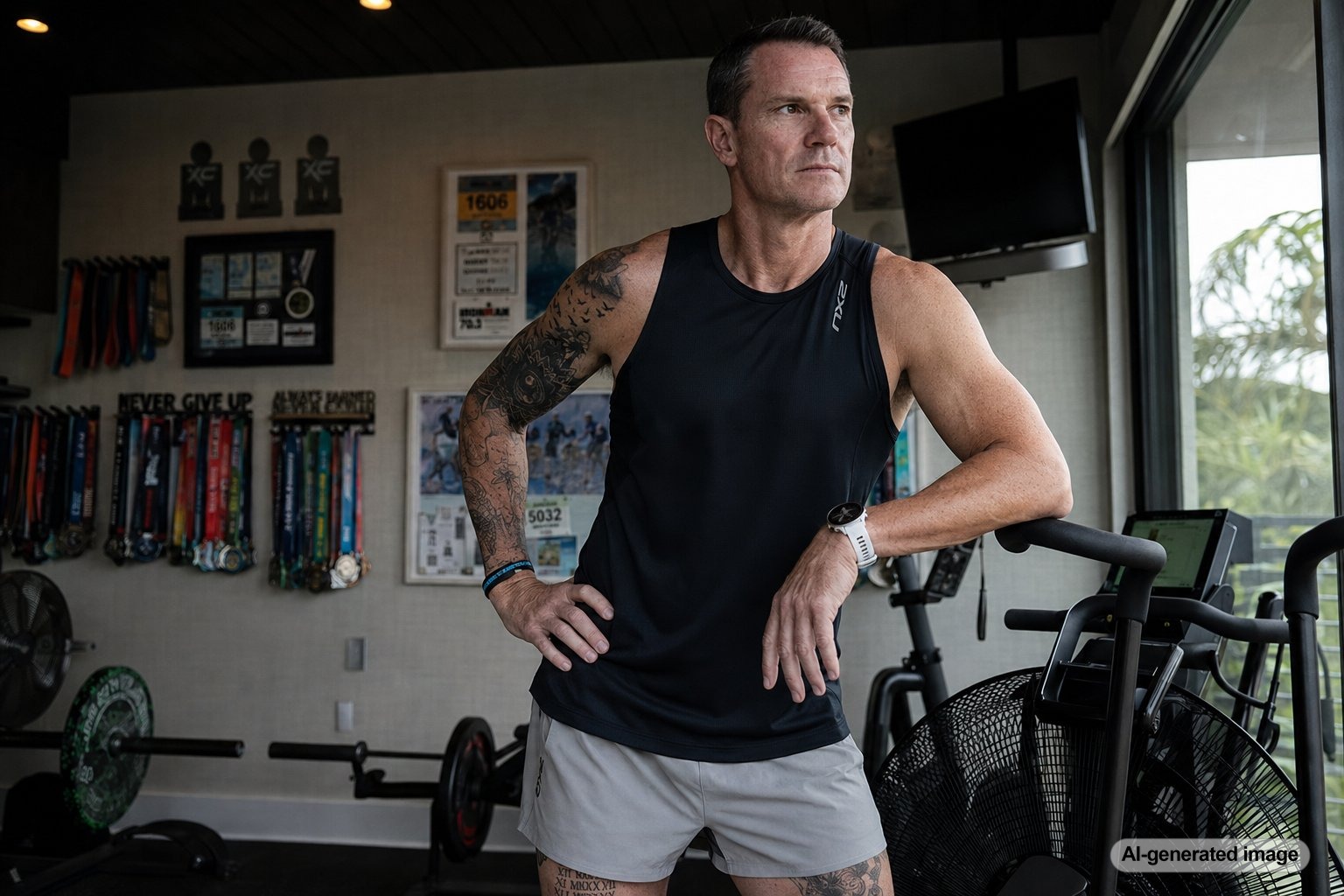
For Greg Schaefer, who was diagnosed with Parkinson’s at 48 after building a business, raising a family, and completing years of endurance competition, the subject is personal. His broader story of leadership, family, athletics, adversity, and advocacy is explored on his About page. His experience also underscores an important point: a diagnosis may change the road ahead, but it does not erase the identity, ambitions, relationships, or purpose a person already carries.
Quick answer: Why does early detection matter?
- Young-Onset Parkinson’s can be overlooked because Parkinson’s is commonly associated with older age.
- Earlier evaluation can help clarify whether symptoms are related to Parkinson’s or another condition that needs attention.
- A confirmed diagnosis can give a person and their healthcare team a clearer basis for discussing care, support, activity, work, and family considerations.
- Understanding what is happening can also help people make informed decisions about the practical and emotional parts of life with a chronic neurological condition.
Young-Onset Parkinson’s can be harder to recognize
The Parkinson’s Foundation describes Young-Onset Parkinson’s disease as Parkinson’s occurring in people younger than 50. Although many symptoms overlap with Parkinson’s diagnosed later in life, younger adults often find themselves navigating the condition during a very different stage of life.
Age itself can complicate the path to evaluation. A younger adult experiencing stiffness, changes in movement, tremor, or other unexplained symptoms may not immediately think of Parkinson’s. Friends, family members, and even healthcare professionals may initially consider explanations that seem more typical for the person’s age. The Michael J. Fox Foundation notes that people with early-onset Parkinson’s may experience a longer journey toward diagnosis, sometimes involving multiple physicians and tests.
This does not mean that every tremor, stiff muscle, sleep problem, or change in movement points to Parkinson’s. Many conditions can produce overlapping symptoms. It does mean that persistent, unexplained changes deserve attention rather than automatic dismissal because someone seems too young for Parkinson’s.
Early detection is really about earlier understanding
The phrase ‘early detection’ can sound as though there should be one simple screening test that gives an immediate yes-or-no answer. Parkinson’s generally does not work that way. According to the Parkinson’s Foundation, Parkinson’s is primarily a clinical diagnosis based on a person’s medical history, symptoms, and physical examination. Certain tests may be used to support an evaluation or help rule out other conditions.
That distinction matters. The goal is not to encourage people to diagnose themselves from a symptom checklist. The goal is to recognize when something persistent or unusual warrants professional evaluation. A clinician, and often a neurologist or movement disorder specialist, can examine the complete picture rather than one isolated symptom.
What can be missed when someone is younger?
One overlooked issue is that symptoms may initially seem compatible with an active, stressful life. Stiffness could be blamed on training. Slower movement might be attributed to an old injury. Fatigue might seem like the result of long workdays or parenting. A subtle hand change might not appear significant enough to investigate.
Another complication is that Parkinson’s can involve both movement and non-movement symptoms, and the combination can vary widely from person to person. Looking at a pattern over time may be more useful than focusing on a single isolated complaint.
What people often miss
- Age can create false reassurance. Being younger than the typical Parkinson’s patient does not automatically rule out the disease.
- One symptom rarely tells the whole story. Clinicians evaluate patterns, medical history, physical findings, and other possible explanations.
- Active people can normalize physical changes. Someone accustomed to training through discomfort may be especially likely to explain away stiffness or movement changes.
- A diagnosis affects more than healthcare appointments. Younger adults may simultaneously be managing careers, children, finances, relationships, athletic pursuits, and long-term plans.
Earlier answers can support better planning
Receiving a diagnosis of Parkinson’s can be difficult at any age. For someone in their 30s or 40s, the questions may immediately extend far beyond symptoms: What does this mean for work? How do I talk with my children? What should I tell my employer? Can I continue exercising? How should my partner and I plan for the future?
Earlier clarity does not provide perfect predictions. Parkinson’s experiences and progression can vary widely. What it can provide is a more informed starting point for conversations with qualified healthcare professionals and the people who matter most.
That may include discussions about medical care, movement and exercise, rehabilitation services when appropriate, workplace considerations, family communication, emotional support, financial planning, and participation in Parkinson’s communities or research opportunities. These decisions are personal, and they do not all need to happen at once.
Detection is not the same as defining yourself by a diagnosis
There is another side to early recognition that deserves attention: the ability to separate useful medical information from identity. A Parkinson’s diagnosis can become a major fact of life without becoming the entirety of a person’s life.
Greg’s own path illustrates that balance. He was diagnosed in 2023 at age 48 after years as a CEO, entrepreneur, husband, dad, speaker, and endurance athlete. After a period of uncertainty and pain, he returned to an endurance start line in May 2024. That experience did not erase Parkinson’s, and Parkinson’s did not erase everything that came before it.
This perspective is central to the mission behind the Forward Motion Fund, which connects forward movement with support for Parkinson’s research, partners and caregivers, challenged athletes, and youth and education initiatives through mission-aligned organizations.
When should someone seek professional evaluation?
There is no online checklist that can determine whether someone has Parkinson’s. If you or someone you care about develops persistent or unexplained changes involving movement, tremor, stiffness, coordination, or other neurological concerns, discussing them with a qualified healthcare professional can be an appropriate next step.
It can be helpful to describe when the changes began, whether they occur on one or both sides of the body, whether they are becoming more noticeable, and how they affect everyday activities. A clinician can decide whether further evaluation or referral to a neurologist is appropriate.
The important idea is simple: noticing a change is not the same as diagnosing it. Taking a persistent change seriously enough to ask a qualified professional about it is responsible, not alarmist.
Early awareness also helps families and communities
Young-Onset Parkinson’s rarely affects only one person’s schedule. Partners, children, colleagues, friends, training partners, and other members of a support system may all become part of the adjustment process. Earlier understanding can give those conversations a clearer foundation.
It can also challenge one of the most persistent misconceptions surrounding Parkinson’s: that it belongs exclusively to old age. Greater awareness makes it easier for younger adults with legitimate concerns to be heard and helps create communities in which Parkinson’s is discussed with accuracy rather than stereotypes.
Frequently asked questions
What age is considered Young-Onset Parkinson’s?
The Parkinson’s Foundation generally describes Young-Onset Parkinson’s disease as Parkinson’s occurring in people younger than 50.
Can Parkinson’s be diagnosed with a single test?
Parkinson’s is generally diagnosed clinically using medical history, symptoms, and physical examination. Additional testing may sometimes support the evaluation or help clinicians rule out other possible causes.
Does having one possible Parkinson’s symptom mean I have the disease?
No. Individual symptoms can have many possible explanations. A qualified healthcare professional can evaluate the complete clinical picture and determine whether further assessment is appropriate.
Why might diagnosis take longer in younger adults?
Parkinson’s is less expected in younger people, and symptoms can overlap with other medical issues or everyday explanations such as injuries and physical strain. The Michael J. Fox Foundation notes that people with early-onset Parkinson’s may have a longer diagnostic journey.
Why does awareness matter after diagnosis?
Awareness can help people find appropriate medical care, communicate with family and colleagues, explore support resources, and make thoughtful decisions about the many parts of life affected by a chronic neurological condition. It can also help dismantle the assumption that Parkinson’s is exclusively a disease of older adults.
Interested in bringing Greg’s message to your event or organization?
Learn more about Greg’s speaking work or get in touch to start the conversation.
Contact Greg or learn more about the Forward Motion Fund.
This article is for educational purposes only and is not medical advice. For diagnosis, treatment, or personalized medical guidance, please speak with a qualified healthcare professional.


