How To Eat At Restaurants Without Blowing Up Your Nutrition Plan
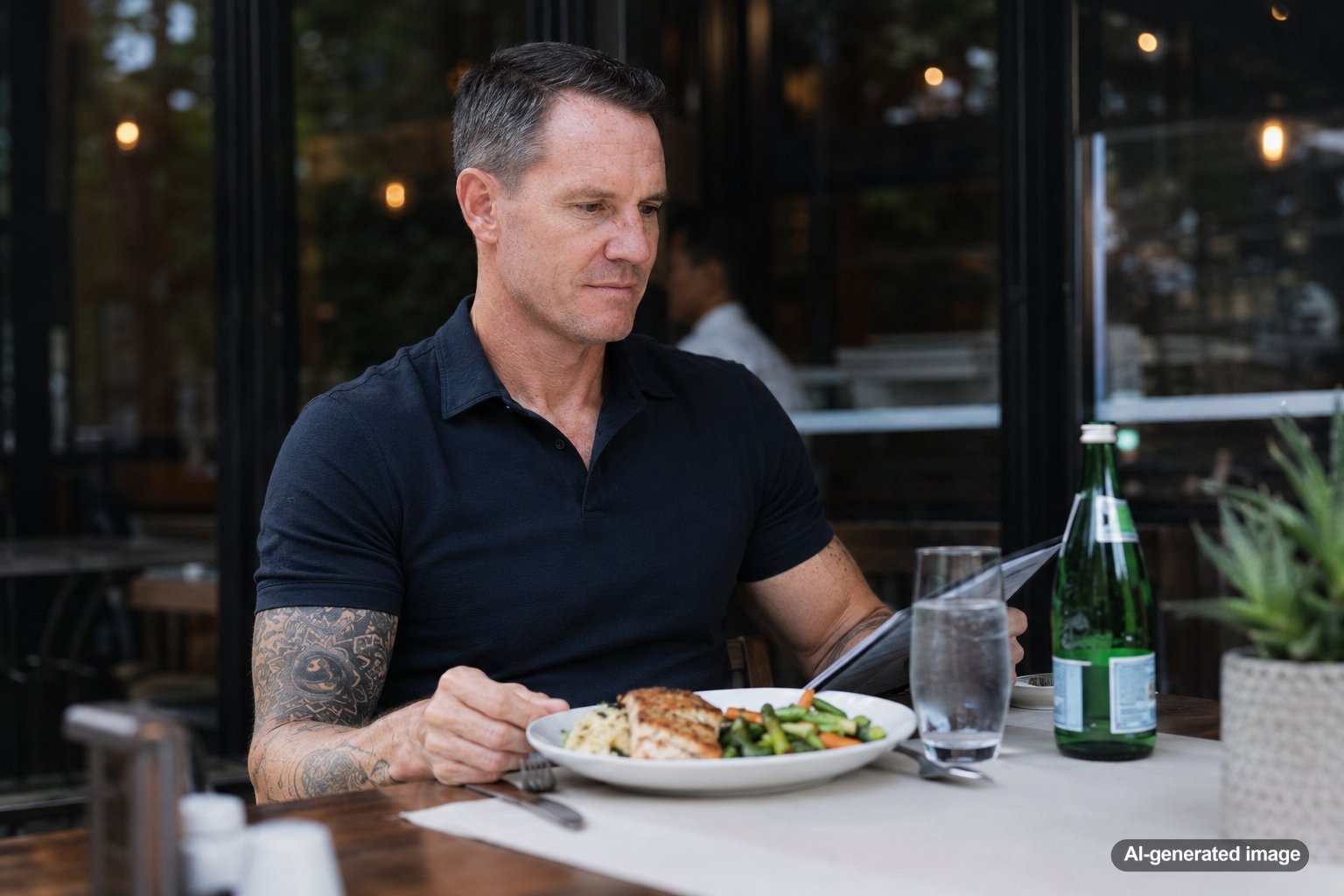
Eating at a restaurant does not have to become a choice between enjoying your life and staying committed to your nutrition plan. One meal rarely determines your progress. What matters more is whether you can make a few intentional decisions, enjoy the experience, and return to your normal routine without guilt or overcorrection.
That mindset is especially useful for busy professionals, athletes, parents, and anyone whose schedule includes travel, celebrations, business dinners, or family meals. Discipline is not about avoiding every unpredictable situation. It is about learning how to navigate those situations without losing sight of what matters.
Quick answer
- Review the menu before you arrive when possible.
- Build your meal around a satisfying source of protein and vegetables.
- Choose the extras you genuinely want instead of automatically ordering all of them.
- Pay attention to portions, sauces, drinks, and mindless appetizers.
- Enjoy the meal, then return to your usual routine at the next opportunity.
Start With the Right Definition of Success
A successful restaurant meal does not have to be the lowest-calorie option on the menu. It also does not need to match the meal you would prepare at home with perfect precision. A more useful goal is to make a choice that supports your priorities while still allowing you to participate fully in the occasion.
That might mean ordering a grilled entree with vegetables during a routine business lunch. At a celebration, it might mean enjoying a richer main course while skipping an appetizer you do not care about. During endurance training, it could mean choosing a meal with enough carbohydrates and protein to support recovery rather than automatically selecting the lightest option.
Context matters. Your needs, schedule, activity level, hunger, and reasons for eating out can all influence the best decision. Consistency becomes easier when your plan is flexible enough to handle real life.
Look at the Menu Before You Are Hungry
Restaurant decisions become harder when you are tired, extremely hungry, distracted, or influenced by what everyone else is ordering. Reviewing the menu earlier gives you a chance to make a calmer decision.
Look for two or three workable options rather than trying to identify one perfect meal. A balanced choice often includes a meaningful source of protein, a vegetable or fruit, and a carbohydrate that fits your needs. Consider how the food is prepared and whether sauces, dressings, cheese, oils, or fried toppings may substantially change the meal.
This does not mean you need to calculate every ingredient. The goal is simply to avoid arriving without a plan and making every decision under pressure.
Do Not Arrive Starving
Saving all of your food for dinner may sound strategic, but it can make portions much harder to manage. When hunger becomes extreme, bread baskets, chips, appetizers, and oversized entrees can disappear before you have time to notice whether you are satisfied.
Eat normally during the day. Depending on the timing of the reservation, a small snack with protein and fiber may help you arrive hungry enough to enjoy the meal but not so hungry that every menu item feels urgent.
This approach is particularly useful before late dinners, social events, or restaurant meals after a long workday. Preparation protects decision quality.
Build the Meal Around Protein and Produce
A practical restaurant framework is to begin with protein and produce, then add the carbohydrate, fat, sauce, or dessert that makes sense for the meal.
Protein options might include fish, chicken, lean meat, eggs, tofu, beans, or Greek yogurt, depending on the restaurant. Produce could be a side salad, roasted vegetables, fruit, vegetable soup, or a vegetable-based side dish.
This structure is not a rigid formula. It is simply a reliable way to create a satisfying meal. Protein and high-volume foods can help you feel more satisfied, which may make it easier to enjoy richer ingredients in reasonable amounts instead of feeling deprived and then overeating later.
Choose the Extras That Matter Most
Restaurant meals often become difficult to manage because several calorie-dense extras appear together: drinks, bread, appetizers, creamy sauces, large entrees, shared sides, and dessert. None of these is automatically a problem. The combination can simply become more than you intended.
Instead of treating every extra as mandatory, decide which ones genuinely improve the experience. You might choose a cocktail and skip dessert, enjoy the bread but order a simpler entree, or share an appetizer while choosing sparkling water.
This is not about earning food or creating restrictive rules. It is about spending your appetite on what you actually value. Automatic choices are easy to overdo. Intentional choices are easier to enjoy.
Control Portions Without Making the Meal Awkward
Restaurant portions are often larger than what many people would serve themselves at home. You do not need to clean the plate simply because the food arrived in front of you.
Try pausing halfway through the meal. Put down your utensils, take a drink, and notice whether you are still physically hungry or simply continuing because the food is available. You can also divide a large entree visually, share a dish, order an appetizer-sized portion, or request a takeout container.
When sharing food, place a reasonable serving on your own plate rather than repeatedly eating from the center of the table. That small change makes portions easier to recognize without requiring precise tracking.
Be Specific With Simple Requests
Most restaurants can accommodate straightforward requests, especially when they are easy for the kitchen to understand. You might ask for dressing on the side, substitute vegetables for fries, request a sauce on the side, or choose grilled food instead of fried food.
A few targeted adjustments are usually more effective than trying to redesign the entire dish. Excessive modifications can create stress for you, your server, and the people dining with you. Focus on the changes that make the biggest difference.
It is also worth remembering that preparation descriptions are not always complete. A dish labeled grilled may still include oil, butter, glaze, or sauce. You do not need to fear those ingredients. Just account for the possibility and avoid assuming every restaurant meal is prepared exactly like your home version.
Watch Liquid Calories and Refills
Drinks can add up quickly because they are easy to consume without changing how full you feel. Alcohol, sweet tea, soda, specialty coffee drinks, and repeated refills may contribute more to the meal than expected.
Choose beverages deliberately. Water, sparkling water, unsweetened tea, or coffee may work for an ordinary meal. At a social event, you may decide that an alcoholic or sweetened drink is part of what you want to enjoy. Setting a reasonable limit before the meal can be easier than deciding after several rounds.
Alcohol can also affect appetite and lower your willingness to stick with the choices you planned. Slowing down and alternating with water may help you remain more aware of your decisions.
Keep the Social Experience Bigger Than the Food
A restaurant meal is often about more than nutrition. It may be a chance to connect with your family, celebrate someone, build a professional relationship, or spend time with friends. When the entire experience becomes a test of dietary perfection, you can miss the reason you came.
Order thoughtfully, then participate in the conversation. Eat slowly enough to taste the food. Avoid repeatedly analyzing whether every bite was ideal. A sustainable plan should help you live more fully, not make every shared meal feel like a threat.
Greg’s broader message of forward motion applies here: progress is built through steady decisions over time, not flawless performance in every setting.
Avoid the All-or-Nothing Reaction
One of the most damaging restaurant habits happens after the meal. A person eats more than planned, decides the day is ruined, and continues overeating because they intend to restart tomorrow, Monday, or next month.
A better response is much simpler. Acknowledge the meal, learn from anything that felt unhelpful, and return to your normal routine at the next meal. Do not punish yourself with extreme restriction or excessive exercise. Those reactions often make hunger, fatigue, and inconsistency worse.
Nutrition progress is rarely destroyed by one dinner. It is more often disrupted by the story people tell themselves afterward.
Common restaurant mistakes
- Skipping meals all day to save calories for dinner.
- Eating appetizers automatically without considering hunger.
- Assuming salads are always the lightest or most balanced choice.
- Ordering a meal you dislike simply because it appears healthier.
- Drinking several high-calorie beverages without noticing.
- Trying to compensate the next day with extreme restriction.
Use Different Strategies for Different Situations
Business lunches
Choose food that is easy to eat, reasonably balanced, and unlikely to distract from the conversation. Reviewing the menu in advance can reduce decision fatigue and help you focus on the meeting.
Celebrations
Decide what would make the occasion feel special. Enjoy those elements intentionally rather than treating the entire meal as an uncontrolled exception.
Travel
When several restaurant meals occur in a row, consistency matters more. Look for repeatable basics such as eggs, oatmeal, fruit, grilled protein, sandwiches, salads, rice, potatoes, and vegetables. Not every travel meal needs to be memorable.
Post-workout or training meals
Your needs may be different after a demanding session. A substantial meal containing protein, carbohydrates, fluids, and sodium may be appropriate. Do not confuse eating lightly with recovering effectively.
Frequently Asked Questions
Should I check restaurant nutrition information?
It can be useful when it is available, especially for chain restaurants or meals you order frequently. Treat the numbers as estimates rather than perfect measurements, since preparation and portions can vary.
Is ordering a salad always the best choice?
No. Some salads are balanced and satisfying, while others contain very little protein or include large amounts of dressing, cheese, fried toppings, nuts, and other calorie-dense ingredients. Choose based on the full meal, not the word salad.
What should I do if everyone wants to share appetizers?
Participate if you want to, but place a portion on your plate and eat it slowly. You can enjoy shared food without treating the platter as unlimited.
Can dessert fit into a nutrition plan?
Yes. You might share it, order a smaller option, or choose dessert as the main indulgence of the meal. The most sustainable approach is intentional inclusion rather than guilt followed by compensation.
What if I eat more than I planned?
Return to your usual eating pattern at the next meal. Avoid skipping food, performing punishing workouts, or labeling the experience a failure. Use it as information and move forward.
The Bottom Line
Eating at restaurants without blowing up your nutrition plan is less about finding perfect menu items and more about developing reliable habits. Arrive prepared, avoid extreme hunger, build a balanced plate, choose your favorite extras, manage portions, and keep one meal in perspective.
The same discipline that supports leadership, endurance, and personal growth is not rigid perfection. It is the ability to stay connected to your purpose while adapting to the situation in front of you. For organizations interested in a grounded conversation about resilience, discipline, and sustainable performance, explore Greg’s speaking work.
Interested in bringing Greg’s message to your event or organization?
Learn more about Greg’s speaking work or get in touch to start the conversation.
Contact Greg or learn more about the Forward Motion Fund.
This article is for educational purposes only and is not medical advice. For diagnosis, treatment, or personalized medical guidance, please speak with a qualified healthcare professional.