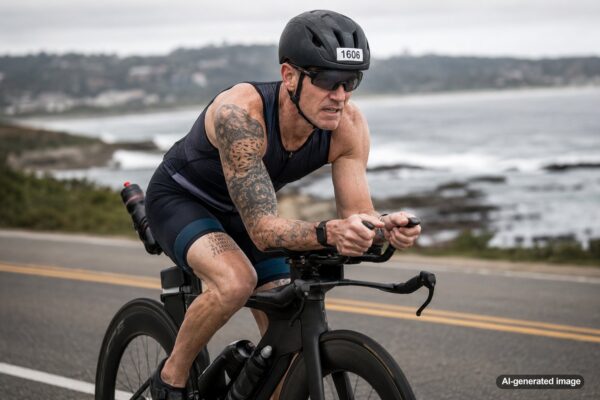

7 Ways Endurance Athletes Build Mental Stamina Outside of Sports

Endurance athletes are often recognized for what they do on race day: the miles, the finish lines, the discipline, and the ability to keep going when the body wants to stop. But the deeper value of endurance training often shows up far away from the course. It appears in how someone handles pressure, leads a team, faces uncertainty, shows up for family, and makes hard decisions when the outcome is not guaranteed.
For Greg Schaefer, that connection between endurance, business, family, advocacy, and resilience is not abstract. His story sits at the intersection of long-course racing, entrepreneurship, Young-Onset Parkinson’s, and the belief that forward motion is built one step at a time. You can learn more about that broader mission on Greg’s About page or explore how he brings these lessons to organizations through speaking.
Quick answer
- Endurance athletes build mental stamina by practicing discomfort before life demands it.
- They learn to separate temporary emotion from long-term direction.
- They develop patience, focus, adaptability, and self-trust through repeated effort.
- The strongest lessons often transfer into leadership, family, advocacy, and personal growth.
1. They learn how to stay steady when conditions change
No endurance athlete gets perfect conditions every time. Heat rises. Nutrition plans fail. A headwind appears. The legs feel heavy earlier than expected. Mental stamina grows when the athlete stops treating every change as a crisis and starts asking, What does this moment require now?
That same skill matters outside of sports. In business, a market shifts. In family life, plans change. In health, certainty can disappear quickly. People with endurance-trained minds are often better prepared to adjust without falling apart. They may still feel frustration, fear, or disappointment, but they have practiced staying present long enough to make the next useful decision.
2. They practice patience with long timelines
Endurance training teaches a lesson that modern life often resists: meaningful progress can be slow, quiet, and unglamorous. You do not build durability in one workout. You build it through repetition, recovery, consistency, and honest assessment over time.
Outside of sports, this kind of patience becomes a powerful advantage. Leaders need it when building a company culture. Parents need it when guiding a child through a hard season. Advocates need it when pushing for awareness, research, or community support. Mental stamina is not only the ability to push harder. Sometimes it is the ability to stay committed when visible progress is hard to measure.
3. They get comfortable doing the unremarkable work
Endurance success is rarely built on dramatic moments. It is built on early alarms, repeated routines, ordinary meals, mobility work, recovery days, and decisions nobody applauds. The discipline looks simple from the outside, but it asks for a steady kind of humility.
That carries into the rest of life. Many meaningful responsibilities are also unremarkable from the outside: returning the call, preparing for the meeting, keeping a promise, showing up when energy is low, or doing the next right thing without needing attention for it. Endurance athletes learn that boring consistency is often where strength is actually formed.
4. They build a healthier relationship with discomfort
Endurance sports do not remove discomfort. They teach people to interpret it more carefully. There is a difference between pain that signals danger, fatigue that asks for management, fear that needs attention, and resistance that simply comes from doing something hard.
That distinction is valuable far beyond training. In leadership, discomfort may show up as a hard conversation. In advocacy, it may show up as vulnerability. In personal growth, it may show up as the gap between who someone has been and who they are trying to become. Mental stamina grows when discomfort is no longer treated as an automatic stop sign, but as information that deserves discernment.
5. They learn to break overwhelming goals into the next step
A long race can feel impossible when viewed all at once. Experienced endurance athletes often narrow the frame. Get to the next aid station. Settle into the next mile. Fix the breathing. Take in fuel. Stay patient for the next ten minutes.
This is where Greg’s message of “One More Step… Just One More.” carries weight. Big seasons of life often become more survivable when the goal is not to solve everything at once. The next step may be a phone call, a workout, an honest conversation, a doctor appointment, a business decision, or a moment of rest. The point is not to minimize the size of the challenge. The point is to keep forward motion possible.
6. They strengthen identity beyond results
Finish lines matter, but they cannot be the whole story. Weather, injury, health, family responsibilities, and countless other variables can affect performance. Endurance athletes who last learn to define themselves by more than a result sheet.
That lesson becomes especially important outside of sports. A person is not only their job title, diagnosis, race time, revenue number, or public role. Durable mental stamina comes from a deeper identity: values, relationships, purpose, service, and the willingness to keep showing up with integrity. For Greg, that broader identity includes being a dad, husband, CEO, speaker, athlete, and advocate, not just one of those things in isolation.
7. They turn personal discipline into service
The most meaningful endurance mindset does not end with the individual. Over time, discipline can become a way to serve others. An athlete may become a steadier leader, a more present parent, a stronger teammate, or a more committed advocate because training has taught them how to stay with hard things.
That is one reason the connection between endurance and mission matters. Personal resilience becomes more powerful when it supports something beyond self-image. Through the Forward Motion Fund, Greg’s forward motion is tied to a larger purpose: supporting Parkinson’s research, partner and caregiver support, challenged athletes, and youth and education initiatives through mission-aligned organizations.
What people often miss about mental stamina
Mental stamina is not about pretending everything is fine. It is not about ignoring fear, denying fatigue, or performing toughness for other people. The most useful version is more honest than that. It allows room for uncertainty, grief, frustration, and doubt while still protecting the next constructive action.
Endurance athletes build that capacity because the sport keeps asking them to return to the present. Not the fantasy version of the day. Not the perfectly controlled plan. The real moment in front of them. That skill is invaluable in work, family, health, and leadership because life rarely unfolds in perfect conditions either.
Practical ways to apply the endurance mindset outside sports
- Name the next step: When a challenge feels too large, define the smallest meaningful action you can take today.
- Separate emotion from direction: Feeling discouraged does not always mean you are off course.
- Respect recovery: Stamina is not built only by pushing. It also depends on rest, reflection, and support.
- Measure consistency, not drama: Look for repeated actions that quietly build trust and capacity.
- Stay connected to purpose: Mental stamina lasts longer when it is attached to people and values that matter.
FAQ
Can non-athletes build the same kind of mental stamina?
Yes. Endurance sports offer one training ground, but the underlying skills can be developed through many forms of disciplined effort, including caregiving, entrepreneurship, creative work, recovery, community service, and leadership.
Is mental stamina the same as mental toughness?
They overlap, but they are not identical. Mental toughness often suggests the ability to withstand difficulty. Mental stamina adds the idea of lasting capacity: staying steady, adaptive, and purposeful over time.
Why do endurance lessons transfer so well into leadership?
Endurance athletes practice decision-making under stress, patience with long timelines, adjustment when plans change, and commitment to a bigger goal. Those are also leadership skills.
Does building mental stamina mean ignoring limits?
No. Real stamina includes discernment. Knowing when to push, pause, ask for help, recover, or change the plan is part of durable strength.
Interested in bringing Greg’s message to your event or organization?
Learn more about Greg’s speaking work or get in touch to start the conversation.
Contact Greg or learn more about the Forward Motion Fund.
This article is for educational purposes only and is not medical advice. For diagnosis, treatment, or personalized medical guidance, please speak with a qualified healthcare professional.