

How Much Exercise is Recommended for People With Parkinson’s?
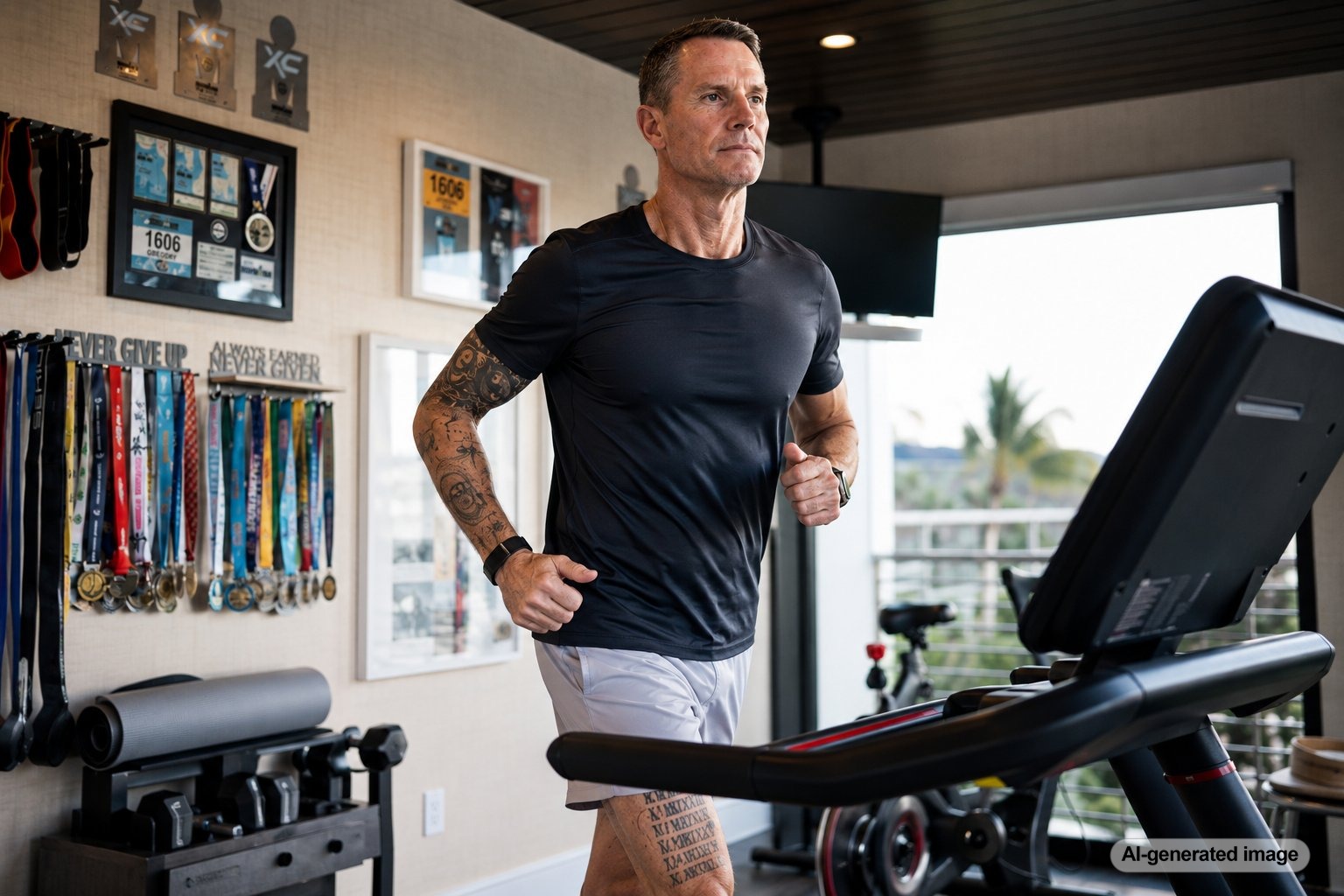
For many people living with Parkinson’s, exercise is not just a wellness add-on. It can become part of how they protect mobility, confidence, independence, and quality of life. The most common recommendation is to work toward at least 150 minutes of moderate-to-vigorous exercise per week, but the real answer is more personal than a single number.
Greg Schaefer’s story sits at the intersection of endurance, family, leadership, and Parkinson’s advocacy. As a 20-time Ironman living with Young-Onset Parkinson’s, he understands that movement can carry meaning far beyond a training plan. Still, every person with Parkinson’s has a different starting point, symptom profile, medical history, and relationship with exercise. The right plan should be safe, realistic, and built with qualified guidance when needed. You can learn more about Greg’s broader mission on the About Greg page.
Quick answer: how much exercise is usually recommended?
- A common target is 150 minutes per week of moderate-to-vigorous exercise for people with Parkinson’s, when safe and appropriate.
- The best routine usually includes variety: aerobic training, strength work, balance practice, flexibility, and functional movement.
- Intensity matters, but it should be matched to the person’s fitness level, symptoms, fall risk, and medical guidance.
- Consistency matters more than perfection. A sustainable routine beats an overly ambitious plan that disappears after two weeks.
- A Parkinson’s-informed physical therapist or clinician can help personalize exercise safely, especially after diagnosis, symptom changes, falls, pain, or surgery.
Why the 150-minute guideline matters
The 150-minute weekly target gives people a practical benchmark. It is roughly the equivalent of 30 minutes a day, five days a week. For some, that may be brisk walking, cycling, swimming, boxing-style fitness, dancing, rowing, hiking, or another form of steady movement. For others, especially early in the process or after a period of inactivity, it may begin with shorter sessions and build gradually.
The point is not to turn every person with Parkinson’s into an endurance athlete. The point is to make movement regular enough to support the systems Parkinson’s can challenge: gait, posture, balance, stiffness, mood, sleep, energy, and confidence. Exercise also gives people something active to do in a diagnosis that can otherwise feel like a series of things being done to them.
What kinds of exercise are most useful?
A strong Parkinson’s exercise routine is usually not one-dimensional. The most useful plans tend to combine several categories, because Parkinson’s can affect the body in several ways at once.
- Aerobic exercise: Walking with purpose, cycling, swimming, rowing, jogging, elliptical training, hiking, or other activities that raise the heart rate.
- Strength training: Resistance work for the legs, hips, core, back, shoulders, and arms to support posture, power, daily tasks, and fall prevention.
- Balance and agility: Exercises that challenge stability, weight shifting, turning, stepping, and controlled movement.
- Flexibility and mobility: Stretching and mobility work that may help counter stiffness and support easier movement.
- Functional training: Practicing real-life patterns such as standing from a chair, climbing stairs, turning, carrying, reaching, and getting up from the floor when appropriate.
Someone who loves competition may find purpose in structured training. Someone else may do better with a Parkinson’s exercise class, a walking group, or short daily movement sessions at home. The best exercise plan is the one that is safe enough to sustain and meaningful enough to repeat.
Moderate-to-vigorous does not mean reckless
One overlooked part of the recommendation is intensity. Moderate-to-vigorous exercise generally means the body is working hard enough to raise breathing and heart rate. For many people, that may be the difference between a casual stroll and a focused walk. But Parkinson’s is complex. Medications, blood pressure changes, balance issues, fatigue, freezing episodes, orthopedic injuries, and other health conditions can all affect what safe intensity looks like.
A useful rule is to pursue challenge without chaos. Exercise should have purpose, but it should not ignore warning signs. Dizziness, chest pain, unusual shortness of breath, repeated falls, new pain, sudden weakness, or major changes in symptoms should be discussed with a qualified healthcare professional.
How to build a weekly routine that actually works
A realistic week might include three aerobic sessions, two strength sessions, brief mobility work most days, and balance practice built into supervised training or a home routine. It does not have to be fancy. It does have to be repeatable.
For example, someone might do a 30-minute walk on Monday, strength work on Tuesday, cycling on Wednesday, mobility and balance on Thursday, a Parkinson’s exercise class on Friday, and a longer outdoor activity over the weekend. Another person may start with three 10-minute walks a day because that is what their body can currently handle. Both can be valid starting points.
Progression matters too. The routine that works today may need to change six months from now. As symptoms, confidence, fitness, or life demands shift, exercise should be adjusted rather than abandoned.
What people often miss
- Exercise is easier to sustain with community. Classes, training partners, family walks, and scheduled sessions can reduce isolation and improve follow-through.
- Strength matters as much as cardio. Endurance is valuable, but leg strength, core control, and posture can influence everyday function.
- Balance should not wait until after a fall. Proactive balance work can be an important part of staying active.
- Fatigue needs respect. Pushing through everything is not the goal. Smart training includes recovery, pacing, and flexibility.
- Identity matters. For many people, movement is not only physical. It can help preserve a sense of agency, courage, and forward motion.
When to get professional guidance
It is wise to involve a Parkinson’s-informed physical therapist, neurologist, exercise professional, or healthcare clinician when starting a new routine, returning after a long break, managing falls, or dealing with symptoms that affect safety. A professional can help assess gait, balance, strength, flexibility, pain, and risk factors, then help build a plan that is challenging without being careless.
This is especially important for people who want to train hard. Greg’s endurance background is part of his story, but it should not be mistaken for a universal prescription. His message of forward motion is not about copying someone else’s distance or pace. It is about taking the next honest step from where you are.
FAQ
Is walking enough exercise for Parkinson’s?
Walking can be a valuable part of a Parkinson’s exercise routine, especially when done consistently and at an appropriate intensity. However, many people benefit from adding strength, balance, flexibility, and functional movement work as well.
Should people with Parkinson’s exercise every day?
Daily movement can be helpful, but not every day needs to be hard training. A week may include harder sessions, lighter mobility days, walking, stretching, balance practice, and rest. The goal is consistency, not constant intensity.
Can exercise slow Parkinson’s progression?
Research and major Parkinson’s organizations support exercise as an important part of living well with Parkinson’s, and some resources discuss its potential role in slowing symptom progression. It should still be viewed as part of a broader care plan, not a stand-alone treatment or guarantee.
What if someone with Parkinson’s has not exercised in years?
Start smaller than pride wants and build from there. Short, safe, repeatable sessions may be the right first step. A qualified professional can help create a plan that accounts for fitness level, symptoms, fall risk, and medical history.
What is the bottom line?
Many people with Parkinson’s are encouraged to aim for at least 150 minutes of moderate-to-vigorous exercise per week, supported by strength, balance, flexibility, and functional training. The best plan is safe, personal, progressive, and sustainable.
Interested in bringing Greg’s message to your event or organization?
Learn more about Greg’s speaking work or get in touch to start the conversation.
Contact Greg or learn more about the Forward Motion Fund.
This article is for educational purposes only and is not medical advice. For diagnosis, treatment, or personalized medical guidance, please speak with a qualified healthcare professional.