Can Five Minutes Of Mobility A Day Make A Difference?
Yes, five minutes of mobility a day can make a meaningful difference, especially when those five minutes become a consistent habit. A brief routine will not transform every limitation overnight, but it can help you pay attention to how your body is moving, address areas that feel restricted, and make movement part of your day before stiffness or fatigue becomes the only signal you notice.
The real value is not the clock. It is repetition. Whether you are training for an endurance event, spending long hours at a desk, managing changing physical abilities, or simply trying to move with more confidence, a small daily practice can create momentum. That practical commitment to steady progress reflects the broader idea behind Greg Schaefer’s story: meaningful change is often built one deliberate step at a time.
Quick answer
- Five minutes is enough to build a consistent mobility habit.
- A short routine can help you notice tightness, asymmetry, or reduced range of motion earlier.
- Daily practice is often more sustainable than an occasional long session.
- The best routine targets the movements your day or training repeatedly demands.
- Mobility work should feel controlled, not forced or painful.
Why five minutes can be enough to matter
Five minutes sounds almost too small to count. That is exactly why it can work. A routine that feels manageable is easier to repeat, and repetition gives you more opportunities to practice moving with control.
A five-minute session may include only three or four movements. That is still enough time to rotate the upper back, open the hips, move the ankles, and gently take the shoulders through a comfortable range. The goal is not to exhaust yourself. It is to give your body a focused movement check-in.
Small sessions also reduce the mental friction that often stops people from beginning. You do not need special equipment, a full workout plan, or a perfect environment. You need a few minutes and a clear starting point.
Mobility is not the same as stretching
Stretching and mobility are related, but they are not identical. Stretching often focuses on lengthening a muscle or holding a position. Mobility usually involves moving a joint through a controlled range while coordinating the surrounding muscles.
For example, holding a calf stretch may create a stretching sensation behind the lower leg. A controlled ankle rock, by contrast, asks the ankle to move while the foot stays grounded and the knee tracks forward. Both may be useful, but they serve slightly different purposes.
A balanced five-minute routine can include both approaches. The key is to choose movements that connect to what you actually need to do, whether that means walking, lifting, cycling, running, swimming, working at a computer, or getting up and down from the floor.
What a simple five-minute routine can look like
You do not need a complicated sequence. Try choosing one movement for each major area that tends to feel restricted during your day.
- One minute of controlled breathing and posture: Stand or sit tall, relax unnecessary tension, and take slow breaths while noticing your rib cage and spine.
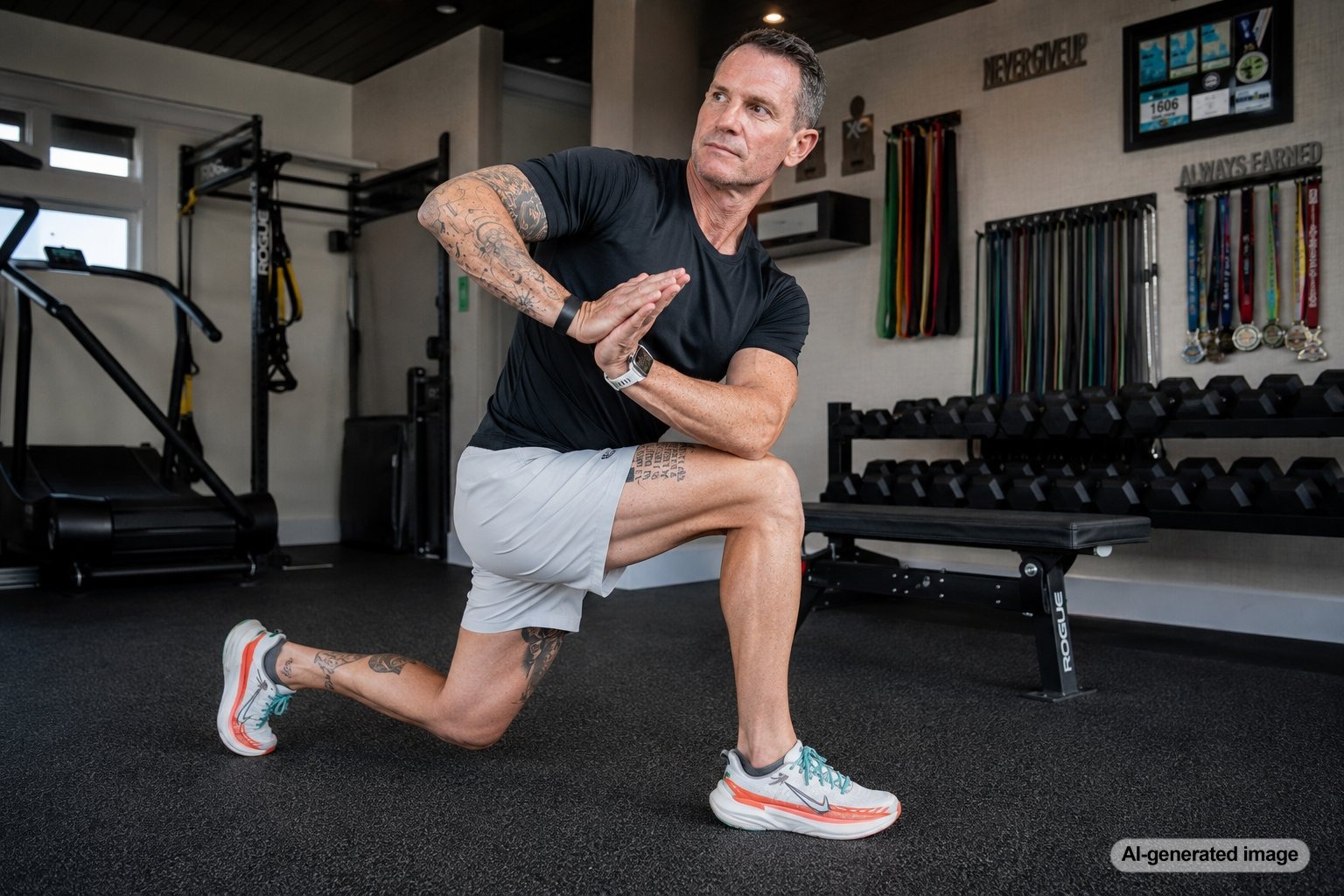
- One minute of upper-back rotation: Rotate gently from side to side without forcing the lower back to do all the work.
- One minute of shoulder movement: Use controlled arm circles, wall slides, or another comfortable range-of-motion drill.
- One minute of hip movement: Try supported hip circles, alternating lunges, or a seated hip rotation.
- One minute of ankle and calf movement: Use slow ankle rocks, heel raises, or controlled foot circles.
This is only a framework. A cyclist may spend more time on hips and upper-back extension. A runner may focus on ankles, calves, and hip rotation. Someone who works at a desk may benefit from shoulder, chest, neck, and thoracic movement.
Consistency matters more than intensity
Mobility work is easy to turn into another performance test. People push farther, chase a dramatic stretch, or assume discomfort means progress. That mindset can work against the purpose of the practice.
Controlled, repeatable movement is usually more useful than forcing a position you cannot comfortably manage. A five-minute routine should leave you feeling more prepared to move, not depleted or aggravated.
This principle applies well beyond mobility. Endurance athletes understand that one heroic training day does not replace weeks of consistent work. Leaders know that trust is not built in a single meeting. Resilience is rarely created by one dramatic decision. It develops through actions repeated when they are useful, inconvenient, and ordinary.
The overlooked benefit: better body awareness
A daily mobility practice gives you a regular opportunity to notice change. One hip may feel different after a long drive. An ankle may feel less comfortable after a hard run. A shoulder may move differently following hours at a laptop.
That awareness does not require panic or self-diagnosis. It simply gives you information. You may decide to adjust a workout, change your desk position, warm up more deliberately, or ask a qualified professional about a persistent concern.
Without a regular check-in, it is easy to overlook gradual changes until they begin interfering with training or daily life. Five minutes creates a simple rhythm of observation.
How to make the habit last
The routine is more likely to stick when it is connected to something you already do. Pair it with your morning coffee, the start of your workday, the end of a training session, or the moment you change into comfortable clothes at night.
Keep the first version simple enough that you can complete it even on a busy day. You can always do more when time and energy allow, but the five-minute version should remain the minimum you can return to.
It also helps to remove unnecessary decisions. Choose a short sequence, write it down, and repeat it for two weeks before changing it. Constantly searching for the perfect routine can become another form of avoidance.
The bottom line
Five minutes of mobility will not replace strength training, cardiovascular exercise, skilled rehabilitation, or individualized medical care. It can, however, become a practical foundation for moving more intentionally. The routine is short enough to repeat, flexible enough to personalize, and useful enough to support a wider commitment to health, training, and forward motion.
Frequently asked questions
Should I do mobility work every day?
Many people can comfortably perform gentle mobility work daily. The movements, effort, and range should match your needs and physical condition. Painful or worsening symptoms should be discussed with a qualified healthcare professional.
Is five minutes better before or after exercise?
It depends on the goal. Before exercise, controlled movement can help you prepare for the positions and ranges your activity requires. After exercise, a calmer routine may help you transition out of the session and notice areas that feel unusually restricted.
How quickly will I notice a difference?
The experience varies. Some people feel more comfortable immediately after moving, while longer-term changes may depend on consistency, strength, activity level, injury history, and other individual factors.
Do I need equipment?
No. A wall, chair, or countertop can provide support. Bands, rollers, or mobility tools may be useful, but they are not required for a focused five-minute routine.
What if a movement hurts?
Do not force through sharp, severe, or worsening pain. Stop the movement and consider speaking with a qualified healthcare professional who can evaluate your individual situation.
Interested in bringing Greg’s message to your event or organization?
Learn more about Greg’s speaking work or get in touch to start the conversation.
Contact Greg or learn more about the Forward Motion Fund.
This article is for educational purposes only and is not medical advice. For diagnosis, treatment, or personalized medical guidance, please speak with a qualified healthcare professional.