

How Much Water Do Active Men Actually Need?
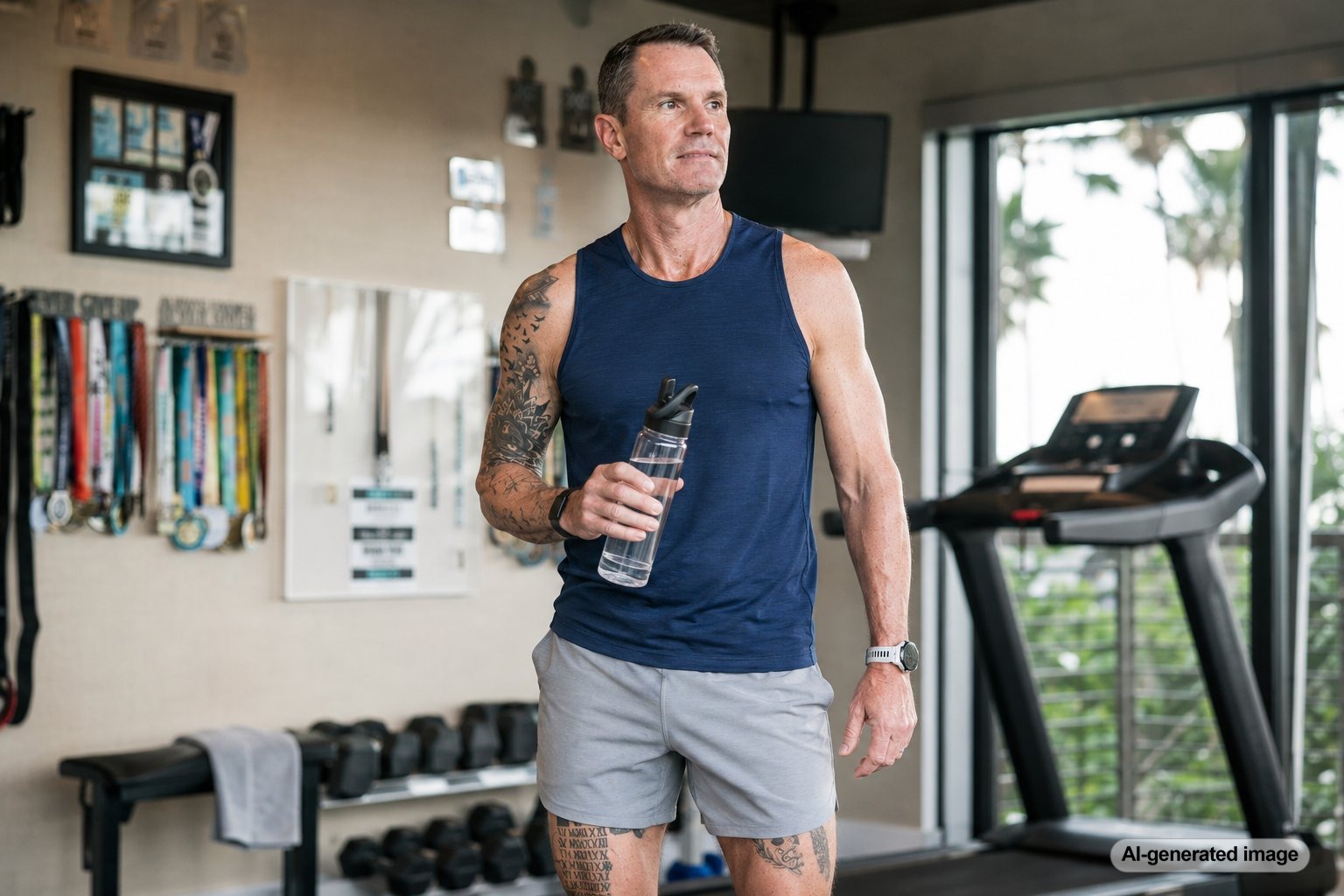
Active men generally need more fluid than sedentary men, but there is no single number that works for every body, workout, and climate. A useful starting point for the average man is around 13 cups of fluids per day, according to the National Institutes of Health. Training, heavy sweating, heat, humidity, altitude, illness, and individual physiology can push the actual need higher.
The practical answer is to begin with a reasonable daily baseline, then replace the fluid lost through activity without treating hydration like a contest. For an endurance athlete such as Greg Schaefer, hydration is not one decision made on race morning. It is a repeatable routine shaped by training conditions, sweat loss, recovery, and experience.
Quick answer
- Start with a daily baseline: Around 13 cups of fluid is a general reference point for adult men, not a personalized prescription.
- Add fluid for activity: Longer, hotter, and more intense sessions usually increase fluid needs.
- Measure your own response: Body-weight changes, thirst, urine color, weather, and workout performance provide more useful guidance than a universal bottle count.
- Consider electrolytes when losses are substantial: Water may be sufficient for short or easy sessions, while longer or sweat-heavy efforts may require sodium and other nutrients.
- Avoid extremes: Both dehydration and excessive water intake can create health risks.
The baseline is a starting point, not the finish line
The commonly cited daily amount for men applies to an average day. It should not be interpreted as a rigid requirement or as the amount of plain water every man must force down. Fluids can come from water, milk, coffee, tea, and other beverages, while food also contributes to hydration.
A 30-minute strength session in an air-conditioned gym does not create the same demand as a three-hour bike ride in August. Body size alone does not settle the question, either. Two men of similar size can have very different sweat rates, and the same athlete may lose substantially more fluid during a humid outdoor run than during a cool indoor workout.
The most useful question is therefore not simply, “How many ounces should I drink?” It is, “What am I losing today, and what amount can I replace comfortably and safely?”
What changes an active man’s water needs?
Workout duration and intensity
Easy movement generally produces less sweat than sustained running, cycling, rowing, or high-intensity training. As the session becomes longer or harder, fluid losses usually rise. The need to plan becomes more important when a workout extends beyond the point at which carrying no fluid is comfortable or sensible.
Heat and humidity
Hot weather increases the body’s cooling burden. Humidity can make sweat less effective at cooling the skin, which may increase strain even when the athlete is drinking. Direct sun, limited airflow, and heat-retaining surfaces can add to the challenge.
Clothing and equipment
Helmets, layered clothing, protective equipment, and dark or non-breathable fabrics can retain heat. An athlete may need a different hydration strategy for a long ride in full gear than for a relaxed walk in lightweight clothing.
Personal sweat rate
Some men finish a workout with a lightly damp shirt. Others look as though they stepped out of a pool. Visible salt marks, stinging eyes, or a salty film on the skin can also suggest meaningful sodium loss. These differences explain why copying another athlete’s drinking schedule is unreliable.
Health, medication, and age
Kidney or heart conditions, diabetes, fever, vomiting, diarrhea, and certain medications can change fluid needs or make aggressive fluid intake unsafe. Thirst perception may also become less dependable with age. Anyone managing a health condition, including Parkinson’s, should discuss individualized hydration and electrolyte decisions with a qualified healthcare professional.
How to estimate fluid loss during exercise
A simple sweat-rate check can turn guesswork into a more personal plan:
- Weigh yourself shortly before the workout, wearing minimal dry clothing.
- Record how much you drink during the session.
- Note any urine produced during the test period.
- Weigh yourself afterward in similarly dry clothing.
- Consider the weight lost, fluid consumed, workout duration, and conditions together.
As a practical approximation, one pound of body weight lost represents about 16 fluid ounces. If a man loses two pounds during a one-hour run while drinking 16 ounces, his total fluid loss was approximately 48 ounces for that hour. This is an estimate, not a laboratory measurement, but repeating the check in different conditions can reveal useful patterns.
The goal during exercise is not necessarily to replace every ounce of sweat immediately. Doing so may feel uncomfortable, and attempting to stay at precisely the same body weight can encourage overdrinking. A personal plan should balance fluid availability, stomach tolerance, weather, exercise duration, and medical considerations.
When are electrolytes useful?
Plain water is often adequate for an ordinary day and many short, moderate workouts. Electrolytes become more relevant during prolonged activity, repeated sessions, heavy sweating, hot conditions, or events in which an athlete is replacing a large volume of fluid.
Sodium deserves particular attention because it is lost in sweat and helps the body maintain fluid balance. That does not mean every workout requires a brightly colored sports drink. Electrolytes can come from drinks, tablets, powders, gels, food, or a combination. The right approach depends on the session and the athlete.
Carbohydrate-containing drinks can provide both fluid and fuel during long endurance efforts, but they may add unnecessary sugar and calories during a short walk or routine gym session. Product labels also vary widely, so “electrolyte drink” is not a precise nutritional category.
Use practical hydration signals together
No single sign provides a perfect hydration measurement outside a clinical setting. A better approach is to look for a pattern:
- Thirst: A useful signal for many healthy adults, although it can lag behind losses during demanding exercise.
- Urine color: Pale yellow often suggests reasonable hydration. Persistently dark urine may indicate that more fluid is needed, though foods, supplements, and medications can alter color.
- Urination frequency: Very infrequent urination can accompany dehydration. Constantly producing completely clear urine may mean fluid intake is more aggressive than necessary.
- Body-weight change: Pre-workout and post-workout measurements can reveal how a specific session affects fluid balance.
- How you feel: Unusual headache, dry mouth, dizziness, declining coordination, or a sharp drop in performance should not be ignored.
Confusion, fainting, inability to urinate, or rapid heartbeat and breathing can accompany severe dehydration and warrant prompt medical attention.
Why more water is not always better
Hydration advice sometimes creates the impression that drinking as much as possible is a mark of discipline. It is not. Consuming water faster than the body can manage can dilute sodium in the blood, a dangerous condition known as exercise-associated hyponatremia.
The risk is especially relevant during long events when an athlete repeatedly drinks beyond thirst or attempts to prevent every small change in body weight. Headache, nausea, confusion, swollen hands, and worsening coordination during prolonged exercise require serious attention because they can overlap with other heat- and hydration-related problems. Stop exercising and seek medical help when severe or rapidly worsening symptoms occur.
A workable daily hydration routine
Consistency usually serves an active man better than last-minute water loading. A practical routine can include:
- Drink with meals and at regular points throughout the day.
- Begin training reasonably hydrated rather than trying to catch up during the workout.
- Carry enough fluid or identify refill points for long sessions.
- Practice the event-day plan during training.
- Adjust for heat, humidity, intensity, and access to fluids.
- Pair large fluid replacements with an appropriate sodium strategy when needed.
- Rehydrate gradually after training and eat a balanced recovery meal.
Endurance training rewards preparation, but it also rewards adaptability. Conditions change. Bodies change. A plan that worked during a cool spring ride may need revision for a summer race or a day when medication, sleep, travel, or illness changes the equation.
What active men often get wrong
Waiting until the workout to think about hydration: Starting noticeably underhydrated makes it harder to catch up comfortably.
Using one fixed target all year: Fluid loss can change dramatically with season, location, clothing, pace, and acclimatization.
Copying a training partner: Similar speed does not mean similar sweat loss.
Assuming every session needs sports drinks: Short workouts often do not require supplemental carbohydrate or large electrolyte doses.
Forcing water after thirst is satisfied: More is not automatically safer, particularly during very long events.
Frequently asked questions
Does coffee count toward daily fluid intake?
Yes. Coffee and tea contribute fluid, although water and other low-calorie beverages are generally practical foundations for daily hydration. Caffeine tolerance varies, so athletes should avoid experimenting with unusually large amounts before training or competition.
Should an active man drink a gallon of water every day?
Not automatically. A gallon may be reasonable for some men on some days, but excessive for others. Daily intake should reflect activity, sweat loss, climate, diet, health, and medical guidance rather than a social-media target.
How much should someone drink before a workout?
There is no universal pre-workout amount. The broader goal is to arrive reasonably hydrated without creating stomach discomfort or repeated bathroom stops. Regular drinking throughout the day is usually more useful than consuming a large volume immediately before exercise.
Is thirst enough during endurance exercise?
Thirst can be a valuable guide, but experienced endurance athletes may also benefit from a practiced plan informed by sweat-rate observations, course conditions, fluid access, and stomach tolerance. Individual medical considerations should take priority.
Does Parkinson’s change the hydration conversation?
It can. Symptoms, medications, swallowing concerns, blood-pressure changes, heat tolerance, and other individual factors may affect hydration decisions. A neurologist, primary care clinician, or sports dietitian familiar with the person’s health history can provide personalized guidance.
The bottom line
For active men, roughly 13 cups of fluid per day is a reference point, not a finish line. Exercise-related needs should be added thoughtfully according to sweat loss, conditions, duration, and recovery demands. The best hydration plan is personal, practiced, and flexible enough to change when the day changes.
That approach reflects a broader endurance lesson: discipline is not blind repetition. It is paying attention, learning from the evidence in front of you, and making the next sound decision. Greg brings that grounded perspective from endurance competition, business leadership, family life, and adversity to his speaking work.
Interested in bringing Greg’s message to your event or organization?
Learn more about Greg’s speaking work or get in touch to start the conversation.
Contact Greg or learn more about the Forward Motion Fund.
This article is for educational purposes only and is not medical advice. For diagnosis, treatment, or personalized medical guidance, please speak with a qualified healthcare professional.


