Humanmaxxing, Longevity, and the Danger of Turning Health Into Another Obsession

The word humanmaxxing sounds futuristic, but the idea behind it is familiar: become stronger, sharper, healthier, younger-feeling, more disciplined, and more resilient. In the best sense, that desire can be powerful. It can push people to train, sleep better, eat with intention, protect their energy, and stop drifting through life on autopilot.
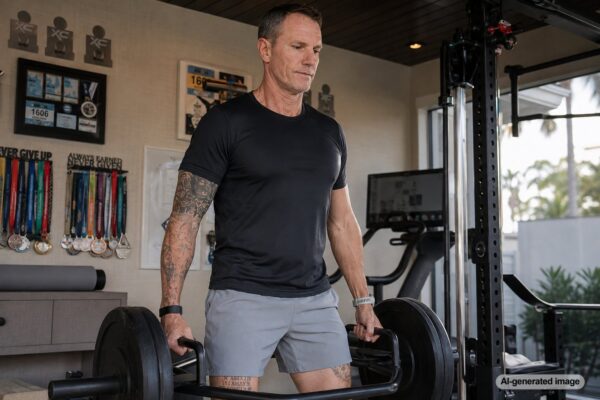
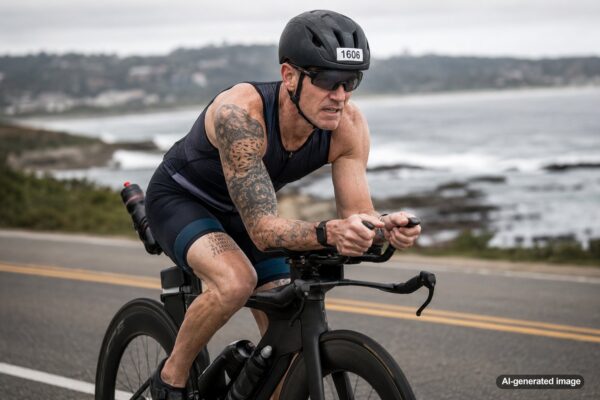
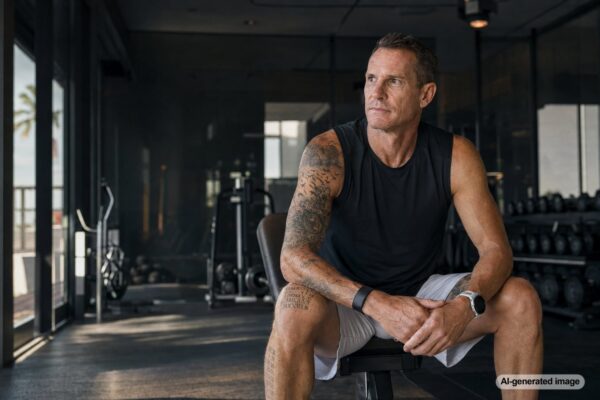
But there is a line between caring for your health and turning health into another scoreboard. For someone like Greg Schaefer, whose life sits at the intersection of family, business, endurance sports, advocacy, and living with Young-Onset Parkinson’s, that distinction matters. The goal is not to optimize every inch of being human until there is no room left for joy. The goal is to keep moving forward with purpose.
Quick answer
- Humanmaxxing can be useful when it means building better habits, strength, energy, and resilience.
- It becomes unhealthy when tracking, protocols, and performance anxiety start controlling your life.
- Longevity should not be reduced to a perfect routine. Relationships, meaning, recovery, and adaptability matter too.
- The healthiest path is often sustainable, flexible, and human, not extreme.
- For people facing medical realities, including Parkinson’s, health routines should support life, not become a way to deny uncertainty.
What humanmaxxing gets right
There is nothing wrong with wanting to improve. In fact, much of what gets discussed under the humanmaxxing or longevity umbrella overlaps with common-sense health principles: consistent movement, strength training, quality sleep, nutrition, stress management, time outdoors, social connection, and reducing behaviors that wear the body down.
For athletes, entrepreneurs, caregivers, and leaders, these practices can be deeply practical. Better sleep can make you more patient. Strength training can help you carry yourself differently. Cardiovascular fitness can build confidence. A calmer morning routine can change the way you show up for your family, your team, or your next hard conversation.
The problem is not discipline. The problem is when discipline loses its relationship to purpose.
When health turns into another obsession
Optimization culture can quietly shift from supportive to compulsive. What starts as a healthier breakfast becomes a fear of the “wrong” meal. What starts as tracking sleep becomes panic over one bad night. What starts as training for resilience becomes an identity that cannot tolerate rest, injury, aging, illness, or imperfection.
That is where the danger lives. A person can appear disciplined on the outside while becoming smaller on the inside. Less spontaneous. Less present. Less able to enjoy a dinner, a vacation, a birthday, or a slow morning because every choice is filtered through output, recovery score, body composition, inflammation, zone targets, supplements, or comparison.
Health should expand your life. If it keeps shrinking your life, something is off.
The longevity trap: confusing control with wisdom
Longevity is a worthy topic. Most people want more years, and more importantly, better years. The challenge is that longevity content often sells the illusion that enough tracking, testing, routines, and restraint can remove uncertainty from being alive.
It cannot.
Greg’s story makes that reality hard to ignore. A person can be strong, driven, successful, disciplined, and deeply athletic, and still face a diagnosis that was never part of the plan. Parkinson’s is not a character flaw. Illness is not proof that someone failed at wellness. Aging is not a personal weakness. The body is not a machine that always rewards perfect inputs with perfect outputs.
Real resilience begins when we stop pretending we can control everything and start asking a better question: given what is true now, what is the next good step?
Humanmaxxing versus human living
There is a difference between building a life that supports health and building a life that worships optimization. One creates capacity. The other creates pressure.
| Healthy pursuit | Obsession pattern |
|---|---|
| Training to feel stronger and more capable | Training because rest feels like failure |
| Eating in a way that supports energy | Feeling anxious, guilty, or rigid around normal meals |
| Using data as feedback | Letting data decide your mood or self-worth |
| Prioritizing sleep and recovery | Panicking when life interrupts the routine |
| Wanting to age well | Fearing every sign of being human |
The point is not to reject tools, wearables, testing, training plans, or better habits. The point is to put them in their proper place. They are supports, not masters.
What people often miss about real health
Some of the most important parts of health are difficult to quantify. You can track heart rate variability, but not the relief of an honest conversation. You can track steps, but not the meaning of walking beside someone you love. You can measure training load, but not the courage it takes to begin again after life knocks you sideways.
For endurance athletes, this lesson can be especially sharp. Racing teaches discipline, patience, and pain tolerance. It also teaches humility. No race goes exactly as planned. Weather changes. Nutrition fails. The body surprises you. The course does not care about your spreadsheet.
The same is true in leadership, family life, advocacy, and living with a diagnosis. The strongest people are not the ones who control every variable. They are the ones who can adapt without losing their center.
A healthier way to think about longevity
A grounded longevity mindset is less about chasing perfection and more about staying available for the life you value. That may include training, better food choices, medical care, stress reduction, sleep habits, and preventive health conversations. It should also include laughter, relationships, service, faith or meaning, recovery, and enough flexibility to remain human.
A better question than “How do I optimize everything?” might be:
- What habit would give me more energy for the people who need me?
- What routine supports my future without stealing my present?
- Where has discipline become fear in disguise?
- What am I training for beyond appearance, metrics, or control?
- What does one more step look like today, not in theory, but in real life?
Those questions bring health back into alignment with purpose.
Practical guardrails for staying grounded
If you are drawn to humanmaxxing, longevity, fitness, or self-improvement, you do not need to abandon that interest. You may need better guardrails.
- Use data as information, not identity. A recovery score, lab result, or training metric can guide decisions, but it should not define your worth.
- Protect room for ordinary life. Birthdays, family meals, travel, and rest days are not failures of discipline.
- Choose consistency over intensity theater. The routine you can sustain often matters more than the extreme protocol you can only tolerate briefly.
- Let your goals serve your values. If health habits make you more present, generous, courageous, and steady, they are doing their job.
- Bring professionals into medical decisions. Especially when symptoms, supplements, medications, or disease-specific questions are involved, qualified guidance matters.
FAQ
Is humanmaxxing always unhealthy?
No. The desire to improve your health, strength, mindset, and daily habits can be positive. It becomes a problem when the pursuit creates fear, rigidity, isolation, or a sense that you are never enough as you are.
How is longevity different from obsession?
Longevity focuses on supporting a healthier life over time. Obsession tries to control life so tightly that the person loses flexibility, peace, and perspective. The difference often shows up in how you respond when the routine gets interrupted.
Can fitness still be part of a meaningful life with Parkinson’s?
Many people with Parkinson’s include movement and exercise as part of their overall care and quality-of-life strategy, but the right approach can vary. A qualified healthcare professional can help tailor activity to the individual’s condition, abilities, and safety needs.
What is a healthier mindset for self-improvement?
Think of self-improvement as stewardship, not punishment. The goal is to build capacity for the life you are called to live, not to chase a version of yourself that is finally worthy once every metric looks perfect.
The bottom line
Humanmaxxing is most useful when it reminds us not to waste the body, mind, and time we have been given. It becomes dangerous when it turns health into another arena for anxiety, ego, or control.
The better path is not passive. It still asks for discipline. It still asks for effort. It still asks for courage. But it also leaves room for uncertainty, grace, relationships, and purpose. That is where forward motion becomes more than optimization. It becomes a way to live.
Interested in bringing Greg’s message to your event or organization?
Learn more about Greg’s speaking work or get in touch to start the conversation.
Contact Greg or learn more about the Forward Motion Fund.
This article is for educational purposes only and is not medical advice. For diagnosis, treatment, or personalized medical guidance, please speak with a qualified healthcare professional.