
How To Improve Cardiovascular Fitness Without Running

Running is only one way to develop cardiovascular fitness. Your heart and lungs respond to sustained, appropriately challenging movement, whether that movement happens on a bicycle, in a pool, on a rowing machine, or during a brisk walk. The best option is not necessarily the activity that looks hardest. It is the one you can perform safely, progress gradually, and repeat consistently.
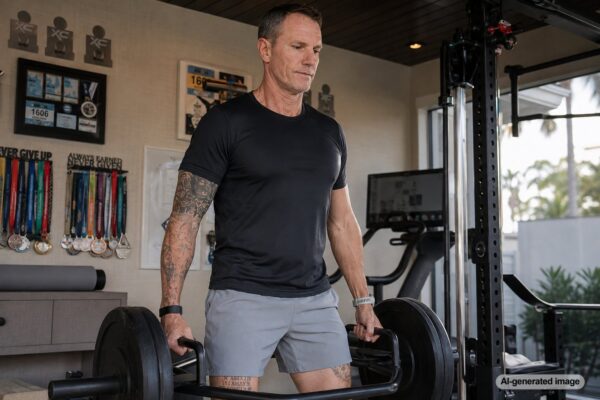
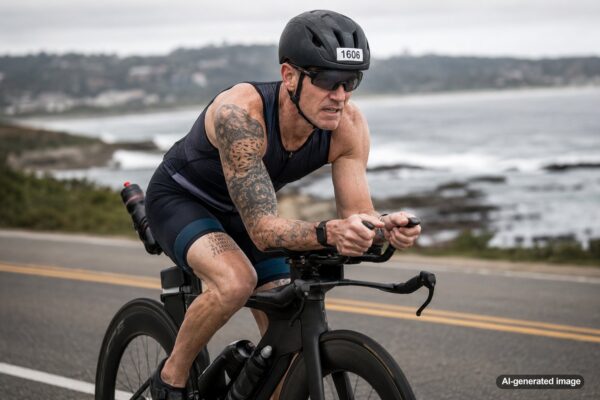
That distinction matters for anyone managing joint discomfort, returning after time away, adapting to a health condition, or simply looking for variety. Greg Schaefer’s experience across endurance sports, business leadership, family, and life with Young-Onset Parkinson’s reflects a practical truth: meaningful progress can take different forms, but it still begins with the next workable step.
Quick answer
- Choose rhythmic activities that elevate your breathing and heart rate without requiring you to run.
- Build a base with steady, moderate sessions before adding harder intervals.
- Use the talk test or perceived effort to control intensity instead of chasing speed.
- Increase one variable at a time, such as duration, resistance, or frequency.
- Select activities you can repeat consistently with manageable recovery.
What cardiovascular fitness actually requires
Cardiovascular fitness describes how effectively your heart, lungs, blood vessels, and working muscles support sustained activity. Running can challenge that system, but it is not uniquely capable of doing so. Cycling, swimming, rowing, dancing, incline walking, and many other activities can create a useful aerobic demand.
The essential ingredients are simpler than any single sport: enough effort to increase breathing, enough duration to sustain the demand, and enough consistency for the body to adapt. A session does not need to leave you exhausted to be productive. Most sustainable endurance programs include plenty of controlled work that can be repeated without requiring several days of recovery.
A practical way to estimate moderate effort is the talk test. At a moderate intensity, you can usually speak in complete sentences, although singing would be difficult. At a vigorous intensity, conversation becomes limited to a few words at a time. Heart-rate data can also be useful, but medications, health conditions, heat, hydration, stress, and device accuracy may affect the numbers. Treat the data as one signal rather than a verdict.
Choose a low-impact cardio activity you can repeat
The word low-impact describes the force placed on the body, not the cardiovascular difficulty of the workout. A hard cycling interval can challenge the heart and lungs considerably while creating less impact than running. This difference makes low-impact modes valuable for athletes seeking additional training volume and for people who do not tolerate repetitive pounding well.
Cycling
Indoor or outdoor cycling makes intensity easy to adjust through resistance, cadence, terrain, and session length. It also offers a seated option for people who feel more stable when their body is supported. Beginners should avoid turning every ride into a heavy-leg strength session. If the legs fail long before breathing becomes challenging, reduce the resistance slightly and use a smoother cadence.
Swimming and water exercise
Swimming involves the entire body while the water supports body weight. Deep-water jogging, aqua aerobics, and continuous pool walking can also provide cardiovascular work without conventional running impact. Technique and breathing comfort may initially limit the workout, so shorter repeats with generous recovery can be more productive than struggling through one long effort.
Rowing
A rowing machine distributes work across the legs, trunk, and upper body. Because technique affects both safety and efficiency, begin with controlled strokes and moderate resistance. More resistance is not automatically better. A smooth sequence and repeatable rhythm generally create a stronger aerobic session than pulling as hard as possible on every stroke.
Brisk or incline walking
Walking is often underestimated because it feels familiar. Pace, incline, terrain, arm movement, and duration can transform it into purposeful endurance training. For someone returning to activity, alternating a comfortable pace with brief brisk segments can provide a clear path forward without requiring a transition to running.
Elliptical training, dancing, and low-impact circuits
Elliptical machines provide continuous movement with adjustable resistance and little landing impact. Dancing adds coordination and enjoyment, while low-impact circuits can alternate movements such as step-ups, marching, controlled shadowboxing, and supported lateral steps. During a circuit, keep transitions brief enough to sustain the aerobic demand but long enough to maintain sound movement quality.
Build an aerobic base before chasing intensity
A common mistake is assuming that cardiovascular improvement requires maximum effort. Hard intervals can be useful, but they are easier to absorb after a foundation of steady training has been established.
Start with a duration you can complete while maintaining control. That might be 10 minutes for one person and 40 minutes for another. If a continuous session is too demanding, divide it into smaller segments. Three 10-minute sessions across a day still represent meaningful movement, and they may be easier to fit into a busy or unpredictable schedule.
When the current workload feels manageable for several sessions, add a small amount of time. A simple progression might move from 20 minutes to 25 minutes rather than jumping immediately to 45. Gradual changes make it easier to recognize whether soreness, fatigue, or loss of enthusiasm is a temporary response or a sign that the workload increased too quickly.
Add intervals without turning every workout into a test
Intervals alternate harder efforts with easier recovery periods. They can make a short session efficient and teach the body to recover while still moving. The harder portions should be challenging, but they do not need to be all-out sprints.
A beginner-friendly cycling, rowing, elliptical, or walking session could include five minutes of easy movement, followed by six rounds of one minute at a strong but controlled effort and two minutes easy. Finish with several easy minutes. As fitness improves, progress by adding one or two rounds, lengthening the work periods, or slightly reducing recovery. Change only one of those variables at a time.
Intervals also reveal an important distinction between cardiovascular strain and local muscular fatigue. If your thighs burn on the bicycle while your breathing remains relatively calm, resistance may be too high for the goal. If rowing technique deteriorates before your heart and lungs are meaningfully challenged, shorten the work interval or lower the resistance. The exercise should challenge the intended system without sacrificing control.
Use frequency and progression to create lasting improvement
Consistency creates more opportunity for adaptation than occasional heroic workouts. National health guidance commonly describes a weekly target of at least 150 minutes of moderate-intensity aerobic activity, or 75 minutes of vigorous activity, for adults. Those numbers are useful reference points, not an instruction to reach the full amount immediately. Some activity is better than none, and individual capacity varies.
Progress can come from increasing session duration, training more frequently, raising resistance, moving faster, or reducing recovery between intervals. Increasing several variables simultaneously makes fatigue harder to interpret. Choose one, observe how your body responds, and allow time for the new workload to become familiar.
What people often miss
- Impact and intensity are different. An activity can be gentle on the joints and demanding for the cardiovascular system.
- Sweat is not a precise measure of fitness. Temperature, clothing, genetics, and hydration all affect it.
- Muscular fatigue can disguise aerobic capacity. Adjust resistance or technique if one muscle group consistently ends the session first.
- Variety works best when the training still has structure. Changing activities is fine, but track duration and effort so progress remains visible.
- Recovery is part of training. Persistent fatigue, declining performance, or unusual soreness may indicate that the workload needs adjustment.
A practical no-running cardio week
A balanced week does not need to be complicated. The following example shows how different activities can serve different purposes:
- Monday: 25 to 35 minutes of steady cycling at a conversational effort.
- Wednesday: A short rowing, elliptical, or incline-walking interval session with controlled recovery periods.
- Friday: 20 to 30 minutes of swimming, water exercise, or another low-impact activity.
- Weekend: A longer easy walk, bike ride, dance session, or mixed cardio circuit.
This is an example, not a universal prescription. Beginners may start with fewer or shorter sessions. Experienced athletes may use these activities to increase aerobic volume while reducing repetitive impact. Strength, balance, mobility, sleep, and recovery also contribute to a durable training practice, even though they serve different purposes from dedicated cardiovascular work.
Adapt the plan to the person, not just the goal
Exercise selection should reflect more than calorie estimates or machine readouts. Access, enjoyment, balance, coordination, pain, fatigue, and confidence all influence whether a plan will survive beyond its first enthusiastic week.
For people living with Parkinson’s, the most appropriate activity and setup can vary widely. Cycling, walking, aquatic exercise, and other modes may all be options, but symptoms, medication timing, balance, and disease progression can affect safety and performance. The Parkinson’s Foundation recommends an individualized approach that includes aerobic activity alongside strength, balance, agility, multitasking, and flexibility. A clinician or physical therapist familiar with Parkinson’s can help evaluate appropriate adaptations.
This personalized approach is consistent with the broader idea behind the Forward Motion Fund: progress is not defined by one route or one kind of athlete. Support, access, and thoughtful adaptation can help more people find a way to keep moving.
Frequently asked questions
Can walking improve cardiovascular fitness?
Yes. Brisk walking can provide moderate-intensity aerobic activity, especially when pace, incline, terrain, or duration increases the challenge. Someone new to exercise may benefit from ordinary level walking before adding hills or faster segments.
What is the best cardio exercise if I cannot run?
There is no single best option for everyone. The strongest choice is an activity that raises your breathing and heart rate, fits your physical needs, and remains available enough to perform consistently. Cycling, swimming, rowing, elliptical training, and brisk walking are all practical possibilities.
How quickly can cardiovascular fitness improve?
The timeline varies with starting fitness, training consistency, workout intensity, recovery, age, and health status. Early signs may include completing the same session with less breathlessness or recovering more quickly afterward. Focus on repeatable trends rather than expecting a fixed deadline.
Can strength circuits count as cardio?
They can create a cardiovascular demand when they involve large muscle groups, controlled technique, and limited rest. However, very heavy sets may end because of local muscular fatigue before producing sustained aerobic work. Dedicated cardio sessions can still be useful alongside strength training.
When should I speak with a healthcare professional?
Seek personalized guidance before beginning or substantially increasing exercise if you have a heart condition, significant balance concerns, an injury, or another condition that may affect safe participation. Stop exercising and seek prompt medical attention for warning signs such as chest pain, fainting, or severe and unusual shortness of breath.
The bottom line
You do not need to run to build cardiovascular fitness. You need an activity that creates an appropriate aerobic challenge, a schedule you can sustain, and a progression measured in manageable steps. Begin where you are, pay attention to the difference between productive effort and warning signs, and let consistency carry more weight than any single workout. One more step does not always mean a literal step. Sometimes it is another pedal stroke, another lap, or another controlled minute of forward motion.
Interested in bringing Greg’s message to your event or organization?
Learn more about Greg’s speaking work or get in touch to start the conversation.
Contact Greg or learn more about the Forward Motion Fund.
This article is for educational purposes only and is not medical advice. For diagnosis, treatment, or personalized medical guidance, please speak with a qualified healthcare professional.