

Why Incline Walking Is Having A Moment In Men’s Fitness
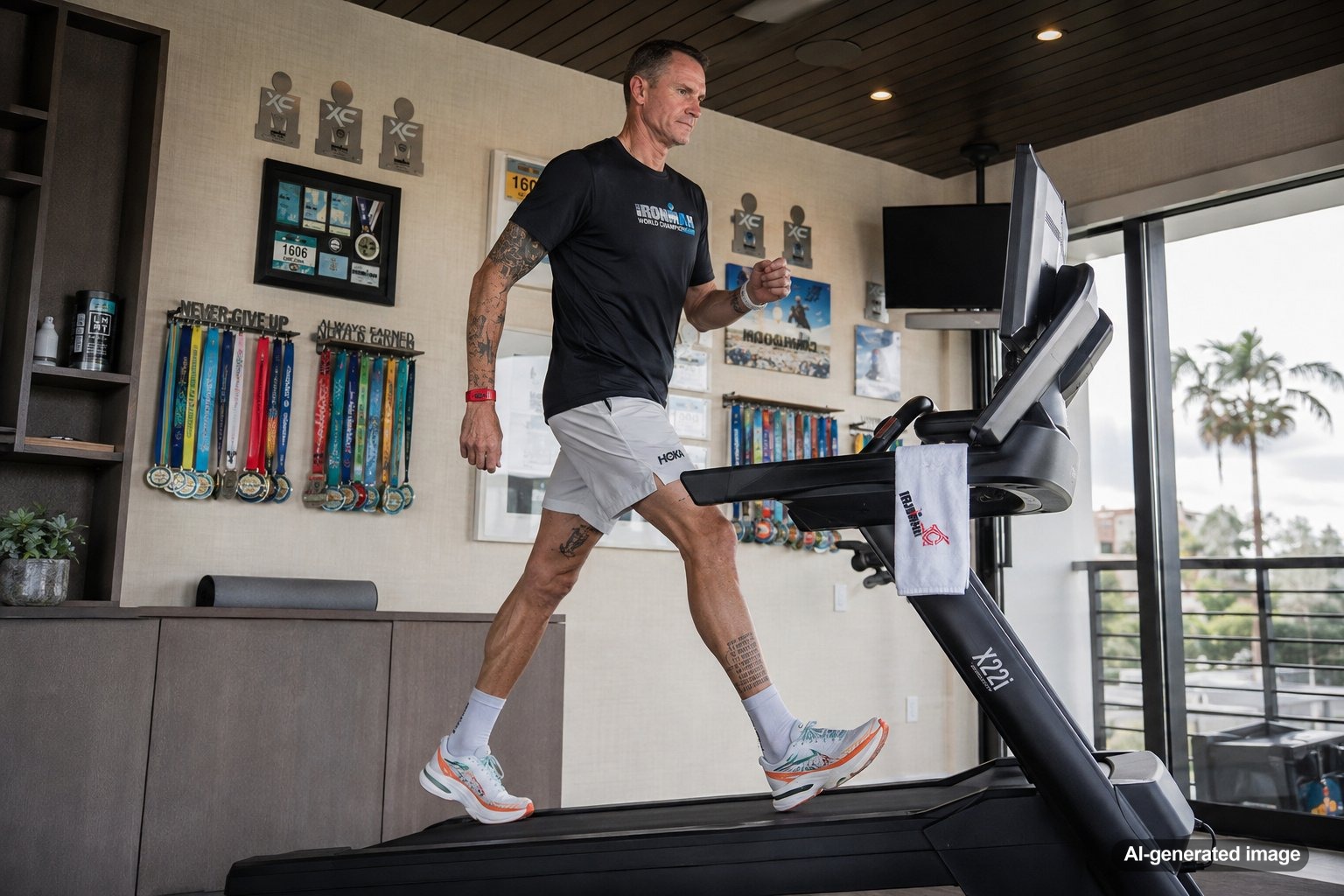
Incline walking is having a moment in men’s fitness because it solves a problem many men eventually face: how to make cardiovascular training demanding without making every session a punishing run, ride, or high-impact circuit. By raising the grade instead of dramatically increasing speed, a treadmill or outdoor hill can turn an ordinary walk into focused, adjustable work.
The appeal is not that incline walking is easy. It is that the difficulty can be controlled. That distinction matters for beginners building consistency, experienced athletes managing a demanding schedule, and men who want conditioning that complements strength training. Greg Schaefer’s experience as a 20-time Ironman, entrepreneur, and speaker reflects a similar principle: sustainable progress often comes from choosing the next useful step and repeating it with discipline.
Quick answer
- Incline walking can feel challenging at a lower speed than running.
- The grade and pace are easy to adjust for different experience levels.
- It can fit into warmups, standalone conditioning sessions, recovery-oriented days, or post-lifting routines.
- It shifts attention from speed and ego toward posture, rhythm, and sustained effort.
- It is simple enough to repeat consistently, which is often more valuable than an impressive workout performed once.
A hard workout does not have to be a fast workout
Men’s fitness culture has often treated speed as the clearest sign that cardio is working. Run faster, pedal harder, or finish the circuit sooner. Incline walking changes the equation. The grade creates resistance while the pace can remain deliberate, allowing the person walking to concentrate on steady movement instead of chasing a number that may compromise form.
This makes incline walking useful across a wide range of situations. A beginner can start with a modest grade and short duration. A regular lifter can use it after strength work without turning the session into another competition. An endurance athlete can place it within a broader training week when a run would add more strain than desired. The same basic movement can be adapted without requiring complicated equipment or a new set of technical skills.
The simplicity also exposes an important truth: slower is not automatically easier. A controlled uphill effort asks for patience. There is no sprint to hide behind and no dramatic finish required. The challenge is to find a sustainable rhythm, remain present, and continue.
It works with strength training instead of competing for attention
Many men organize their fitness routines around lifting. Cardiovascular work gets squeezed into whatever time remains, or it is skipped because the available options feel disconnected from the primary goal. Incline walking offers a practical bridge. It can be added before lifting as a progressive warmup, after lifting as a measured conditioning block, or on a separate day when the objective is simply to move.
The key is matching the session to its purpose. A pre-lifting walk should prepare the body rather than exhaust it. A post-lifting session can be longer, but the pace should still respect the work already completed. A standalone incline workout can use gradual changes in grade to create distinct work periods without requiring an all-out effort.
This flexibility is part of the appeal. Fitness does not have to be divided into rigid camps where someone is either a lifter, a runner, or a cyclist. Incline walking can support a more complete routine while letting strength training remain central.
The intensity is visible and adjustable
Incline walking provides two clear controls: pace and grade. That makes it easy to modify a session in real time. If posture begins to break down, the walker can reduce the incline. If the effort feels too light, the grade can rise before the speed does. If fatigue from work, travel, training, or poor sleep is present, both settings can be reduced without abandoning the habit.
That last point is often overlooked. A useful fitness routine needs room for imperfect days. When every workout is built around a personal record, people are more likely to skip sessions when they cannot perform at their best. Incline walking allows someone to preserve the appointment with himself while adjusting the demand honestly.
For treadmill sessions, avoid treating the handrails as a towing system. Brief contact for balance may be appropriate for some people, but leaning backward while holding on can change the movement and make the displayed grade a poor reflection of the actual effort. A more manageable incline with upright, controlled posture is usually a better training choice than a steep setting that cannot be maintained cleanly.
It makes consistency easier to protect
The most effective routine is rarely the one with the most dramatic single workout. It is the one that can survive busy weeks, travel, shifting priorities, and normal changes in energy. Incline walking has very little setup. On a treadmill, the grade can be changed with a button. Outdoors, a hill, bridge, or rolling route can provide the resistance.
That accessibility matters for leaders, parents, entrepreneurs, and athletes whose schedules do not always cooperate. A focused 20-minute walk can have a clear beginning and end. There is no need to turn it into a test of toughness or dismiss it because it is shorter than the original plan.
This practical approach aligns with the grounded resilience Greg brings to his speaking work. Forward motion is not always dramatic. Sometimes it is the decision to modify the plan, do the work available today, and return tomorrow.
It rewards restraint, posture, and attention
An incline can tempt people to increase the setting simply because a higher number looks more impressive. Productive incline walking is more disciplined than that. The goal is not to survive the steepest grade while hanging onto the treadmill. It is to choose a challenge that permits controlled steps, a stable upper body, and a repeatable rhythm.
Useful posture cues include looking forward rather than down, keeping the torso tall instead of folding over the console, and letting the arms move naturally when balance allows. Stride length may shorten as the grade rises. That is not a failure; it is a reasonable response to the terrain.
Attention also matters outdoors. Hills change the demands of both the climb and the descent, and uneven surfaces introduce variables that a treadmill does not. Footwear, visibility, weather, and route familiarity deserve consideration. The point is not to make incline walking complicated. It is to respect the setting and stay engaged.
What people often miss
- More incline is not always better. The right grade is the one that supports the intended effort and sound movement.
- Speed can stay modest. The incline is already adding difficulty, so there is no requirement to chase running speeds.
- Recovery still matters. A hard uphill session is still a hard session, even when it is called walking.
- The treadmill display is not the workout. Posture, control, breathing, and consistency matter more than an impressive setting.
- Progress can be subtle. Adding a few minutes, improving posture, or relying less on the handrails can be meaningful.
How to build a practical incline walking session
A straightforward session can begin with several minutes of comfortable level walking. From there, increase the grade gradually until the effort feels purposeful but controlled. Maintain that level for a defined period, then lower the grade before finishing with an easier walk.
Another option is to alternate between moderate and slightly steeper grades while keeping the pace stable. This creates work and recovery periods without demanding abrupt speed changes. Someone new to incline walking might use short uphill intervals with generous easier periods. A more experienced person might use longer sustained climbs.
Use perceived effort as a practical guide. An easier session should allow comfortable conversation. A more demanding session may make conversation less fluid, but it should not require reckless movement or a desperate grip on the rails. Stop and seek appropriate guidance if symptoms such as chest pain, faintness, or unusual shortness of breath occur.
Progress one variable at a time. Increasing speed, grade, and duration together can make it difficult to understand what the body is responding to. A cleaner approach is to add a little time, slightly raise the incline, or adjust the pace while keeping the other elements stable.
Where incline walking fits in a real week
There is no single correct schedule. A man who lifts three or four days per week might add brief incline walks after two of those sessions. Someone rebuilding a fitness habit might begin with two standalone walks on nonconsecutive days. An endurance athlete may use incline walking selectively when variety or lower-speed conditioning fits the broader plan.
The role of the workout should remain clear. If the objective is recovery-oriented movement, keep it easy. If the goal is a challenging conditioning session, allow adequate time before repeating a similar effort. If it is a warmup, finish feeling ready to train rather than already depleted.
Consistency should not become rigidity. The grade used last week is not a contract. Adjusting a workout because of fatigue, soreness, travel, or a demanding day is not weakness. It is responsible training.
Frequently asked questions
Is incline walking only for beginners?
No. Its difficulty depends on the combination of grade, pace, duration, and the individual’s current capacity. Beginners can use gentle inclines, while experienced athletes can use longer climbs or carefully structured changes in grade.
Is incline walking better than running?
Neither is universally better. They are different tools. Running may be appropriate when speed, running-specific fitness, or race preparation is the goal. Incline walking may be preferable when someone wants adjustable conditioning at a walking pace or needs an option that fits more comfortably alongside other training.
Should incline walking be done before or after lifting?
Either can work. Before lifting, keep the walk easy enough to function as a warmup. After lifting, the session can be more substantial if it does not undermine recovery or technique. The right placement depends on the primary goal for that day.
How steep should the treadmill be?
Use a grade that allows stable posture and controlled steps without depending heavily on the handrails. The appropriate setting varies by person, treadmill, pace, and purpose, so an arbitrary high number is not a useful universal target.
Can incline walking be a complete workout?
It can serve as a standalone conditioning session, especially when it includes a gradual warmup, a purposeful working period, and an easier finish. A well-rounded long-term fitness plan may also include strength, mobility, balance, and other forms of movement suited to the individual’s goals and abilities.
The bottom line
Incline walking is gaining attention because it is challenging without being complicated, adjustable without feeling aimless, and compatible with many different training identities. It gives men a way to work hard while moving with control, and it leaves room for the kind of honest adjustments that make consistency possible.
Its real value is not found in a viral treadmill setting or a promise of instant transformation. It is found in repeatable effort: choosing an appropriate grade, maintaining sound movement, and taking the next step with purpose.
Interested in bringing Greg’s message to your event or organization?
Learn more about Greg’s speaking work or get in touch to start the conversation.
Contact Greg or learn more about the Forward Motion Fund.
This article is for educational purposes only and is not medical advice. For diagnosis, treatment, or personalized medical guidance, please speak with a qualified healthcare professional.