
What Intentionally Racing With Less Control Teaches Athletes About Inner Strength

Many athletes spend years building control. They plan every workout, analyze every metric, optimize every detail, and try to remove uncertainty before race day arrives. But some of the most meaningful growth happens when control becomes limited and the athlete has to respond instead of predict.
Intentionally racing with less control is not about ignoring preparation or accepting poor decisions. It is about learning what remains when the perfect plan disappears. For athletes, that moment can reveal a deeper form of strength built on adaptability, awareness, and trust.
Quick answer: What can racing with less control teach athletes?
- Preparation matters, but adaptability often determines how athletes respond when conditions change.
- Confidence can come from trusting skills and experience instead of relying only on a perfect plan.
- Discomfort can reveal decision-making ability, patience, and emotional control.
- Inner strength is often developed through uncertainty, not the absence of it.
Control creates confidence, but flexibility creates resilience
Athletes naturally look for control. Training schedules, nutrition plans, equipment choices, pacing strategies, and race goals all create structure. That structure is valuable because it gives athletes a foundation.
The challenge comes when an athlete depends on control as the only source of confidence. Weather changes. Energy levels fluctuate. Equipment has limitations. Unexpected moments appear. The ability to continue forward when circumstances are imperfect becomes a different kind of athletic skill.
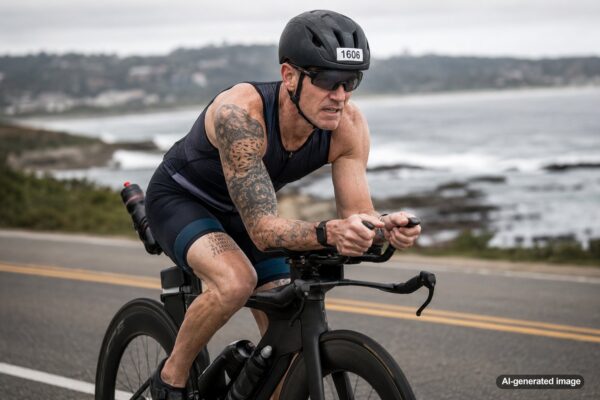
Endurance athletes experience this often. A race rarely unfolds exactly as imagined. The strongest competitors are not always the ones who avoid problems. They are often the ones who can adjust without losing focus.
Learning to trust preparation instead of prediction
There is a difference between being prepared and trying to predict every possible outcome. Preparation builds capability. Prediction attempts to eliminate uncertainty.
Racing with less control can teach athletes that their training has value beyond the exact conditions they practiced for. The hours spent building endurance, discipline, and consistency create a foundation that can support decisions in unpredictable moments.
This mindset shift can be powerful. Instead of asking, “How do I make sure nothing goes wrong?” athletes can ask, “How will I respond when something changes?”
Finding strength in the moments that cannot be optimized
Modern athletes have access to more data and tools than ever before. Metrics can provide useful information, but numbers cannot completely measure courage, patience, or the ability to stay composed during difficulty.
Some of the most important lessons happen in moments that cannot be perfectly tracked. Choosing to continue after disappointment. Adjusting a goal without giving up purpose. Staying present when a race becomes uncomfortable.
These experiences build a type of confidence that comes from knowing you can handle uncertainty.
How less control can improve an athlete’s mindset
Intentionally releasing some control can create space for better awareness. Athletes may become more focused on the present moment instead of constantly evaluating whether reality matches expectations.
- Better decision-making: Athletes learn to respond to what is happening rather than what they hoped would happen.
- Greater patience: Unexpected challenges become part of the process instead of immediate threats.
- Stronger self-trust: Confidence grows from experience, not just from ideal outcomes.
- More perspective: A single difficult moment becomes one part of a larger journey.
What athletes often miss about inner strength
Inner strength is sometimes misunderstood as constant confidence or endless motivation. In reality, it often appears during moments of uncertainty, frustration, and adjustment.
An athlete does not need to feel completely in control to continue moving forward. Strength can look like staying committed while acknowledging difficulty. It can look like changing the plan while protecting the purpose behind it.
This lesson extends beyond racing. Leaders, entrepreneurs, caregivers, and anyone navigating change face similar moments where certainty disappears and adaptability becomes essential.
Practical ways to build comfort with uncertainty
- Practice responding to small changes during training instead of treating every adjustment as a failure.
- Focus on controllable actions rather than outcomes that depend on many outside factors.
- Reflect on difficult experiences and identify what they taught you about your own capabilities.
- Measure progress by resilience and decision-making, not only by results.
FAQ
Does racing with less control mean athletes should stop planning?
No. Preparation remains a critical part of athletic performance. The goal is not to remove planning but to become capable when plans need to change.
Why is uncertainty valuable for athletes?
Uncertainty can reveal skills that are difficult to develop through perfect conditions, including adaptability, patience, and emotional control.
Can this mindset apply outside of sports?
Yes. The ability to adjust while staying connected to a larger purpose can help people navigate leadership, career changes, personal challenges, and unexpected life events.
How can athletes become more comfortable with uncertainty?
Athletes can gradually build this skill by practicing flexibility, reflecting on challenges, and focusing on responses rather than trying to control every outcome.
Interested in bringing Greg’s message to your event or organization?
Learn more about Greg’s speaking work or get in touch to start the conversation.
Contact Greg or learn more about the Forward Motion Fund.
This article is for educational purposes only and is not medical advice. For diagnosis, treatment, or personalized medical guidance, please speak with a qualified healthcare professional.