

How to Keep Competing With Yourself in a Healthy Way
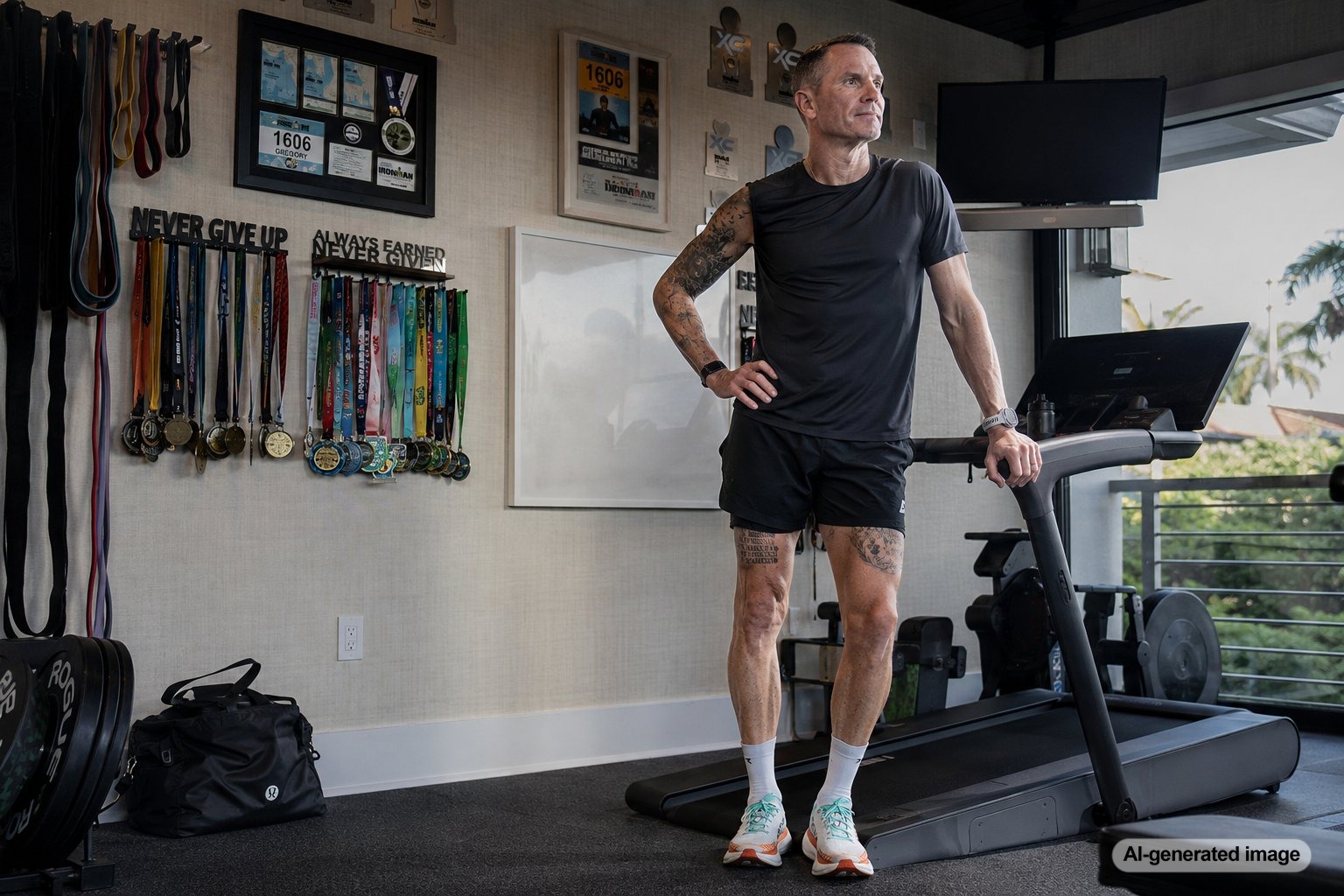
Competing with yourself can be one of the healthiest forms of growth, as long as the goal is not to punish yourself into becoming better. At its best, self-competition is a way to stay honest, focused, and connected to the next step in front of you. It helps you ask better questions: Am I showing up with intention? Am I improving in a way that matters? Am I becoming more aligned with the person I want to be?
That kind of inner competition fits naturally with Greg Schaefer’s world: endurance, business, family, resilience, advocacy, and forward motion. It is not about chasing perfection. It is about building a relationship with effort that is sustainable enough to carry you through hard seasons. To understand more about the broader story behind that message, visit Greg’s About page.
Quick answer: How do you compete with yourself in a healthy way?
- Measure progress against your own values, not someone else’s timeline.
- Use effort, consistency, and recovery as scorecards, not just outcomes.
- Keep goals specific enough to guide you, but flexible enough to survive real life.
- Notice when self-competition turns into self-criticism, comparison, or burnout.
- Let the question be, “What is one more step I can take?” instead of “Why am I not further ahead?”
Healthy self-competition starts with the right opponent
The healthiest version of competing with yourself is not a fight against who you are. It is a commitment to keep meeting the next version of yourself with honesty. The opponent is not your body, your past mistakes, your age, your diagnosis, your business setbacks, or your unfinished goals. The opponent is the temptation to drift, quit caring, or let fear make every decision.
That distinction matters. When people say they are competing with themselves, they often mean they are trying to beat yesterday’s performance. That can be useful, especially in sports, leadership, training, or personal discipline. But a stronger approach is to compete with yesterday’s habits, yesterday’s excuses, and yesterday’s limits while still respecting today’s reality.
Some days, progress looks like a faster split, a stronger meeting, a better decision, or a clear win. Other days, it looks like patience, recovery, humility, or simply staying in motion when the path feels uncertain. Healthy self-competition gives both kinds of days a place.
Do not let the scoreboard get too small
A narrow scoreboard can make self-competition unhealthy. If the only measure is speed, money, rankings, appearance, output, or public recognition, the process can become fragile. One bad result starts to feel like a verdict on your identity.
A healthier scoreboard includes more than the final number. For an athlete, that may mean tracking sleep, consistency, form, fueling, strength work, and emotional discipline. For a founder or leader, it may mean measuring clearer communication, better hiring decisions, improved follow-through, or a calmer response under pressure. For someone rebuilding after adversity, it may mean honoring effort that nobody else sees.
The question is not only, “Did I win?” It is also, “Did I show up in a way I respect?” That question creates a steadier form of ambition.
Use comparison carefully, especially with your past self
Comparing yourself to other people is the obvious trap, but comparing yourself to a past version of yourself can be just as complicated. Past-you may have had different health, different responsibilities, different resources, different energy, or a different season of life. Trying to recreate an old version of yourself can quietly become its own form of pressure.
The goal is not to worship who you used to be. The goal is to learn from that person, thank that person, and then build from where you are now. A former athlete, former CEO, former high performer, former caregiver, or former version of yourself may still have lessons to offer. But the work has to happen in the present.
This is especially important when life changes in ways you did not choose. Healthy self-competition leaves room for adaptation. It allows goals to evolve without treating that evolution as failure.
Choose process goals that keep you grounded
Outcome goals have a place. Finish the race. Build the company. Book the keynote. Raise awareness. Complete the project. Hit the milestone. Those goals can create focus and urgency.
But process goals are what keep self-competition healthy over time. They are the daily behaviors you can return to even when the outcome is uncertain. A process goal might be training four days this week, having the hard conversation with respect, preparing fully for a presentation, taking care of recovery, or making one decision that aligns with your values.
Process goals also protect you from all-or-nothing thinking. If the finish line moves, the market shifts, the body changes, or the plan gets interrupted, you still have something meaningful to practice. You can still take one more step.
Know the difference between discipline and punishment
Discipline has direction. Punishment has resentment. Discipline says, “This matters, so I am going to keep showing up.” Punishment says, “I am not enough, so I have to prove I deserve rest, respect, or peace.” The behaviors may look similar from the outside, but the internal cost is very different.
Healthy self-competition should make you stronger, clearer, and more connected to your purpose over time. It should not require you to become cruel to yourself. There is a difference between holding yourself accountable and speaking to yourself like an enemy.
A useful test is to ask whether your standard would still sound fair if you gave it to someone you loved. Would you tell your child, spouse, teammate, employee, or friend that one setback erased their value? Probably not. Do not build an inner culture you would never allow in a team you were responsible for leading.
Let recovery count as part of the competition
Many driven people treat recovery as the opposite of competition. In reality, recovery is often what makes sustained competition possible. Rest, reflection, family time, medical care when needed, emotional support, and quiet space are not signs that the mission is weakening. They are part of how the mission lasts.
Endurance sports teach this clearly. Training is not just the workout. It is also the adaptation that happens afterward. Leadership works the same way. So does advocacy. So does family life. If you never recover, you eventually stop improving. You may keep moving, but you are no longer moving well.
Healthy self-competition asks for courage and restraint. It asks you to push when the moment calls for effort and to pause when wisdom is the stronger move.
Watch for the signs that self-competition has become unhealthy
Self-competition can drift into something harmful when it becomes constant self-surveillance. A few warning signs are worth noticing early:
- You only feel good about yourself when you are improving.
- You dismiss progress because it is not dramatic enough.
- You compare every current effort to your peak season.
- You feel guilty for resting, even when your body or mind needs it.
- You turn every hobby, relationship, or quiet moment into another performance metric.
- You use discipline to avoid grief, fear, uncertainty, or vulnerability.
When those patterns show up, the answer is not necessarily to stop striving. It may be to widen the definition of progress. Sometimes the next level is not more intensity. Sometimes it is more honesty.
Build a healthier self-competition rhythm
A simple rhythm can help keep ambition grounded: define, act, review, adjust, repeat. Define what matters in the current season. Act with consistency. Review what happened without drama. Adjust based on reality. Then repeat without needing every cycle to be perfect.
This rhythm works because it separates identity from feedback. A missed goal becomes information, not a sentence. A hard season becomes context, not proof that you are done. A strong performance becomes encouragement, not permission to stop growing.
For teams, leaders, athletes, and anyone rebuilding after disruption, that rhythm is powerful. It keeps people engaged without making them brittle. It creates a culture where standards and humanity can exist at the same time.
What people often miss about competing with themselves
People often think healthy self-competition is about becoming tougher. Sometimes it is. But more often, it is about becoming more truthful. You learn to tell the truth about your effort, your excuses, your limits, your progress, your support system, and your purpose.
You also learn that motivation is not always loud. Some of the most meaningful forward motion is quiet. It happens before the crowd sees it, before the finish line, before the applause, before the public story makes sense. That is where character is often built.
Greg’s message of “One More Step… Just One More” is not about pretending hard things are easy. It is about refusing to let hard things have the final word. To learn more about the mission connected to that message, visit the Forward Motion Fund.
FAQ
Is competing with yourself better than competing with others?
It can be healthier because it keeps your attention on your own growth, values, and effort. Competing with others can still be useful in sports, business, and performance environments, but it becomes risky when it controls your identity or makes your worth dependent on someone else’s results.
How do I know if I am being too hard on myself?
You may be too hard on yourself if progress never feels like enough, rest feels undeserved, or every setback becomes personal. Accountability should help you grow. It should not make you feel constantly defeated.
Can self-competition help with resilience?
Yes, when it is grounded in process, purpose, and adaptability. Resilience grows when you learn how to keep showing up through changing circumstances without losing your humanity in the process.
What is a good first step?
Pick one area where you want to improve and choose a process goal for the next seven days. Keep it specific, realistic, and connected to something that matters. Then review what you learned without turning the review into self-judgment.
Bottom line
Competing with yourself in a healthy way means holding a standard without turning that standard into a weapon. It means caring about growth while still respecting your current reality. It means using ambition to build a fuller life, not to escape from one.
The strongest version of self-competition is not about proving you are invincible. It is about staying honest, staying engaged, and continuing to move forward with purpose. One more step. Just one more.
Interested in bringing Greg’s message to your event or organization?
Learn more about Greg’s speaking work or get in touch to start the conversation.
Contact Greg or learn more about the Forward Motion Fund.
This article is for educational purposes only and is not medical advice. For diagnosis, treatment, or personalized medical guidance, please speak with a qualified healthcare professional.


