
How To Keep Moving Forward When The Water Gets Rough

Rough water has a way of revealing what steady ground never can. It strips away the illusion that progress always feels smooth, predictable, or clean. When life gets turbulent, the goal is not to pretend the waves are not there. The goal is to learn how to keep moving with enough clarity, humility, and courage to take the next honest step.
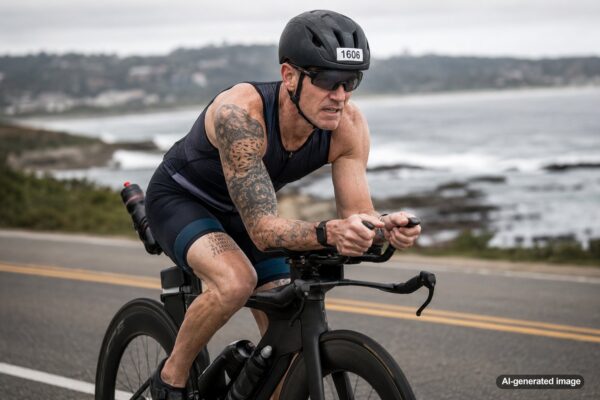
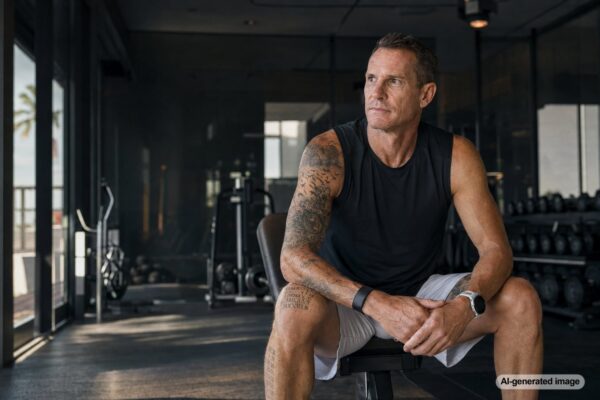
For Greg Schaefer, forward motion is not a slogan built for perfect days. It is a lived practice shaped by family, business leadership, endurance sports, advocacy, and the reality of navigating life after a Young-Onset Parkinson’s diagnosis. His message is not that rough water is easy. It is that movement still matters when conditions change.
Quick answer: how do you keep moving forward when life gets rough?
- Stop trying to solve the entire storm at once and focus on the next useful step.
- Separate what you can control from what you can only respond to.
- Let support become a strength, not something you resist until you are exhausted.
- Use routines, anchors, and small commitments to create stability when emotions are high.
- Remember that forward motion does not always mean speed. Sometimes it means staying present, asking for help, and refusing to disappear.
Rough water changes the question
When things are calm, most people ask, “How far can I go?” When the water gets rough, the better question becomes, “What can I do next that keeps me engaged, grounded, and moving in the right direction?” That shift matters. It takes pressure off the fantasy of total control and brings attention back to disciplined response.
In endurance racing, business, health challenges, and family life, the same truth appears in different forms: panic burns energy, denial delays action, and isolation makes the current feel stronger. The strongest people are not the ones who never feel fear. They are often the ones who learn to keep choosing the next responsible move while fear is still in the room.
That is why Greg’s idea of forward motion is not about charging ahead blindly. It is about staying connected to purpose while adapting to reality. It is about knowing when to push, when to pause, when to ask for support, and when to remind yourself that one difficult mile is not the whole race.
Start with the next honest step
When life feels overwhelming, the mind often tries to leap too far ahead. It wants to solve the next year, predict every outcome, protect everyone, and eliminate uncertainty before taking action. That can make a hard season feel impossible before you have even begun.
The next honest step is smaller and more useful. It may be making the phone call you have avoided. Getting back into a routine. Having a hard conversation. Resting without guilt. Returning to training in a modified way. Asking a professional for guidance. Telling someone close to you what is actually happening instead of pretending you are fine.
Forward motion becomes more sustainable when it is measured in commitments you can keep today. One more step. Just one more. Not because the step fixes everything, but because it keeps you from surrendering your agency to the storm.
Know the difference between control and command
One of the most important distinctions in rough water is the difference between being in control and being in command. Control suggests you can dictate every variable. Command means you can lead yourself well even when some variables are beyond you.
An athlete cannot control the weather on race day, but can control preparation, pacing, nutrition, attitude, and response. A leader cannot control every market shift, but can control communication, values, discipline, and how the team is supported. A person facing a life-changing diagnosis cannot control every symptom or uncertainty, but can choose education, movement where appropriate, medical guidance, community, and honest connection.
This distinction keeps resilience from becoming denial. It allows you to acknowledge the roughness of the water without handing over your identity to it.
Build anchors before you feel ready
Rough seasons often make people wait for motivation before they act. The problem is that motivation can be unreliable when sleep is thin, stress is high, or the future feels uncertain. Anchors are different. They are repeatable practices that help carry you when motivation is not available.
An anchor might be a morning walk, a training plan adjusted to your current capacity, a weekly conversation with someone you trust, a short planning ritual, a gratitude practice that does not feel forced, or a commitment to show up for one meaningful responsibility each day. The point is not to create a perfect routine. The point is to create enough structure that you are not making every decision from the middle of the waves.
For leaders, anchors can also include clear communication rhythms, honest check-ins, and values that remain visible under pressure. For families and support systems, anchors may look like shared language, practical help, and permission to tell the truth without turning every conversation into crisis.
Let support become part of strength
Many people resist support because they confuse independence with never needing anyone. Rough water exposes the weakness in that idea. A support system does not make a person less strong. It often gives strength somewhere useful to go.
Support can be emotional, practical, professional, spiritual, athletic, or community-based. It may come from a spouse, family member, coach, clinician, teammate, friend, colleague, or mission-aligned organization. What matters is not the label. What matters is that the person in rough water does not have to become both the swimmer and the lifeguard at the same time.
This is also where Greg’s broader mission comes into focus. Through his work as a speaker and through the Forward Motion Fund, the idea of moving forward extends beyond one person’s story. It becomes a way to support research, caregivers, challenged athletes, and young people who are learning what resilience looks like in real life.
Redefine progress when the conditions change
One of the hardest parts of adversity is accepting that progress may look different than it did before. That does not mean progress is gone. It means the measurement has changed.
In a calm season, progress may look like speed, scale, achievement, or visible wins. In a rough season, progress may look like consistency, courage, communication, patience, adaptation, or staying connected to the people and purpose that matter most. There is dignity in that kind of progress, even when it does not look impressive from the outside.
That lesson shows up in endurance sports as clearly as it does in life. Some miles are about pace. Others are about staying upright, managing the moment, and refusing to let one hard stretch define the entire event. The same is true in business, health, family, and personal growth.
What people often miss
Moving forward is not the same as pretending everything is fine. It is not ignoring grief, fear, fatigue, or uncertainty. Real forward motion makes room for honesty. It says, “This is hard, and I still have a next step.” That is where resilience becomes grounded instead of performative.
When rough water becomes a leadership lesson
Adversity has a way of making leadership less theoretical. It tests whether values are real, whether communication holds, and whether a person can stay steady without becoming rigid. For teams and organizations, this is why Greg’s story carries weight beyond athletics or health. It speaks to the pressure people face in boardrooms, communities, families, and personal turning points.
A strong message for leaders is not “push harder no matter what.” It is more nuanced than that. It is about knowing your mission, telling the truth, adapting intelligently, and helping people believe that the next step is still worth taking. For organizations looking for a grounded voice on resilience, performance, and purpose, Greg’s speaking work brings those ideas into a human and practical conversation.
FAQ
What does it mean to keep moving forward?
It means staying engaged with life, purpose, and responsibility even when circumstances are difficult. It does not always mean moving quickly. Sometimes it means taking one practical step, asking for support, or adjusting your path without giving up your direction.
How can someone stay resilient without ignoring reality?
Grounded resilience begins with honesty. You name what is hard, recognize what is outside your control, and choose the next action that helps you respond well. Denial avoids reality. Resilience works with reality.
Why is the phrase “one more step” so powerful?
Because it makes adversity smaller without making it fake. Instead of demanding that someone solve the entire future, it brings the focus back to the next doable act of courage, discipline, connection, or care.
Can rough seasons become part of a larger purpose?
They can, but not always immediately. Purpose often becomes clearer over time, especially when people are supported, honest, and willing to turn lived experience into service, leadership, advocacy, or deeper connection.
Interested in bringing Greg’s message to your event or organization?
Learn more about Greg’s speaking work or get in touch to start the conversation.
Contact Greg or learn more about the Forward Motion Fund.
This article is for educational purposes only and is not medical advice. For diagnosis, treatment, or personalized medical guidance, please speak with a qualified healthcare professional.