
Why Leg Strength Is One Of The Best Predictors Of Healthy Aging
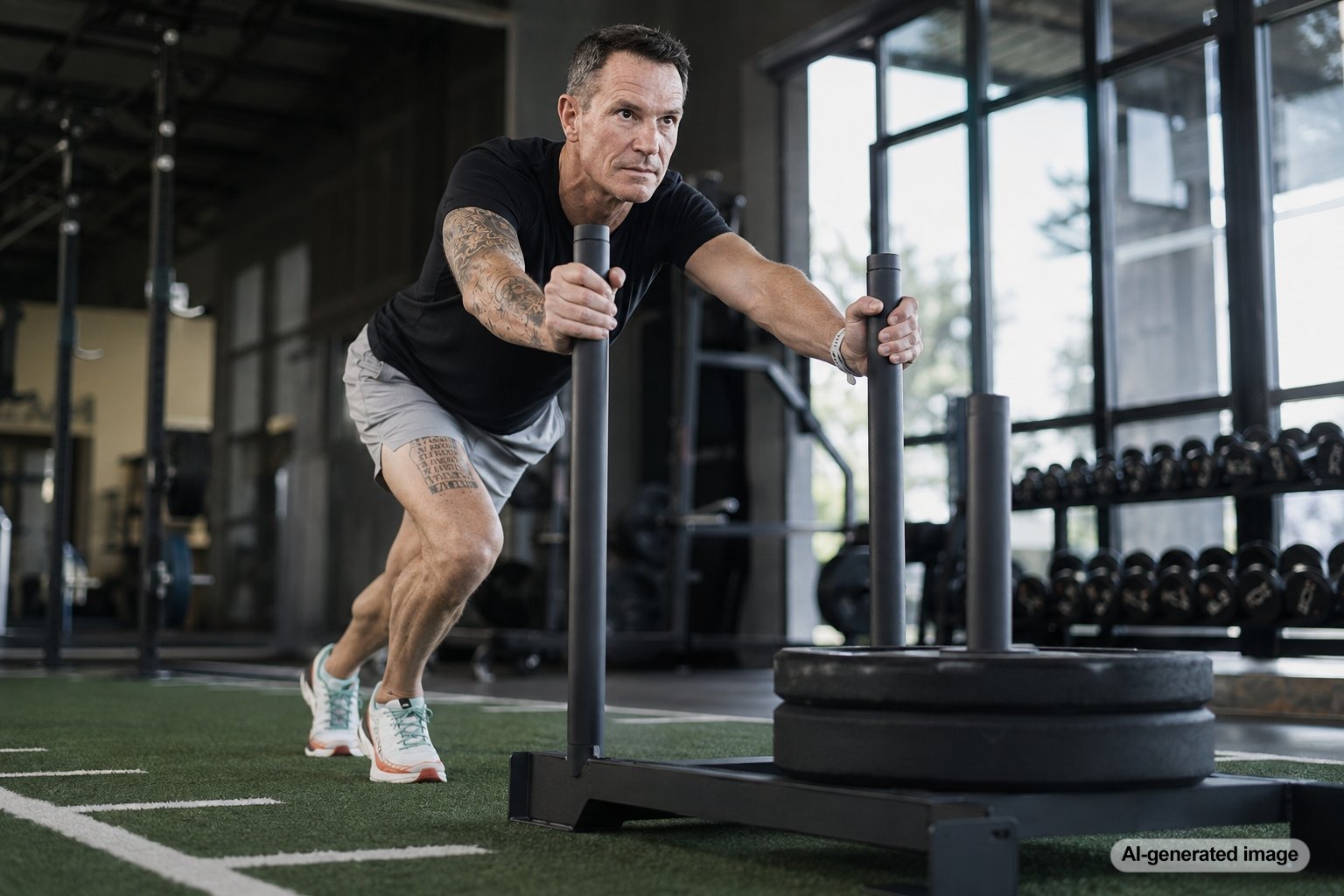
Healthy aging is about more than adding years to a life. It is also about preserving the ability to move through those years with independence, confidence, and purpose. That is one reason leg strength deserves far more attention than it usually gets. The muscles of the hips, thighs, calves, and surrounding structures help us stand up, climb stairs, recover our balance, carry everyday loads, and keep moving when life asks more of us.
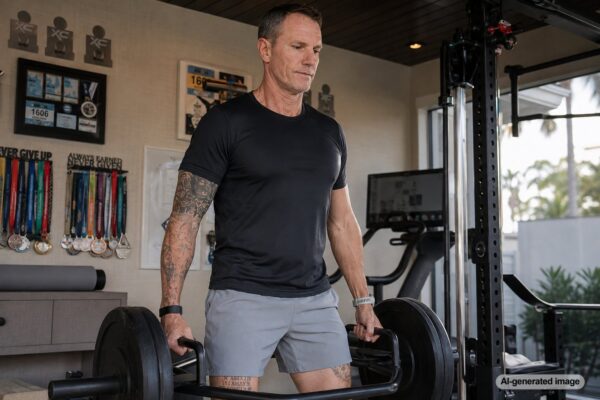
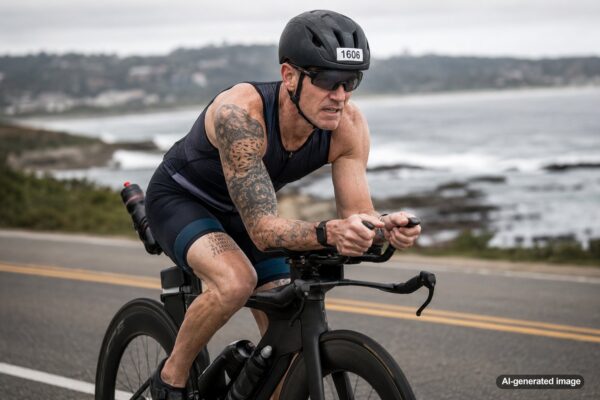
Research supported by the National Institutes of Health has shown that measures of strength and balance change meaningfully with age, making physical performance a useful window into how the body is aging. For Greg Schaefer, whose life brings together family, business leadership, endurance sports, adversity, and advocacy, the bigger lesson is familiar: what we build consistently can matter when the road gets harder.
Quick answer: Why does leg strength matter so much?
- Leg strength supports everyday independence. Standing from a chair, using stairs, carrying groceries, and getting in and out of a vehicle all depend heavily on the lower body.
- Strength works together with balance. Strong legs help the body control movement and respond when balance is challenged.
- Muscle strength tends to decline with age. Staying active and including resistance exercise can help many adults maintain or improve strength.
- Lower-body performance gives useful information about physical function. Tests involving chair stands, knee strength, walking, and balance are commonly used to assess mobility and aging-related function.
Leg strength is closely connected to independence
Think about how often your legs determine whether you can complete an ordinary day without assistance. You stand up from bed. You lower yourself into a chair. You step off a curb. You climb a flight of stairs. You stabilize yourself when the sidewalk is uneven. None of these movements looks like an athletic performance, but each requires a combination of strength, coordination, balance, and confidence.
This is why lower-body strength matters beyond the gym. Maintaining the ability to produce force through the legs can support mobility and independence as we get older. The National Institute on Aging notes that muscle strength and performance generally decline with age, while an active lifestyle and resistance training can help many older adults preserve physical function.
Strength can tell us something that appearance cannot
Two people of the same age can look similarly healthy while having very different levels of physical capacity. One may be able to rise from a low chair without using their hands, climb several flights of stairs comfortably, and recover quickly after an unexpected step. Another may struggle with those same movements.
That distinction is important because healthy aging is not simply about what the body looks like. It is about what the body can do. NIH-supported research examining adults over age 50 found age-related declines in measures including knee strength, grip strength, and balance. The findings reinforce the value of looking at functional abilities rather than relying on chronological age alone.
Leg strength, balance, and mobility are different but connected
It is tempting to put strength, balance, and mobility into one category, but they are not interchangeable. Strength is the ability of muscles to produce force. Balance is the ability to control the body’s position. Mobility is the practical ability to move through the environment. Each can influence the others.
For example, someone may have enough cardiovascular fitness to walk for a long time but still find it difficult to rise from the floor because of limited lower-body strength. Another person may have strong legs but need additional work on balance or coordination. Healthy aging is better served by developing the whole system than by chasing one isolated number.
Power matters too, not just maximum strength
One overlooked part of aging is the difference between strength and power. Strength describes how much force you can produce. Power includes how quickly you can produce that force. Everyday life sometimes demands both.
Standing quickly, catching yourself after a stumble, stepping onto a high curb, or accelerating to cross a street safely can involve the ability to generate force promptly. This is one reason a complete approach to physical function should not be reduced to lifting the heaviest possible weight. Control, appropriate speed, balance, range of motion, and movement quality all matter.
Small everyday movements can reveal a lot
You do not need an elaborate laboratory test to understand why lower-body capacity is useful. Consider a few ordinary situations. Can you stand from a chair comfortably without pushing heavily through the armrests? Can you walk up stairs with control? Can you carry a moderate household load while maintaining good posture? Can you step over an obstacle without feeling unstable?
These are not diagnostic tests, and difficulty with any one movement can have many possible causes. But they illustrate why clinicians and researchers often pay attention to functional movement. The ability to perform basic tasks can provide practical information that a scale or birthday cannot.
What people often miss
The goal is not to have the strongest legs in the room. The goal is to maintain enough strength, balance, mobility, and confidence to keep participating in the life you want. That may mean traveling, playing with children or grandchildren, competing in endurance events, working, volunteering, hiking, or simply navigating your home without unnecessary limitation.
Building strength is a long-term practice
Strength is not something to think about only after mobility begins to feel difficult. The National Institute on Aging describes resistance training as an important component of maintaining muscle and physical function as people age. Depending on a person’s health, experience, and abilities, resistance work can take many forms, including exercises that use body weight, machines, free weights, or other forms of resistance.
The important distinction is consistency rather than intensity for its own sake. A useful program should be appropriate for the individual and should develop progressively rather than treating every workout as a test. People with medical conditions, mobility limitations, pain, a history of falls, or uncertainty about safe exercise should speak with a qualified healthcare professional before making major changes to an exercise routine.
Healthy aging is not one metric
Calling leg strength one of the best indicators of healthy aging does not mean it tells the entire story. Cardiovascular health, cognition, nutrition, sleep, social connection, medical care, emotional well-being, balance, and many other factors matter. Genetics, injuries, health conditions, and individual circumstances also influence physical capacity.
Leg strength is valuable because it sits at the intersection of so many activities that make independent life possible. It gives us something practical to pay attention to and, for many people, something that can be trained.
That idea also fits a larger principle behind Greg’s work and the Forward Motion Fund: progress does not always require a dramatic leap. Sometimes the meaningful work is continuing to build capacity, protect what matters, and take one more step.
Frequently asked questions
Does stronger leg strength guarantee a longer life?
No. Leg strength is one useful marker of physical function, not a guarantee of longevity or health. Healthy aging is influenced by many biological, behavioral, medical, and social factors.
Why are chair stands often associated with healthy aging?
Standing from a chair requires lower-body strength, balance, coordination, and mobility. Because the movement resembles an essential everyday task, it can provide useful information about physical function. A clinician can help interpret functional limitations when there is a concern.
Is walking enough to maintain leg strength?
Walking is valuable physical activity, but aerobic activity and resistance training place different demands on the body. The National Institute on Aging describes combinations of walking and resistance exercise as useful for supporting physical function. The right mix varies by individual.
Can adults build strength later in life?
Many older adults can improve muscle strength through appropriately designed exercise. Individual results vary, and exercise choices should reflect health status, experience, mobility, and medical guidance when appropriate.
What if leg weakness appears suddenly or interferes with daily life?
New, unexplained, significant, or worsening weakness deserves professional evaluation rather than self-diagnosis. A qualified healthcare professional can help identify possible causes and recommend appropriate next steps.
Interested in bringing Greg’s message to your event or organization?
Learn more about Greg’s speaking work or get in touch to start the conversation.
Contact Greg or learn more about the Forward Motion Fund.
This article is for educational purposes only and is not medical advice. For diagnosis, treatment, or personalized medical guidance, please speak with a qualified healthcare professional.