

How To Set Up A Low Cost Physical Therapy Space For Parkinson’s At Home
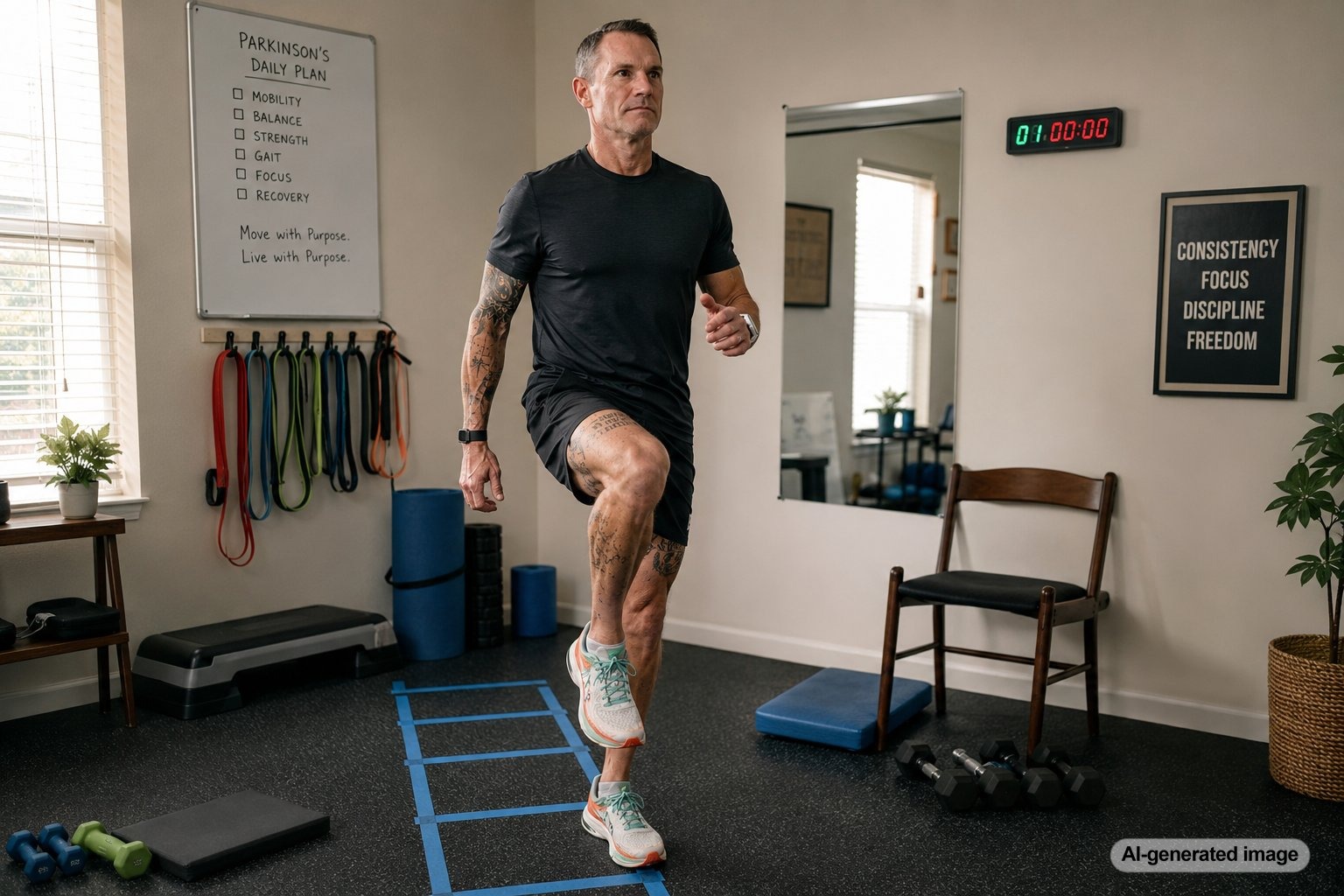
A useful physical therapy space for Parkinson’s does not require a home gym, expensive machines, or an entire spare room. A clear section of floor, a sturdy chair, good lighting, and a few inexpensive tools can create a practical place to work on movements recommended by a physical therapist.
The most important word is personalized. Parkinson’s can affect balance, walking, posture, coordination, strength, and endurance differently from one person to another. A physical therapist who understands neurological conditions can evaluate those needs and help determine which movements, equipment, and safety precautions belong in the space. Greg’s broader commitment to living with purpose and continuing forward can be explored on the About Greg page.
Quick answer
- Choose a well-lit area with a flat, non-slip floor and enough room to move without stepping around furniture.
- Start with low-cost basics such as a stable chair, resistance band, exercise mat, light weights, and visible floor markers.
- Remove loose rugs, cords, clutter, and unstable furniture that could create a tripping or grabbing hazard.
- Keep a phone, medical alert device, or support person nearby when exercising alone may not be appropriate.
- Ask a Parkinson’s-informed physical therapist to approve the setup and provide a routine matched to current abilities.
Start With The Movements, Not The Equipment
It is easy to begin by shopping for exercise gear. A better approach is to identify the movements the space needs to support. Physical therapy for Parkinson’s may address walking, balance, posture, flexibility, strength, transfers, turning, or strategies for movement challenges. The right setup depends on which of those areas matter most for the individual.
For example, someone practicing repeated sit-to-stand movements needs a stable chair and safe foot placement more than a collection of weights. Someone working on walking cues may need an open pathway and high-contrast floor markers. A person practicing posture or flexibility may benefit from a mat, a wall, and enough room to extend the arms without striking furniture.
Before setting up the area, write down three practical goals. They might include getting out of a chair with better control, walking through a doorway more confidently, maintaining an upright posture, or following a therapist-approved strength routine. Let those goals determine what enters the space.
Choose A Safe Location
A low-cost therapy space can fit in a bedroom corner, living room, home office, finished basement, or another area that can remain consistently clear. The location should be easy to reach without navigating stairs or carrying equipment through crowded rooms.
Look for these basic features
- Flat flooring: Use a firm, stable surface. Thick carpet, uneven transitions, and loose rugs can make foot placement less predictable.
- Strong lighting: Reduce shadows and glare. A simple floor lamp or brighter bulb may be more useful than another piece of exercise equipment.
- Open movement space: Leave enough room to step forward, backward, and sideways without contacting a table, shelf, or sharp corner.
- A dependable support surface: A solid wall, fixed counter, or sturdy chair may provide support when a therapist has specifically included it in the routine.
- Comfortable temperature: Avoid spaces that become excessively hot, cold, or poorly ventilated.
Avoid using rolling office chairs, lightweight folding furniture, unstable tables, or furniture that swivels. These objects may move when someone reaches for support. A chair used for exercises should remain planted, have a firm seat, and ideally include armrests when they are helpful for transfers.
Build The Space With Affordable Basics
Many useful items cost little, and some may already be available at home. Buy only what supports the routine recommended by a qualified professional.
1. A sturdy chair
A stable dining chair with a firm seat can support seated movements, sit-to-stand practice, rest breaks, and certain balance activities. Place it against a wall when appropriate so it cannot slide backward. Avoid chairs with wheels, deep cushions, or a seat so low that standing becomes unnecessarily difficult.
2. Resistance bands
Resistance bands are compact, inexpensive, and available in several resistance levels. They may be used for therapist-approved strength and posture exercises. Check bands frequently for cracks, thinning, or damage, and replace them before they snap. Do not anchor a band to furniture unless the therapist has confirmed that the attachment point and exercise are safe.
3. Light hand weights
Small dumbbells can be useful when resistance training is part of the plan. Household objects such as filled water bottles may sometimes provide a low-cost alternative, but they should be easy to grip and securely closed. The appropriate load varies, so weight selection should come from professional guidance rather than guesswork.
4. A non-slip exercise mat
A mat can make floor-based stretching or mobility work more comfortable. It should lie completely flat and remain out of walking paths when it is not being used. Floor exercises are not suitable for everyone, particularly when getting down or returning to standing is difficult or unsafe.
5. High-contrast visual markers
Painter’s tape, flat floor spots, or other high-contrast markers can help define foot placement, step length, or direction during exercises prescribed by a therapist. Markers must remain flat and firmly attached so their edges do not become tripping hazards.
6. A mirror, when appropriate
A securely mounted mirror can provide visual feedback for posture, alignment, and movement size. A large leaning mirror can tip and should not be used as a support. Some people may find visual feedback distracting, so a mirror should serve a specific purpose rather than becoming an automatic requirement.
7. A timer and written instructions
A basic kitchen timer, phone timer, or large digital clock can help structure intervals and rest periods. Keep the therapist’s written routine in a visible location. Use large, clear print and simple instructions. A checklist can reduce the need to remember every step while moving.
Create A Clear Practice Path
A short walking lane may be more valuable than a large collection of equipment. Create a straight, uncluttered route with room to turn safely. Keep shoes, pet toys, electrical cords, baskets, and small tables outside the lane.
If a therapist recommends visual or auditory cueing, the path may include flat tape lines, a metronome, counting, or another specific cue. Cueing strategies are individual. A technique that helps one person may not be appropriate for another, especially when walking, freezing, balance, or multitasking challenges differ.
Doorways, tight turns, and changes in flooring may present different movement demands than a straight path. A therapist can help decide whether those real-life features should be practiced and how to do so safely.
Organize The Space To Reduce Decision Fatigue
The setup should make it easy to begin. Store frequently used equipment in one visible bin or on a waist-height shelf. Avoid placing supplies on the floor or in a location that requires climbing, deep bending, or reaching overhead.
A simple organization system might include:
- One basket for bands, light weights, and small accessories.
- One folder containing the current routine and therapist notes.
- A wall calendar or log for recording completed sessions and questions.
- A designated charging location for a phone or alert device.
- A water bottle placed within easy reach but outside the movement area.
Keeping the area ready can lower the friction between intending to exercise and actually starting. Consistency often depends on removing small obstacles: searching for a band, moving a coffee table, finding instructions, or clearing yesterday’s clutter.
Include A Safety Station
A home therapy area should include a simple plan for what happens if help is needed. Keep a charged phone nearby. Make sure emergency contacts are easy to access. When a medical alert system or wearable fall-detection device is already part of the person’s safety plan, it should be worn rather than left across the room.
Some people should not exercise alone. The need for supervision can depend on balance, fall history, cognitive changes, blood pressure concerns, movement fluctuations, the difficulty of the activity, and other health conditions. A clinician can help determine whether a family member, care partner, therapist, or trained instructor should be present.
Stop the session and seek appropriate help for a fall, injury, chest pain, severe shortness of breath, fainting, or another concerning change. New or worsening symptoms should be discussed with a qualified healthcare professional.
What People Often Miss
The room should be allowed to change
A setup that works today may need to change as goals, symptoms, medication timing, mobility, or confidence change. Periodic physical therapy and occupational therapy evaluations can help keep the environment aligned with current needs.
Medication timing may affect the session
Some people experience periods when movement is easier or more difficult in relation to medication. A clinician may recommend scheduling activity during a time when movement is more reliable. Do not independently change medication timing or dosage for exercise.
Real-life function matters more than collecting exercises
The purpose of the space is not simply to complete repetitions. It is to support meaningful goals such as walking through the home, getting up from a chair, maintaining strength, participating in family life, or continuing activities that matter.
A care partner also needs clear instructions
When another person assists, the therapist should explain where to stand, how much help to provide, and what not to do. Pulling on an arm or improvising physical support may create risk for both people.
A Sample Low-Cost Setup
Imagine a six-by-eight-foot section of a home office. The desk chair has been moved outside the exercise area. A firm chair with armrests sits against one wall. Two strips of flat painter’s tape mark a walking lane. A small basket on a shelf holds two resistance bands and a pair of light dumbbells. A printed routine is clipped to the wall beside a timer. The floor is clear, the lamp is on, and a charged phone rests on the shelf.
That modest setup may support chair transfers, standing exercises, posture work, strength training, stepping practice, and a short walking routine, depending on what a physical therapist recommends. Nothing about it resembles a commercial gym. Its value comes from being safe, specific, and ready to use.
Common Setup Mistakes
- Buying too much too early: Equipment that does not match the plan becomes clutter and may introduce hazards.
- Using unstable furniture for support: Rolling, swiveling, folding, or lightweight furniture can move unexpectedly.
- Leaving equipment on the floor: Bands, weights, mats, and water bottles can obstruct the very path meant for safe movement.
- Following random online routines: General videos may not account for an individual’s balance, freezing, pain, other medical conditions, or fall risk.
- Making the routine too complicated: A short plan completed consistently may be more useful than an overwhelming sequence that is difficult to remember.
- Skipping professional reassessment: Exercise needs and safety considerations can change over time.
Questions To Ask A Physical Therapist
- How much open floor space do I need for my current goals?
- Which chair height and style are safest for my exercises?
- Should I use a wall, counter, or chair for support?
- Are resistance bands or hand weights appropriate for me?
- Which activities require another person to be present?
- What signs mean I should stop an exercise?
- How should I adjust the routine on a day when movement feels different?
- When should the home program and room setup be reevaluated?
Frequently Asked Questions
How much room is needed for a Parkinson’s home therapy space?
There is no universal size. A small, clear area may be enough for seated work, strength exercises, and basic stepping. Walking or multidirectional movement may require a longer path. A physical therapist can determine how much space is needed for the prescribed routine.
Do I need a treadmill or stationary bike?
Not necessarily. Those machines may be appropriate for some people, but they are not required for a useful home setup. Walking, seated aerobic activity, resistance exercises, and other low-cost options may be included based on ability and professional guidance.
Can I use household objects instead of exercise equipment?
Sometimes. A firm chair, wall, water bottle, towel, or taped floor marker may serve a practical purpose. Every object should be stable, easy to handle, and approved for the intended movement. Improvised equipment should never compromise safety.
Should the space include balance equipment?
Unstable surfaces, balance boards, and similar devices can increase difficulty and risk. They should not be added casually. Use them only when a qualified professional has determined that they are appropriate and provided clear instructions.
How often should the setup be reviewed?
Review it whenever there is a fall, near-fall, meaningful change in movement, new equipment, a revised therapy plan, or a change in the ability to exercise independently. Routine professional reevaluations can also identify adjustments before a problem becomes obvious.
The Bottom Line
A low-cost physical therapy space for Parkinson’s should be clear, stable, well-lit, and built around personal movement goals. Begin with a sturdy chair, open floor space, simple equipment, and written guidance. Remove hazards before adding features. Most importantly, involve a Parkinson’s-informed physical therapist or occupational therapist so the space supports movement without creating unnecessary risk.
Forward motion is rarely about having perfect conditions. It is often about creating a practical environment for the next meaningful step. Learn more about the mission behind that idea through the Forward Motion Fund.
Interested in bringing Greg’s message to your event or organization?
Learn more about Greg’s speaking work or get in touch to start the conversation.
Contact Greg or learn more about the Forward Motion Fund.
This article is for educational purposes only and is not medical advice. For diagnosis, treatment, or personalized medical guidance, please speak with a qualified healthcare professional.