
How to Maintain Grip Strength with Early Stage Parkinson’s
Maintaining grip strength with early stage Parkinson’s is not just about squeezing harder. It is about protecting the small daily abilities that help a person stay independent, confident, and connected to the life they are still building. Opening a jar, buttoning a shirt, holding a coffee mug, carrying groceries, typing, cooking, training, or shaking someone’s hand can all become more noticeable when stiffness, tremor, slowness, or changes in coordination begin to affect the hands.
For someone like Greg Schaefer, whose story sits at the intersection of family, endurance, business leadership, Parkinson’s advocacy, and forward motion, the subject is practical and deeply human. Grip strength is not a small thing when it supports how you work, train, serve, care, and keep showing up.
Quick answer
- Grip strength can often be supported through consistent, low-risk hand, wrist, forearm, and full-body strengthening habits.
- With Parkinson’s, grip changes may involve more than weakness. Stiffness, bradykinesia, tremor, fatigue, and coordination can all affect hand function.
- Small, repeatable exercises may help, especially when paired with posture, shoulder mobility, and daily-use practice.
- A physical therapist or occupational therapist can help personalize exercises, tools, and safety strategies.
- The goal is not perfection. The goal is preserving useful function, confidence, and momentum one step at a time.
Why grip strength can change in early stage Parkinson’s
Parkinson’s can affect movement in several ways, including tremor, stiffness, slowness of movement, and balance or coordination changes. When these symptoms show up in the hands, a person may notice that tasks feel less automatic. The hand may not open or close as quickly. Fingers may feel stiff. Small movements may take more focus. A grip that once felt natural may feel inconsistent from one day to the next.
That distinction matters. A weaker grip is not always only a muscle-strength problem. Sometimes the issue is timing, stiffness, endurance, motor control, medication timing, fatigue, or the way the brain and body coordinate movement. That is why a thoughtful approach usually includes strength, mobility, dexterity, and functional practice rather than only squeezing a hand gripper as hard as possible.
Start with the whole chain, not just the hand
The hand does not work alone. Grip depends on the fingers and thumb, but it is also supported by the wrist, forearm, elbow, shoulder, upper back, posture, and trunk. If the shoulder is tight, the wrist is stiff, or posture is rounded, the hand may have to work from a less efficient position.
A practical grip routine can include gentle wrist circles, forearm stretches, shoulder rolls, scapular retractions, and open-close hand movements before strengthening begins. This kind of warm-up does not need to be dramatic. It simply prepares the body for better movement quality.
For many people, the best starting question is not, “How strong can I squeeze?” It is, “Can I open my hand fully, close it with control, release on purpose, and repeat that motion without rushing?”
Use controlled strengthening, not max-effort squeezing
Grip work should feel useful, not punishing. In early stage Parkinson’s, aggressive max-effort squeezing may create frustration, fatigue, or unnecessary strain, especially if the hand already feels stiff. A steadier approach is often more practical.
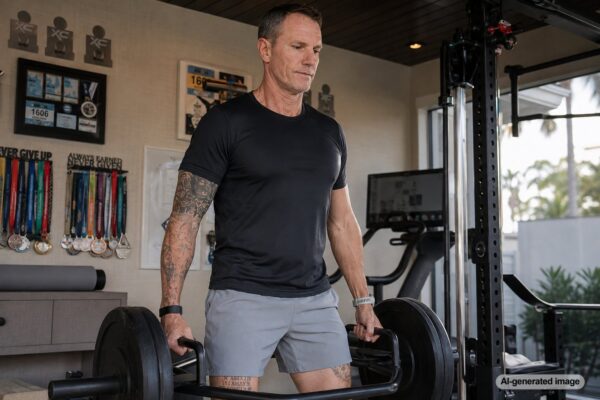
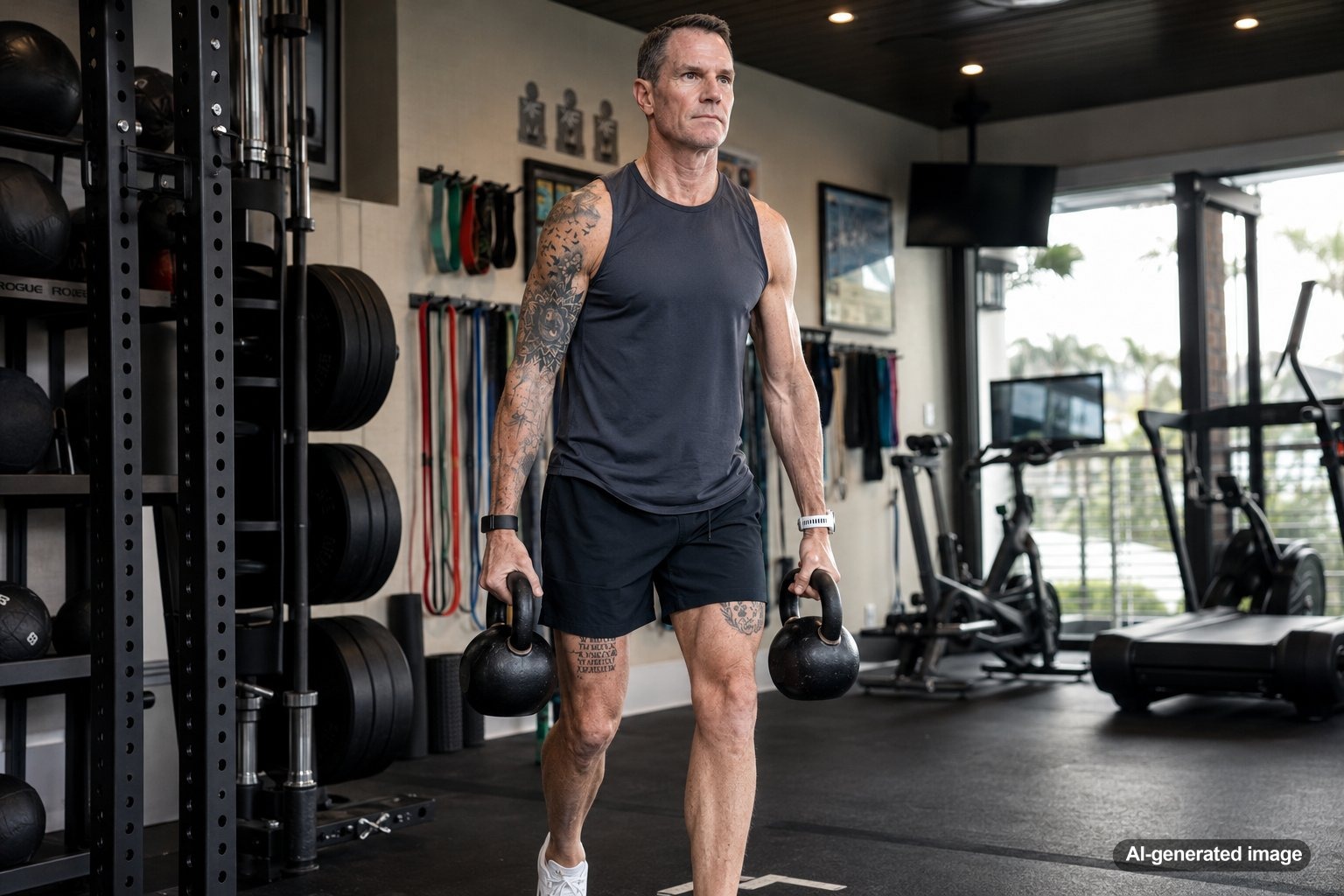
Common options include squeezing a soft therapy ball, gently pinching putty, wringing a towel, carrying light grocery bags, using a hand exerciser with light resistance, or practicing farmer carries with manageable weights. The resistance should allow clean control. If the hand cramps, pain increases, or the movement becomes sloppy, the load may be too much for that day.
A simple framework is to use short sets, slow releases, and regular rest. The release matters because real-life grip is not only about holding on. It is also about letting go with control.
Train dexterity alongside strength
Someone may have decent raw grip strength and still struggle with buttons, keys, utensils, phone use, handwriting, or opening small packages. That is where dexterity comes in. Dexterity work trains the fingers and thumb to coordinate smaller, more precise movements.
Examples may include rolling therapy putty between the fingers, touching each fingertip to the thumb, picking up coins, using clothespins, stacking cards, sorting small household objects, or practicing handwriting in short sessions. These are not glamorous exercises, but they are close to the real-life tasks people want to protect.
One overlooked angle is speed. Parkinson’s can make movement smaller or slower, so it may help to practice deliberate, larger hand opening and closing rather than tiny, rushed repetitions. Quality first. Speed can come later if it is safe and appropriate.
Build grip into daily life
The most useful routine is often the one a person can actually keep. Grip strength can be supported through intentional daily habits: carrying a water bottle, using kitchen tools, folding towels, gardening, cooking, walking with light hand weights if approved by a clinician, or practicing controlled carries during normal household tasks.
This is where Greg’s broader message of forward motion becomes relevant without turning Parkinson’s into a slogan. Progress is often built through ordinary repetitions. One intentional task. One more controlled movement. One more day of staying engaged with the body instead of stepping away from it.
Readers who connect with this mindset may also find meaning in Greg’s Forward Motion Fund, which reflects a commitment to research, support, challenged athletes, and mission-aligned impact.
Work with symptoms instead of fighting the day
Many people living with Parkinson’s notice that symptoms vary. Hand control may feel different depending on sleep, stress, fatigue, medication timing, temperature, hydration, or the time of day. A grip routine that works well on Monday may feel different on Thursday.
Rather than treating that variability as failure, it can help to build flexible options. On a good day, someone might do light resistance work, carries, and dexterity practice. On a tougher day, the goal may be gentle mobility, open-close repetitions, and simple daily-use tasks. Consistency does not always mean doing the same amount. It means staying connected to the practice in a way the body can tolerate.
What people often miss
- Grip is functional. The point is not only stronger hands. The point is keeping daily tasks more manageable.
- Release is part of grip. Practice opening the hand and letting go, not only squeezing.
- The thumb matters. Pinch strength and thumb control often affect keys, buttons, utensils, and phones.
- Fatigue changes quality. Short, clean practice can be more useful than long sessions that break down.
- Professional guidance helps. A therapist can tailor exercises and adaptive strategies to the person, not just the diagnosis.
When to seek support
It is smart to speak with a qualified healthcare professional if grip changes are interfering with daily tasks, causing pain, increasing falls or safety concerns, or changing quickly. A physical therapist can help with strength, mobility, balance, and conditioning. An occupational therapist can help with hand function, adaptive tools, home strategies, work tasks, handwriting, dressing, cooking, and energy conservation.
Support is not a sign that someone is losing ground. It can be a way to stay in the game with better information, better tools, and a plan that fits real life.
FAQ
Can grip strength improve with Parkinson’s?
Some people may improve strength, endurance, coordination, or daily function through regular movement and targeted exercise, but results vary. Parkinson’s symptoms, medication timing, overall health, and consistency can all play a role. A clinician or therapist can help set realistic goals.
Are hand grippers safe for early stage Parkinson’s?
Hand grippers may be useful for some people when resistance is light enough and the movement is controlled. They may not be the best starting point for everyone, especially if stiffness, pain, cramping, or coordination issues are present. Softer tools and functional practice may be better tolerated.
How often should someone practice hand exercises?
Frequency should be individualized. Many people do better with short, consistent practice rather than occasional hard sessions. If symptoms, pain, or fatigue increase, it is worth adjusting the routine and asking a qualified professional for guidance.
Does grip work replace full-body exercise?
No. Grip work can be one part of a broader plan that may include aerobic exercise, strength training, flexibility, balance, and functional movement. Parkinson’s exercise guidance often emphasizes a well-rounded approach rather than one isolated body part.
What is the real goal?
The goal is to preserve useful movement and confidence. Stronger hands matter, but so do independence, dignity, participation, and the ability to keep doing meaningful things with the people and work that matter most.
Interested in bringing Greg’s message to your event or organization?
Learn more about Greg’s speaking work or get in touch to start the conversation.
Contact Greg or learn more about the Forward Motion Fund.
This article is for educational purposes only and is not medical advice. For diagnosis, treatment, or personalized medical guidance, please speak with a qualified healthcare professional.