

What Are The Essential Mindfulness Tools For Managing Parkinson’s Tremors
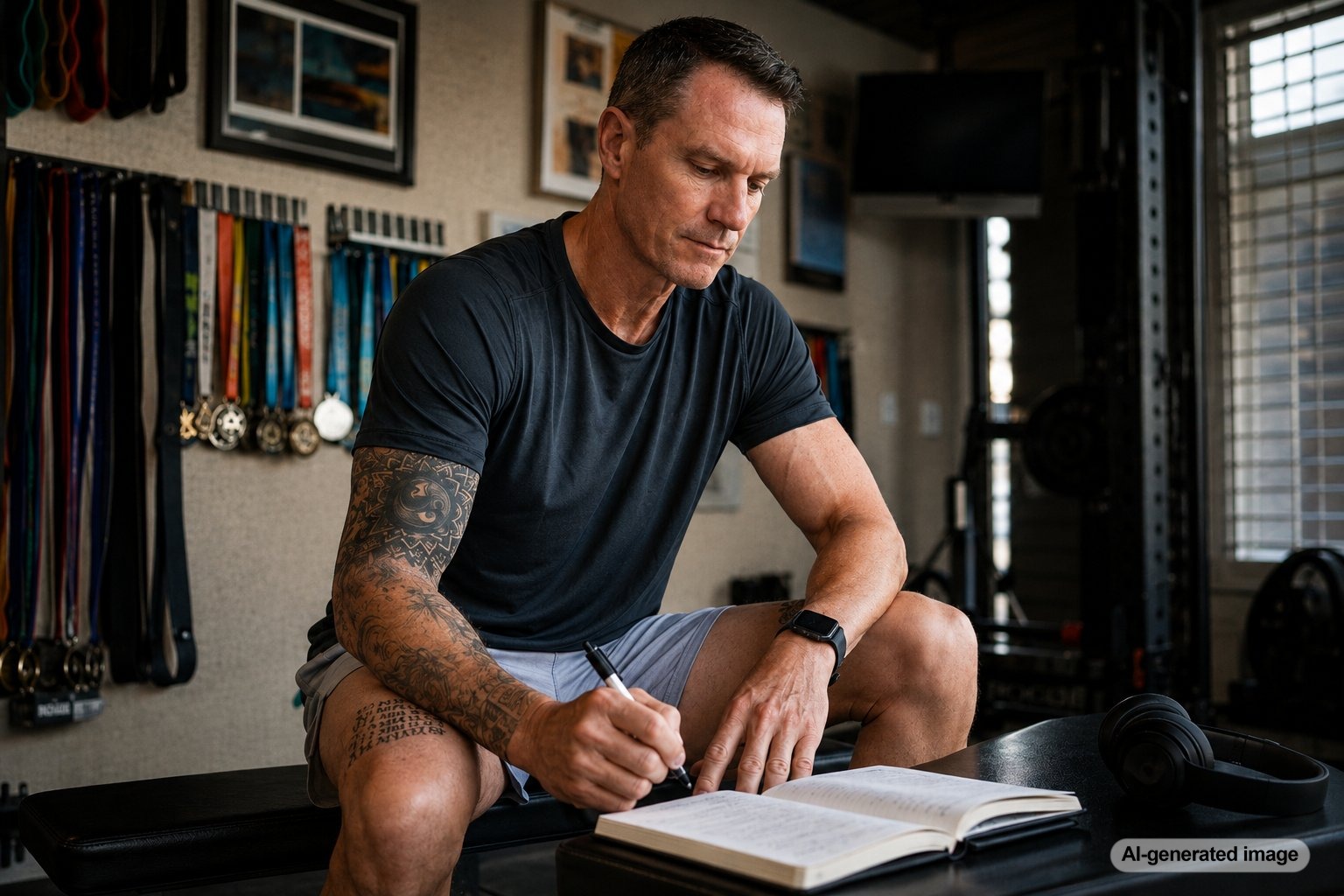
Mindfulness does not make Parkinson’s simple. It does not erase tremors, replace medication, or turn a hard day into an easy one. What it can do, for some people, is create a little more space between a symptom and the fear, frustration, or self-consciousness that often follows it.
That space matters. Parkinson’s tremor can become more noticeable during stress, anxiety, fatigue, or overstimulation. A mindfulness practice may help someone slow the nervous system, notice patterns, and respond with more steadiness instead of spiraling into panic. For Greg Schaefer, whose work sits at the intersection of endurance, leadership, family, Parkinson’s advocacy, and forward motion, this is not about pretending the challenge is small. It is about finding practical ways to take one more step, even when the body is not cooperating. You can learn more about Greg’s broader story on the About Greg page.
Quick answer: essential mindfulness tools for Parkinson’s tremors
- Slow breathing: A simple anchor that may help calm the stress response when tremor feels louder.
- Grounding through the senses: A way to return attention to the present moment instead of chasing anxious thoughts.
- Body scanning: A practice for noticing tension, posture, fatigue, and stress without judgment.
- Mindful movement: Gentle movement paired with attention, rhythm, and breath.
- Self-compassion language: A mental tool for reducing shame, pressure, and the feeling of being at war with the body.
Why mindfulness can matter when tremors feel more visible
Parkinsonian tremor is often described as a resting tremor, and not everyone with Parkinson’s experiences it in the same way. It can affect daily tasks, confidence, public interactions, and the emotional energy required to move through a normal day.
One of the overlooked realities is that tremor is not only a movement issue in the lived experience of Parkinson’s. It can also become a social and emotional moment. A hand tremor while signing a receipt, holding a cup, standing in a meeting, or sitting across from someone at dinner can create a loop: the tremor shows up, the person notices, stress rises, and the tremor may feel even more intense.
Mindfulness is not about controlling every symptom. It is about changing the relationship to the moment. Instead of immediately thinking, Everyone can see this, or I have to make it stop right now, mindfulness invites a more grounded response: This is happening. I can breathe. I can slow down. I can choose the next step.
1. Breath as an anchor
Breathing is often the simplest place to start because it is always available. A person does not need special equipment, a quiet retreat, or a perfect mental state. The practice can be as basic as noticing the inhale, lengthening the exhale, and repeating that pattern for a few cycles.
A practical version is the 4-6 breath: inhale gently for a count of four, exhale slowly for a count of six, and repeat for one to three minutes. The goal is not to force the body into calm. The goal is to give the nervous system a clear signal that the moment can be met with steadiness.
This can be especially useful before a stressful interaction, during travel, while waiting for medication timing, or after noticing that tremor has become more distracting. It is not a performance. It is a reset.
2. Grounding through the senses
When tremor draws attention, the mind can race ahead. What if this gets worse? What are people thinking? Will I be able to finish what I started? Grounding brings attention back to what is actually here.
One simple tool is the 5-4-3-2-1 practice. Notice five things you can see, four things you can feel, three things you can hear, two things you can smell, and one thing you can taste or one slow breath you can take. For someone managing Parkinson’s, this practice can be adapted. The point is not to complete it perfectly. The point is to shift from fear-driven attention to present-moment attention.
Grounding can also be physical. Feet on the floor. Back against a chair. Hand resting on a table. Eyes softening toward one steady point. These cues may not stop a tremor, but they can help a person feel less swept away by it.
3. Body scanning without judgment
A body scan means moving attention through the body slowly and noticing what is there. Not fixing. Not arguing. Just noticing.
For Parkinson’s tremors, this can be useful because symptoms rarely happen in isolation. A person may notice jaw tension, clenched shoulders, shallow breathing, fatigue, a rushed pace, or frustration building before the tremor becomes the only thing they can think about. A body scan can create earlier awareness.
A short version might sound like this: What is happening in my feet? What is happening in my legs? Is my jaw tight? Are my shoulders lifted? Am I holding my breath? The answer does not have to be dramatic. Sometimes the next right step is simply lowering the shoulders, uncurling the fingers, sitting down, changing the task, or asking for a minute.
4. Mindful movement
Mindful movement is different from pushing through. It blends attention, breath, pacing, and movement into one practice. Examples may include gentle stretching, walking with awareness, yoga, tai chi, or other movement-based practices recommended by a qualified professional.
This matters because many people with Parkinson’s already understand movement as part of their life and care routine. For endurance-minded people, founders, parents, leaders, and athletes, the harder skill may be learning that not every movement session has to prove something. Some movement can be used to listen.
A mindful walk might focus on the feeling of the foot meeting the ground, the rhythm of the arms, the breath, and the environment. A gentle stretch might focus on range, ease, and patience. The lesson is not weakness. It is awareness. That awareness can support better decisions about rest, pacing, stress, and the next challenge.
5. Naming the moment accurately
Mindfulness often begins with language. The words a person uses internally can either intensify stress or create steadiness.
There is a difference between saying, My body is failing me, and saying, I am having a harder symptom moment right now. There is a difference between, I cannot handle this, and, This is uncomfortable, and I can slow the next minute down. These are not magic phrases. They are ways to stop adding unnecessary shame to an already difficult experience.
This is one reason Greg’s broader message of forward motion connects so strongly with Parkinson’s. Forward motion does not mean denial. It means refusing to let one hard moment become the whole story.
What people often miss about mindfulness and Parkinson’s
Mindfulness is not the same as being calm all the time. A person can be mindful and still be frustrated, tired, scared, or disappointed. The practice is not to eliminate honest emotion. It is to meet emotion with more awareness and less self-attack.
Mindfulness is not a replacement for clinical care. Tremors, medication timing, progression, anxiety, sleep, and daily function should be discussed with qualified healthcare professionals. Mindfulness may be one supportive tool inside a larger care plan.
Mindfulness works best when it is practiced before the hardest moment. Waiting until stress is at its peak can make any tool harder to use. Practicing for one or two minutes on ordinary days can make the tool more available on difficult days.
How to build a simple tremor-moment routine
A routine can help because stress often removes options. When someone already knows what to try, the moment can feel less chaotic.
- Pause: Stop the task for a few seconds if it is safe to do so.
- Exhale: Take one longer exhale before trying to control anything else.
- Ground: Feel the feet, chair, table, or another steady point of contact.
- Name it: Say internally, This is a symptom moment, not a character flaw.
- Choose one next step: Continue, slow down, ask for help, change position, or take a brief break.
This kind of routine is small on purpose. In a hard moment, simple is useful. The goal is not to win against Parkinson’s in one dramatic act. The goal is to reduce the emotional load enough to keep moving through the next honest step.
Mindfulness, leadership, and living in public
For people living with Young-Onset Parkinson’s, tremor can collide with careers, parenting, leadership, relationships, and identity. It can show up in places where someone used to feel confident. It can ask a person to lead while also being seen in a new way.
Mindfulness can support that reality because it trains a different kind of strength. Not the strength of hiding everything. Not the strength of pretending symptoms do not matter. The strength of staying present when the moment is imperfect.
That is also why Greg’s speaking work resonates beyond Parkinson’s alone. Organizations, teams, and leaders do not only need stories about achievement. They need honest models of resilience under real pressure. To explore that message for an event or team, visit Greg’s Speaking page.
FAQ
Can mindfulness stop Parkinson’s tremors?
Mindfulness should not be described as a way to stop Parkinson’s tremors. It may help some people manage stress, attention, and emotional response, which can matter because stress and anxiety may worsen symptoms for some individuals. Tremor concerns should be discussed with a qualified healthcare professional.
How long should a mindfulness practice be?
It does not have to be long. One to three minutes of breathing, grounding, or body scanning can be a meaningful start. Consistency often matters more than duration.
What if sitting still makes tremor more noticeable?
Some people find stillness uncomfortable. In that case, mindful movement, walking, stretching, or grounding through touch may feel more accessible than seated meditation.
Should caregivers or partners use these tools too?
Yes, mindfulness tools can also support partners, family members, and caregivers. Parkinson’s affects more than one person, and the support system often carries its own stress, uncertainty, and emotional load.
When should someone seek additional help?
If tremor, anxiety, mood changes, sleep issues, medication timing, or daily functioning are becoming harder to manage, it is important to speak with a qualified healthcare professional. Support is not a sign of weakness. It is part of building a steadier path forward.
Interested in bringing Greg’s message to your event or organization?
Learn more about Greg’s speaking work or get in touch to start the conversation.
Contact Greg or learn more about the Forward Motion Fund.
This article is for educational purposes only and is not medical advice. For diagnosis, treatment, or personalized medical guidance, please speak with a qualified healthcare professional.


