

How To Tell If You Need Mobility Work Or More Strength
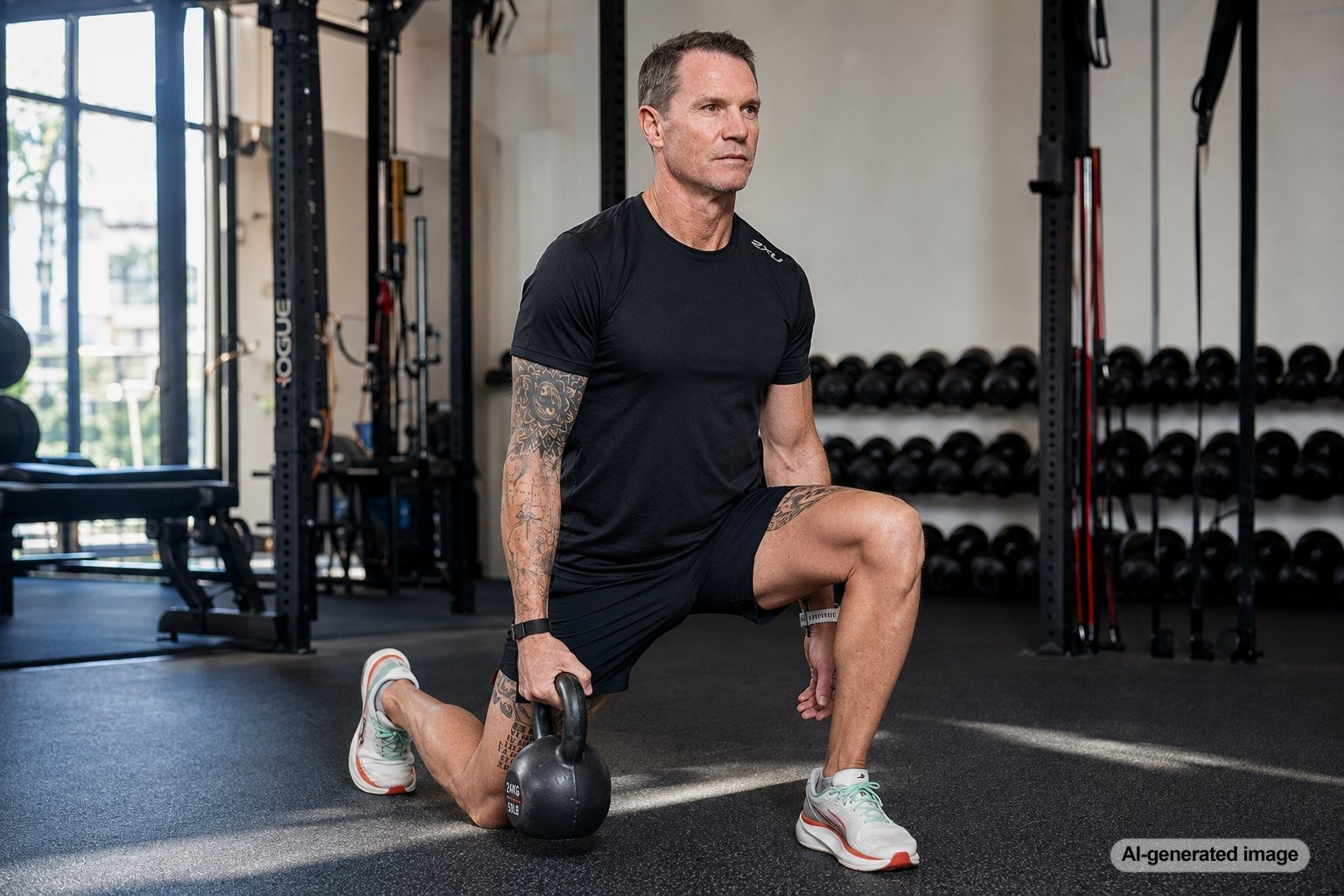
When a movement feels stiff, awkward, or limited, the obvious reaction is often to stretch more. But a tight-feeling joint or muscle does not automatically mean you need more flexibility. Sometimes the missing piece is strength: the ability to control, stabilize, and produce force through the range of motion you already have. Knowing the difference between a mobility problem and a strength problem can make training more focused, more productive, and less frustrating.
For endurance athletes, busy professionals, and anyone trying to keep moving well over time, the goal is not to become endlessly flexible or endlessly strong. It is to build usable movement. That means having enough range of motion to perform the task and enough strength to control that range under real-world demands. Greg’s approach to endurance, resilience, and consistent forward progress reflects the same principle: useful capacity matters more than chasing a single metric. You can learn more about that broader perspective on Greg’s story.
Quick answer: mobility or strength?
- You may need more mobility if you cannot comfortably reach the position even when the movement is unloaded and supported.
- You may need more strength if you can reach the position passively but lose control, stability, or confidence when you have to hold or use it.
- You may need both if the range is limited and you also struggle to control the range you do have.
- Look at the specific movement rather than assuming every sensation of tightness means you should stretch.
Start with the difference between range and control
Mobility is more than being flexible. In practical training terms, mobility is your ability to move a joint through a useful range with control. Strength is your ability to create and resist force. The two overlap, which is why the answer is often less obvious than it first appears.
Imagine a deep squat. If your ankles physically cannot move far enough forward for you to keep your heels down, an ankle mobility limitation may be part of the problem. If your ankles have enough range but your knees collapse inward, your torso loses position, or you cannot rise smoothly, strength and motor control may deserve more attention.
The same distinction can show up in running, cycling, swimming, lifting, or everyday activities. A position you cannot reach is different from a position you can reach but cannot own.
Clues that mobility work may be the priority
A mobility limitation tends to show up as a consistent restriction in the available range itself. The key question is simple: can your body get into the position, even when the demand for strength is reduced?
You cannot reach the position without compensation
If you repeatedly have to twist, arch, shift, lift a heel, or change your alignment simply to reach a basic position, the joint or surrounding tissues may not be giving you enough usable range for that task. For example, limited overhead motion may cause someone to flare the ribs or excessively arch the lower back just to get the arms higher.
The restriction remains when the movement is supported
Support can help separate mobility from strength. If holding onto a stable surface, lying down, or removing resistance still leaves you unable to reach the desired position, mobility may be the larger constraint. The lack of range remains even after much of the stability and force demand has been removed.
One side has noticeably less usable range
Side-to-side differences are common and are not automatically a problem. Still, a clear restriction on one side can be useful information, especially when it changes how you perform a specific movement. The goal is not perfect symmetry. The goal is enough comfortable, controlled range for what you are asking your body to do.
Clues that strength may be the missing piece
Strength limitations often become clearer when the range of motion exists but disappears once you must control it against gravity, resistance, fatigue, or speed.
You can reach the range passively but not actively
This is one of the most useful distinctions. Suppose you can lift your leg higher with the help of a strap or your hands than you can using your own muscles. That gap may suggest that you have more passive range than active control. More stretching alone may not address the main limitation.
You feel unstable near the end of the range
A position can feel tight because your body does not feel secure there. If you can enter the position but feel shaky, weak, or unable to hold it, strengthening within that range may help build confidence and control. This is especially relevant for athletes who need to produce force repeatedly rather than simply demonstrate flexibility once.
Your form changes as soon as resistance increases
An unloaded squat, step-up, press, or hinge may look smooth, while the same pattern falls apart as soon as meaningful resistance is added. When the available range does not change but your ability to control the movement does, strength is likely part of the equation.
Why feeling tight does not always mean you need more stretching
Tightness is a sensation, not a complete diagnosis of what is limiting the movement. A muscle can feel tight because it is working hard, because the position is unfamiliar, because surrounding muscles are not contributing effectively, or because the nervous system is guarding a range that does not feel well controlled.
That does not make stretching useless. It means stretching should have a purpose. If mobility work gives you additional range, the next question is whether you can use that range. A productive training approach often pairs mobility with controlled strength so the new position becomes something your body can actually manage.
What people often miss
Temporary range is not the same as usable range. You might gain a little motion immediately after stretching, foam rolling, or warming up. The more important question is whether you can control that position during the movement that matters to you.
More range is not automatically better. You need enough mobility for your goals. A triathlete, powerlifter, swimmer, and recreational walker do not need identical movement capacities.
Strength should be trained through useful ranges. If you always strengthen only the middle of a movement, you may still feel weak or uncertain near the edges of your available range.
A simple way to test the difference
You can use a basic three-step comparison to think more clearly about a movement limitation.
- Try the movement normally. Notice where you stop, compensate, lose balance, or feel unable to continue smoothly.
- Reduce the strength demand. Use support, remove weight, slow the movement down, or try a position where gravity has less influence.
- Compare the result. If the range remains limited, mobility may deserve more attention. If the range improves dramatically when support is added, strength or control may be the larger issue.
This is not a medical assessment. It is simply a practical way to think about training decisions. Pain, sudden loss of motion, swelling, numbness, significant weakness, or a change following an injury should be evaluated by an appropriate healthcare professional rather than treated as a routine mobility problem.
Why many people need both mobility and strength
Mobility and strength are not opposing training categories. They work together. A runner may need enough hip extension to move efficiently and enough strength to control the pelvis while fatigue builds. A cyclist may benefit from sufficient hip and ankle motion while also needing the trunk and leg strength to maintain position for hours. Someone returning to lifting may need additional shoulder range while simultaneously developing the strength to stabilize that range under load.
This is where training becomes more useful than simply asking, “Should I stretch or lift?” A better question is, “What quality is limiting this specific movement?” That shift encourages problem-solving instead of habit. It also fits the broader mindset behind sustainable performance: identify what the next step requires, then train that capacity deliberately.
How to combine mobility and strength in the same session
You do not always need a separate mobility day. A short, targeted mobility exercise can prepare a specific range, followed by a strength movement that teaches you to use it. For example, someone working on ankle range for squatting might use a controlled ankle mobility drill and then practice a squat variation that reinforces the newly available position.
The sequence can be simple: create access to the range, build control in the range, then apply it to the movement you care about. That approach keeps mobility connected to function rather than turning it into an isolated routine with no clear purpose.
When progress stalls, reassess the problem
If you have spent weeks stretching the same area and nothing meaningful changes, reconsider the assumption that flexibility is the main issue. Likewise, if you keep adding weight but a movement remains restricted or full of compensations, more strength alone may not solve it.
Good training requires adjustment. Endurance sports make that lesson obvious: conditions change, fatigue changes, and the body you bring to today’s session may not feel exactly like the body you had last month. Greg’s work as an athlete, entrepreneur, speaker, and advocate is rooted in the idea that forward motion is often built through thoughtful adaptation rather than stubbornly repeating the same approach. That perspective also shapes his speaking work with organizations and teams.
Frequently asked questions
Should I stretch if I feel tight?
Stretching may be useful, but the sensation of tightness alone does not tell you what the movement needs. Check whether you actually lack range or whether you have difficulty controlling the range you already possess.
Can strength training improve mobility?
Strength exercises performed through appropriate ranges can help you build control and confidence in positions that previously felt difficult. The most useful approach depends on the specific movement, your goals, and your current capacity.
Can too much mobility work be unhelpful?
It can be inefficient to spend large amounts of training time chasing additional range that your activity does not require. Mobility work is most useful when it addresses a specific restriction that affects how you move or perform.
How often should I work on mobility?
There is no universal schedule that fits everyone. A small amount of targeted mobility work performed consistently can be more useful than long sessions of unfocused stretching. Your training history, activity, available range, recovery, and goals all matter.
What if a movement hurts?
Pain changes the situation. Do not assume pain is simply a sign that you need more stretching or more strength. A qualified healthcare professional can help evaluate persistent, significant, or unexplained pain and determine appropriate next steps.
The bottom line
If you cannot reach a position even when the movement is supported and unloaded, mobility may be the main limitation. If you can reach the position but cannot control it, stabilize it, or use it under resistance, strength may deserve more attention. Many people need some combination of both.
The most productive goal is not maximum flexibility or maximum strength in isolation. It is useful movement: enough range for the task, enough strength to control it, and enough awareness to keep adjusting as your goals and circumstances change. Progress often comes down to identifying what the next step actually requires, then training that quality with intention.
Interested in bringing Greg’s message to your event or organization?
Learn more about Greg’s speaking work or get in touch to start the conversation.
Contact Greg or learn more about the Forward Motion Fund.
This article is for educational purposes only and is not medical advice. For diagnosis, treatment, or personalized medical guidance, please speak with a qualified healthcare professional.


