
What Open-Water Swimming Teaches You About Facing The Unknown
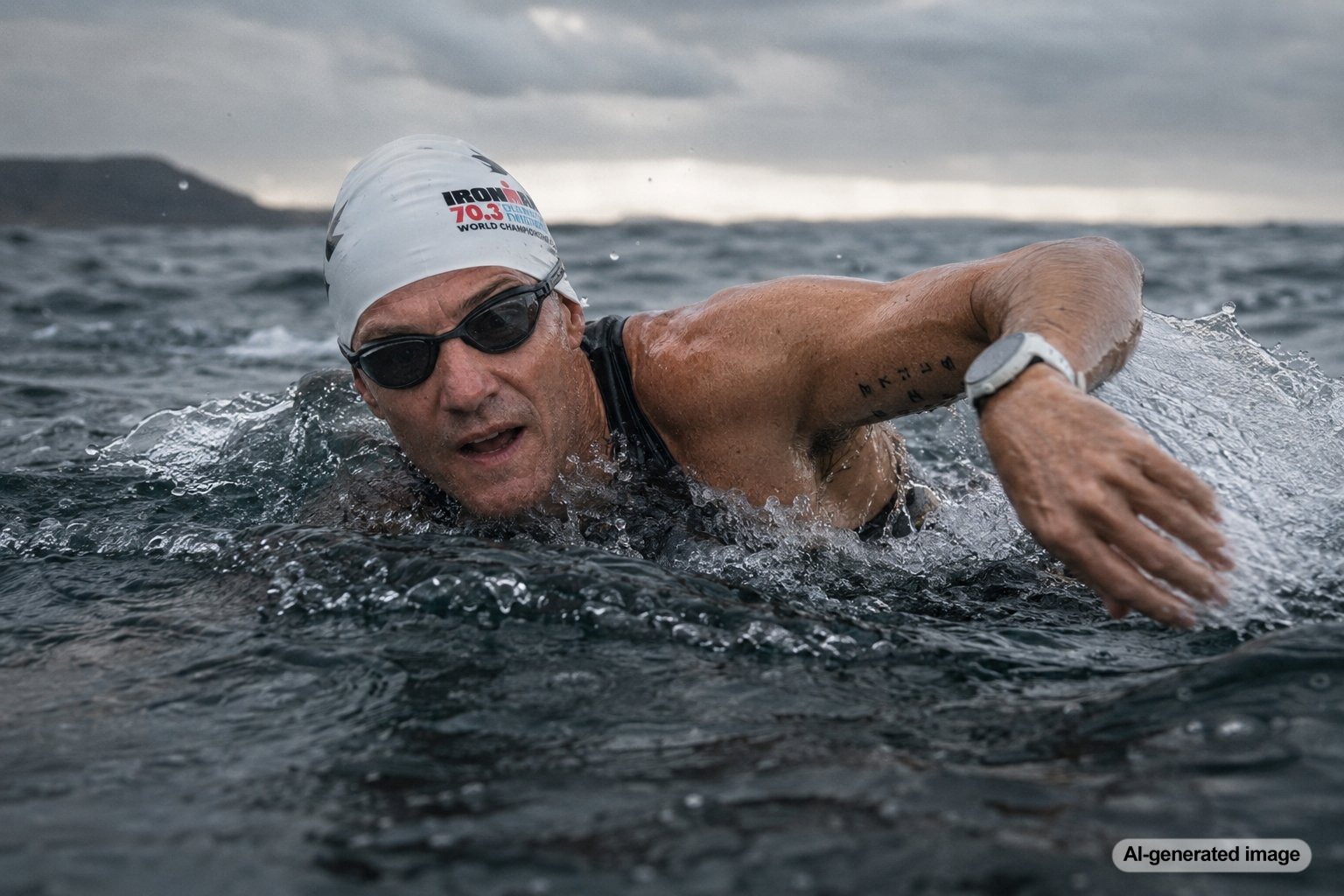
Open-water swimming teaches you that the unknown is not something you defeat before you begin. It is something you enter with preparation, respect, and enough trust to keep moving. Unlike a pool, open water does not give you lane lines, walls, perfect visibility, or a controlled environment. You start with a direction, but the water asks you to adapt.
That is the lesson. Facing the unknown is rarely about having every answer. It is about learning how to stay steady when conditions shift, how to find your next point of focus, and how to take one more stroke when the shoreline still feels far away. For an endurance athlete, a leader, a parent, or anyone walking through uncertainty, open water becomes more than a race setting. It becomes a teacher.
Greg Schaefer’s work as a speaker, athlete, entrepreneur, and advocate is built around that same kind of forward motion. You can learn more about his story and mission on the About Greg page.
Quick answer
- Open-water swimming teaches you to move forward without perfect visibility.
- It builds calm decision-making when conditions are unpredictable.
- It reminds you that fear can be managed through focus, rhythm, and preparation.
- It shows the value of sighting, adjusting, and returning to your line instead of panicking.
- It turns uncertainty into a practice of presence, discipline, and trust.
The water does not promise certainty
In a pool, the structure is obvious. You know the length, the walls, the lane, and the pace clock. Open water removes much of that certainty. The surface can look calm from shore and feel entirely different once you are in it. Wind changes the texture. Currents shift your line. Other swimmers create chop. Visibility may disappear after the first few strokes.
That loss of control can feel uncomfortable, but it is also where the real lesson begins. Many people wait for certainty before they act. They want the whole route mapped, the risk eliminated, the outcome guaranteed. Open water does not offer that deal. It asks for preparation, then courage. It asks you to respect what you cannot control without letting it stop you.
Life often works the same way. A diagnosis, a career change, a family challenge, a business setback, or a new mission can place you in water you did not expect. The goal is not to pretend the uncertainty is easy. The goal is to learn how to move honestly inside it.
Fear gets smaller when focus gets specific
One of the most useful skills in open-water swimming is sighting. You lift your eyes, find a buoy or landmark, check your direction, and return to your rhythm. You do not stare at the entire course at once. You find the next reference point.
That is a powerful way to think about fear. Fear grows when the unknown becomes too large and vague. It shrinks when attention becomes specific. In the water, the question is not, “How will I survive the whole distance?” The better question is, “Where is the next buoy, and what stroke do I need right now?”
That kind of focus does not deny the size of the challenge. It simply breaks the challenge into something workable. In a race, that might mean breathing on schedule, relaxing the shoulders, correcting your line, and returning to a steady cadence. In life, it might mean making one phone call, keeping one commitment, asking for one piece of support, or choosing one next step.
Preparation matters, but adaptation matters too
No serious open-water swimmer enters the water casually. Training matters. Gear matters. Course knowledge matters. Safety matters. Experience matters. Preparation gives you confidence because it reminds you that you have done the work before the moment arrived.
Still, preparation is not the same as control. The water may not behave the way you hoped. Your goggles may fog. Your breathing may feel off. The pack may push you wider than planned. A confident swimmer is not someone who never gets disrupted. A confident swimmer is someone who can adapt without unraveling.
This is one of the most practical lessons open water offers leaders and teams. A plan is essential, but the plan is not sacred. The mission is sacred. When conditions change, you adjust while keeping your deeper direction intact. That mindset matters in endurance sports, in business, and in any season that requires resilience.
Calm is a skill, not a personality trait
From the shore, calm can look like confidence. In the water, calm is often a decision made repeatedly. It is the decision to slow the breathing before panic takes over. It is the decision to relax the hands instead of fighting the water. It is the decision to stop wasting energy on frustration and return to what can be done.
Open water teaches that calm does not mean the absence of nerves. It means learning how to work with your body and mind under pressure. Some swimmers count strokes. Some focus on exhaling fully. Some use a phrase. Some lock onto the next buoy. The method may vary, but the principle is the same: calm becomes real through practice.
That distinction matters because many people assume resilience is something you either have or do not have. Open water suggests otherwise. Resilience is trained in small moments. It is built every time you choose rhythm over panic, discipline over reaction, and movement over freezing.
The shortest line is not always the easiest line
In open water, swimming straight is harder than it sounds. A small drift repeated over time can send you far off course. Sometimes the fastest swimmer is not the one with the strongest stroke, but the one who sights well, stays composed, and wastes less energy correcting avoidable mistakes.
There is a life lesson in that. When people face the unknown, they often look for the dramatic breakthrough, the perfect answer, or the heroic surge. But progress is often quieter. It comes from checking direction, making small corrections, and refusing to let one bad stretch define the whole course.
There may be moments when you need to pause, look up, and recalibrate. That is not failure. It is wisdom. The swimmer who never sights may feel fast for a while, but speed without direction can become expensive. Forward motion works best when it includes honest awareness.
What people often miss about open-water courage
Courage in open water is not recklessness. It is not ignoring conditions, dismissing fear, or pretending discomfort is not real. It is preparation paired with humility. It is knowing the water deserves respect while also knowing you are capable of entering it with purpose.
This matters because courage is often misunderstood. People sometimes describe courage as a loud, fearless quality. Open water offers a different definition. Courage can be quiet. It can look like showing up to the start line with nerves in your stomach. It can look like asking for support. It can look like taking the first strokes even when the far buoy seems small.
For Greg, the broader message of forward motion is not about pretending life is easy or turning adversity into a slogan. It is about continuing to move with honesty, discipline, family, purpose, and service. That is part of what makes his message resonate with teams, organizations, and communities looking for something deeper than surface-level motivation.
Practical takeaways for facing the unknown
The lessons from open-water swimming are useful far beyond the race course. They translate into any season where the next chapter feels unclear.
- Find your next buoy. Do not try to solve the whole future at once. Identify the next useful point of focus.
- Control your breathing before your pace. When pressure rises, steadiness often begins with the body.
- Expect changing conditions. A shift in the water does not mean the plan failed. It means adjustment is part of the plan.
- Use support wisely. Coaches, teammates, family, and trusted advisors can help you see what you cannot see alone.
- Keep returning to rhythm. Progress is built through repeated action, not one perfect moment of confidence.
These are not abstract ideas. They are practical habits. The unknown becomes less intimidating when you stop treating it as one massive wall and begin treating it as a course that can be navigated one sighting, one breath, and one stroke at a time.
Open water and the discipline of forward motion
There is a moment in many swims when the start is behind you, the finish is not yet close, and the only honest task is to keep going. That middle stretch can reveal a lot. It shows whether you can stay patient when progress feels slow. It shows whether you can adjust without spiraling. It shows whether your purpose is strong enough to carry you when excitement fades.
That is why open water can be such a meaningful metaphor for leadership, adversity, and personal growth. It does not make the unknown disappear. It teaches you how to relate to it differently. Instead of waiting for fear to leave, you learn to move with it. Instead of demanding perfect visibility, you learn to sight. Instead of fighting every wave, you learn when to settle, when to surge, and when to conserve.
Greg’s phrase, “One More Step… Just One More,” carries that same spirit. In the water, it might be one more stroke. In life, it might be one more day of showing up, one more conversation, one more act of service, or one more decision to keep moving toward what matters.
FAQ
What does open-water swimming teach about uncertainty?
It teaches that uncertainty can be navigated through preparation, focus, adaptation, and steady movement. You may not control the water, but you can control how you respond inside it.
Why is open-water swimming mentally challenging?
It removes many of the familiar controls found in a pool. There may be limited visibility, changing conditions, crowded starts, and no wall to touch. That requires calm, awareness, and trust in your training.
How does open-water swimming relate to resilience?
Resilience shows up in the swimmer’s ability to keep moving while adjusting to changing conditions. It is not about never feeling fear. It is about returning to rhythm after disruption.
What is the biggest life lesson from open-water swimming?
The biggest lesson is that you do not need perfect certainty to begin. You need preparation, direction, support, and the willingness to take the next honest stroke.
Interested in bringing Greg’s message to your event or organization?
Learn more about Greg’s speaking work or get in touch to start the conversation.
Contact Greg or learn more about the Forward Motion Fund.
This article is for educational purposes only and is not medical advice. For diagnosis, treatment, or personalized medical guidance, please speak with a qualified healthcare professional.