
What People Get Wrong About Parkinson’s and Physical Performance
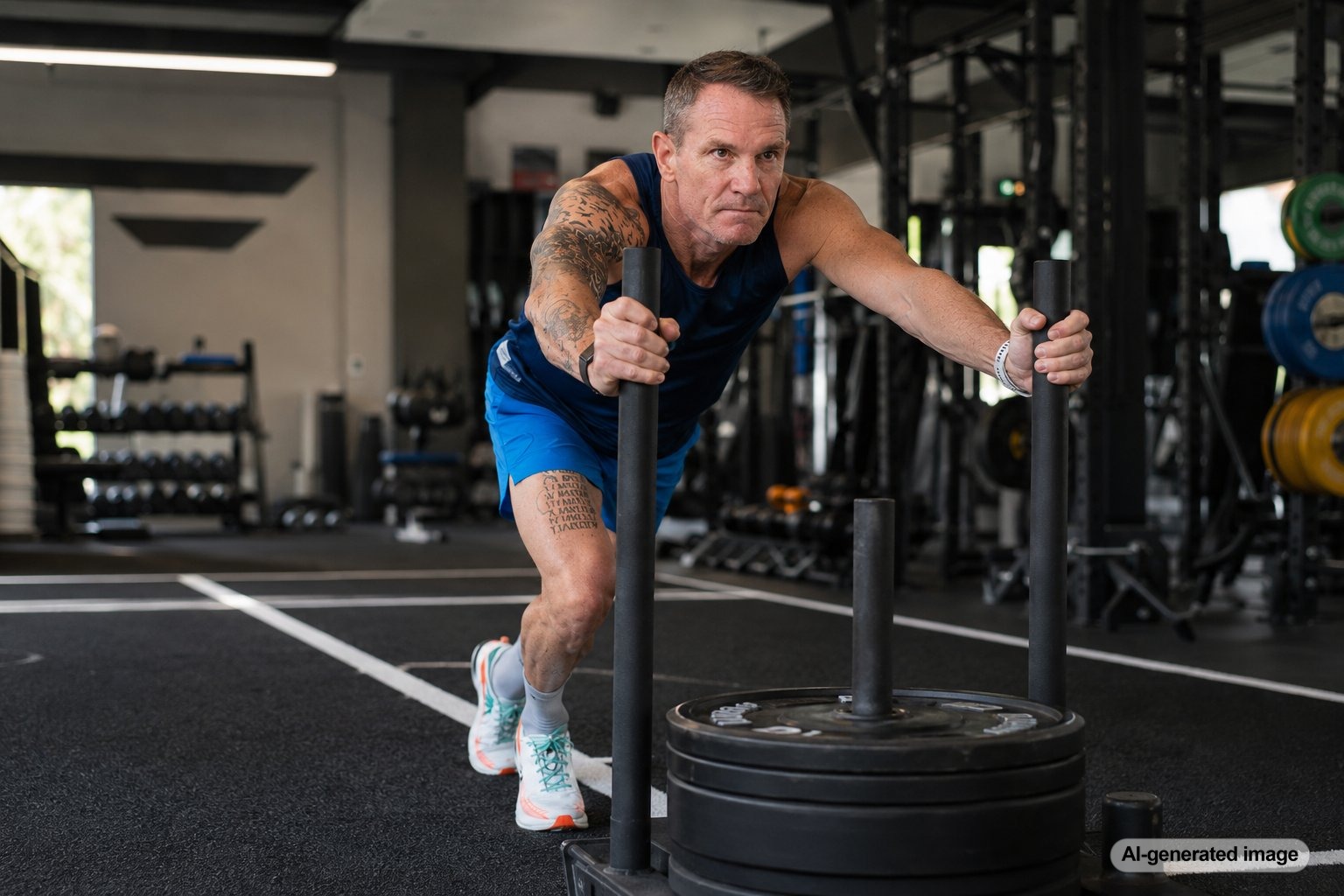
One of the biggest misunderstandings about Parkinson’s is that the diagnosis automatically means physical performance disappears. Parkinson’s can affect movement, balance, stiffness, coordination, energy, sleep, and confidence. Those realities matter. But they do not tell the whole story of what a person can still train for, adapt to, fight through, or build around.
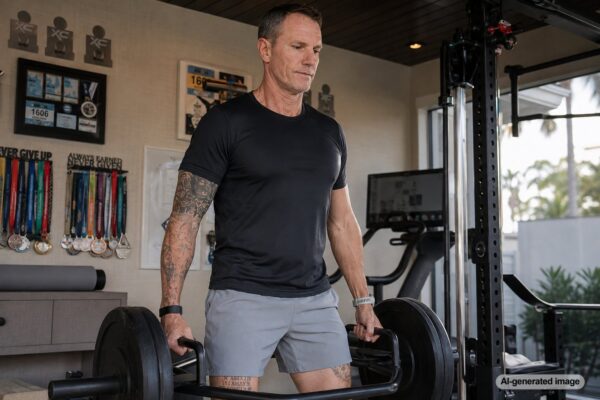
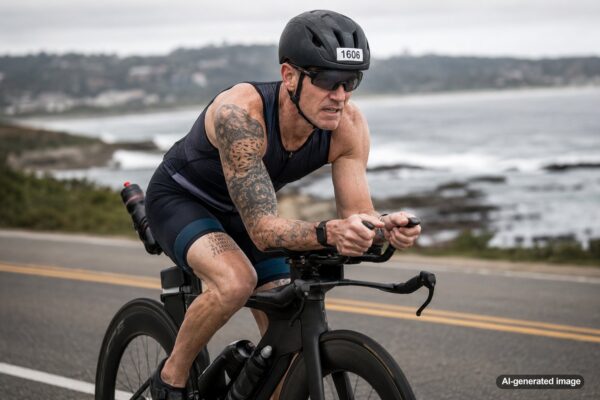
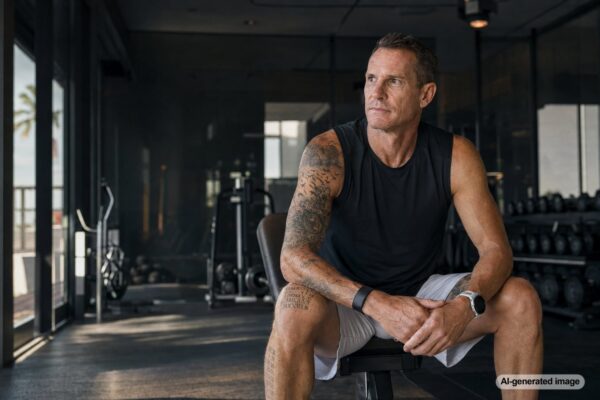
Greg Schaefer’s story sits in that complicated middle ground. He is a dad, husband, CEO, motivational speaker, and 20-time Ironman living with Young-Onset Parkinson’s. His experience does not make Parkinson’s simple, and it does not turn physical performance into a slogan. It shows something more useful: the body may change, but discipline, support, identity, purpose, and movement can still have a powerful role. You can learn more about Greg’s broader story on the About Greg page.
Quick answer
- Parkinson’s can affect physical performance, but it does not affect every person the same way.
- Many people underestimate how much strength, endurance, balance work, and consistent exercise can still matter.
- High performance may require adaptation, pacing, medical support, and humility, not denial.
- Visible ability does not mean someone is unaffected by Parkinson’s.
- Physical performance is not only about race results or gym numbers. It can also mean staying engaged in life, family, work, and purpose.
People mistake diagnosis for disappearance
Parkinson’s is a progressive neurological disorder that can affect movement and may involve symptoms such as tremor, stiffness, slowness, balance changes, and difficulty with walking or coordination. Those facts are real. But a diagnosis is not a full biography. It does not capture someone’s training history, mindset, support system, treatment plan, daily effort, or reason for moving forward.
That distinction matters because many people hear “Parkinson’s” and picture only the later or most visible stages of the disease. They may not understand Young-Onset Parkinson’s, where someone may still be working, parenting, training, leading, competing, and carrying responsibilities while managing symptoms that others cannot always see. Performance can exist alongside struggle. Strength can exist alongside uncertainty.
People assume physical ability means the disease is not serious
Another common mistake is the opposite assumption: if someone with Parkinson’s looks strong, athletic, or capable, people may think the disease must be mild or overstated. That can be deeply inaccurate. Parkinson’s symptoms can fluctuate. Medication timing, fatigue, stress, sleep, pain, and environment can all influence how a person moves and feels on a given day.
An athlete crossing a finish line may still have had a difficult morning getting dressed. A business leader speaking on stage may still be managing stiffness, tremor, or fatigue behind the scenes. A parent who trains hard may still need support at home. Performance does not cancel out the diagnosis. It reveals the work required to keep participating in life.
People underestimate the value of exercise
Exercise is not a cure for Parkinson’s, and it should not be framed as a magic answer. Still, major Parkinson’s organizations consistently describe physical activity as an important part of living with the disease. Exercise may support mobility, balance, flexibility, strength, mood, and overall quality of life for many people with Parkinson’s.
What people often miss is that exercise is not one narrow thing. It can include aerobic conditioning, strength training, mobility work, stretching, balance practice, boxing-style classes, cycling, walking, swimming, physical therapy-guided movement, or sport-specific training. The right approach depends on the person, symptoms, goals, safety considerations, and medical guidance.
For someone like Greg, endurance sports are part of a much larger pattern: discipline, structure, identity, community, and the decision to keep moving forward. For someone else, the meaningful win might be walking more confidently, getting stronger for daily tasks, or returning to an activity they thought they had to give up. Both matter.
People confuse adaptation with weakness
Physical performance with Parkinson’s often requires adaptation. That may mean warming up longer, building more recovery into the week, choosing safer training environments, working with clinicians, changing intensity, using support tools, or accepting that one day will not look like the next.
None of that is weakness. Adaptation is a performance skill. Great athletes and leaders adjust to reality instead of pretending reality is not there. The same is true when Parkinson’s enters the picture. The goal is not to prove invincibility. The goal is to stay engaged, informed, and honest enough to keep building a life around what still matters.
People overlook the mental load behind the physical work
Physical performance is never only physical. Parkinson’s can bring uncertainty, frustration, identity questions, and the emotional weight of not knowing exactly how the future will unfold. That can affect confidence before a workout, a race, a meeting, or a normal day with family.
When people praise someone only for being “inspiring,” they may miss the more human truth. Courage is not constant excitement. Sometimes it is patience. Sometimes it is grief. Sometimes it is doing the next useful thing when the body feels unfamiliar. Sometimes it is asking for help without surrendering your identity.
What people often miss
- Parkinson’s is variable: Symptoms, energy, and movement can change across the day or from one day to the next.
- Fitness history matters: Someone with years of training may have tools, habits, and body awareness that help them adapt.
- Support matters: Family, clinicians, coaches, friends, and community can make continued movement more realistic.
- Performance is personal: For one person, performance is an Ironman. For another, it is walking safely, lifting a grandchild, or returning to a favorite routine.
Physical performance is not proof that Parkinson’s is easy
The better way to understand Parkinson’s and performance is to hold two truths at once. Parkinson’s can be serious, disruptive, and unpredictable. People living with it can also be strong, competitive, disciplined, joyful, ambitious, and deeply capable.
That balance is central to Greg’s message. He does not represent a fantasy where adversity disappears. He represents a lived commitment to forward motion: one more step, one more choice, one more honest effort. For organizations, teams, and communities looking for a grounded message about resilience, leadership, and purpose, Greg’s speaking work brings that intersection to life.
FAQ
Can people with Parkinson’s still be athletic?
Yes, some people with Parkinson’s continue to train, compete, and pursue athletic goals. The experience varies widely, and safety, symptom management, medical guidance, and smart adaptation are important.
Does exercise cure Parkinson’s?
No. Exercise is not a cure. However, physical activity can be an important part of managing health, function, mobility, mood, and quality of life for many people living with Parkinson’s.
Why do some people with Parkinson’s look physically strong?
Strength or athletic ability does not mean Parkinson’s is absent or easy. Symptoms can fluctuate, and many people work hard behind the scenes to maintain function, fitness, and confidence.
What should people avoid assuming about Parkinson’s?
Avoid assuming that every person with Parkinson’s has the same symptoms, the same limitations, or the same future. It is better to listen, respect individual experience, and recognize both the challenges and the capacity that may exist.
Interested in bringing Greg’s message to your event or organization?
Learn more about Greg’s speaking work or get in touch to start the conversation.
Contact Greg or learn more about the Forward Motion Fund.
This article is for educational purposes only and is not medical advice. For diagnosis, treatment, or personalized medical guidance, please speak with a qualified healthcare professional.